Optimizing Commercial Electrical Distribution Uptime
Optimizing Electrical Distribution for Maximum Commercial Uptime
In every major commercial and industrial facility, power is not a luxury. It is the pulse. At Kord Electric, we understand that commercial electrical distribution reliability determines whether a property operates smoothly or spirals into costly downtime. Within the first few seconds of a power disturbance, data can vanish, production can stall, and tenants can lose trust. Therefore, we approach every system with precision, foresight, and a steady hand. Our technicians and expert service staff take the time to explain what is happening behind the walls and inside the panels, because knowledge builds confidence. And while electricity may move at the speed of light, we prefer to move with careful intent, ensuring every circuit, breaker, and feeder supports uninterrupted performance.
Now, let us step deeper into what it truly means to optimize electrical distribution in modern commercial and industrial buildings.
The Foundation of Commercial Electrical Distribution Reliability
Every resilient system begins with design. Before wires are pulled or switchgear is installed, we evaluate load demands, future growth, redundancy needs, and code compliance. In large facilities, distribution is not simply about delivering power. It is about directing it intelligently.
For example, industrial manufacturing plants often operate heavy machinery with fluctuating loads. Meanwhile, high rise commercial properties depend on elevators, HVAC systems, lighting networks, and server rooms that cannot afford interruptions. Because of this, we design layered distribution frameworks that balance demand while protecting sensitive equipment.
Moreover, our team performs detailed load calculations and short circuit studies to ensure each component performs under stress. We do not guess. We measure. Then, we verify.
And yes, sometimes we explain transformer capacity with the calm tone of a late night documentary narrator. After all, even a 2000 amp service deserves a little storytelling.
How Do You Improve Commercial Electrical Distribution Reliability in Large Buildings?
Many property managers and facility engineers ask this question directly. The answer is straightforward, although the execution requires experience.
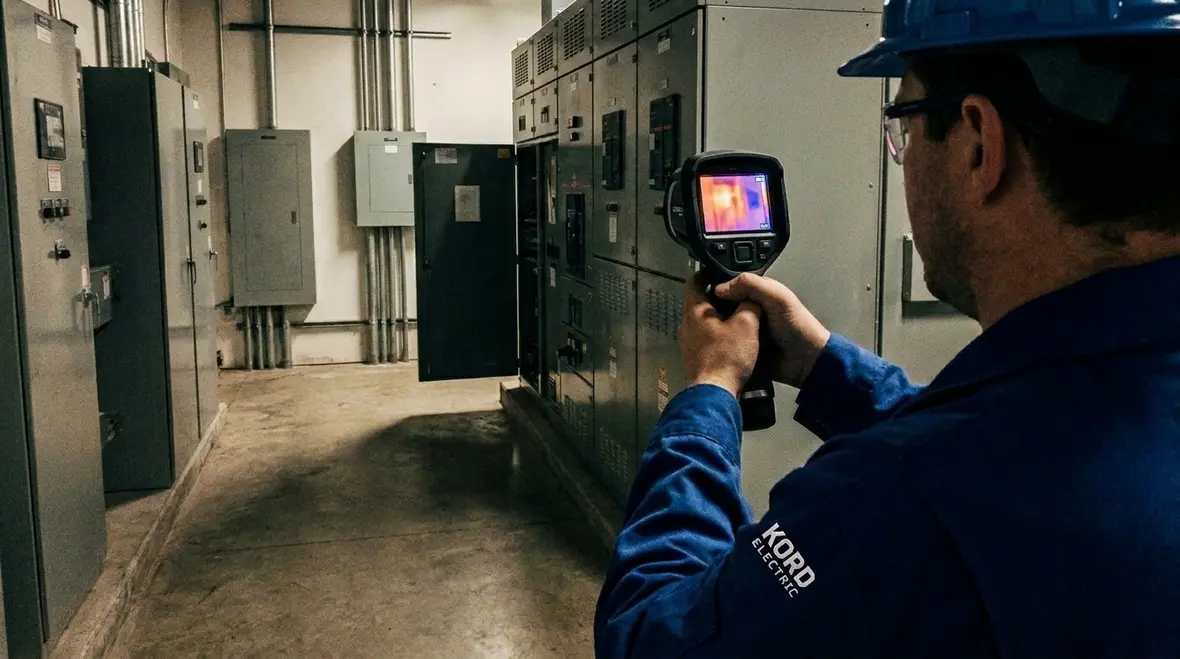
First, we start with assessment. We conduct thermal imaging scans, panel inspections, and load profiling. Consequently, we identify hot spots, imbalanced phases, and aging components before they fail.
Second, we implement redundancy where appropriate. For mission critical facilities, that may include dual feeds, automatic transfer switches, and properly sized backup generation. However, redundancy must align with real operational needs. Too little protection invites risk. Too much wastes capital.
Third, we modernize outdated infrastructure. Older panels and switchgear often struggle to meet today’s digital and automation demands. Therefore, upgrading distribution boards and protective devices significantly increases system stability.
Finally, we train facility teams. Our expert service staff explains how distribution equipment functions, what warning signs to watch for, and how to respond during an event. Because when teams understand their systems, response times shrink and confidence grows.
For facility leaders who want a deeper dive into how all of this fits into the bigger picture of building performance, our article on commercial electrical systems for modern buildings expands on how distribution, protection, and controls work together behind the scenes.

Designing Distribution Systems for Modern Commercial Buildings
Modern buildings are smarter than ever. Lighting systems integrate with occupancy sensors. HVAC equipment communicates with energy management platforms. Security systems run continuously. As a result, distribution systems must support constant communication and evolving loads.
We approach modern design with three priorities in mind.
- Scalability: Buildings change. Tenants expand. Equipment evolves. Therefore, panels and feeders must allow for growth without full system replacement.
- Energy Efficiency: Balanced loads, efficient transformers, and power factor correction reduce waste and lower operational costs.
- Selective Coordination: Protective devices must isolate faults without shutting down entire sections of a facility.
In addition, we integrate advanced metering so facility managers can monitor consumption in real time. Knowledge is power, quite literally. When data reveals usage trends, leadership can make informed decisions about upgrades or operational shifts.
While the public may only see lights turning on, behind the scenes a complex network ensures stability. Think of it as the orchestra behind a Broadway show. The audience hears harmony. We hear circuits working together in perfect rhythm.
Preventive Maintenance as the Guardian of Commercial Electrical Distribution Reliability
If design lays the foundation, maintenance protects the structure. Without regular service, even the strongest system weakens over time.
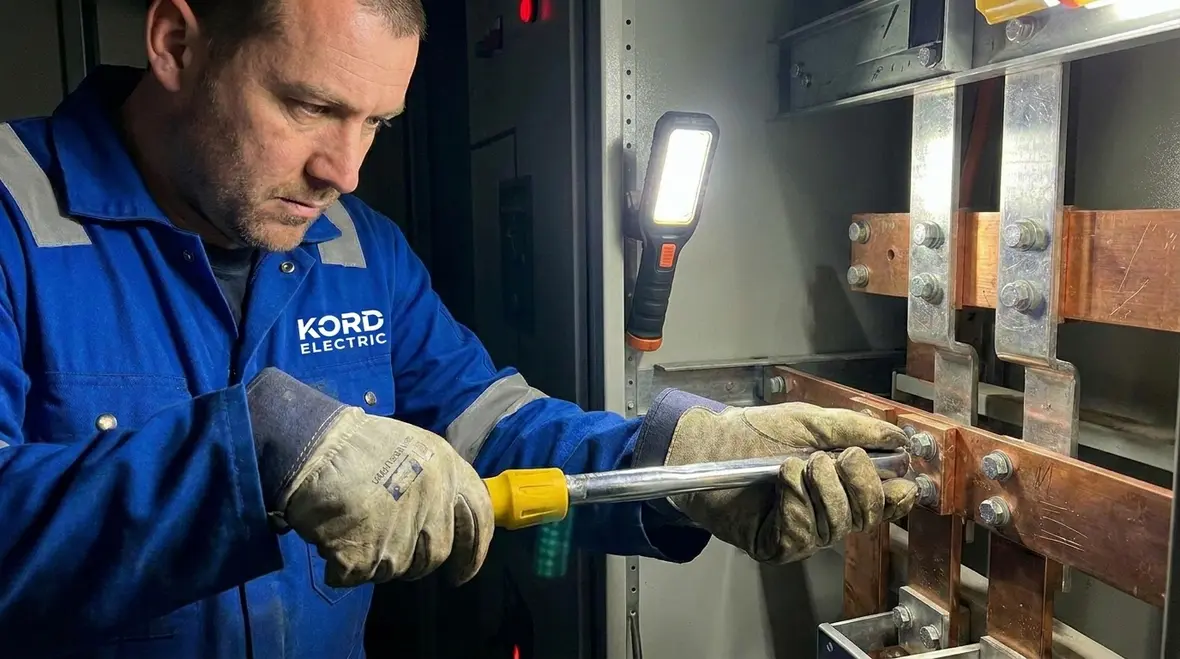
At Kord Electric, we build preventive maintenance programs specifically for commercial and industrial facilities. These programs include breaker testing, torque verification, infrared scanning, cleaning of switchgear, and calibration of protective relays.
Furthermore, we document every inspection. Detailed reporting allows facility managers to track trends across years, not just months. Consequently, they can budget for upgrades before emergencies strike.
Consider a loose lug connection. It seems minor. However, over time it generates heat. Heat degrades insulation. Eventually, failure occurs. Therefore, a simple torque check can prevent major disruption.
Our technicians often explain this with a smile. Skipping maintenance on electrical distribution is like ignoring the oil change light in a fleet vehicle. It may run for a while. But eventually, it will protest. And unlike your car, a commercial building cannot simply pull over to the side of the road.
For organizations that want a structured, repeatable maintenance strategy rather than one-off inspections, our dedicated electrical preventive maintenance services are built to protect uptime and extend the life of critical distribution equipment.
Risk Mitigation and Safety in High Demand Environments
Industrial facilities and major property buildings operate in high demand environments. Equipment runs for long hours. Loads fluctuate. Environmental conditions can be harsh. Because of this, safety must remain central to every distribution strategy.
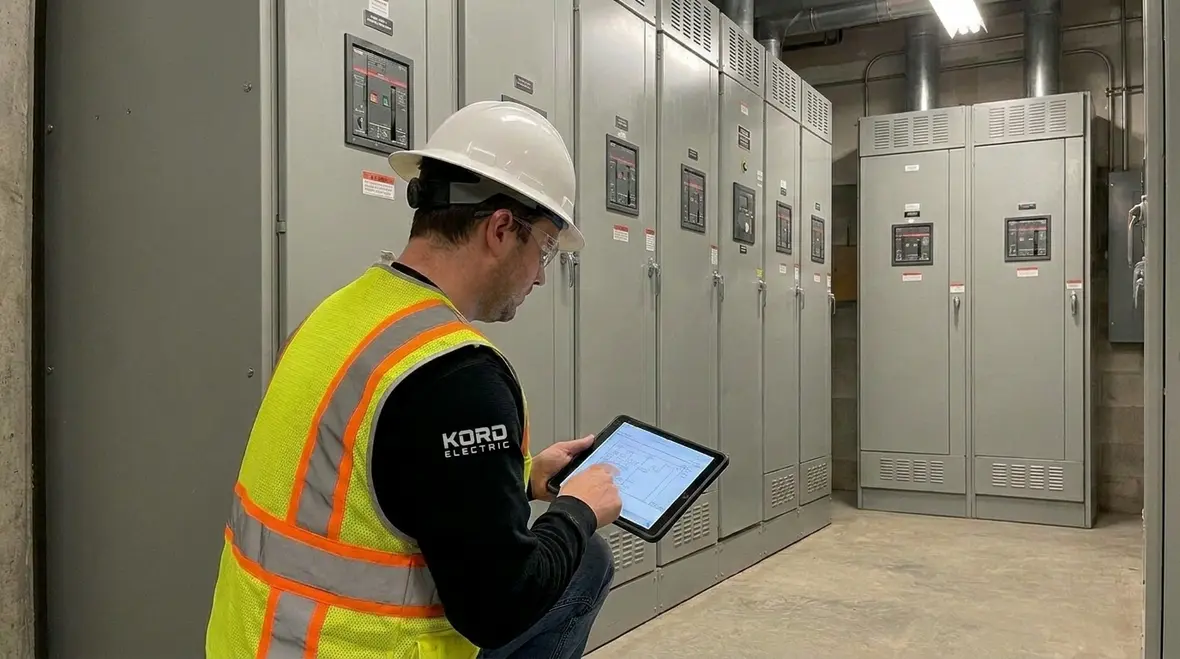
We implement arc flash studies to determine hazard levels and establish proper labeling. Additionally, we review grounding and bonding systems to ensure fault currents travel safely away from personnel and equipment.
Moreover, we verify that protective devices coordinate correctly. When a fault occurs, the nearest breaker should trip first. Otherwise, a small issue can cascade into a large outage.
Our expert service staff takes time to explain arc flash boundaries, PPE requirements, and safe switching procedures. Education reduces accidents. And in environments where voltage levels are significant, knowledge is not optional. It is essential.
Although the topic may sound technical, the goal remains simple. Protect people. Protect property. Maintain uptime.
Balancing Redundancy, Efficiency, and Cost
Every facility leadership team faces the same question. How much protection is enough?
On one hand, robust redundancy enhances commercial electrical distribution reliability. On the other hand, excessive infrastructure can inflate budgets unnecessarily. Therefore, we guide clients through a balanced evaluation.
We analyze operational criticality. For example, a data driven industrial plant may require layered backup systems. Meanwhile, a multi tenant commercial property might prioritize selective redundancy in key areas such as elevators and fire life safety systems.
Below is a simplified comparison our technicians often present during consultations.
|
Priority Focus
|
Efficiency Focus
|
By reviewing these elements side by side, stakeholders can determine where investment delivers the greatest operational value. Consequently, decisions become strategic rather than reactive.
And yes, sometimes we gently remind clients that overspending on unnecessary redundancy is like installing a moat around a perfectly secure building. Impressive, perhaps. Necessary, rarely.
Upgrading Legacy Systems Without Disrupting Operations
Many commercial and industrial facilities operate with aging infrastructure. However, shutting down operations for major upgrades often feels impossible. Therefore, careful planning becomes critical.
We perform phased upgrades that isolate sections of distribution while keeping core operations active. Temporary power solutions may support sensitive areas during equipment replacement. Additionally, we coordinate closely with facility managers to schedule work during low demand periods.
Our technicians communicate every step. They explain what will occur, how long it will take, and what contingencies exist. Because uncertainty breeds anxiety, clarity builds trust.
Through structured modernization, facilities gradually improve commercial electrical distribution reliability without compromising daily productivity. Step by step, outdated components give way to modern, code compliant systems that support current and future demands.
It may not be as dramatic as a cinematic power up sequence in a superhero film. Still, when a new switchboard energizes flawlessly, we allow ourselves a quiet moment of satisfaction.
Partnering With Experts Who Explain the Process
Technical skill matters. Yet communication matters just as much.
At Kord Electric, our technicians and expert service staff do more than install and maintain equipment. They educate. They walk facility teams through panel layouts. They clarify why certain upgrades improve system stability. They answer questions without jargon or impatience.
Because of this approach, clients gain more than a contractor. They gain a partner.
We have found that when property managers understand their distribution systems, they make smarter operational choices. They recognize early warning signs. They plan budgets responsibly. And above all, they value the long term strength of their infrastructure.
Commercial electrical distribution reliability is not achieved through a single installation. It develops through ongoing collaboration, preventive care, and informed leadership.
Frequently Asked Questions
Conclusion
Power keeps commercial and industrial facilities moving. When distribution systems falter, operations suffer. At Kord Electric, we design, maintain, and modernize infrastructure with steady precision and clear communication. If your facility demands stronger uptime, safer systems, and a partner who explains every step, we are ready to help. Connect with our team today and let us strengthen the backbone of your building’s performance.
If you are already seeing signs of nuisance trips, voltage issues, or unexplained equipment faults, our dedicated voltage fluctuation repair services for commercial and industrial facilities can be paired with new or existing distribution upgrades to stabilize performance and protect sensitive loads.