Commercial Electrical Inspection Checklist California
California Commercial Electrical Inspection Checklist for Building Owners
When a building owner in California asks for a commercial electrical inspection checklist california, we hear the quiet worry beneath the words: will the inspector find a problem, and will the repair bill land like a surprise plot twist. At Kord Electric, we support commercial and industrial facilities and major property buildings, and we help owners plan ahead with a clear checklist and practical steps. In this guide, we walk through what our team expects during an inspection, how our technicians explain requirements in plain language, and what you can do before the paperwork starts feeling heavier than your breaker panel. First, we cover the process and the common items that inspectors want to see, then we move into building owner actions that reduce risk and downtime.
What building owners should know before the inspection begins
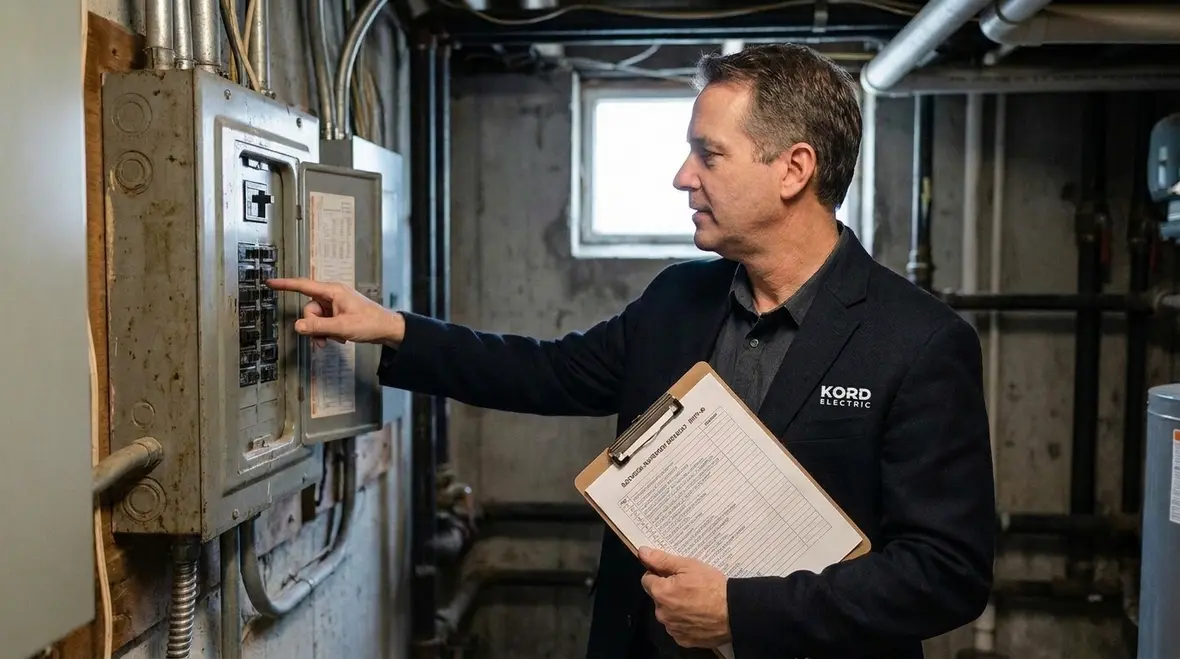
Inspections rarely fail because of one dramatic issue. Instead, most problems show up as a chain of small gaps: outdated labels, missing records, poor documentation, and equipment that has quietly drifted out of compliance. Therefore, building owners should treat the inspection like a maintenance event, not a courtroom drama. While the inspector does not need a pep talk, we still encourage owners to prepare as if a careful person with a clipboard is coming to check every detail. That is not paranoia. That is good business.
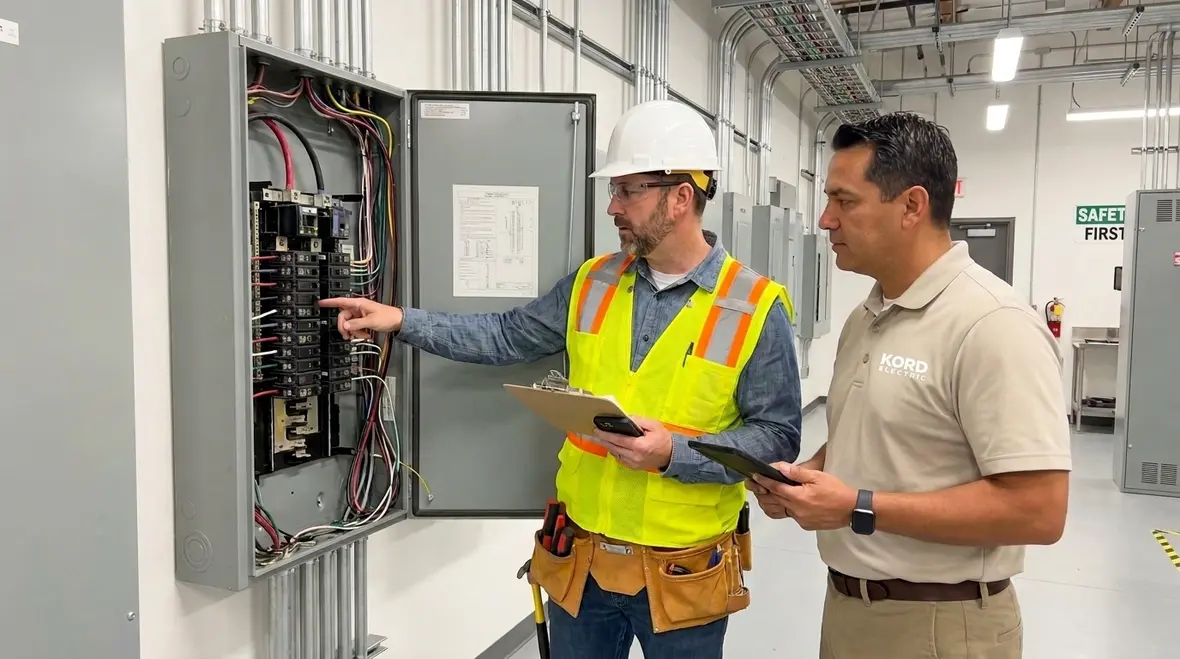
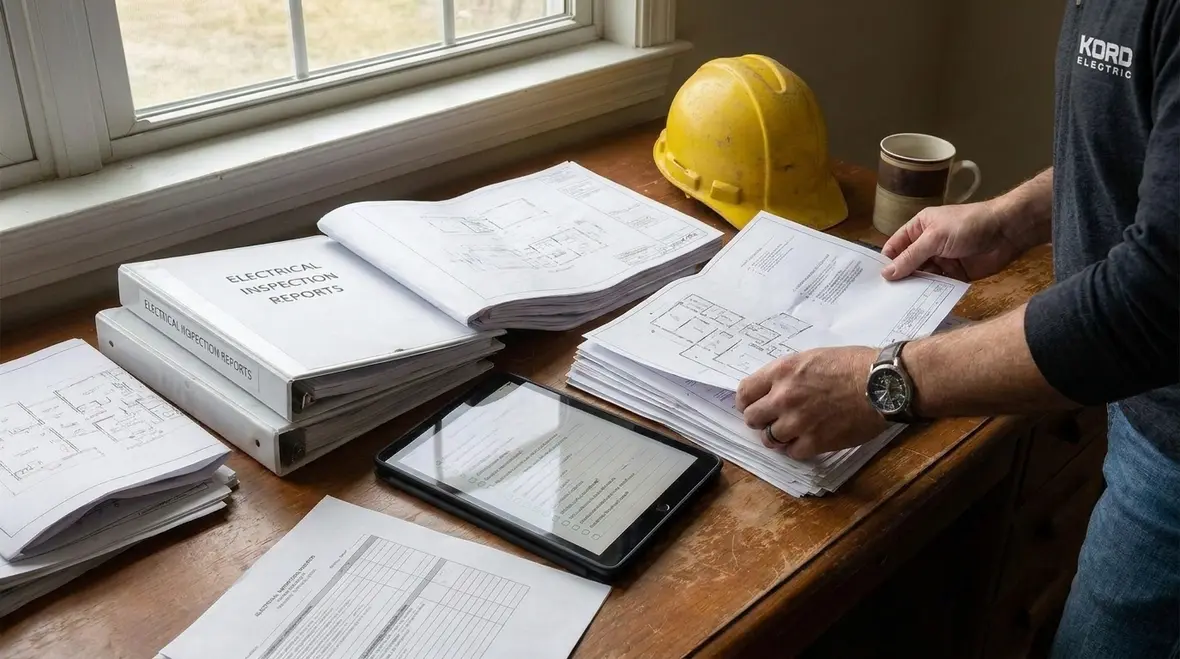
Next, we tell owners to gather key information early. Our expert service staff often finds that the electrical system tells a clearer story when documentation exists. For example, we ask for previous inspection reports, panel schedules, as built drawings when available, and any recent change orders. If a system was modified, we want to know what changed and when. In addition, we encourage owners to confirm access to equipment areas: locked rooms, sealed enclosures, and blocked pathways slow down the inspection and can create avoidable issues.
For a deeper dive into inspection expectations across California commercial properties, many owners also review Kord Electric’s dedicated guide on electrical inspection California commercial properties before scheduling their own assessment. That way, the inspection day feels like the next logical step in a clear process, not a surprise exam.
How our technicians review the electrical system step by step
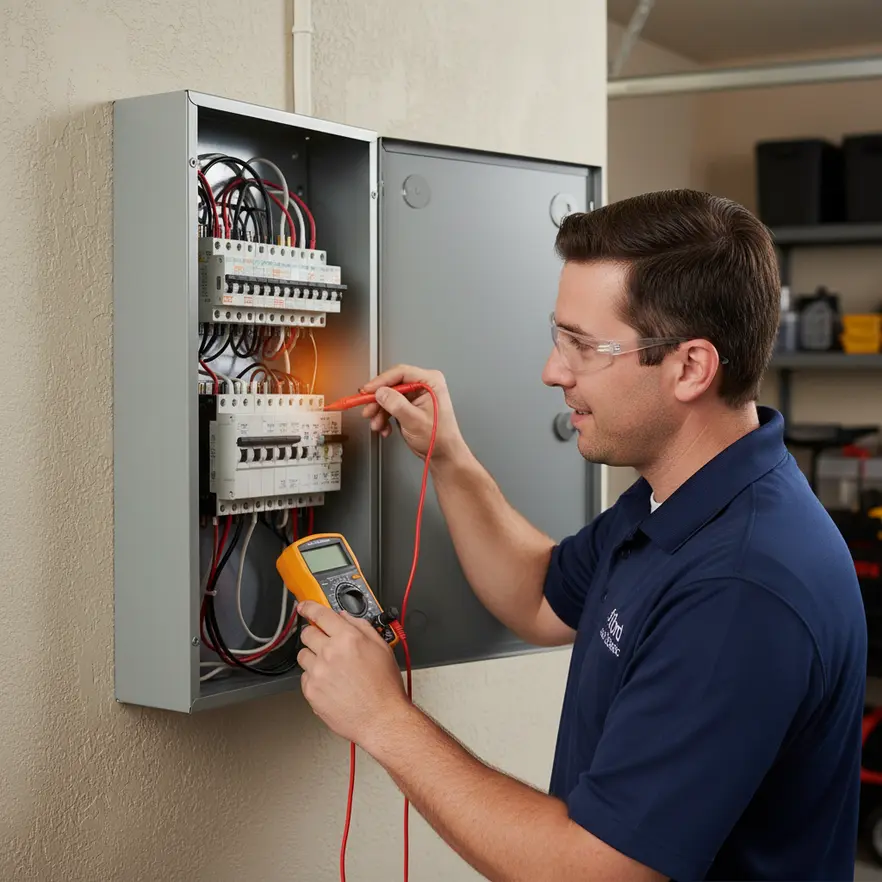
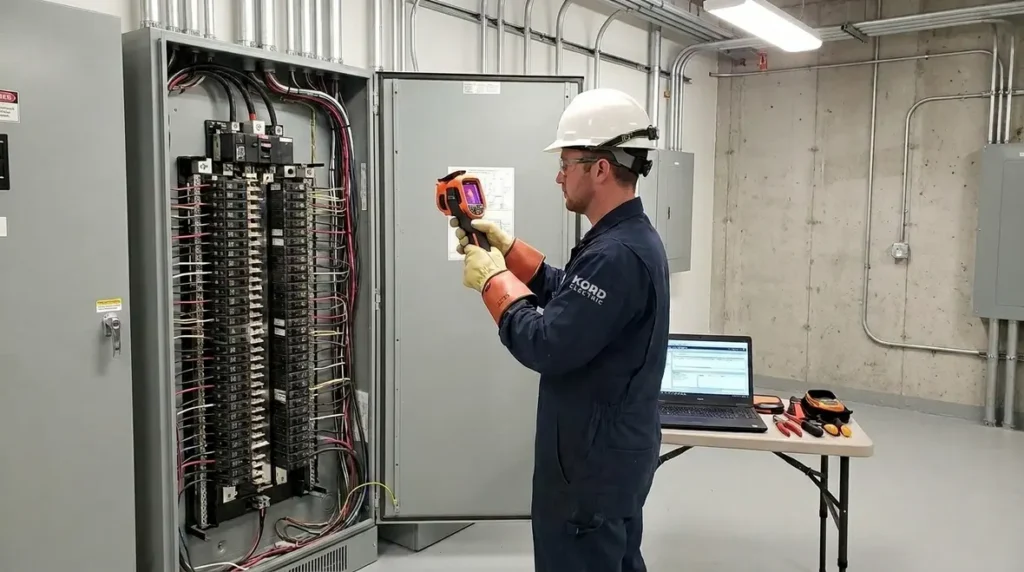
We review the electrical system in a structured way, and our technicians explain what they see as they go. That matters because building owners do not just need a list of faults. They need to understand the “why,” so they can prioritize fixes. First, we look at service equipment and distribution, including main disconnects, panelboards, and busbar areas. Then we check branching circuits for signs of overheating, damage, and incorrect installation practices.
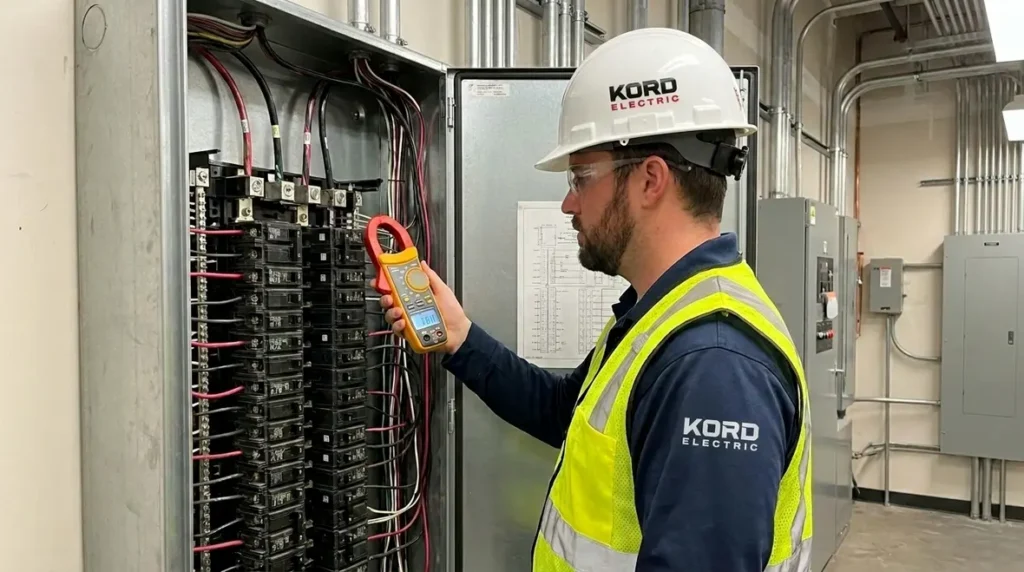
After that, we examine the grounding and bonding system. Even when everything appears powered, weak or incorrect grounding can create unsafe conditions and nuisance faults. Then we move into conductors and terminations. Inspectors commonly focus on torque quality, conductor insulation condition, and any signs of corrosion or poor connections. Finally, we review protection features such as breakers, fuses, and overcurrent devices so they align with the design and code requirements.
Along the way, our team also checks for practical safety details. For instance, we look for clear working space around electrical equipment, correct labeling, and whether covers and barriers remain in place. If anything looks like it has been “temporarily removed” for weeks, we call it out. Temporary has a habit of becoming permanent, like that one playlist you never delete.
Because this step-by-step approach also supports troubleshooting, many facility teams pair inspection work with insights from our broader resources, such as the commercial electrical troubleshooting guide for facilities, so they can connect code compliance with real-world uptime.
Key items inspectors focus on in commercial facilities

In our experience, commercial and industrial inspections often concentrate on items that affect safety and reliability under real-world use. Therefore, we keep the focus on components that can fail during normal operations, not just on what looks good in a photo. Inspectors typically expect proper labeling and identification. That includes panel directories, circuit labels, and equipment markers that match the actual field conditions. If the label says “office outlets” and the circuit feeds a security camera rack, someone will ask why. And they will ask loudly, even if they are polite.
Next, inspectors look closely at wiring methods and equipment installation. They pay attention to conduit integrity, fittings, conductor sizing, and support details. They also check that electrical spaces are maintained so workers can safely operate and service equipment without improvising. Additionally, they examine required covers, guards, and enclosures. Missing or damaged covers can create shock hazards, and careless gaps can become a future safety incident.
Then we see repeated attention to protective device coordination. In plain terms, breakers and fuses must protect conductors and equipment as intended. If a protective device does not match the load or the installation, the system may not perform during a fault. And when a fault happens in a commercial setting, everyone wants the power to stay stable, not to vanish like an actor leaving a sitcom.
Owners who want to move beyond the checklist and think in terms of broad risk control often connect these inspection priorities with a commercial electrical safety audit for risk control, so every breaker, label, and enclosure ties back to a larger safety strategy.
Common documentation and compliance gaps we help owners fix
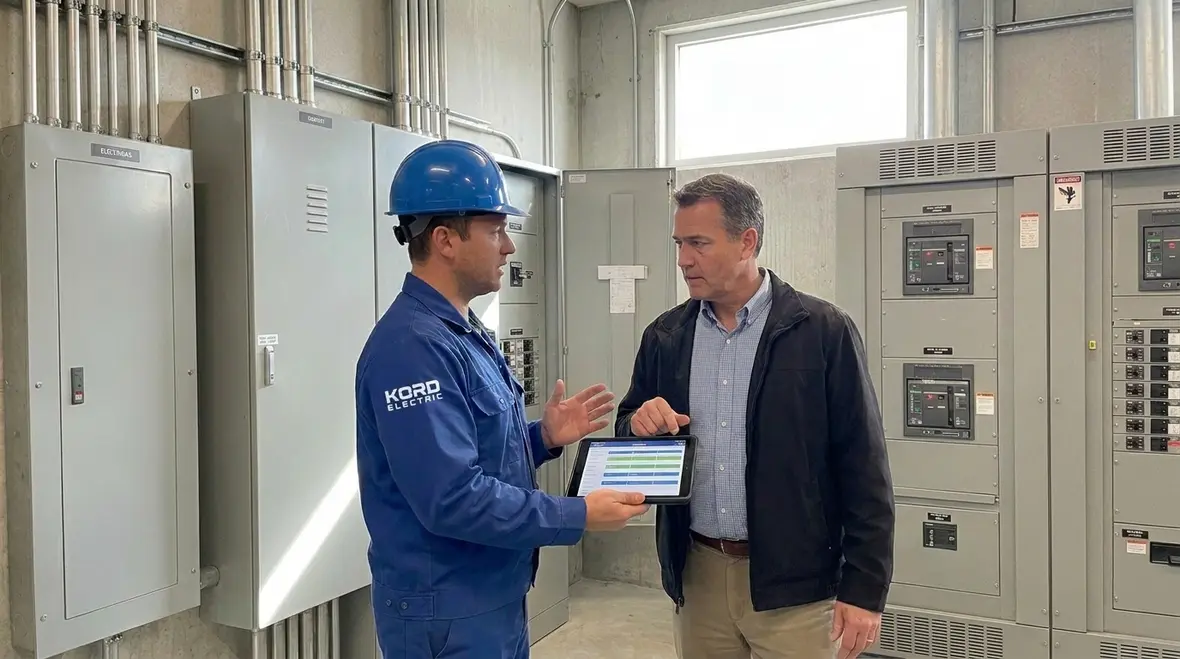
Even when the electrical system is functional, paperwork can lag behind. Consequently, inspections often flag documentation gaps that owners can prevent with a simple routine. We help owners close those gaps by building a file that matches how inspectors work. Our technicians explain each record request and how it ties to compliance.
Common gaps include missing panel schedules, unclear circuit identification, and incomplete history of modifications. If the facility has undergone renovations, we confirm that the electrical updates were captured correctly. Then we check for any evidence of outdated or conflicting labeling that can confuse future service work. Confusion costs money. It also creates the kind of “who changed this?” meetings nobody wants.
We also guide owners on maintaining test results and inspection reports. When available, we recommend keeping copies of the latest testing outcomes, repair documentation, and photos of completed corrective work. That helps inspectors verify that issues were addressed, not just noticed. Moreover, it reduces rework during future inspections because the next team does not start from scratch.
For many facilities, these documentation habits become part of a broader strategy that matches the way Kord Electric structures commercial and industrial electrical maintenance plans, so inspections, repairs, and preventive work all share the same playbook.
Scheduling, downtime planning, and preparing the site
Owners often worry about downtime, and that is reasonable. Power interruptions can disrupt operations, alarms, HVAC performance, and production schedules. However, with good planning, we keep interruptions short and controlled. We start by reviewing the inspection scope and identifying equipment that may require verification, calibration, or correction. Next, we coordinate with facility managers to schedule access and work windows that fit business hours or planned shutdown times.
Then we prepare the site so the inspector can move efficiently. That means providing safe access routes, ensuring lighting in electrical spaces works properly, and clearing obstructions. We also recommend confirming that locked rooms and electrical rooms have the right access procedures in place. If keys, badges, or access codes cause delays, you end up paying for waiting time, and waiting time is expensive in every industry.
Finally, we help owners plan follow-up actions. If we identify corrective needs, we prioritize them based on safety risk, code alignment, and impact to operations. In other words, we fix what could cause immediate trouble first, then we handle lower priority items. We do not leave owners with a mystery list. We provide clarity, and our expert service staff explains what each item affects and how quickly it should be addressed.
Because many of these corrections touch broader system capacity, some building owners also explore a detailed commercial electrical load capacity assessment guide so each scheduling decision supports long-term reliability, not just short-term fixes.
FAQ: commercial electrical inspection checklist california
Frequently asked questions for building owners
What timeline should we plan for corrections?
It depends on the scope. We recommend reviewing findings right away so safety issues get addressed first, and the rest follow a realistic schedule.
Do we need updated panel labels before an inspection?
Yes, clear labeling helps inspectors confirm circuits and reduces unsafe confusion during ongoing service.
Do you support industrial facilities and major property buildings?
Yes. Our focus stays on commercial and industrial environments and major property structures, not residential work.
For owners coordinating inspections across multiple locations or planning long-term upgrades, it can also help to review broader resources such as guides to choosing a Los Angeles County commercial electrician, so inspection decisions align with your overall service and upgrade strategy.
Ready to get inspection-ready with less stress
If you want a clear path to a safer, smoother inspection, Kord Electric can help you get organized before the inspector arrives. Our technicians and expert service staff walk with you through the commercial electrical inspection checklist california items that matter most for commercial and industrial facilities and major property buildings. Then we prioritize fixes based on safety and real operational impact, so you avoid last minute chaos. Call us today to schedule an assessment and build a practical plan your team can actually follow.
If your facility is located in or around Southern California, you can also connect this inspection planning with comprehensive Los Angeles County electrical services, ensuring that everything from code compliance to upgrades and emergency support is handled by one experienced commercial team.
Whether you manage a single building or a portfolio of properties, aligning your inspection checklist with the right service partner turns the process from a source of anxiety into a routine safety check. With the right preparation, documentation, and support, inspection day becomes just another well-planned part of your maintenance calendar, not a suspenseful episode waiting for a surprise ending.