Industrial Electrical Panel Capacity Assessment
At Kord Electric, we run an industrial electrical panel capacity assessment to help commercial and industrial facilities avoid the moment when breakers start acting like they have stage fright. Our technicians look at real load, not guesses. Then we compare what your panel can handle today with what your building will ask for next. In other words, we help property teams spot the right time to expand before the lights flicker, the HVAC struggles, or production slows down. And yes, we also know that “we will deal with it later” is a favorite business plan. It is also one of the most expensive ones.
When a commercial panel is at capacity
Third person perspective matters here, because the pattern is familiar across many major property buildings. A facility team usually notices first in the small ways. Meanwhile, the panel may show signs like warm lugs, frequent breaker trips, or unexplained voltage drops during peak operations. Then, as new equipment comes online, the panel’s margin shrinks. To be clear, that margin is not a mystery. It is the gap between expected load and available capacity.

However, the real risk is not only the current load. The risk also comes from how load changes through the day and across seasons. For instance, morning start ups for compressors, pumps, and air handling units can stack up fast. Later, process loads and kitchen or laundry operations may add more. As a result, a panel that looked fine during a calm inspection can fail during a busy shift.
That is why our expert service staff focuses on the entire electrical story, including upstream distribution and downstream loads. If one part runs hotter than it should, another part often runs stressed too. And if you are thinking, “Can’t we just swap a breaker?” someone in the building will eventually say that. Then we explain, calmly, why it is rarely that simple.
Capacity checklist: what to measure before expansion
To decide when expansion makes sense, we recommend a structured industrial electrical panel capacity assessment. A proper checklist starts with the data, then moves to the practical field checks. Our technicians use reliable measurements, label accuracy, and load history to build a clear picture.
Here is what we typically verify during an expansion decision:
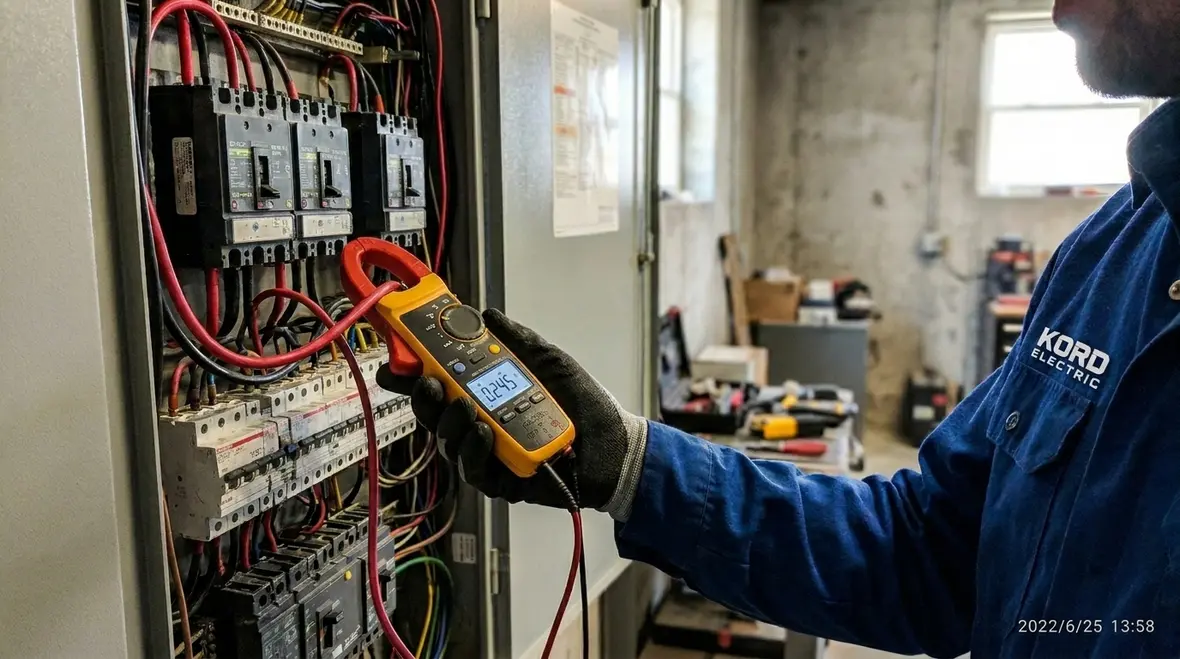
- Panel loading by phase: We confirm current on each phase and note imbalance. Imbalance creates extra heat and reduces usable capacity.
- Breaker trip history: Frequent nuisance trips can signal overload, aging breakers, or loose terminations.
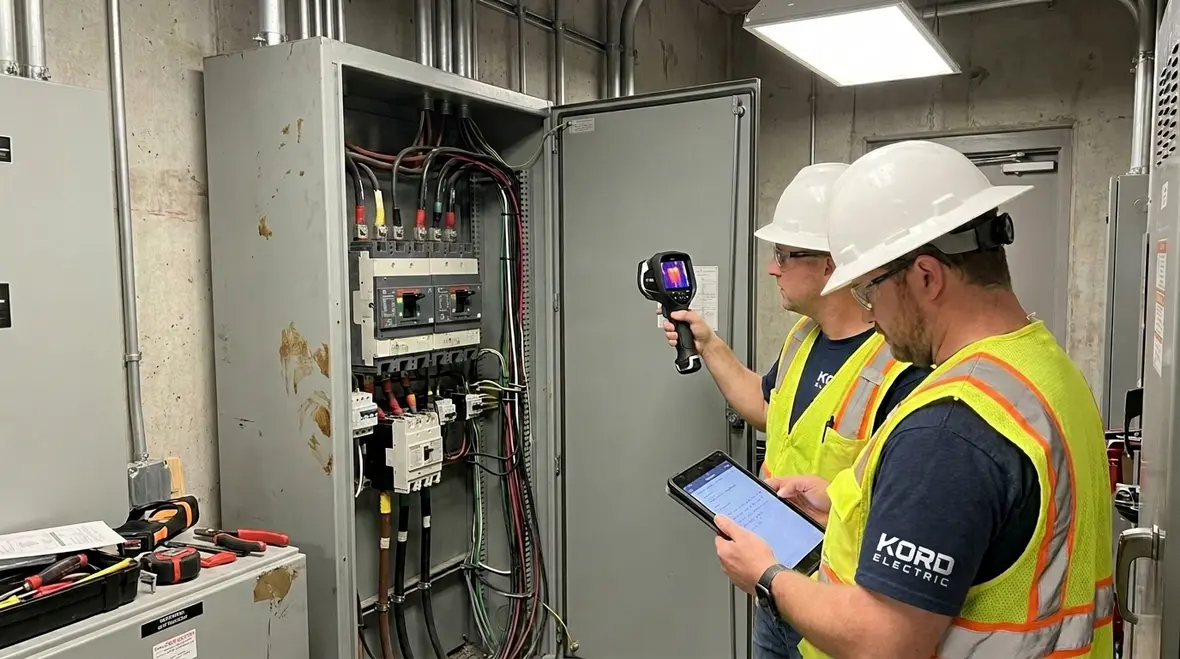
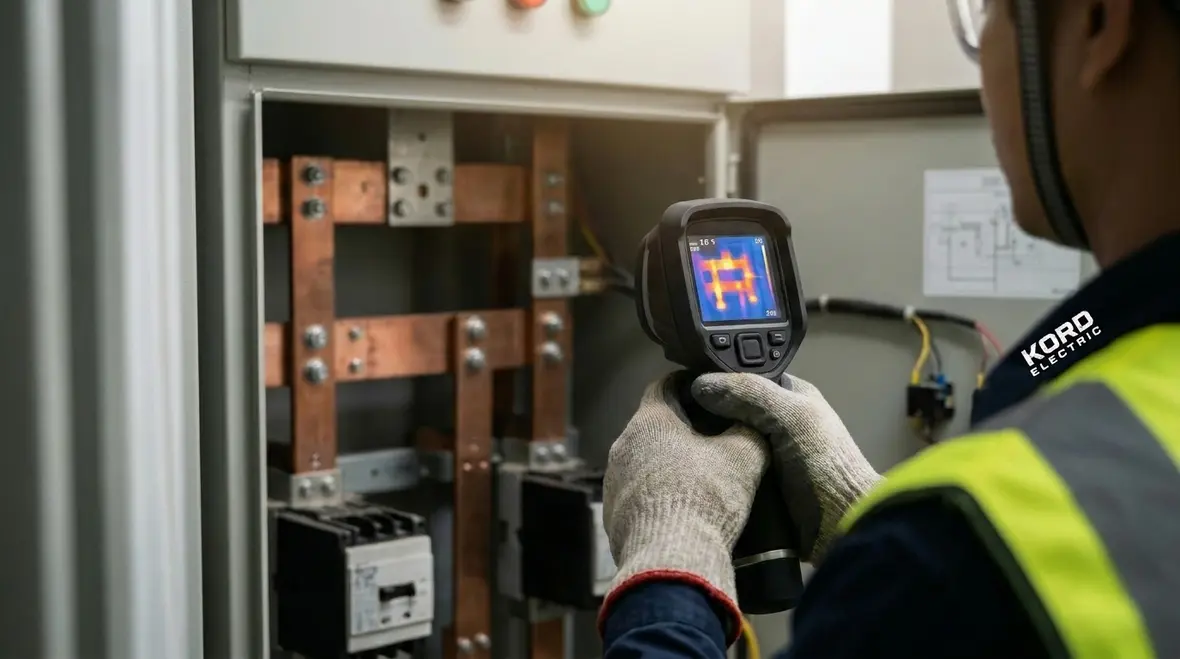
- Temperature and infrared checks: Hot spots on breakers, bus bars, or lugs show where resistive losses are building.
- Voltage drop under load: We look at how voltage behaves during motor starts, peak HVAC cycles, and process changes.
- Existing spare capacity: We count what is actually available, not what the panel label claims.
- Load growth and schedule: We review planned additions, lease changes, new tenants, renovations, and equipment upgrades.
- Harmonics and power quality indicators: Nonlinear loads can overheat neutrals and damage equipment.
Once these items are checked, we then map the current system to the future load picture. Only then does “expansion” become an engineering choice instead of a guess. And as any facilities manager knows, guesses rarely pass inspection.
Key signals that expansion is overdue
Some teams wait for a failure event. That approach feels bold, like letting a cat decide when it wants to behave. But in commercial and industrial environments, bold usually turns into downtime. Therefore, expansion should not depend on an outage to “teach the lesson.”
Our expert service staff often sees these signals before things break:
- Near maximum demand during predictable windows: If peak load regularly sits close to the panel’s rating, growth will push it over.
- Persistent nuisance trips: These can appear even when operators reset the system without tracing the cause.
- Rapid breaker wear: Older breakers under higher load cycle faster and degrade sooner.
- Warm or discolored bus connections: That visual clue matters. Heat is not polite.
- Reduced efficiency in motors and HVAC: Voltage drop can make motors run hot and fail early.
- Expansion request delays: If the schedule keeps moving, you may lose the only window when it is safe to work.
In many cases, the panel is not “broken.” It is simply running out of headroom. Then every additional load becomes heavier than it should be. At that stage, the electrical system stops behaving like infrastructure and starts behaving like a stress test.
How to plan expansion without disrupting operations
Facilities teams usually care about one thing first: continuity. Power cannot become a surprise. So we help property owners plan expansion in a way that reduces downtime and keeps critical loads stable.
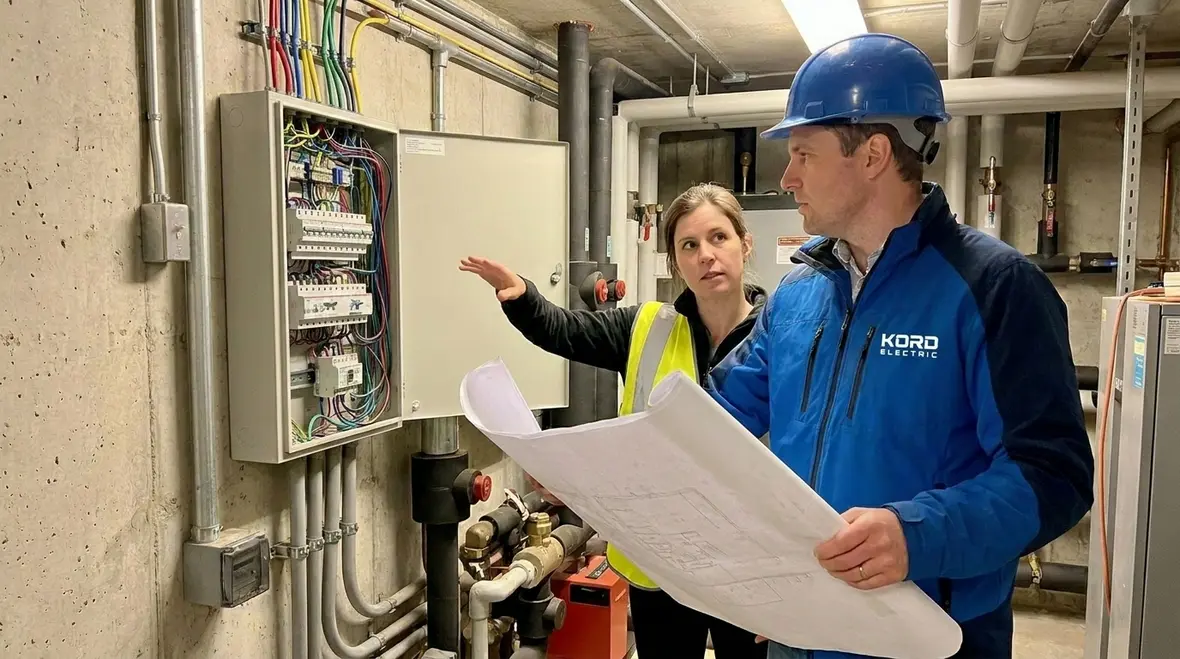
To start, we review the facility’s power architecture. Then we coordinate with building operations and, when needed, the electrical room access schedule. After that, we align design work with construction timing. For example, if the building relies on specific circuits for life safety, security systems, process equipment, or data rooms, we treat those as protected loads. We also consider how the work impacts feeders, grounding, and labeling so the system remains usable after expansion.
Next, we address the practical side that people forget until it is late. We confirm clearances, equipment compatibility, and whether existing conductors can support the changed configuration. We also plan for staged shutdowns when required, and we document the steps so operations staff are not left guessing. And yes, we label like we want future technicians to thank us. That is not vanity. It is safety.
For major property buildings that include high-demand spaces, electrical infrastructure planning must also align with data center needs. Our team often references the fundamentals we cover in our data center electrical infrastructure essentials, because those basics show up everywhere: distribution design, load management, and power reliability. When teams respect those foundations early, the expansion process goes smoother, with less drama and fewer late night phone calls.
Panel expansion options and when each one fits
Expansion does not always mean replacing the entire panel. In commercial and industrial facilities, the best approach depends on where the capacity shortage lives and how power flows through the building.
Common options include:
- Adding panelboards or sections: Teams often expand capacity by increasing available spaces while keeping circuits organized and labeled.
- Upgrading service and feeders: When upstream limitations create the bottleneck, upgrading feed components can unlock capacity.
- Reconfiguring distribution: A smart circuit re-map can reduce overload on specific phases or load groups.
- Adding new subpanels: This approach can separate critical and noncritical loads so each area gets appropriate protection.
- Load management and demand control: When growth is planned, soft controls can reduce peaks while expansion work proceeds.
Our technicians help the facility team choose the right method based on measured load, power quality, and safety requirements. They also explain options in plain language. This is where our expert service staff earns its keep. Because nobody wants to interpret a one paragraph electrical drawing like it is a riddle from a comic book. It should be clear, documented, and buildable.
And if someone suggests that the easiest fix is “just add a breaker,” we respond with respect. Then we explain why breaker changes alone rarely fix an upstream capacity issue. The building deserves real solutions, not electrical bandages.
What happens after the assessment is complete
Once the industrial electrical panel capacity assessment is done, the facility team should receive more than a number. They should receive a decision path. At Kord Electric, we share our findings, the causes behind the capacity limit, and the options ranked by reliability, cost control, and schedule impact.
Then we help answer these practical next steps:
- Which loads must be protected first and which can shift later.
- How expansion affects breakers, feeders, and labeling so maintenance stays simple.
- What electrical room conditions must be addressed for safe installation.
- How to validate performance after work, including test steps that confirm stable operation.
- How to plan for growth so the next expansion does not arrive on schedule like an unwanted anniversary.
Importantly, we align this plan with the real life of the facility. Commercial and industrial buildings do not run on paper. They run on shifts, production cycles, weather, and equipment wear. Therefore, the best capacity plan matches the facility’s rhythm, not a generic template.
For facilities that want to turn assessment insights into ongoing reliability, pairing panel capacity work with a structured program like our electrical preventive maintenance services helps keep systems stable long after the initial project is complete.
FAQ: Industrial panel expansion and capacity planning
Conclusion: plan expansion before the system asks twice
Capacity issues do not get better with hope. They get worse with time, new equipment, and busy production windows. Kord Electric helps commercial and industrial facilities move from guesswork to clarity through a measured industrial electrical panel capacity assessment, careful planning, and field-ready solutions. If your team sees recurring trips, heat at connections, or tight margins during peak load, reach out now. We will explain options, outline next steps, and keep your power dependable, the way it should be.
Contact Kord Electric to schedule an expert review and build a clean, safe expansion plan. For facilities looking to integrate panel work into a broader program, our dedicated electrical preventive maintenance services help keep distribution systems reliable long after the initial upgrade.
When panel capacity, voltage stability, and future load growth all intersect, having a commercial and industrial specialist on site makes the difference between a quick fix and a long-term solution. Our team plans expansions with the same discipline we apply to services like voltage fluctuation diagnostics for commercial and industrial facilities, so your infrastructure can handle what comes next without drama.
If your property is also planning lighting or equipment changes alongside panel work, our commercial and industrial lighting installation services can be coordinated with capacity upgrades to minimize downtime and keep all work aligned under one plan.