How to Read NFPA 70 National Electrical Code
How to Read NFPA 70: A Practical Guide to the National Electrical Code for Commercial and Industrial Buildings
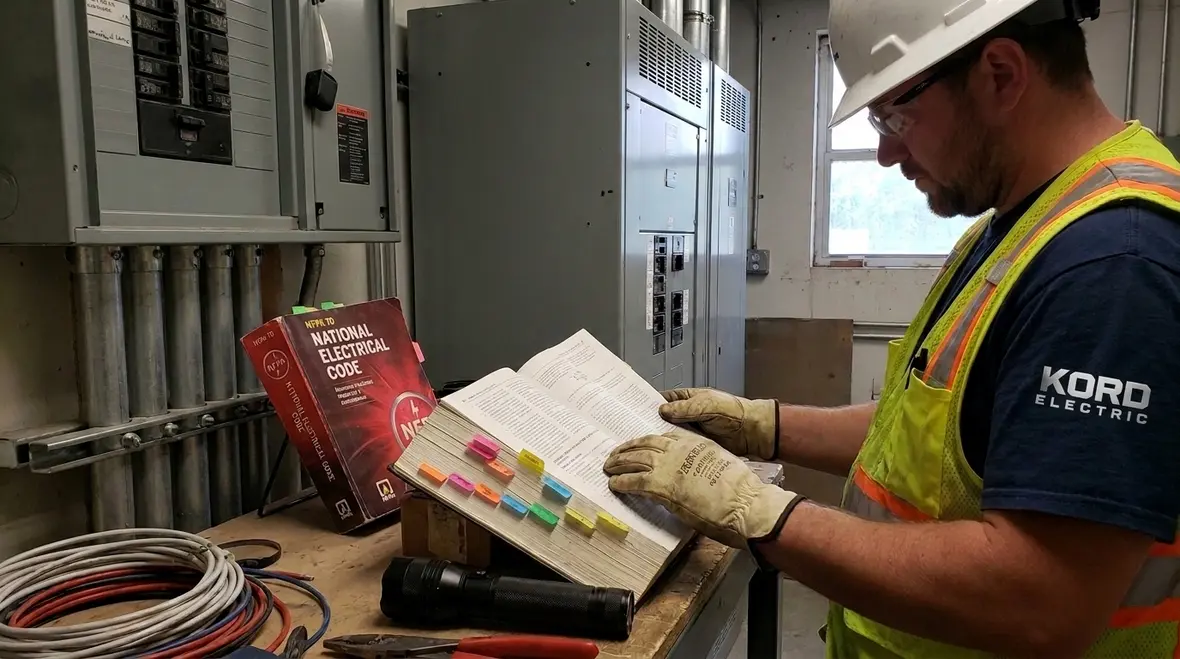
At Kord Electric, we treat the National Electrical Code the way some people treat a “great playlist” on a long shift: carefully, on purpose, and with real respect for what it controls. That is why we wrote How to Read NFPA 70: A Practical Guide to the National Electrical Code and why our team still uses it as a stepping stone when we plan real work for real sites. If you have ever opened NFPA 70 and felt like you walked into a library where the lights are always off, you are not alone. We will help you navigate it.
In the next sections, we explain how to read the code, where technicians focus first, and how we translate the rules into safe, buildable electrical systems for commercial and industrial facilities and major property buildings.
NFPA 70 overview: why the code feels dense but stays useful

NFPA 70 is the big rulebook for electrical installations. It covers how systems should be designed, installed, and verified so people stay safe and property stays protected. However, many facility leaders do not struggle with the idea of safety. They struggle with the structure. That is normal.
Here is what we do: we break the code into practical layers. First, we identify the scope that applies to the building type and the system at hand. Next, we locate sections that control wiring methods, equipment listings, grounding, bonding, and overcurrent protection. Then, we cross check the installation intent against the definitions and the requirements.
To keep things calm, our technicians and expert service staff do not just “read rules.” They map them to the job. After all, nobody wants an electrical plan that reads like a mystery novel where the ending is “call someone else.” We prefer endings with energized circuits, clean documentation, and fewer surprises during inspection.
How to navigate the code without getting lost
When people ask us how to read NFPA 70, we usually start with method, not memorization. So, we recommend a simple workflow that we use on commercial and industrial work.
Step one: start with your project details. Identify the occupancy category, voltage, conductor types, and equipment scope. Also confirm whether you face normal installations, temporary power, emergency systems, or specialized loads.
Step two: find the right chapter, then the right rule. NFPA 70 uses a structured approach. You do not treat every line as equally important. Instead, you look for the sections that directly govern your installation.
Step three: read the requirement and the exception. We see a lot of errors from teams who skip exceptions. Yes, exceptions exist because real buildings are not robots. For example, a baseline requirement might apply broadly, but an exception might allow a different method when certain conditions are met.
Step four: confirm definitions. Words matter in code language. If the code defines a term in a specific way, you treat that definition as the final say. Our expert service staff explains these definitions in plain business terms so the team can act, not just understand.
And just to lighten the mood, if NFPA 70 ever makes you feel like you are studying for a final exam you never signed up for, take a breath. We have done the work long enough to know where people trip, and we guide them around those spots.
If you prefer to pair your reading with more strategic planning content, you can also explore how NFPA 70 connects to bigger projects. Articles like the Electrical Infrastructure Upgrade Planning Guide or the Commercial and Industrial Electrical Maintenance Plans on the Kord Electric blog show how code language turns into long term reliability, safer energization days, and fewer surprises for large facilities.
For teams in fast paced environments, How to Read NFPA 70: A Practical Guide to the National Electrical Code works best when it sits alongside your actual drawings, utility information, and project schedule. Our technicians often annotate code references directly on one line diagrams and panel schedules so that what you read, what you build, and what you inspect all match.
That way, NFPA 70 is not a separate “book on a shelf.” It becomes part of the way you plan tenant improvements, evaluate electrical infrastructure upgrade options, and coordinate with inspectors and stakeholders on every commercial or industrial project.
Key topics we check first for major property buildings
For commercial and industrial facilities and major property buildings, we prioritize the code areas that drive real risk and real downtime. Then we align the documentation so the installation can be verified without last minute scramble.
1) Wiring methods and installation conditions
We focus on how conductors and cables get supported, protected, and routed. This includes conduit and raceway rules, cable requirements, and installation constraints based on exposure and physical hazard.
2) Grounding and bonding
We treat grounding as a system behavior, not a single part. Also, bonding ensures fault current paths behave as intended. If bonding and grounding are wrong, troubleshooting turns into a guessing game, and nobody likes guessing when a facility manager has an event to run.
3) Overcurrent protection and coordination
Overcurrent devices protect conductors, and they also shape how faults clear. We check sizing, type, and ratings, and we coordinate protection so a fault clears without wiping out unrelated circuits.
4) Equipment rules and system labeling
We verify installation requirements for panels, switchgear, and service equipment. We also confirm that the system gets the right markings and documentation so staff can operate it safely later.
5) Emergency and standby power
For life safety and critical loads, we follow the code paths that govern emergency systems and reliable power behavior. In these projects, our technicians also explain what the code expects to happen during transfer and how to validate it.
How our technicians apply NFPA 70 in real projects
Reading the code is one skill. Using it on job sites is another. So we bring our process into the planning and the field work, and we explain the “why” behind each step.
When we start a project, we typically align drawings with the applicable code requirements. Then we review details such as conductor fill, support spacing, equipment terminations, and circuit identification. After that, we confirm the installation method matches the rule, not just the diagram.
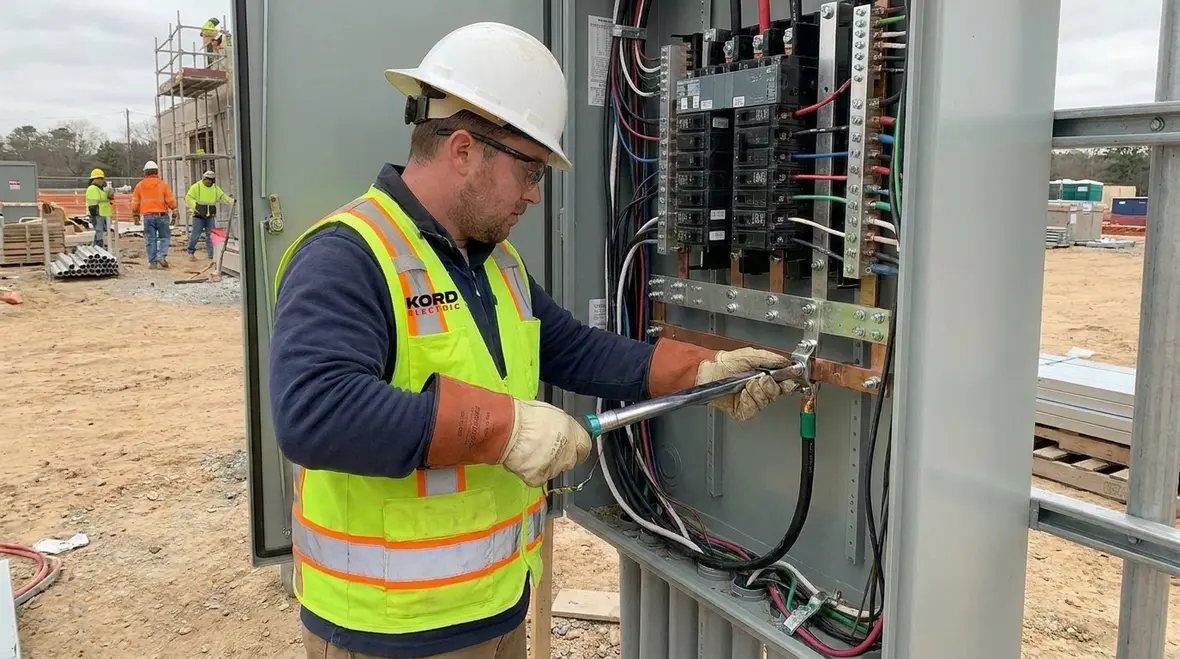
In the field, our technicians verify workmanship in a way that supports long term reliability. They check torque practices where required, confirm labeling, ensure separation where needed, and document results in a way that helps the facility team. Meanwhile, our expert service staff explains what matters most for ongoing operation. That means maintenance teams do not need to translate code language every time they open a panel. They already have context.
And yes, sometimes we catch issues early enough to avoid a “we will fix it later” moment. Those moments always arrive faster than people expect, like a pop up ad you cannot close on the first try.
Dual column walkthrough: code sections to field actions
To make the process easy for teams who work with deadlines, we use a simple mapping approach. Below is a dual column guide we apply during planning and verification for commercial and industrial and major property buildings.
| Code intent in NFPA 70 | Field action we verify with our technicians |
| Wiring methods match the environment and hazard level | Conduit and cable type meet the conditions; routing and support look correct for the space |
| Grounding and bonding support safe fault behavior | Bonding paths are correct; equipment grounds connect as intended; continuity and connection quality hold up |
| Overcurrent protection limits damage and clears faults | Device ratings and placements align with design; conductor protection and coordination requirements support selective operation |
| Equipment installation supports safe use and maintenance | Terminations, working clearances, labeling, and documentation support later service work |
Because code language can feel abstract, we translate it into actions that a facility team can confirm. Then, when the inspector or internal reviewer arrives, we already have the “paper trail plus field proof” needed for smooth outcomes.
How to read NFPA 70 for compliance planning, not panic
Many teams approach the code like a fire drill. However, compliance planning works better when it stays calm and organized. So we guide facility leaders to plan with lead time, document their assumptions, and validate key decisions early.
First, we help identify what version of the code applies to the project timeline and local enforcement requirements. Next, we confirm the intended use of spaces and electrical system modes. Then, we review how the building will operate in practice, including switching behavior, maintenance access, and emergency load performance.
From there, we align a verification plan. That means test expectations, inspection checkpoints, and documentation format stay consistent. As a result, the project runs smoother and the facility team gets a handoff they can trust.
And if you are thinking, “This sounds like extra steps,” you are right. It is extra steps. But it is also the difference between a clean energization day and a day that starts with “why is this circuit acting weird?” Like most problems in life, the expensive part is what happens when you rush.
If your facility is in Los Angeles County and you want a team that reads NFPA 70 with the same focus they bring to real projects, the Los Angeles County electrical services page outlines how Kord Electric supports commercial and industrial properties across the region with code minded planning, installation, and verification.
You can also explore related resources like Understanding NFPA 70: The National Electrical Code Explained for 2026 on the Kord Electric blog, which builds on How to Read NFPA 70: A Practical Guide to the National Electrical Code by walking through the latest code cycle and what it means for large facilities planning upgrades or tenant improvements.
FAQ
Final word from Kord Electric
If you want electrical systems that operate safely and stand up to inspection, do not gamble with code basics. Kord Electric helps commercial and industrial facilities and major property buildings apply NFPA 70 with clarity, documentation, and field backed verification. Our technicians and expert service staff explain the requirements in a way your team can use, not just read. Reach out now, and we will help you plan, build, and verify with confidence so your project moves forward, not sideways.
For facilities planning larger upgrades, our team can connect How to Read NFPA 70: A Practical Guide to the National Electrical Code with services such as infrastructure assessments, distribution upgrades, and commercial project planning. You can also review our in depth article, Understanding NFPA 70: The National Electrical Code Explained for 2026, to see how we break down code cycles for the current year in the same practical, field tested language.
When you are ready to apply this guidance on a real project, the Los Angeles County electrical services overview shows how Kord Electric supports everything from permit planning to final inspection support for commercial and industrial facilities.