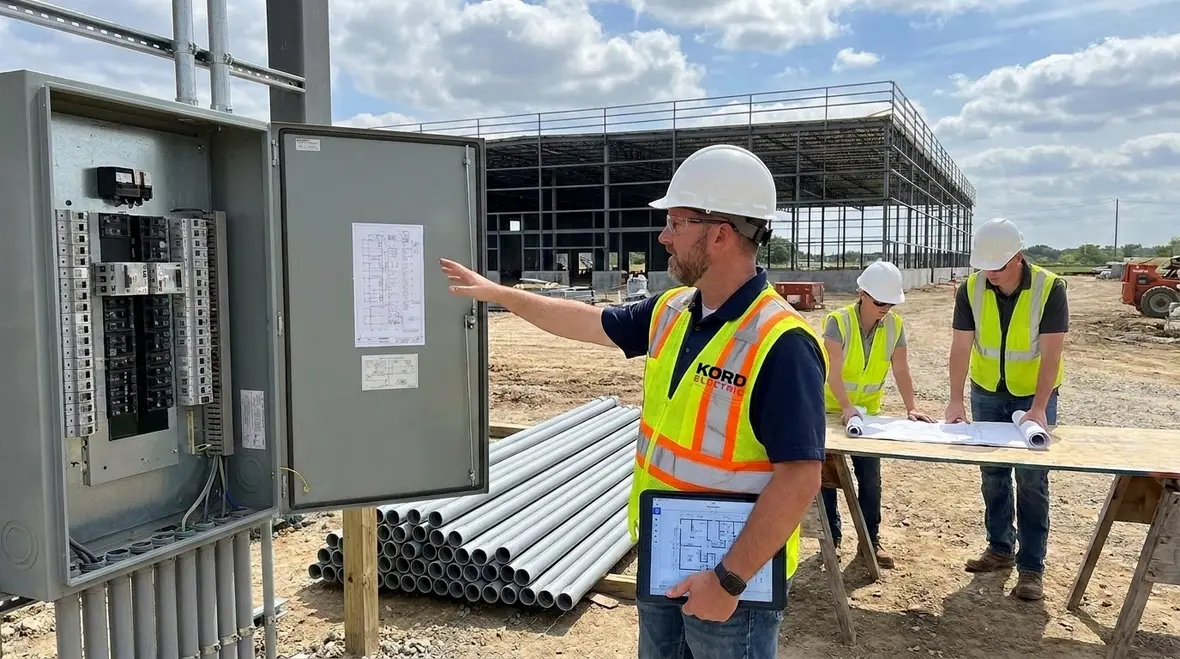
Electrical Supply Planning Tools for Construction Projects
At Kord Electric, we build smarter plans for power and materials with Electrical Supply Planning Tools for Construction & Distribution Projects from day one. We use them to map loads, track lead times, and line up the right equipment for commercial and industrial facilities, as well as major property buildings. In other words, we help our clients avoid the classic construction reality where the panel shows up after the drywall. And nobody wins that game, not even the contractors with three backup plans and a coffee habit.
Our approach is simple in tone, but serious in execution. First, we plan for how electricity will behave in real life. Then, we coordinate supply so the project stays on schedule. Along the way, our technicians and expert service staff explain what matters, in plain language, so the plan does not become a mystery box.
Advanced power distribution for warehouse efficiency starts with the schedule
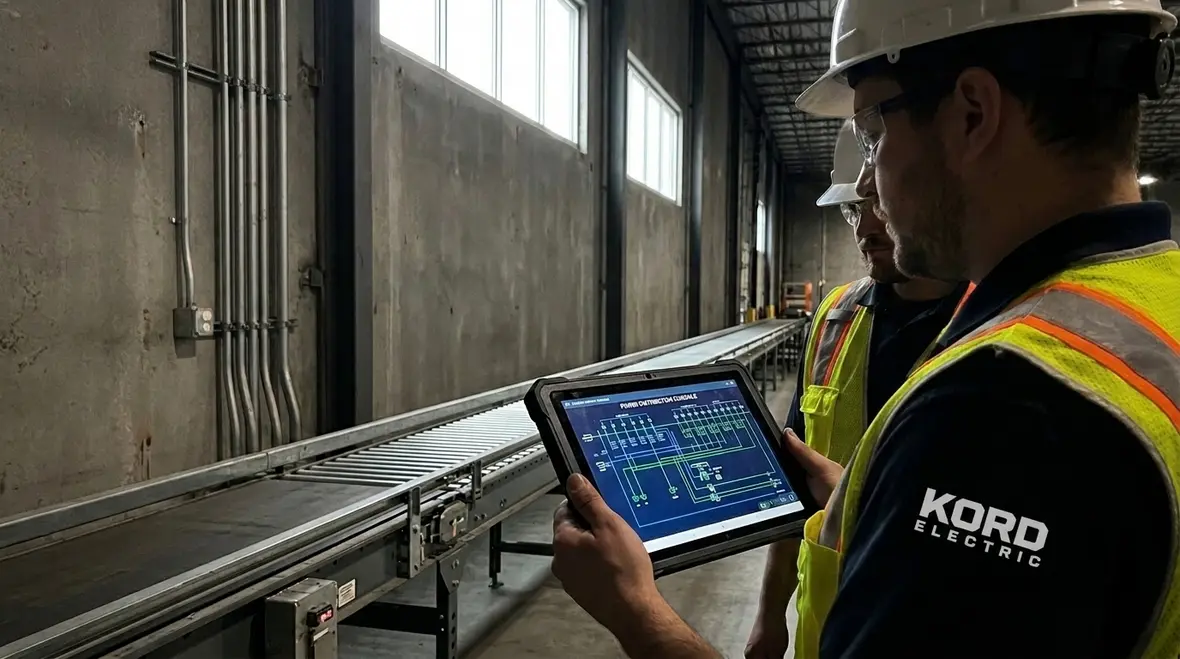
When facilities need reliable power, distribution design and supply planning cannot sit in different rooms. In the warehouse world, for example, equipment runs in bursts: conveyors start, systems cycle, lighting changes, and dock activity spikes. In that environment, the schedule becomes part of the electrical system. If distribution components arrive late, the whole power plan gets delayed, and then everyone starts “revising” under pressure. That revision is not strategy, it is triage.
In the Kord Electric blog feature on advanced power distribution for warehouse efficiency, we highlight how modern distribution helps keep operations smooth. Our planning tools support that same outcome by connecting electrical needs to procurement timing. Therefore, we model the electrical requirements and then align the buying path, so the distribution scheme builds without surprises. And yes, we do tell clients the truth early. The truth is calm, but it can still be annoying. That is how you know it is useful.
How electrical construction and distribution projects get delayed in the real world
In commercial and industrial projects, delays often start small and then grow legs. One delayed component turns into another. A revised breaker selection triggers an updated long lead order. That order ships later. Now the installer waits. Meanwhile, the site manager wonders why the calendar looks like a bad sitcom season finale.
We see a pattern across construction and distribution work. Early planning gaps create later confusion, especially around power distribution panels, switchgear, feeders, and specialty equipment that depends on design details. Our Electrical Supply Planning Tools for Construction & Distribution Projects help prevent those gaps by tying requirements to dates, not just to drawings.
As a result, we focus on three practical areas. We confirm what the design calls for. Then we validate lead times against the critical path. Finally, we coordinate handoffs between electrical scope, distribution layout, and field installation sequencing. Because when parts arrive on time, power distribution stays aligned with the commissioning plan.

Electrical Supply Planning Tools for Construction & Distribution Projects: what we actually track
Our team does not use planning tools as a fancy spreadsheet replacement. We use them as a decision system that links electrical design intent to purchasing reality. Specifically, we track supply data in a way that helps our engineers, our estimators, and our field leadership speak the same language.
Here is what we commonly watch as we build the plan:
- Load and distribution requirements: We align the expected power flow with the distribution setup so the design does not depend on “best guess” assumptions.
- Lead time windows: We consider procurement timing for panels, switchgear, bus systems, and other long lead items.
- Install sequencing: We support field workflows so electrical crews do not wait for power distribution components to arrive after the rough-in.
- Revision handling: When scope changes, we update the plan so the procurement path stays consistent.
- Documentation readiness: We keep submittals and specs aligned, which reduces rework during review cycles.
Then, we involve our technicians and expert service staff to explain the “why,” not only the “what.” They help stakeholders understand how decisions affect commissioning and operation, because a facility owner cares about runtime reliability, not just procurement timing. In short, we treat planning as part of the electrical system, not as paperwork.
Distribution design that supports operations, not just inspections
Commercial and industrial facilities run on uptime. Therefore, their power distribution must support operations during normal cycles and during changes. A distribution setup that looks perfect on paper can still fail to serve the building if it does not match how equipment runs.
Our process emphasizes distribution design that supports real schedules and real load behavior. For instance, warehouses need predictable power for automated systems, lighting zones, and material handling equipment. Similarly, major property buildings rely on power stability for life safety loads, elevators, tenant improvements, and building management systems.
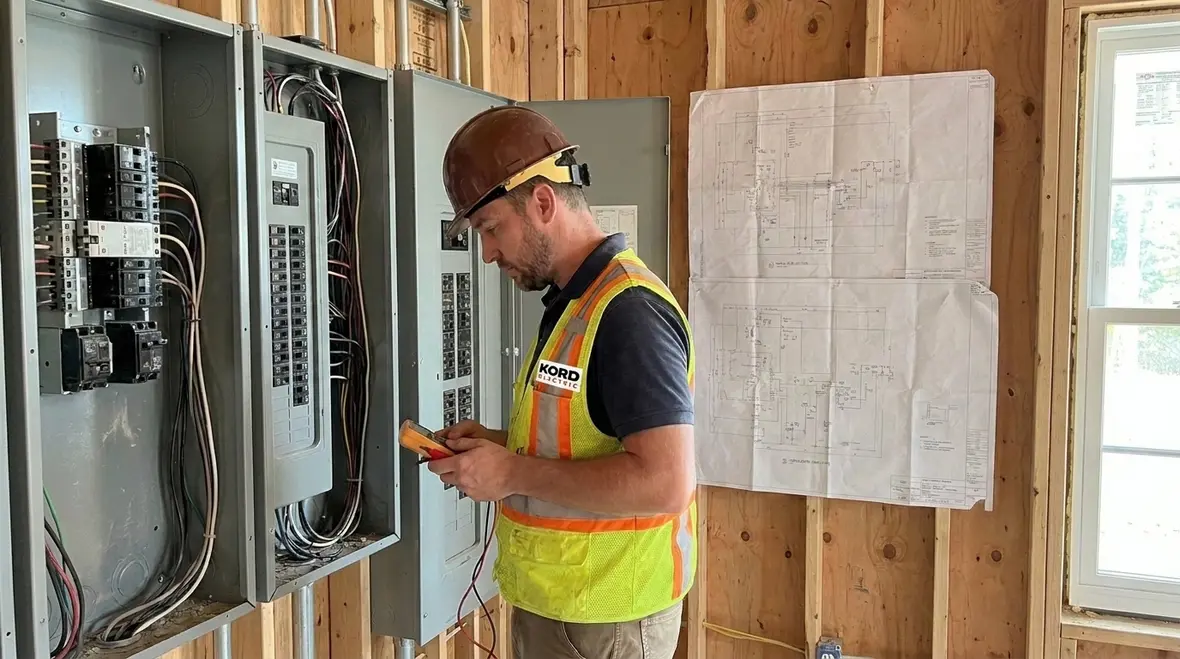
At Kord Electric, we connect the planning tool outputs to distribution design decisions. That means we evaluate how feeders route, how panels and switchgear integrate, and how protective devices coordinate. We also account for field constraints like cable routing paths, space requirements, and access. As a result, the electrical construction work proceeds with less churn and fewer last minute substitutions.
And we keep things honest. If a change affects reliability or coordination, we say it directly. The goal is not drama. The goal is a distribution system that serves the facility long after the final inspection photo gets taken.
Coordination across teams: procurement, engineering, and the field crew
Supply planning does not succeed when it stays inside one department. It succeeds when coordination becomes a habit. So we build communication loops that keep procurement, engineering, and installation teams aligned through design changes and ordering windows.
First, our engineering and estimating teams map electrical scope to a procurement plan. Next, procurement uses the plan to order based on verified lead time needs, not guesswork. Then, field leadership prepares installation sequencing around expected delivery dates. Finally, our technicians and expert service staff help explain changes, so nobody has to play detective in the field.
There is also a practical advantage. When teams share the same planning view, fewer items get stranded during transitions. Therefore, the distribution system connects cleanly from early rough-in to commissioning. It also reduces the likelihood of “silent failures,” like missing accessories or misaligned labeling, which usually show up at the worst possible moment.
We will admit it: construction has plenty of surprises. But we do not want surprises where the breaker count should have matched the submittal package all along. That is not a plot twist. That is a preventable problem.
Commissioning and service readiness depend on the right supply plan
Commissioning is where theory meets reality. If the supply plan ignores how systems will be tested and verified, the project gets stuck at the exact stage when everyone expects progress. Therefore, our planning process supports test readiness.
We think about service access and operational support. That means we plan for component placement, labeling, documentation, and coordination among equipment interfaces. Moreover, we consider how the facility will maintain the distribution system once it is live. Major property owners and commercial operators need service clarity, not a scavenger hunt.
Our technicians and expert service staff help ensure that the final electrical construction outcome matches the operational expectation. They also explain how distribution components integrate and what to verify during startup. In this way, we reduce the gap between “installed” and “ready.” And yes, we keep it calm. Nobody wants a commissioning sprint that feels like a group project where only one person did the work.
FAQs about supply planning for commercial and industrial electrical work
How we support warehouses and major property buildings
Warehouses and major property buildings demand a distribution approach that keeps operations steady. We focus on commercial and industrial facilities because those projects require structured coordination and dependable electrical performance. Our work supports environments where uptime matters, where power quality affects productivity, and where distribution reliability protects the business.
With our planning tools and expert service staff, we help teams stay aligned from the early distribution design phase through procurement and installation. As a result, the facility receives a distribution system that fits its operational needs, not just a set of installed components.
And since people love practical benefits, here are a few we commonly help deliver. Better alignment on lead times. Fewer late substitutions. Cleaner commissioning handoffs. More confidence from stakeholders who have to run the facility after we leave the site. For multi-facility operators and property managers across the region, it also means one consistent partner for work that ranges from warehouse distribution upgrades to broader Los Angeles County electrical services that keep complex properties running.
Connecting planning tools to broader electrical services
Electrical Supply Planning Tools for Construction & Distribution Projects do not live in isolation. They connect with how a facility approaches maintenance, upgrades, and long term reliability. When planning tools are aligned with broader service offerings, facilities can move smoothly from design and construction into preventive care, targeted troubleshooting, and future improvements without rebuilding the roadmap each time.
That connection is especially valuable for teams that are already thinking about long term power performance, whether through structured maintenance programs, distribution data management, or focused fault finding. By treating planning tools as one layer in a larger support model, facility leaders can use the same data to prioritize upgrades, budget for future capacity, and respond quickly when loads change or new equipment comes online.
For projects in and around Los Angeles County, that often means coordinating planning conversations with service capabilities that already support inspections, upgrades, and emergency response. In practice, the same clarity that keeps a construction project on schedule also helps long term service partners understand where critical equipment lives, how it was designed to perform, and what “normal” looks like when they arrive years later to support the system.
Ready to plan your electrical supply with confidence?
If you manage electrical construction or distribution for a commercial or industrial facility, we invite you to talk with Kord Electric. Our team uses Electrical Supply Planning Tools for Construction & Distribution Projects to align design needs, procurement timing, and field sequencing, so your distribution system builds smoothly and tests cleanly. Speak with us early, before lead times become a surprise. We will review your scope, explain the plan in plain language through our expert service staff, and help you protect your schedule and your uptime.
To see how this planning mindset extends into broader project work, you can also explore how we handle advanced power distribution for warehouse efficiency and other commercial upgrades that keep facilities ready for growth, not just ready for inspection day.
When you are ready to connect your next build or distribution upgrade with a structured electrical supply plan and a full-service partner, our commercial and industrial team is ready to help.