Advanced Power Distribution for Warehouse Efficiency
At Kord Electric, we help commercial and industrial teams gain control over energy use with practical designs that work in the real world. In our Warehouse lighting power efficiency guide, we start with one simple idea: measure first, then tune. That method cuts waste without guessing, and it keeps operators from paying for light that nobody needs. However, advanced power distribution systems do more than reduce bills. They improve uptime, make maintenance safer, and help facilities run cleaner, steadier, and faster. And yes, the “turn it off to save money” advice is fine, but it is not a strategy. We build systems that perform like one.
How power distribution boosts warehouse operations
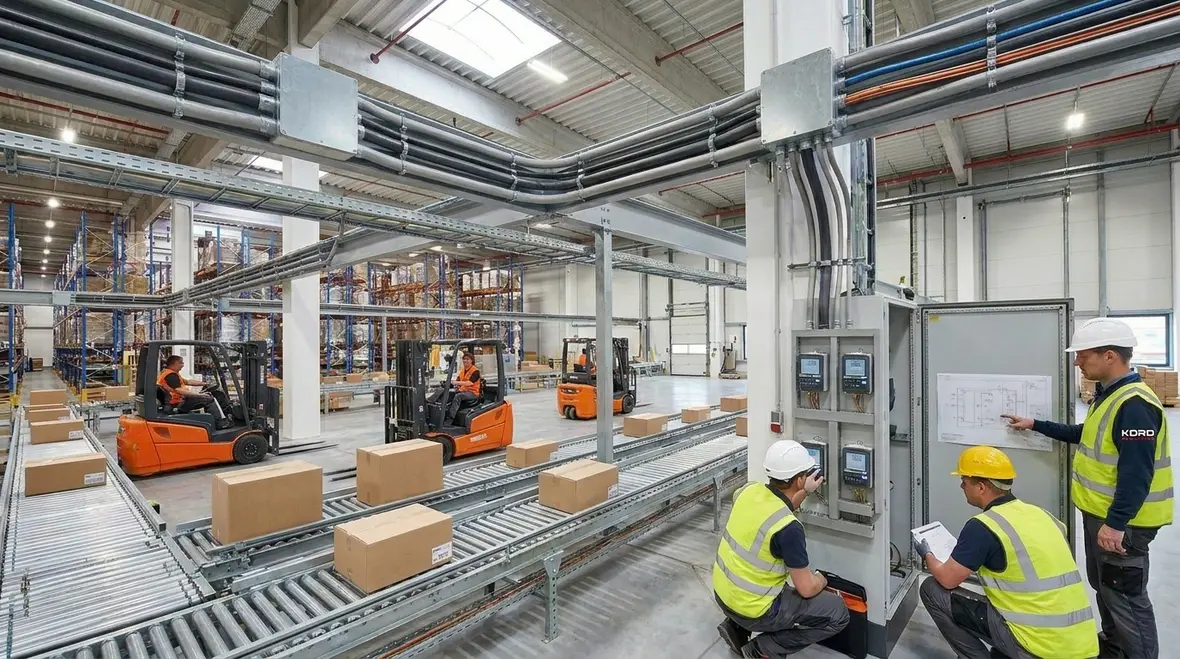
Warehouses operate like busy cities. Forklifts move, conveyors hum, dock doors cycle, and Wi Fi quietly carries critical data. Yet when power distribution falls behind, everything slows down. Lights flicker, motors draw uneven loads, and panels overheat. Then maintenance teams spend their days chasing symptoms instead of solving root causes. That is where advanced distribution systems help. They manage loads, improve power quality, and reduce the stress that causes downtime.
To be clear, we do not treat electricity like a black box. Our technicians and expert service staff explain what we find in simple terms, so decision makers can act with confidence. And when someone asks, “Can this system handle growth?” we do not dodge. We run load studies, review demand profiles, and design for real expansion, not fantasy. The goal is straightforward: keep power stable as activity increases.
Design steps that maximize lighting and motion energy savings
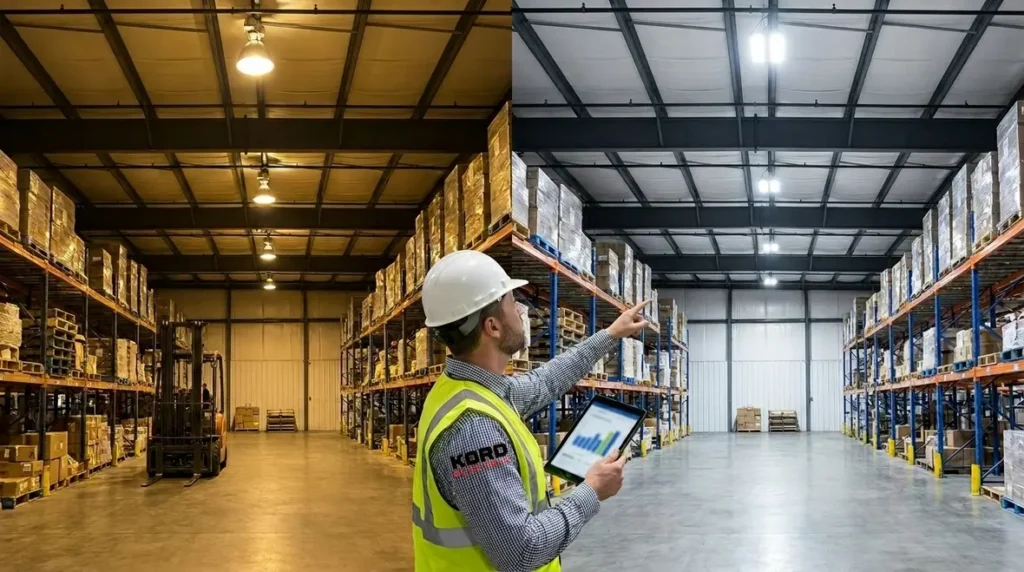
A strong warehouse plan connects lighting strategy to distribution design. First, we map lighting zones and identify how often each area needs full output. Then we match that pattern to the way power is delivered across the site. For example, we can use targeted controls at the panel level so that groups of fixtures dim or switch based on time, motion, or occupancy schedules. That reduces load during low activity without turning the warehouse into a haunted house.
Next, we coordinate distribution so control circuits stay reliable. We also protect sensitive equipment like network racks, security systems, and building management devices. As a result, the warehouse keeps running even when operators perform routine tasks or the site experiences temporary demand spikes.
Finally, we verify performance after installation. Our team uses commissioning checks and measured results, which means the facility does not rely on “it should work.” Instead, it works, and the numbers back it up.
Where load balancing prevents dimming, nuisance trips, and downtime
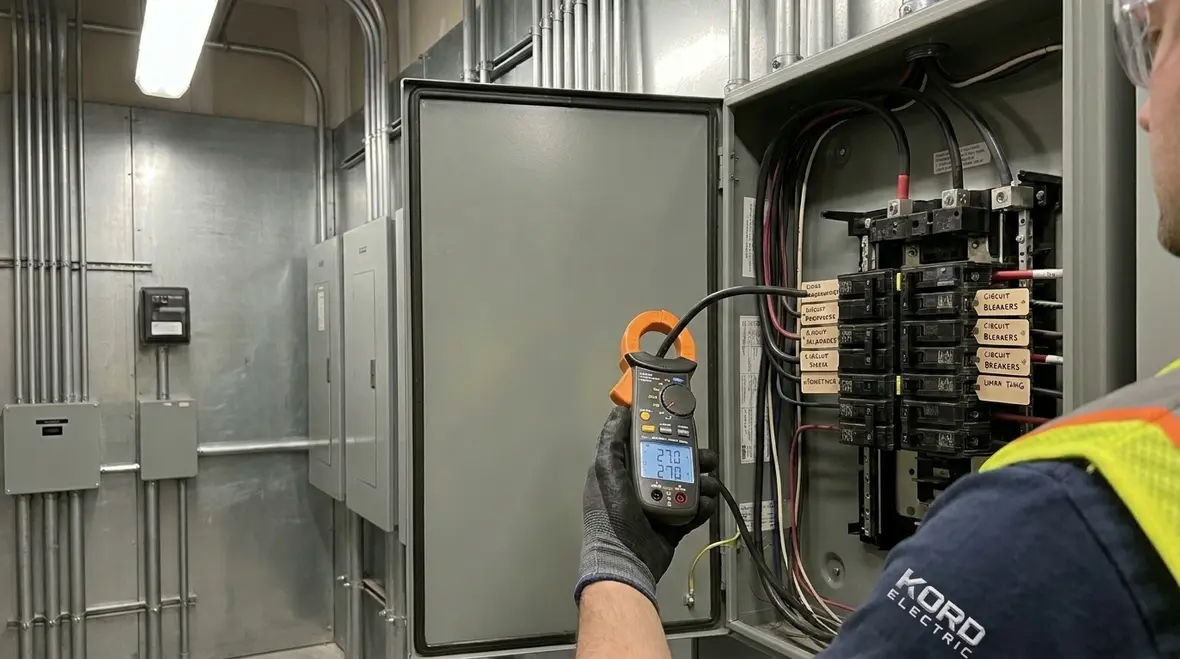
When multiple areas share feeders without proper planning, loads can drift out of balance. One circuit pulls more current, another sits underused, and the panel heats unevenly. Over time, this creates nuisance breaker trips, dimming events, and higher maintenance costs. It also shortens component life, because heat is the silent tax on every warehouse operation.
Therefore, we balance loads by design. We evaluate panel schedules, identify major motor loads and lighting loads, and then route circuits with practical fairness. We also consider how operations change across shifts. A night shift staging area may draw differently than daytime pick zones. When the design accounts for that, the warehouse stays stable.
Importantly, our expert service staff explains the “why” behind the balancing plan. We show what changes, what stays, and how it impacts both comfort and uptime. If a facility team wants to know why a specific feeder needed a different breaker size, we answer directly and we keep the explanation calm and clear.
Modern commercial electrical systems in warehouses that scale
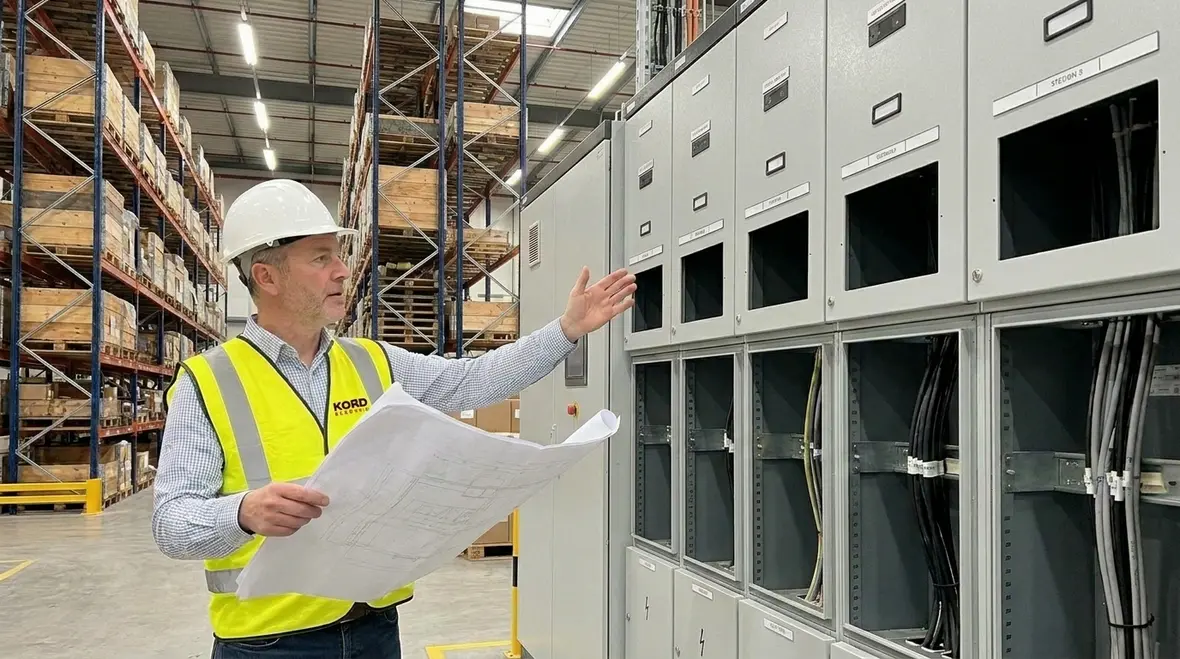
Warehouse work expands in waves. New racks go in, new lines start, and the building management team adds sensors because leadership wants better visibility. The catch is that power systems must scale without forcing expensive rewiring. Our approach aligns with our commercial electrical systems work for modern buildings, where we prioritize safe layouts, clear labeling, and long term flexibility.
So, we design distribution with growth in mind. We use panel footprints that can accept future circuit additions. We plan spare capacity in feeders and switchgear. We route power so techs can access it quickly during service calls, not after a scavenger hunt. Then we document everything in a way that helps the next team, including contractors, stay productive.
We also consider how the warehouse handles peak demand. Instead of treating peaks as rare events, we model them. That supports smarter strategies for lighting groups, HVAC loads where applicable, and other site equipment that creates demand during shift change and high throughput periods.
And yes, scaling can feel like building a phone app at 2 AM. It works, but nobody wants to debug it under pressure. We prevent that by designing for the future while the facility still has time to plan.
For a closer look at how this approach translates beyond warehouses, you can explore our insights on commercial electrical systems for modern buildings, where the same principles of clarity, scalability, and safety guide every design decision.
Power quality and protection that keep critical systems online
Even when the load is “right,” power quality can still harm equipment. Voltage dips, harmonics, and surges can cause controllers to reset, cameras to lose sync, and automation gear to underperform. In a warehouse, a minor interruption can slow operations, trigger safety concerns, and ruin shift schedules.
To address this, we install appropriate protection and power conditioning where it matters. We use coordinated protection so faults clear fast without spreading damage. We apply surge protection to protect control electronics. And we manage harmonics when the site includes drives, rectifiers, or other non linear loads.
Furthermore, we set up systems so operators can respond quickly. Proper labeling, clear circuit identification, and accessible components help the facility recover faster. Our technicians also guide teams through operational best practices after commissioning, because the best system in the world still depends on good hands on day to day tasks.
Common warehouse efficiency challenges we see
- Uneven lighting loading across panels
- Old switchgear and unclear circuit labeling
- Control wiring that fails during routine maintenance
- Motor driven equipment that adds harmonic strain
- Panels that run hot due to poor distribution planning
What our designs focus on
- Measured zone control and stable dimming behavior
- Load balancing across feeders and phases
- Protection coordination that reduces nuisance trips
- Clean power delivery for automation and safety systems
- Commissioning checks tied to your goals
Commissioning, measurement, and service support that last
Installation is not the finish line. Warehouses change, usage shifts, and equipment ages. That is why commissioning and ongoing service matter. We do not just hand over drawings and hope. We test the system in realistic conditions. Then we confirm that performance matches the goals in our Warehouse lighting power efficiency guide, including how lighting controls behave across typical operating schedules.
After that, our expert service staff stays involved when facilities need support. They help teams understand how to maintain panels safely, how to spot early signs of imbalance or overheating, and how to handle updates without disrupting production. Because we work in commercial and industrial settings and major property buildings, we understand the pace of life on these sites. You cannot stop operations for long, and you cannot risk repeated service visits.
And when issues do pop up, we respond with clear explanations. We describe what failed, why it failed, and what we recommend next. This reduces confusion and helps people make decisions without guesswork. It is like having a calm voice on a shaky call. You still fix the problem, but you do it without drama.
FAQ: Warehouse power distribution and efficiency
Next steps to upgrade your warehouse power system
If your warehouse energy use feels “stuck,” your power system may be doing work you cannot see. We can help with load studies, distribution upgrades, commissioning, and lighting control tuning that aligns with the Warehouse lighting power efficiency guide. Kord Electric supports commercial and industrial facilities and major property buildings, so we design for uptime, safety, and growth. If you want a clear plan and practical results, contact us today and let our technicians map your next upgrade.
For facilities looking to align power distribution upgrades with broader reliability goals, you can also review how our dedicated electrical preventive maintenance services help protect warehouse systems over the long term. Coordinating advanced distribution design with structured maintenance keeps critical operations steady as your site evolves.
If you are planning a larger project that combines warehouse power upgrades with wider commercial improvements, our team can connect this work to your overall commercial electrical strategy so your building scales smoothly instead of reacting under pressure.