
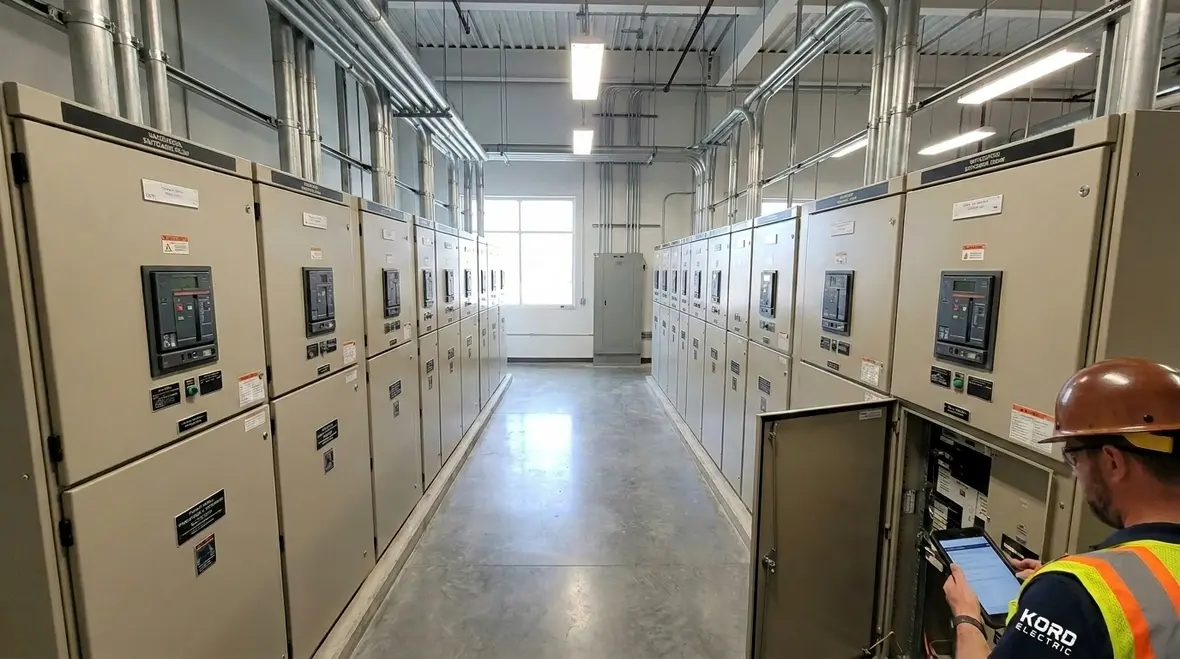
Industrial Power Redundancy Strategies Guide
Why redundant power keeps commercial and industrial operations alive
At Kord Electric, we build Industrial power redundancy strategies into the electrical design from day one, so commercial and industrial facilities do not blink when the utility grid stumbles. We design for continuity by pairing dependable sources, separating critical loads, and using controls that switch quickly and clearly. Meanwhile, our team reviews real operating risks, not just one sized up “standard” drawings.
Now, nobody wants to think about power loss, but reality has a habit of showing up uninvited, like a sitcom character who always says the wrong thing and somehow lands on their feet. So we plan for that moment in advance. Then, we document it, test it, and maintain it, because redundancy only works when it is real, not theoretical.
Site power story: map risks before design decisions
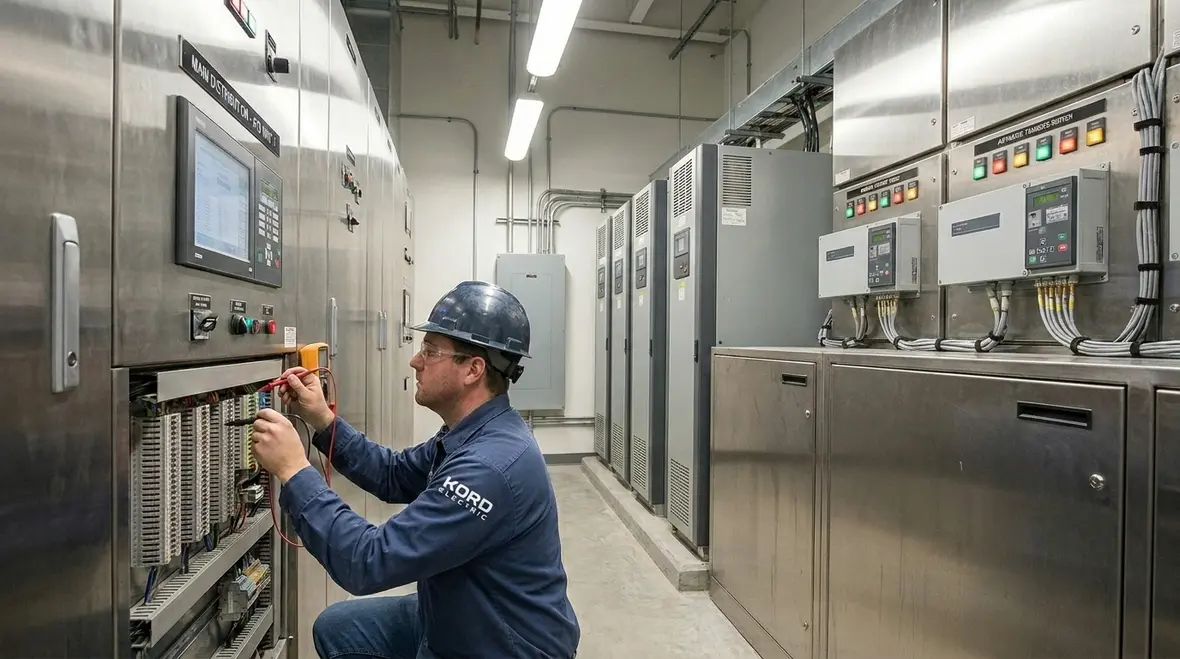
Others may start with equipment first. We start with the site story. Our technicians and expert service staff walk the facility, then they trace where power truly matters. For instance, we confirm which panels feed process equipment, life safety systems, critical networking, and any building systems that keep operations stable. After that, we look at how the building behaves during disturbances. Then we ask a simple question: what failures would shut you down, and which ones would barely slow you down?
Next, we study utility history, transformer loading, generator run history, and previous outage reports. In many cases, the “problem” is not the power supply at all, but the way loads are grouped or the way switching devices coordinate. Therefore, our engineering and field teams align on the right balance of capacity, switching speed, and protection settings. That way, the redundant path does not just exist on paper, it carries real responsibility when it matters.
And yes, we also consider human behavior. People do not always respond like a control panel. So we make sure the system is intuitive to operate, with clear labeling, tested sequences, and procedures that match how your facility team works.
How N+1, dual feeds, and source switching support continuity
Industrial continuity comes from layered choices. When Industrial power redundancy strategies get implemented properly, they create more than “backup power.” They create dependable alternatives. One common approach uses dual utility feeds or dual distribution paths, often built to N+1 logic so one component can fail without shutting down critical loads.
Here is the practical idea. Instead of assuming any single source will always behave, we plan for normal operation plus a controlled fallback. For example, dual feeds can power the same critical switchboard under normal conditions or share loads based on designed logic. When a fault occurs, switching devices transfer loads to the remaining healthy source.
Meanwhile, source switching includes careful coordination between protective devices and controls. We confirm that breakers, relays, transfer switches, and interlocks work together so the system clears faults fast and avoids unsafe backfeed conditions. Otherwise, the system might keep running, but it could also create new problems, like nuisance trips or unstable power quality.
Finally, we align redundancy with operations. A warehouse with minimal downtime tolerance might need different behavior than a manufacturing line, data hall, or critical treatment facility. Thus, we tailor switching sequences and load priorities to match the facility’s actual needs.
Designing distribution so failures stay local and systems stay stable
Once the sources are planned, we shape the distribution path. A facility can have redundant feeders and still suffer major downtime if distribution is not separated well. So we focus on segmentation, selective coordination, and panel strategy. We design bus systems and switchgear layouts to reduce the chance that one fault harms too much of the building.
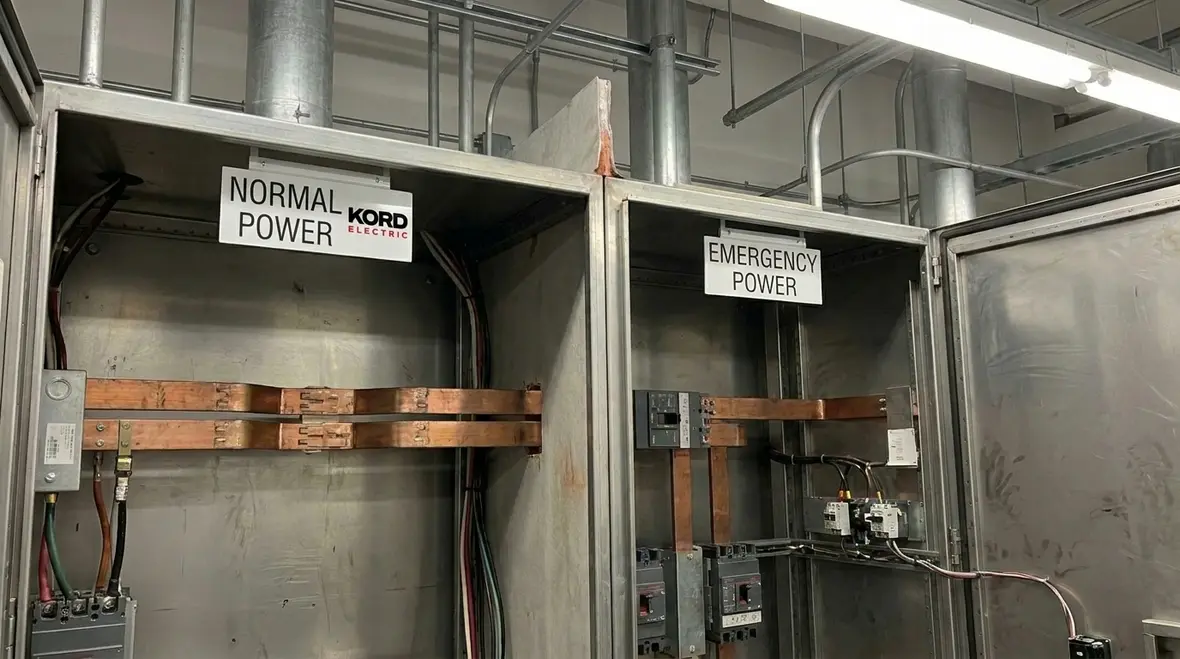
In real terms, we often separate normal and emergency equipment, isolate critical loads, and maintain clear boundaries between life safety, process loads, and support loads. Therefore, when a transformer fault or bus failure happens, protection does its job and the healthy sections continue to operate.
Additionally, we address power quality within the redundancy plan. Switching events can cause disturbances if controls are not coordinated. We verify voltage regulation needs, harmonic considerations, and grounding strategy. That matters because stable power quality supports motors, drives, sensitive controls, and communications gear.
And because people ask for “redundant power,” we remind them: redundancy is not just about extra hardware. It is also about correct labeling, correct wiring, and correct settings. Our technicians check details that other teams skip, because small errors can become big outages.
Commissioning and testing: redundancy only counts after proof
We do not stop at installation. We prove the system. During commissioning, our expert service staff verify load transfer sequences, interlock logic, and protection behavior. Then we test under realistic scenarios, so the facility sees what will happen when it matters.
For example, we test transfer switch operation, check generator or alternate source starting behavior, and confirm automatic sequences. We also verify alarm points and monitoring signals so operations teams see issues early rather than discovering them during an outage. In short, we turn redundancy into a tested routine, not a stressful mystery.
As part of that work, we review maintenance readiness. If a system needs specialty tools, special access, or rare vendor parts, we make sure the plan supports real life. Then we help facility teams understand what they should expect during maintenance windows.
Occasionally, someone tells us, “We’ll test it later.” Later is how people end up meeting the electrician under fluorescent lights at midnight. We prefer the calm version: scheduled testing, clear logs, and a plan that reduces surprises.
Maintenance plans that keep redundancy working year after year
Even strong designs lose reliability if facilities skip maintenance. So Kord Electric supports commercial and industrial customers with maintenance planning that fits their equipment and their risk level. If you want to see how we think about structured upkeep, we recommend reviewing our guidance in the commercial and industrial electrical maintenance plans resource. In that same spirit, we build routine work that keeps the system dependable during both normal operations and abnormal events.
Typically, our approach includes inspections, testing, and documentation for key components such as switchgear, breakers, transfer equipment, and protective relays. We also focus on mechanical health: contact wear, transfer mechanism performance, and control wiring condition. That matters because many failures start as “small” mechanical issues long before they show up as full outages.
Then we tune maintenance to the facility schedule. We coordinate work to avoid disrupting production. We also provide reporting so owners and operators can track trends. Over time, trend data helps teams plan replacements before failure, which is how redundancy becomes cost effective.
Just as important, we communicate clearly. Our technicians explain findings in plain language, and they guide customers on what needs immediate action versus what can wait. We keep it business casual, not “electrical code poetry.”
Training, documentation, and operating clarity for continuity
Redundant power infrastructure design works best when the facility team can operate it confidently. So we help clients with documentation that supports daily work. That includes updated one line diagrams, clear panel schedules, and notes on normal and emergency operating states. We also help align alarms, signage, and procedures with what the equipment actually does.
Next, we provide training that respects the team’s real responsibilities. Our technicians review system behavior, explain what alarms mean, and describe what steps the operator should take during a transfer event. They also cover safe boundaries such as interlock purpose and backfeed prevention.
Transitioning from “we installed it” to “we can run it” makes a big difference. And when your facility runs multiple shifts, with different operators each day, the right documentation and guidance prevent confusion. That is continuity, too.
FAQ
Ready to protect business continuity with redundancy built in
If your facility cannot afford surprise shutdowns, we recommend a clear plan for redundancy that fits your actual loads and operating risks. Kord Electric designs, commissions, and maintains commercial and industrial electrical systems so your critical operations stay powered when conditions change. Our technicians explain each step, document the results, and support your team with maintenance-ready procedures. For related long-term reliability planning, many facilities also pair redundancy projects with structured electrical preventive maintenance programs that keep infrastructure stable year after year. Contact us today to assess your current setup and build a continuity plan you can trust.
If your site also needs lighting or distribution upgrades as part of these Industrial power redundancy strategies, our dedicated lighting installation services help align visibility, efficiency, and safety with the same disciplined approach we apply to critical power design.


