Industrial Subpanel Expansion Guide for Growth
Scaling Your Industrial Power With the Industrial Subpanel Expansion Guide
At Kord Electric, we treat power like a system that has to last, not a problem to patch. That is why our industrial subpanel expansion guide starts the right way: by helping teams plan ahead for load growth, confirm the service and equipment capacity, and add circuits with proper labeling, protection, and workmanship. In the rest of this article, our experienced technicians walk through how a commercial or industrial facility scales power without turning maintenance into an all day “who touched what” mystery.
And yes, people will still ask, “Can we just add one more breaker?” Others will laugh, and then we still have to do it correctly. Let us show you how we keep it calm, code aligned, and built for real operations.
Why Industrial Subpanel Capacity Limits Show Up in Real Facilities
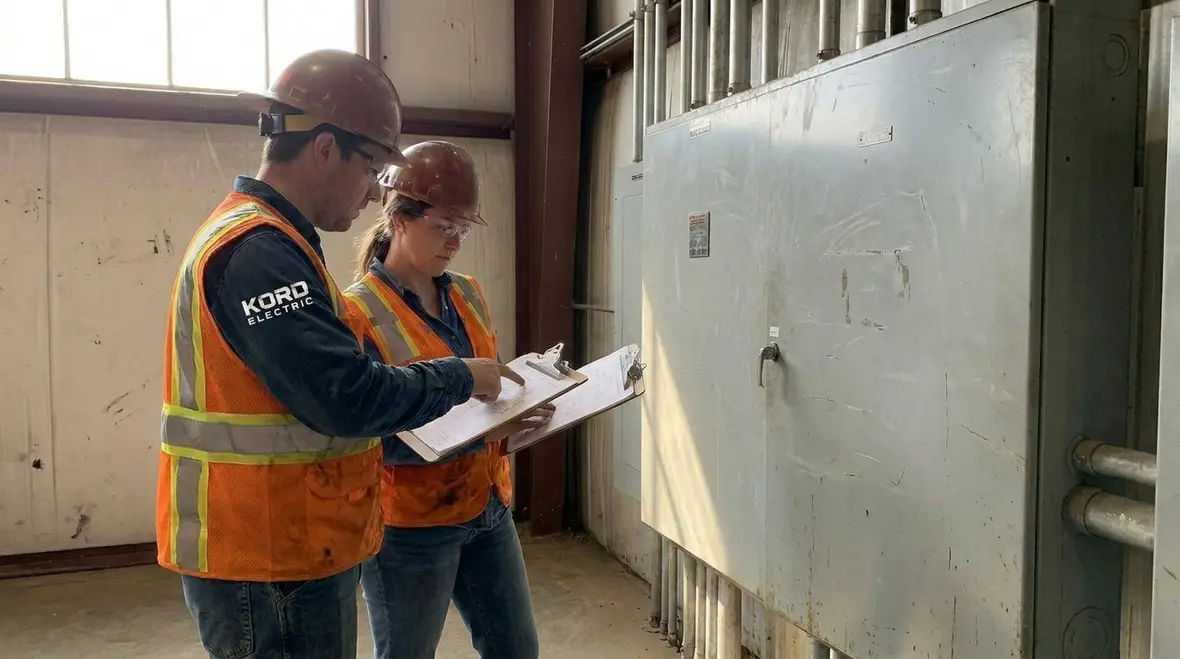
In commercial and industrial buildings, power demand rises in stages. First, one new machine shows up. Then, lighting gets upgraded. Next, HVAC runs longer seasons. Therefore, the loads that once fit neatly into existing panels start to crowd out the available space.
Kord Electric technicians often see the same patterns. Breakers get replaced with mismatched types, knockouts get filled in a hurry, and blank spaces shrink faster than expected. Meanwhile, bus ratings, conductor sizing, and thermal limits do not “grow with the building.” They stay fixed, and the electrical system reminds everyone with heat, nuisance trips, or voltage drop.
So, before expansion, we confirm what the facility actually needs. Then we map that against available panel space, electrical ratings, and distribution design. This keeps the solution from becoming a temporary patch that becomes a long term headache.
For facility leaders reviewing broader system limits, pairing this with a deeper look at hidden infrastructure issues can be helpful. Kord Electric shares additional insight on unseen panel and distribution risks in their article on hidden electrical problems in commercial buildings, which shows how crowded, aging, or modified equipment can quietly erode safety and reliability over time.
Plan the Expansion Scope Like a Pro, Not Like a Guess
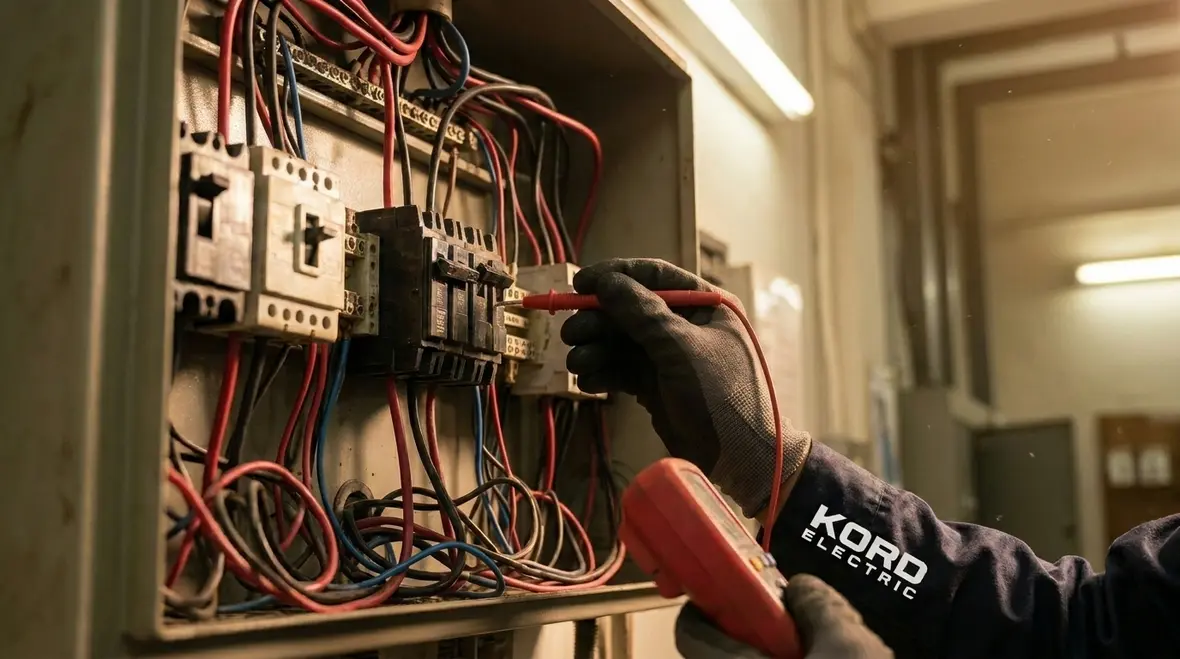
When we help a major property or industrial site, we start with a proper scope. That means we collect current single line details, panel schedules, and equipment lists. Next, we review future work with the building team. For example, a facility may be adding production lines, upgrading conveyors, or increasing process cooling.
After that, we evaluate demand and diversity in a practical way. We do not just count breakers. We consider motor starting current, continuous loads, and how the system behaves during peak operation. Therefore, the expansion design protects both comfort and production. If you only design for average power, you will likely discover the limits during startup events.
We also plan installation impact. In many facilities, power outages are expensive. So, we discuss phasing options, load transfer needs, and commissioning steps. Our technicians explain each step as they go, because the best electrical plan is the one the team can actually operate and maintain.
For organizations building a longer term strategy around expansions, retrofits, and reliability, this subpanel planning work fits naturally alongside structured commercial and industrial electrical maintenance programs. A disciplined maintenance plan keeps panels, feeders, and protective devices in known condition so each new project starts from solid ground instead of guesswork.
Do You Have Enough Panel Space and Bus Rating for Growth?
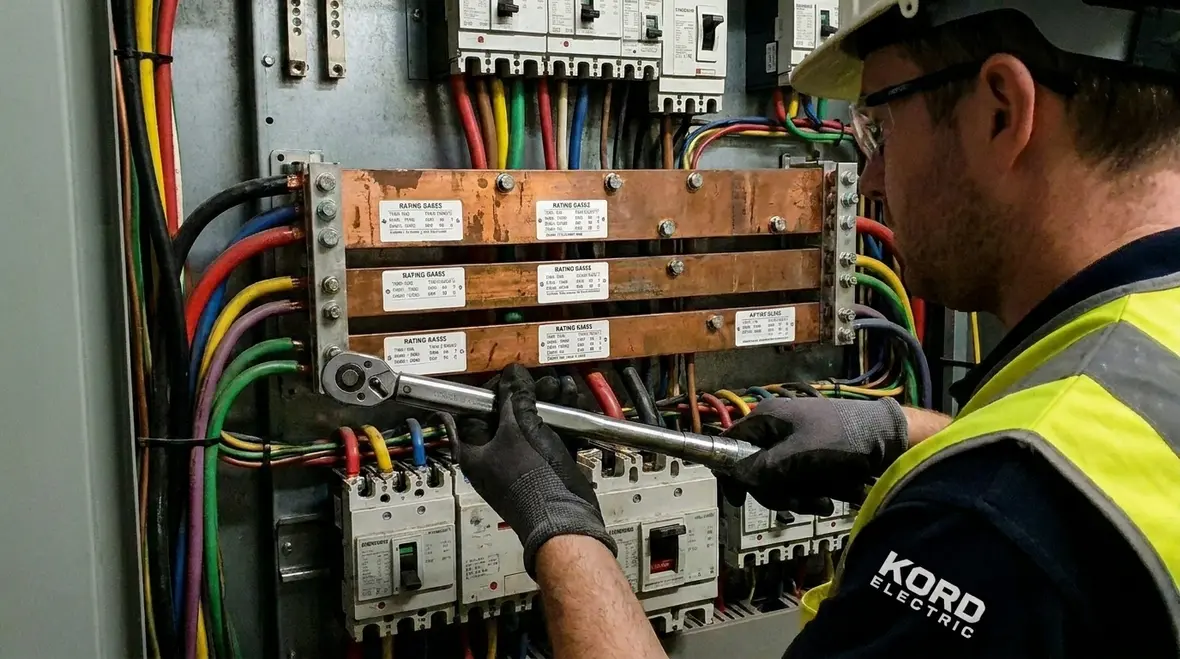
Panel size is not the whole story. Even when a cabinet looks roomy, the bus rating and feeder capacity decide what is truly possible. Kord Electric focuses on the complete electrical path, including bus ampacity, upstream protection, and conductor routing.
During a typical assessment, our expert service staff checks available breaker positions and whether the panel supports the number of poles and ampere ratings you want to add. We also examine load balance between phases. If phases drift too far apart, the system runs hotter and works less efficiently.
Here is where we slow down and explain plainly. If the bus rating or feeder limits are near the ceiling, adding space alone creates a false sense of safety. It is like buying bigger storage bins for a room that already floods every time it rains. You did it “right,” but the water still wins.
Once we know the real limits, we recommend the expansion approach that fits the facility’s electrical architecture. That may include rethinking how loads are distributed across panels, coordinating with broader commercial electrical system upgrades, or pairing the work with preventive maintenance on critical feeders and switchgear so future growth stays predictable.
Step by Step Installation Approach for Commercial and Industrial Sites
Once planning is complete, Kord Electric moves through installation with steady control. First, we verify existing conditions in the field. Then we confirm labeling standards and breaker identification requirements so the facility team can maintain the system later without guesswork.
Next, we address wiring and termination quality. We use proper conductor sizing and ensure torque and connection methods meet standards. Therefore, the expansion does not create hotspots and it avoids hidden failures.
After wiring, our technicians install and verify overcurrent protection. Then we test functionality under safe conditions. This includes verifying correct phase connections and checking for abnormal behavior in newly added circuits.
Finally, we update the panel schedule and document changes. We do not leave a facility with a “trust me” situation. We hand over clear records so other electricians, facilities teams, and safety staff can understand what we did and why.
For facilities that want subpanel work to align with broader infrastructure changes—such as solar integration, lighting retrofits, or switchgear modernization—our team coordinates timelines and testing steps so each upgrade supports the others instead of competing for capacity.
Key Code and Safety Checks That Prevent Costly Rework
Expansion is not only about adding circuits. It is about staying safe and compliant for the long haul. Kord Electric emphasizes key checks that protect people and equipment across commercial and industrial facilities.
We verify grounding and bonding practices, because correct reference paths reduce shock risk and stabilize system operation. We also confirm that panelboard ratings, enclosure integrity, and conductor routing comply with applicable requirements. When facilities skip these steps, problems often surface later as tripped breakers, nuisance alarms, or equipment downtime.
Additionally, we check that circuit conductors match the protection provided. That sounds basic, and it is. Yet mismatches are one of the fastest ways to turn a clean expansion job into a rework project. Our technicians explain this with zero drama. If the breaker and wire are not aligned, the system will behave like a bad superhero team. Everybody has a role, and the whole mission fails when one member does not show up.
We also manage cleanliness and separation in enclosures. That keeps access safe and reduces the chance of damaged conductors during future maintenance.
Behind all of this work sits the national electrical code and related maintenance standards. When you expand a subpanel, you are not just adding hardware—you are stepping into current NEC requirements and, for many facilities, NFPA 70B maintenance expectations. Kord Electric’s team follows code aligned practices so expansions today do not become compliance problems tomorrow.
Common Pitfalls During Subpanel Expansion and How We Avoid Them
Facilities often face issues that seem small until they stack up. One pitfall is “panel drift,” where older circuits get altered over time and schedules stop matching reality. Another pitfall is underestimating upstream limits. Even if a subpanel has open spaces, feeders and protective devices may not.
Then there is the classic problem: mixing new and old components without reviewing compatibility. Some panels accept certain accessories, but not all. Also, some labeling and conduit practices that worked years ago do not meet current standards. Therefore, we treat each expansion like a modern engineering task, not a copy of yesterday.
Our expert service staff also watches for thermal imbalance. If loads rise unevenly across phases, the panel may not trip right away. It simply runs hotter, which accelerates wear. We prevent that by balancing circuits thoughtfully and documenting the final arrangement.
Finally, we keep the project aligned with facility operations. If the plant runs at full load during certain hours, we plan testing and commissioning to match those windows. That way, problems do not hide until the busiest shift.
For properties already juggling overloaded panels, nuisance trips, or unexplained shutdowns, it often makes sense to pair an industrial subpanel expansion guide with a more comprehensive look at emergency power failures and hidden electrical risks. When you solve root causes and capacity together, every expansion becomes part of a calmer long term strategy instead of another one off fix.
FAQ: Industrial Subpanel Expansion Guide
Choose Kord Electric for Calm, Code Aligned Growth
When industrial power needs to scale, you do not need guesswork. You need a controlled plan, correct ratings, clean installation, and documentation your team can trust. Kord Electric supports commercial and industrial facilities with expert technicians who explain each step and execute with care. If your building is adding production equipment, upgrading systems, or simply running out of panel room, contact us for an assessment. Let us expand your subpanel the right way, so your operations stay steady, not dramatic.
If you are also looking at broader reliability, inspections, or long term maintenance alongside your industrial subpanel expansion guide, Kord Electric’s dedicated electrical preventive maintenance services help keep panels, switchgear, and distribution equipment in top condition so every future expansion, retrofit, or solar integration project has a stable foundation.
For facility leaders who like to connect the dots between cost, reliability, and growth, you can also explore related guides like the commercial electrical systems overview, hidden risk assessments, and emergency outage planning across Kord Electric’s resource library. Together with this subpanel expansion roadmap, they give you a clearer, calmer view of how your entire electrical infrastructure supports the next phase of your operations.