Industrial Warehouse Smart Lighting: Controls, Sensors & Energy Savings
Industrial warehouse smart lighting is not just a “nice to have.” It is a practical way to keep safety high, visibility steady, and utility costs under control. At Kord Electric, we design and implement Industrial Warehouse Smart Lighting: Controls, Sensors & Energy Savings systems that help commercial and industrial facilities run smarter, not harder. We focus on controls, motion and daylight sensing, and thoughtful layout so the lights do what they should, when they should. As our technicians explain it, the goal is simple: reduce wasted light, stabilize performance, and make maintenance easier. And yes, it feels good when your electrical bill stops acting like a surprise party.
Because lighting lives at the center of energy use and safety, we also connect warehouse strategies to broader control planning. For teams exploring how automation cuts waste across an entire facility, resources like Kord Electric’s Commercial Lighting Control That Saves Energy With Automation overview show how smart scheduling, zoning, and sensor behavior come together to drive real savings, not just new switches on the wall.
What smart lighting controls do in a warehouse setting
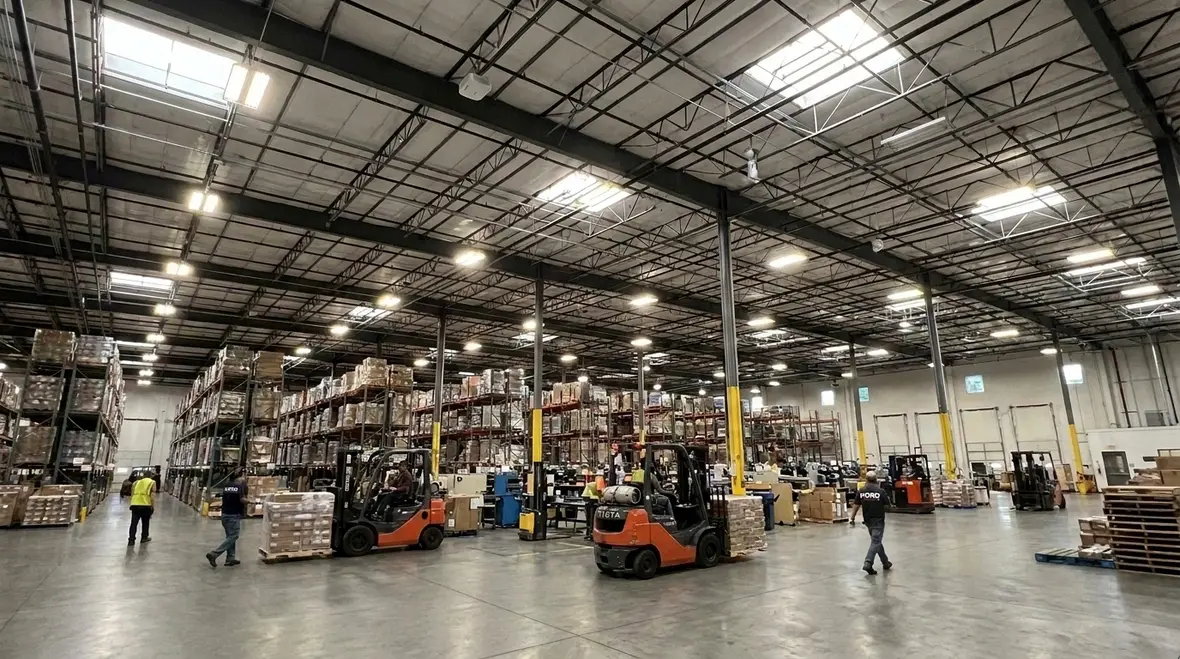
When a facility team adds Industrial Warehouse Smart Lighting: Controls, Sensors & Energy Savings, they usually start with one big problem: lighting that stays on too long or ignores real conditions. Warehouses do not stay consistent. A dock door opens and closes, cloud cover changes, forklifts move, and work zones shift through the day. Therefore, the lights must respond to that reality. Smart lighting controls use scheduling, dimming, and zoning so illumination matches the space usage.
In many warehouses, lights currently operate on fixed timers or old manual switches. That approach works about as well as setting your thermostat to “always warm” and calling it comfort. In contrast, advanced controls split the facility into zones and adjust output based on occupancy and ambient light. As a result, you get reliable brightness where people and activity exist, while the rest of the warehouse uses less energy.
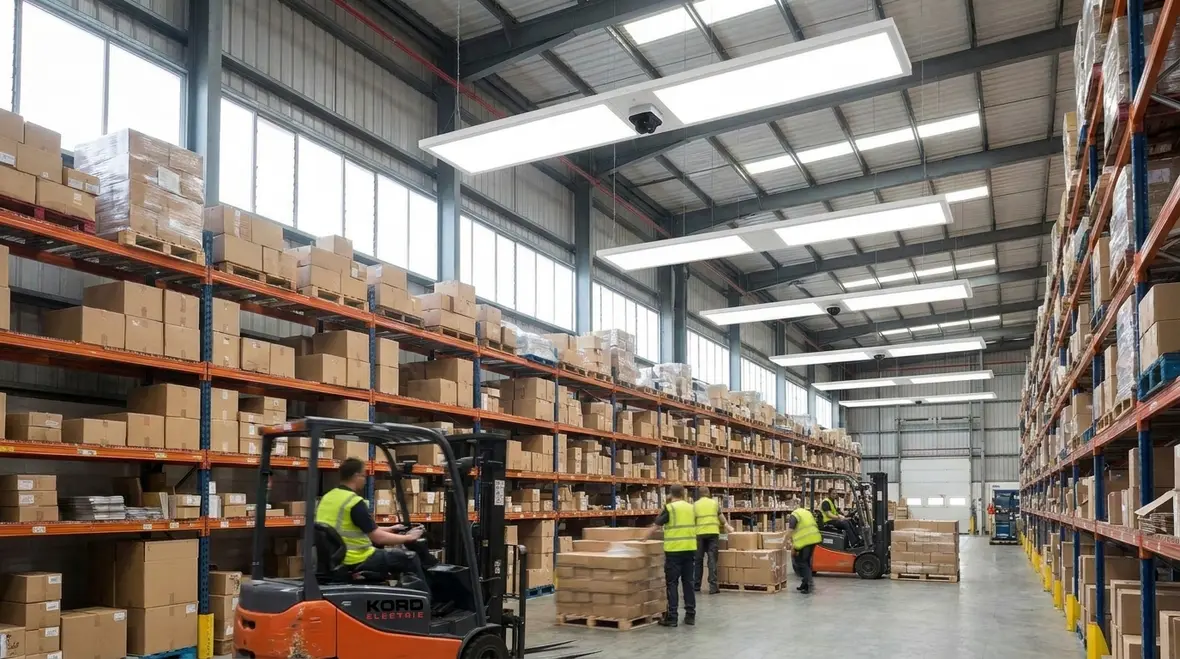
We also configure systems to handle staging and transitions. For example, when a zone becomes active after a long rest period, the lights do not need to jump instantly to full power if your process can tolerate a short ramp. Yet we still protect safety requirements by ensuring illumination stays appropriate for movement, picking, and staging. Our expert service staff walks facility managers through these settings, step by step, so the operation team understands what changes, and why.
Smart controls become even more useful when they align with planned upgrades. If you are already reviewing efficiency improvements, guides like Kord Electric’s Warehouse Lighting Automation Efficiency overview show how automation stabilizes light levels, coordinates with shift schedules, and reduces the “why is this still on?” moments that drain your budget at 2 a.m.
Which sensors matter most for industrial warehouses
Sensors work best when they match the workflow. Consequently, we start by studying how the building performs across time. Then we choose sensor types and placement patterns that fit the task areas. For industrial and commercial spaces, the most common sensor goals include occupancy detection, daylight harvesting, and fault awareness.
Occupancy sensing targets areas where motion is intermittent. In warehouse aisles, loading bays, and secondary work rooms, occupancy sensors can reduce “always on” behavior. We also account for motion sources that matter, like people walking near aisles and forklifts moving at predictable speeds.
Daylight sensing targets areas near skylights, dock doors with sidelights, or exterior-facing walls. As daylight increases, the system can dim fixtures without reducing visibility. This matters because glare and underlighting cause problems, too. Therefore, we tune the dimming curve and thresholds to keep the space bright enough for safe work.
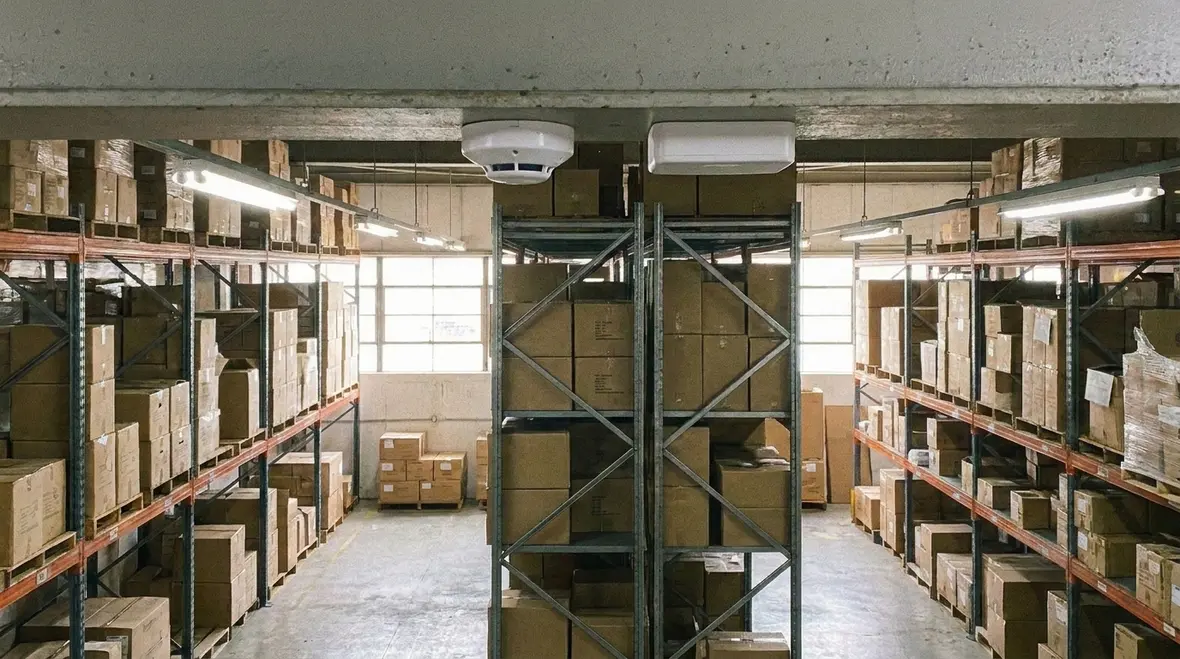
System status sensing supports proactive maintenance. Some control systems report failure events, occupancy sensor faults, and fixture-level status. That way, others do not discover lighting issues only when a manager notices the dark aisle. Our technicians explain what the alerts mean, which device they relate to, and what action the facility should take.
Bottom line: Industrial Warehouse Smart Lighting: Controls, Sensors & Energy Savings becomes real when sensors align with actual operations, not when someone drops sensors into a ceiling grid and hopes for the best. For deeper examples of how this plays out on real sites, you can explore Kord Electric’s Warehouse Smart Lighting Controls for Safety guide, which shows how thoughtful coverage supports clear sightlines and safer traffic around racking and loading zones.
How we design zones, dimming rules, and schedules for cost control
To cut costs, a facility must stop paying for light that does not contribute to work. However, you cannot just reduce output everywhere. We design zones based on light needs and work patterns, and we then set dimming rules that protect safety and productivity.
First, we identify the “must be bright” areas. Then we identify “can flex” areas. For example, a high-bay picking zone needs consistent illumination. Meanwhile, a storage corridor with low activity can handle lower output during inactive periods. After that, we design the schedules around shifts, break times, and seasonal usage.
Next, we tune response time. When activity begins, lights need to become usable quickly. Still, they do not always need to stay at full output longer than needed. Therefore, we often implement a staged approach. Lights move from standby to task levels based on occupancy, then settle back to reduced levels after activity ends. This supports savings while keeping comfort stable.

Our process also accounts for warehouse growth and future changes. If you add racks, reconfigure lanes, or extend operating hours, the control settings and zoning should adapt without a full redesign. We build that flexibility into the programming and documentation. During commissioning, our technicians walk through the layout, explain the logic behind each zone, and show facility staff how to review performance reports.
And if that sounds like a lot, remember: a good smart lighting system should feel boring in the best way. It should do its job quietly, like the professional in the background of a sitcom who fixes everything without stealing the scene. When facilities want to dig further into zoning strategies, Kord Electric’s Industrial Lighting Control Strategies for Plants article offers additional examples of how zones, dimming layers, and schedules protect productivity while trimming runtime.
What energy savings look like, and what affects results
Energy savings usually come from three places: reduced runtime, reduced light output through dimming, and better alignment of lighting to actual occupancy and daylight. Yet the size of the savings depends on your baseline conditions.
If a facility currently uses outdated lighting with fixed-on operation, savings can be significant once controls start reducing wasted hours. If the building already has decent timers, the gain may shift more toward fine-tuning and daylight response. Still, even incremental reductions help when you manage many fixtures across a large warehouse footprint.
We also pay close attention to controls interaction. For example, if you use occupancy sensors, the system must avoid “nuisance trips” caused by non-work motion like curtains or rapid temperature changes. Therefore, we position sensors carefully and adjust settings based on the environment.
We consider seasonal patterns. Daylight harvesting changes throughout the year, and it changes again when you close blinds or modify loading routines. As a result, we program seasonal behavior when appropriate and keep thresholds consistent with safety needs.
Our team also compares outcomes after installation. We review operation data, validate that the system dims as intended, and confirm that zones behave correctly during different shifts. Then our expert service staff documents lessons learned so your controls stay steady, not mysterious. That is how you protect savings month after month. For organizations evaluating broader retrofit projects, Kord Electric’s Commercial Lighting Control Retrofit: Costs, Benefits & Energy Savings guide can help connect control strategies with budgets, timelines, and long-term energy expectations.
Reliability, compliance, and ongoing maintenance for major properties
Commercial and industrial facilities need systems that remain reliable, especially in safety-critical areas. Therefore, we design for stability first, then efficiency. Smart lighting controls must integrate with your facility electrical infrastructure and follow relevant standards and local requirements. We also plan for the real world: temperature swings, dust, vibration, and ceiling variations that do not match a spreadsheet.
As part of installation, we ensure proper wiring practices, secure device mounting, and correct communication methods so the controls do not lose track of zones. We also test for correct dimming behavior and confirm sensor coverage so the lights respond where people actually work.
Maintenance matters, too. Instead of waiting for a complaint about a dark corridor, the system can help reveal issues earlier. Yet we do not leave it there. Our technicians and expert service staff provide clear guidance on what to monitor and how to respond to alerts. That reduces downtime and keeps operations on schedule.
For major property buildings, we also support clear documentation. Facility managers and electrical supervisors need to know what controls exist, where they are installed, and how they operate. We keep that information organized so internal teams can manage the system without guesswork. When you want a broader picture of how lighting ties into your overall electrical strategy, the Kord Electric Blog includes resources such as the Industrial Lighting Control Benefits Explained article, which connects control reliability, maintenance planning, and energy performance across complex portfolios.
Dual column overview: control components and where they fit
To make the approach easy to visualize, we often break the system into practical parts. Here is a dual column view of common components and typical warehouse uses.
| Component | Typical warehouse use |
Zone based control panels |
Segment the building so task areas brighten while storage and low traffic zones dim |
Occupancy sensors |
Detect movement in aisles, staging areas, offices, and work rooms to reduce wasted runtime |
Daylight sensors |
Harvest natural light near skylights or exterior openings and maintain consistent brightness |
Fixture level controls or drivers |
Support dimming and stable light output across high bay and low bay layouts |
Monitoring and alerting |
Report faults and performance issues so facilities handle maintenance before complaints |
These components do not operate in isolation. They come together as part of a broader Industrial Warehouse Smart Lighting: Controls, Sensors & Energy Savings strategy that respects how your warehouse actually runs. For leaders who want a wider view of control options across different building types, the Industrial Lighting Control Strategies for Plants guide offers a helpful companion perspective.
Implementation steps we follow from walk-through to stable operation
Every industrial warehouse has its own layout, lighting history, and operational schedule. Therefore, we treat installation as a project that starts with listening, not guessing. We begin with a site walk through and a review of how lighting impacts work, safety, and maintenance.
Then we map the zones and validate sensor coverage. We verify power and control compatibility, and we confirm where daylight affects each section. After that, we develop a control plan that includes schedules, occupancy behavior, daylight harvesting rules, and safe dimming levels.
During installation, our technicians keep the work orderly so the facility stays operational. We coordinate with your team for access windows and we ensure safe routing of equipment. Once wiring and device setup completes, we commission the system. This step matters because it turns a good design into reliable daily performance.
Finally, we train your operational staff. Our expert service staff explains what the controls do in plain language and how managers can review behavior. That way, others do not have to “trial and error” their own lighting system like it is a new video game with no tutorial. You get confident, repeatable results. If your warehouse is part of a larger property portfolio in Southern California, connecting these upgrades with Los Angeles County electrical services from Kord Electric helps ensure that distribution, panels, and controls all support the same long-term reliability strategy.
FAQ
Conclusion and call to action
If your warehouse lights run like they never learned time management, it is time to bring in a smarter control strategy. At Kord Electric, we install Industrial Warehouse Smart Lighting: Controls, Sensors & Energy Savings systems that match real workflows, protect visibility, and reduce wasted energy. Our technicians and expert service staff guide you from design to commissioning, then support stable performance after go live. Reach out today, and let us help your facility light the right areas, at the right times, without the surprise bill.
To see how this warehouse-focused approach connects with other efficiency strategies, explore the broader Kord Electric Blog, including resources like the Industrial Lighting Control Benefits Explained article and the Warehouse Lighting Automation Efficiency Guide. Together, these insights show how smart controls, thoughtful wiring, and clear documentation turn lighting from a constant headache into a quiet, reliable asset.
When you are ready to start a project, you can also review Kord Electric’s Industrial Lighting Control Strategies for Plants article for ideas on how controls support production spaces, then connect those concepts with our dedicated industrial warehouse smart lighting design for a complete, code-aware solution.