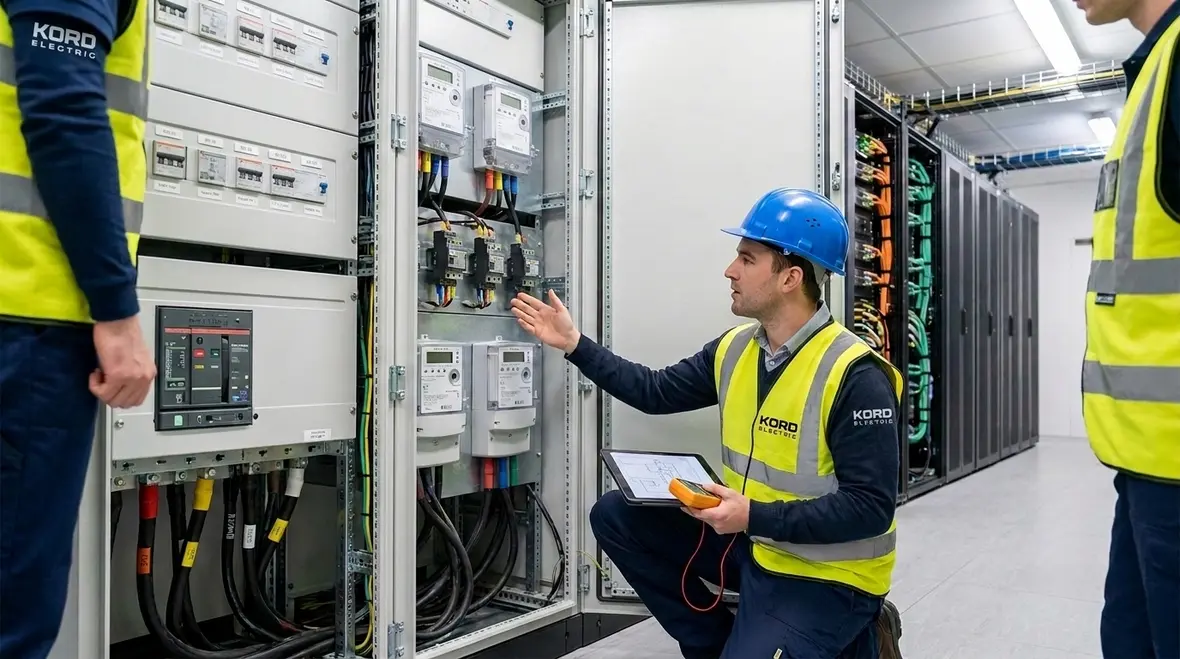
Data Center Power Distribution Best Practices for Reliability
Data Center Power Distribution Best Practices for Reliability, explained by Kord Electric
When a data center loses power, the downtime does not just hurt, it costs. That is why Data Center Power Distribution Best Practices for Reliability matter from the first single-line drawing to the day-to-day maintenance plan. At Kord Electric, we build and support power systems for commercial and industrial facilities and major property buildings where reliability is not a slogan, it is a requirement. Others may treat distribution like an afterthought. We treat it like the backbone of the whole operation. And yes, we keep our guidance calm and clear, even when the UPS alarms start acting like they are starring in a horror movie.
In this article, we share how we help owners and facilities teams reduce risk, improve uptime, and make power distribution easier to manage. Along the way, our technicians and expert service staff explain what they see in real installs, not just theory from a textbook. For a deeper dive into how distribution design supports uptime, you can also explore our companion guide on data center electrical distribution design for reliability, which pairs well with these best practices.
Plan your reliability path before equipment shopping
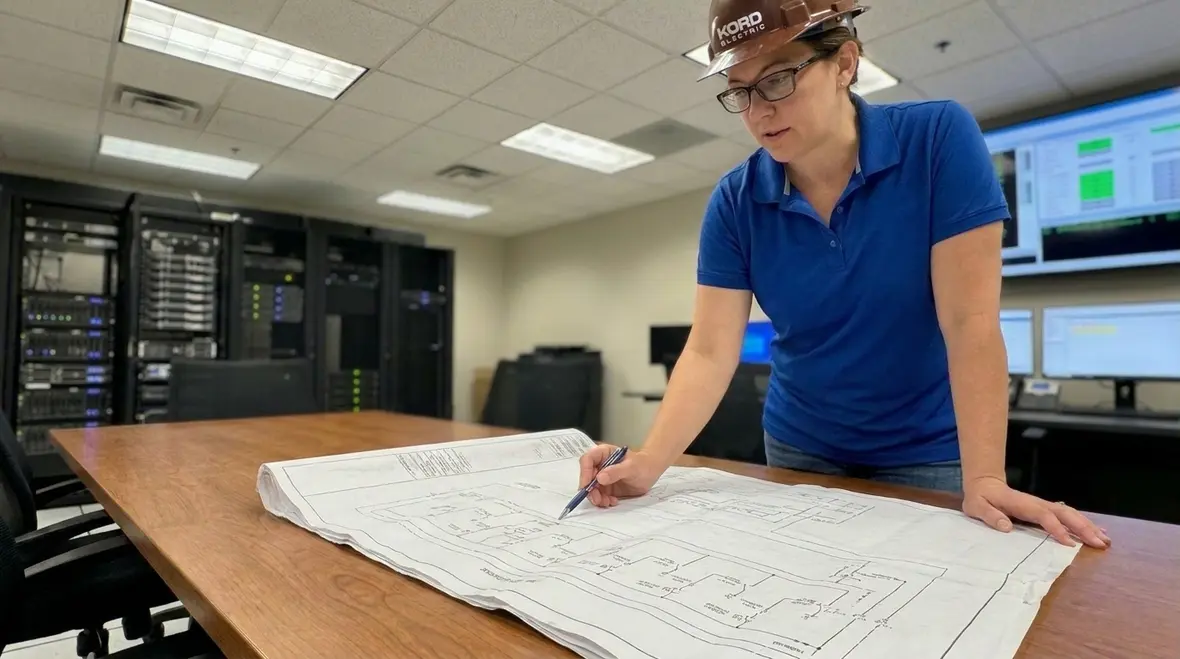
Before anyone buys switchgear or UPS modules, we map the reliability path. That means we define how power should flow in normal and abnormal conditions, then we build the design around those realities. First, we confirm the load types and their behavior during transfers. Then, we decide how much redundancy you truly need and where that redundancy should live.
Many teams start with gear, not the plan. However, we start with the “what if” cases. What if a feeder opens? What if a maintenance event happens during peak load? What if cooling systems run on different schedules? As we plan, we document assumptions so the design does not drift later during procurement or construction. In our work, we see that clarity early saves expensive rework later.
Our expert service staff also helps owners translate power design goals into operations rules. For example, if the design supports planned maintenance without full shutdown, we make sure procedures match the electrical logic. That alignment keeps a system reliable even when people are under pressure.
Design for selective coordination and clean fault clearing
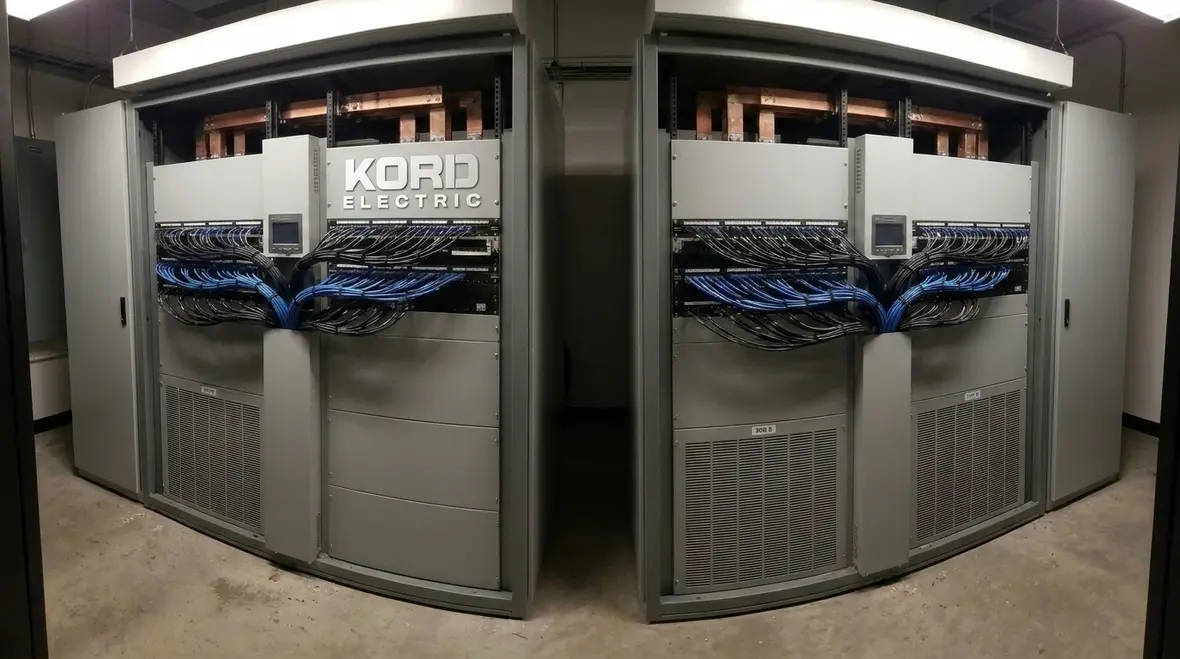
A reliable data center distribution system does not just “have power.” It must protect itself quickly when something fails. To do that, we focus on selective coordination. That means upstream devices clear faults without forcing unnecessary shutdowns downstream.
We coordinate protective devices based on actual equipment curves and realistic fault current levels. Then we verify the settings with study work that reflects the final configuration, not an outdated one. This is where many projects slip. Someone changes a breaker, swaps a cable run, or updates a transformer, and suddenly the coordination margin becomes a rumor.
Next, we pay attention to arc flash risk and safe work practices. We guide teams to align labeling, incident energy study results, and operating procedures. Safety and uptime are linked, because workers will not reliably maintain what feels unsafe.
We also treat fault clearing speed like a reliability feature. The faster the system clears, the less it damages equipment and the less it disrupts operations. At Kord Electric, our technicians look for the details that impact real response, not just compliance checklists.
Build redundancy that matches actual operating needs
Redundancy sounds simple until you ask how the facility operates day to day. Therefore, we build redundancy to match real maintenance windows, load priorities, and transfer logic. Some loads must ride through transitions with minimal disturbance. Others can tolerate longer times. We design the system around those needs.
We also help clients avoid a common trap: overbuilding redundancy where it does not change outcomes, while underbuilding it where it does. For example, redundancy in distribution helps, but only if transfer paths actually support the load requirements without hidden bottlenecks. Similarly, if redundancy exists on paper but procedures do not support it in practice, reliability can still slip.
In our service work for commercial and industrial facilities, we often see that operators need simple, repeatable steps. So we explain the “why” behind transfer logic and ensure maintenance rules match the electrical design. Our expert staff takes the time to walk through key actions, because the best design fails if people cannot use it confidently.
And if you are wondering whether this is where the power system becomes part of the workplace culture, the answer is yes. Even the best gear can feel like a maze when the team does not understand it. We help reduce that maze.
Optimize voltage levels and busbar architecture for stable transfers
Choosing voltage levels and designing busbar architecture impacts stability during load transfers and fault conditions. We consider how voltage regulation devices interact with loads and how the system behaves when sources switch. This matters especially when critical loads sit close to the edge of acceptable voltage range.
We review how transformers, switchgear, and bus sections share load and how they respond during abnormal events. Then, we model the system so that voltage drops and transient behavior stay within limits. In other words, we do not just connect equipment. We shape how the system responds under stress.
When busbar sections and switching schemes distribute load, we help teams maintain the balance needed to avoid hot spots and uneven wear. Also, we ensure that labeling and access align with field reality. If a technician has to fight access during maintenance, that is not reliability, that is a training course.
Our technicians and service staff routinely highlight these practical points. They explain what causes nuisance alarms, unexpected reclosures, or thermal issues, and they connect those causes back to design choices. That feedback loop improves how new systems perform once the doors open.
Follow life cycle reliability with maintenance and testing
Power distribution reliability does not end at commissioning. It lives or dies during the life cycle. That means we plan maintenance, test intervals, and replacement schedules with the same discipline used in the design phase. If you treat maintenance like a checkbox, the system eventually teaches you a lesson with a real outage.
We help teams build routine test plans for transfer equipment, protective devices, and monitoring systems. We also review how data and alarms are used. If alerts overwhelm operators, they stop seeing signals, and then the real issue arrives quietly. So we help tune how the facility reacts to alarms, not just how the devices report them.
Our expert service staff emphasizes field checks such as torque verification, insulation testing when needed, thermal inspections, and visual checks that catch early signs of trouble. We also support replacement planning for aging components so the facility stays ahead instead of reacting.
And yes, we know maintenance schedules can feel like a never-ending saga. But unlike a TV series, the plot twist should not be “everything fails at once.” Proper maintenance keeps the ending boring, which is exactly what you want.
Monitoring, analytics, and documentation for real operational control
Clear documentation and smart monitoring give the facility team confidence. When something goes wrong, teams need fast answers: what changed, where the fault lives, and what steps restore stability. We help ensure that drawings, single-line updates, and device settings stay accurate through project changes.
We also support monitoring approaches that focus on actionable signals. Trend data on key parameters like load levels, voltage, breaker operations, and transformer temperatures helps teams spot drift before it becomes a failure. Monitoring should not simply collect data. It should help people make decisions.
In our field work, we explain how to interpret monitoring outputs in plain terms. Our technicians and service staff teach teams what to look for during normal operations, so anomalies stand out. That reduces downtime and shortens troubleshooting time.
Additionally, we help clients align documentation with operating procedures. If the procedure says one thing and the system behaves differently, reliability erodes. When our team updates documentation after work, we do it with the goal of making operations safer and faster. For commercial and industrial sites across the region, our broader Los Angeles County electrical services for commercial and industrial facilities support reliability beyond just the data center room.
FAQ on data center power distribution reliability
Conclusion: take reliability seriously with Kord Electric
Reliability in a data center does not happen by chance. We help commercial and industrial facilities build power distribution systems that clear faults correctly, support stable transfers, and stay trustworthy through the full life cycle. Our technicians and expert service staff explain the details in plain language, then they back it up with practical testing and documentation discipline. If you want Data Center Power Distribution Best Practices for Reliability that work in the real world, contact Kord Electric today. We will help you plan, build, and support a system that keeps running, and we can coordinate these efforts with broader initiatives like data-driven design and reliability-focused distribution planning across your facility portfolio.
When you are ready to move from theory to action, our team is here to help design, upgrade, and maintain the electrical backbone that keeps your servers online and your operations calm.
From new builds to retrofits, we work with facility teams in Los Angeles County and across Southern California to plan selective coordination, redundancy, monitoring, and maintenance strategies that actually match how the facility runs every day.