IR Thermography for Electrical Maintenance: What It Detects & Why It Matters
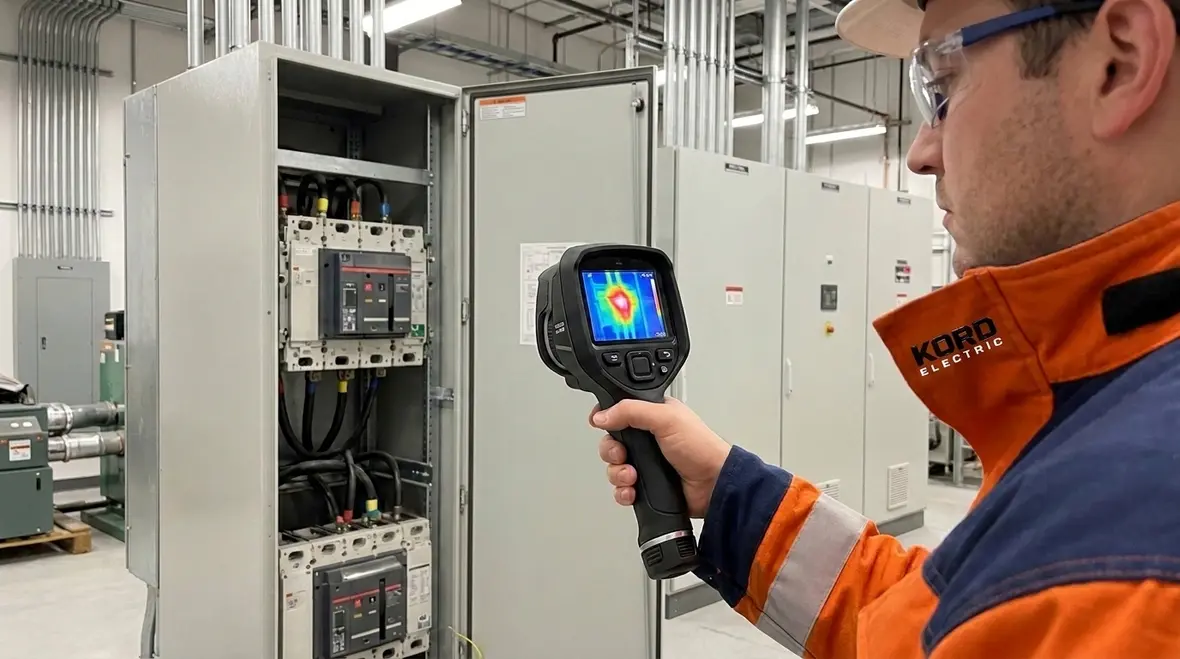
In commercial and industrial facilities, electrical issues do not announce themselves with a polite knock. They build slowly, then escalate fast. IR Thermography for Electrical Maintenance: What It Detects & Why It Matters is the kind of service that helps us see trouble before it becomes downtime, repairs, or something hotter than it should be. Using infrared imaging, our team at Kord Electric captures temperature patterns across panels, bus bars, connections, and rotating electrical components. Then, our expert service staff explains what the images mean in plain language, because people do not need a physics lecture to make good decisions. And yes, we keep it professional. The only thing we want getting “hot” is your confidence that the system will run when it matters.
Why thermal imaging helps prevent electrical failures at work
When power flows through an electrical connection, the material does its job. However, a loose terminal, aging insulation, or a corroded contact can create extra resistance. As a result, heat builds up at the problem location first. That is why infrared inspection earns its place in electrical maintenance plans for large buildings and industrial sites.
In practice, we use IR thermography to find abnormal heat signatures during normal operating conditions. Then we correlate those findings with system load, equipment type, and installation design. Next, we prioritize corrective actions based on risk, not guesswork. This is how we help facility managers shift from “repair after the problem” to “detect before the failure.”
And if you are thinking, “Can we just tighten everything and call it done?” We get the joke. But real life is not a sitcom, and torqueing random connections can create new issues. Our technicians confirm what needs attention and where it needs attention.
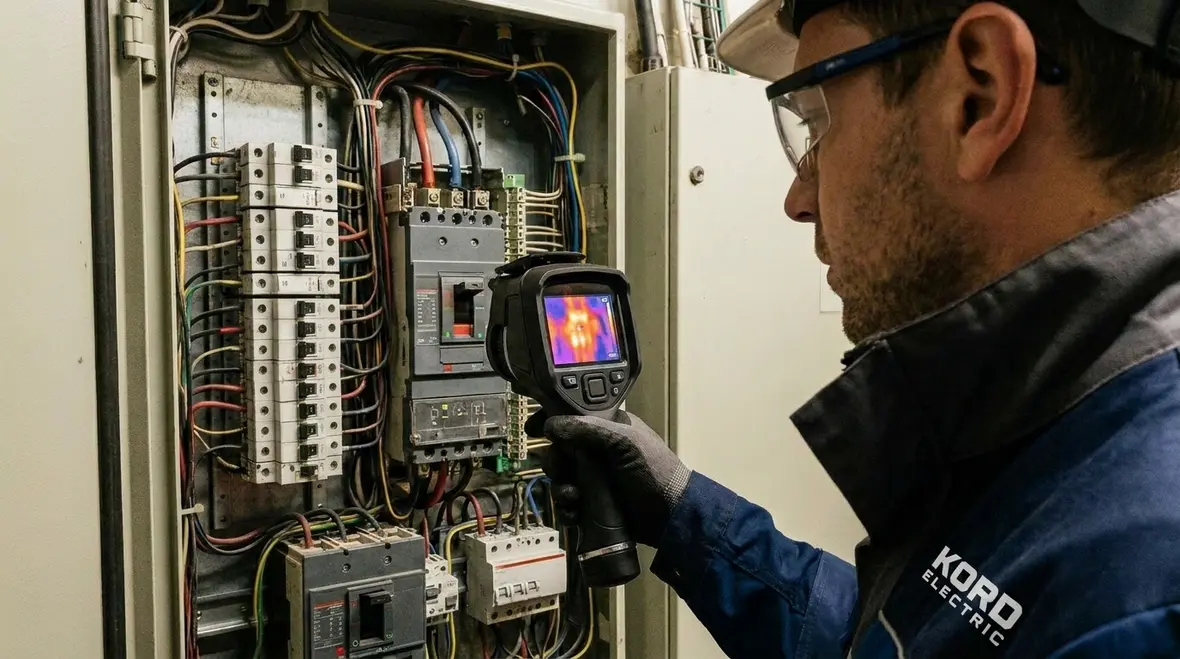
What our infrared inspections detect on electrical systems
Our expert service staff explains the findings clearly, and the underlying detection targets stay consistent across major property buildings and industrial facilities. During an inspection, we look for heat patterns that suggest abnormal electrical performance. Typically, we evaluate the following:
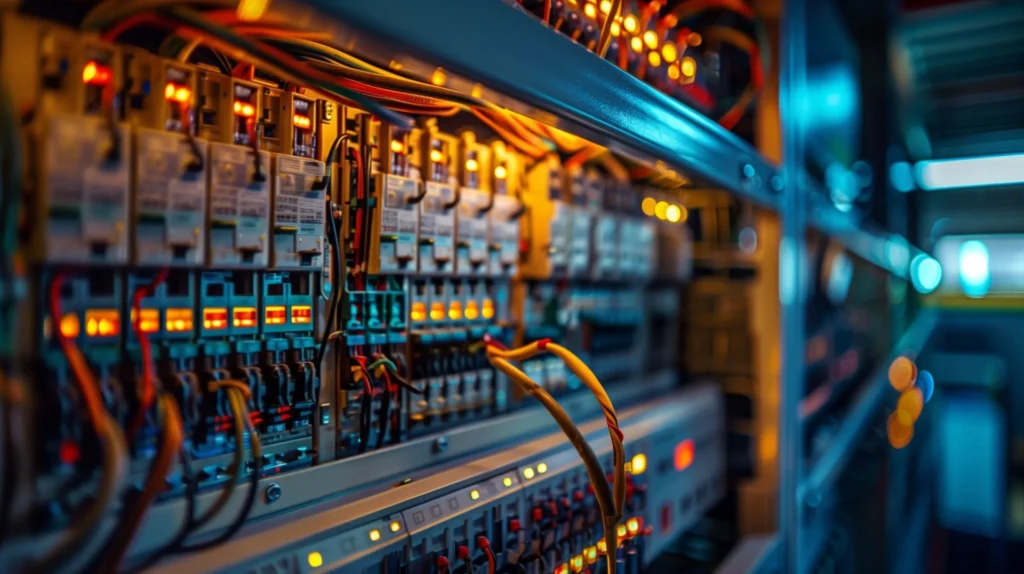
Loose or failing connections at breakers, lugs, terminations, and splices, which often show localized hotspots.
Overloaded circuits where temperature elevation suggests sustained demand beyond design limits.
Imbalanced phases that can indicate uneven load distribution or internal device issues.
Damaged bus bars or bus connections where corrosion, oxidation, or degradation increases resistance.
Defective switchgear components such as contact wear, insulation breakdown, or internal defects.
Motor and rotating equipment issues when heat patterns suggest bearing problems, misalignment, or electrical imbalance.
Additionally, we watch for patterns that repeat across similar components. For example, if one breaker shows a higher temperature rise than its peers, that difference often tells a sharper story than raw numbers alone. Therefore, we compare like for like, then we document what we see so our electrical maintenance team can act with purpose.
How we perform IR inspections without guesswork
Thermal imaging sounds simple until you do it for real in a live facility. Kord Electric approaches every inspection as a disciplined process, not a quick walk-through with a camera. First, our technicians review equipment one-line diagrams, operating conditions, and known maintenance history. Then we coordinate inspection timing so the system runs at stable load levels, because a “cold” snapshot is rarely useful.
Next, we capture images and measure temperature differences. However, we do not stop at pointing at a hotspot. We also document context, such as ambient conditions, airflow, equipment rating, and any recent work performed. After that, we evaluate whether the heat signature matches the expected behavior for that specific component.
Then we translate the results into action steps. For example, we might recommend tightening a connection, replacing a compromised termination, or scheduling deeper diagnostics for a device that shows abnormal thermal behavior. In other words, we give facility teams a clear route from inspection to correction.
And if someone asks, “Can you make the heat go away with that camera?” We smile. We cannot magically fix a bad connection. But we can help you find it early, before the damage writes its own maintenance ticket.
Why timing and temperature baseline matter in electrical maintenance
Infrared thermography does not work like a smoke alarm that goes off the moment something fails. Instead, it reveals how temperatures behave across your system. Therefore, timing matters. If we inspect right after a change, the system may not represent steady conditions. If we inspect during an unusual operating window, we might misread what looks abnormal.
That is why we help our commercial and industrial clients establish baselines. We compare images from one inspection cycle to the next. If a connection steadily trends hotter over time, that shift becomes a meaningful signal. Conversely, if a hotspot appears once and then normalizes, we can treat it as an event that likely resolves with normal operation or minor adjustment.
In addition, we consider whether heat comes from electrical causes or non-electrical effects. For example, restricted airflow or enclosure heat trapping can influence readings. Thus, our technicians use context to avoid false alarms and to focus attention where electrical performance likely deteriorates.
Once we interpret trends correctly, we can support better budgeting too. Instead of reacting to catastrophic failure, our clients can plan targeted repairs with a timeline that fits maintenance windows and operational priorities.
What reports look like and how our team helps decision makers act
After each inspection, our process continues with reporting that supports real decisions. Our expert service staff prepares findings in a format that facility and operations teams can use immediately. We map thermal issues to equipment identifiers, describe the likely electrical cause, and provide risk based guidance.
Then we help prioritize next steps. Some findings might warrant immediate attention. Others may call for scheduled maintenance. When components show patterns that suggest deeper defects, we recommend additional testing or evaluation. In this way, we prevent “wandering troubleshooting” that burns time and disrupts production.
Also, we align recommendations with the realities of commercial and industrial buildings. We do not treat a facility like a lab experiment. We respect downtime constraints and safety requirements. So our guidance supports a practical plan for corrective action.
And yes, we explain things. If an image could speak, it still would not share a clear next step without a human to interpret it. That is where our technicians earn their place.
Where IR Thermography for Electrical Maintenance: What It Detects & Why It Matters fits into a facility program
Thermal inspections work best when they become part of a wider electrical maintenance strategy. Kord Electric helps facilities build an approach that combines inspection, documentation, and targeted electrical service. As a result, the process supports reliability across switchgear, panels, motor control centers, and large distribution equipment.
For major property buildings and industrial sites, we typically align infrared inspections with operational rhythms. Some clients want inspections at defined intervals. Others prefer inspection after major renovations, component replacements, or load changes. Either way, we help you connect the dots between equipment condition and operational demands.
Furthermore, the service can complement other maintenance efforts such as breaker testing, insulation assessments, and preventive tightening programs. However, unlike broad, non selective checks, IR-based inspection focuses attention on what is actually showing abnormal thermal behavior under real load.
If you are building a broader strategy around reliability and power quality, resources like Kord Electric’s data-driven design and power reliability guides can be helpful companions alongside IR inspections, giving you a clearer picture of how distribution, protection, and maintenance all interact over time.
FAQ
Call Kord Electric when you want electrical maintenance that runs ahead of problems
If your facility operates like a busy stage, you do not need electrical surprises stealing the spotlight. Kord Electric delivers IR thermography support designed for commercial and industrial performance, helping you detect abnormal heat signatures, prioritize repairs, and protect uptime. Our technicians and expert service staff explain what we see and what to do next, so your team can act with confidence.
When you want to connect IR findings with broader support across panels, feeders, and power quality, Kord Electric’s Los Angeles County electrical services for commercial and industrial facilities provide a coordinated path from inspection to upgrades, troubleshooting, and preventive maintenance.
Contact us to schedule an IR thermography inspection and build a maintenance plan that stays ahead of risk, not behind it. If you would like to dig deeper into related topics, you can also explore our guides on data-driven electrical design, power reliability audits, and lighting maintenance, which pair naturally with IR thermography in a long-term reliability program.