Hospital Electrical Panel Labeling: Safety, Identification & Compliance
Hospital Electrical Panel Labeling: Safety, Identification & Compliance matters in ways many people only notice when something goes wrong. Kord Electric supports commercial and industrial facilities, and we treat hospital panels like critical equipment, because they are. When we install or update labeling, we help teams find circuits fast, reduce downtime, and support safer responses during maintenance, emergencies, and inspections. In short, clear markings turn a chaotic panel into a calm, readable map. And yes, we have seen panels that look like they were labeled by a sleep deprived DJ, so our technicians step in with a system that makes sense.
Our expert service staff explains the “why” behind every label, because good Hospital Electrical Panel Labeling: Safety, Identification & Compliance does not just look neat. It also helps people make correct choices under pressure. That is the standard we follow for major property buildings and healthcare environments.
What hospital teams expect from accurate panel labeling
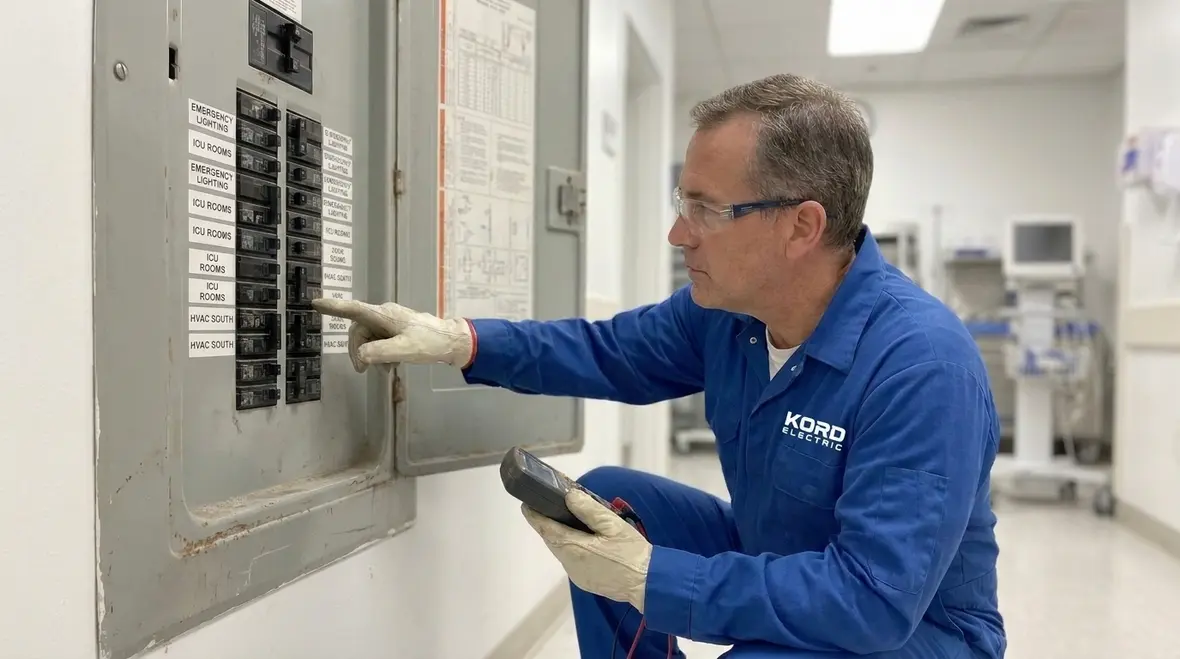
In healthcare, the right circuit must be identified without guesswork. Technicians, electricians, nurses, facilities teams, and emergency responders all rely on panel information. Therefore, the labeling needs to match real-world work patterns, not just whatever the last person wrote on a sticky note.
First, hospital staff expect clear circuit purposes. For example, labels should communicate equipment or area served, like patient room branch circuits, life safety loads, or support systems. Next, they expect consistent formatting across cabinets and rooms, because confusion grows when every panel “speaks” a different language.
Then there is continuity. Hospital electricians must know that the printed label aligns with how the breaker actually behaves. So we use structured verification during work, and our expert service staff explains what they confirmed and what they updated, step by step. That reduces “label drift,” the common problem where the label looks correct but the circuit does not.
And finally, we remember the human side. People do not troubleshoot in a calm, classroom setting. They troubleshoot during a busy shift, with alarms, phones ringing, and someone asking for help with “just one quick thing.” A panel that reads clearly helps teams stay focused instead of playing a game of electrical hide and seek.
How we plan labeling so it stays correct over time
Kord Electric takes a practical approach. We do not treat labeling as decoration. We treat it as part of the electrical system’s documentation. That means we plan for the way hospitals evolve, because they renovate, add devices, replace equipment, and shift responsibilities.
To keep Hospital Electrical Panel Labeling: Safety, Identification & Compliance accurate long after installation, we follow a simple sequence. We start with panel schedules and as-built information, then we confirm field conditions. After that, we apply labels that follow a consistent structure across the facility. In other words, we help each panel “tell the same story” as the rest of the documentation. For teams that want a deeper dive on best practices, our Electrical Panel Labeling Best Practices Guide walks through how we standardize labeling in commercial facilities.
Our technicians also address what many teams overlook. They look at spare breaker spaces, future expansion areas, and shared feeders. If a spare breaker is clearly marked as unused, it prevents accidental energizing. If a feeder is identified by function, it reduces the chance that someone isolates the wrong load during maintenance.
We also plan for legibility. A label that can not be read from the working position is a label that fails during service. Therefore, we select clear text sizes, durable markings, and placement that matches how people operate the equipment.
And yes, our expert service staff sometimes tells facilities managers the truth: if a label looks good but a technician can not read it under site lighting, it is still a problem. We do not just install labels, we build dependable clarity.
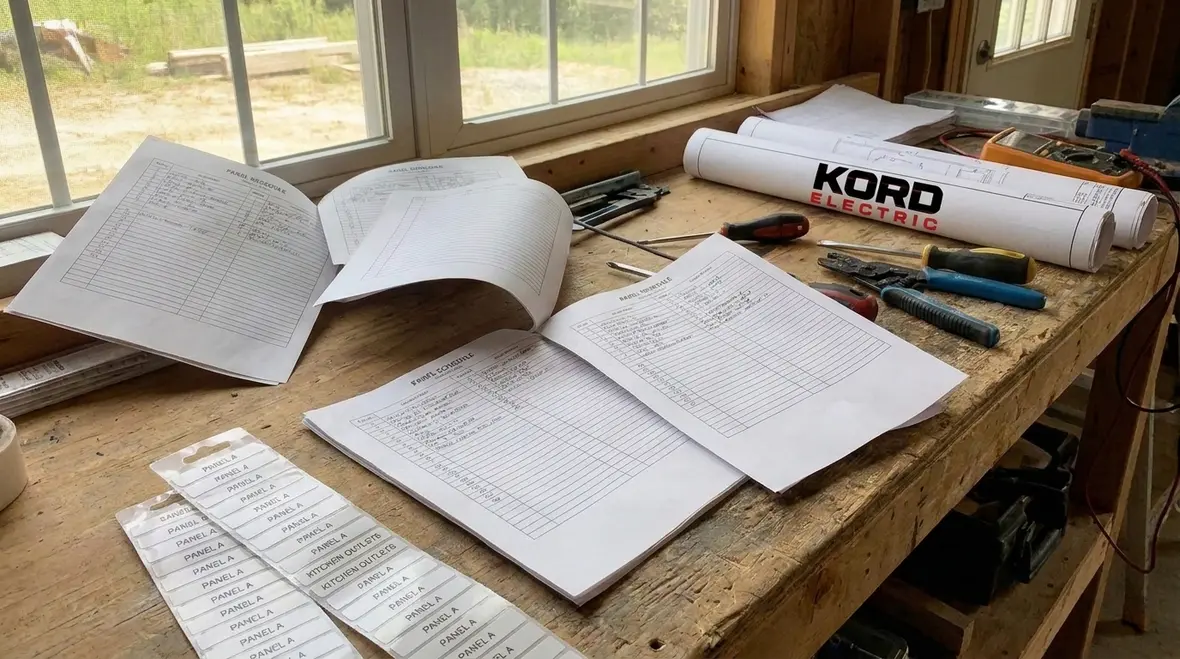
Key elements of panel labels that support safety and fast decisions
When we build or update labeling in hospitals and other major property buildings, we focus on elements that directly support safe decisions.
Clear circuit identification so a person can match a breaker to its load. We avoid vague wording and instead describe the function and location served.
Correct labeling hierarchy so readers know what matters first. For example, life safety circuits should stand out from non-critical loads.
Group and numbering logic so circuits follow a predictable pattern. This helps teams compare panels across rooms and levels without mental gymnastics.
Panel and room references so a label does not stop at the breaker. It should connect to the area served, because the building is the real context.
Durable, service-friendly format that survives cleaning, vibration, and the everyday reality of facilities operations.
Additionally, we help coordinate labeling with the hospital’s operational needs. For example, if facilities staff maintain critical systems during set hours, they need labels that support those schedules and escalation paths.
Our technicians explain what each label element does in real work. That way, the facility team understands the logic, not just the final result. When people understand the logic, they protect it. And that keeps Hospital Electrical Panel Labeling: Safety, Identification & Compliance from turning into a “one time project” that fades after the inspection report lands.
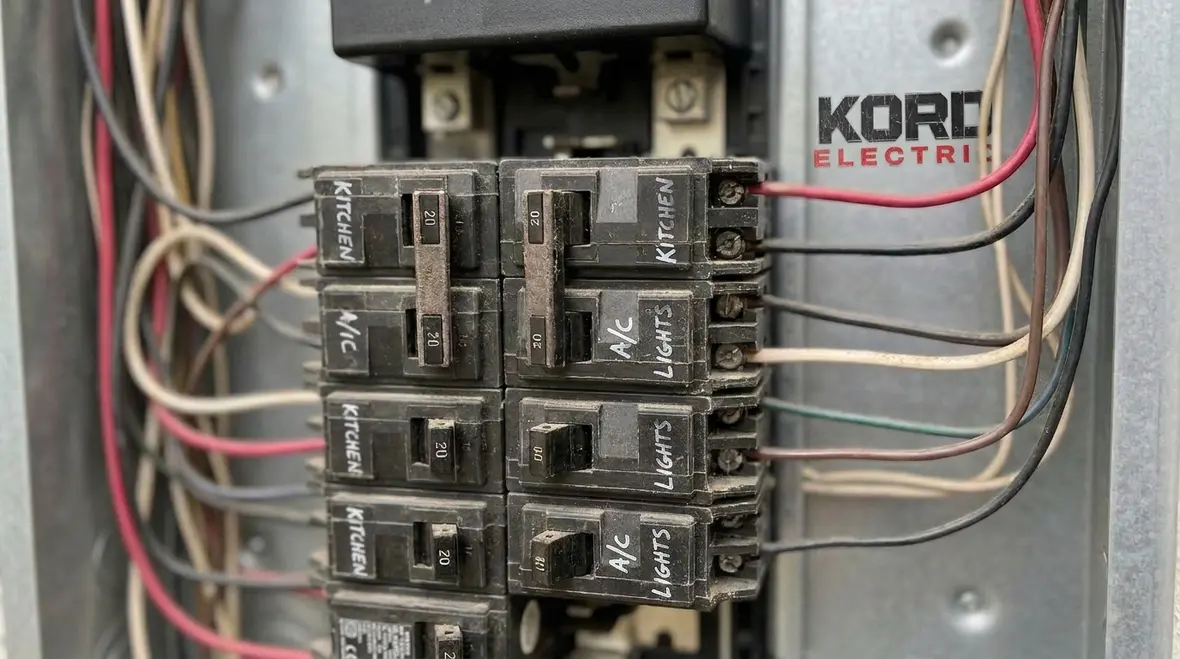
Common labeling mistakes we help facilities avoid
Hospitals can lose time and increase risk when labeling fails. Therefore, Kord Electric works to prevent repeat mistakes during upgrades and service. Below are issues we commonly find, and what we do instead.
Wrong panel schedule alignment. The schedule might say one thing, and the breaker might do another. We verify in the field, then update labeling so the two match.
Generic descriptions. Labels like “misc” or “outlets” do not help anyone during emergencies. We replace them with functional descriptions linked to area or equipment.
Mixed numbering across cabinets. A circuit that becomes “1A” in one place and “IA” in another creates avoidable confusion. We standardize the pattern across the system.
Unclear life safety identification. If critical circuits blend in visually, response slows. We highlight life safety loads using consistent conventions.
Small text and poor placement. A label that requires a flashlight and a ladder is not a label. We position and format markings for real access.
Meanwhile, some teams treat labeling like the last step after the “real work.” Yet labeling drives the next round of work. So we prioritize it and explain the reason during the process. Our expert service staff walks facilities leaders through what we are correcting and why it matters to day to day operations.
Because, in a hospital, nobody has time to “figure it out.” They need to act. Electrical clarity helps them move with confidence, not guesswork.
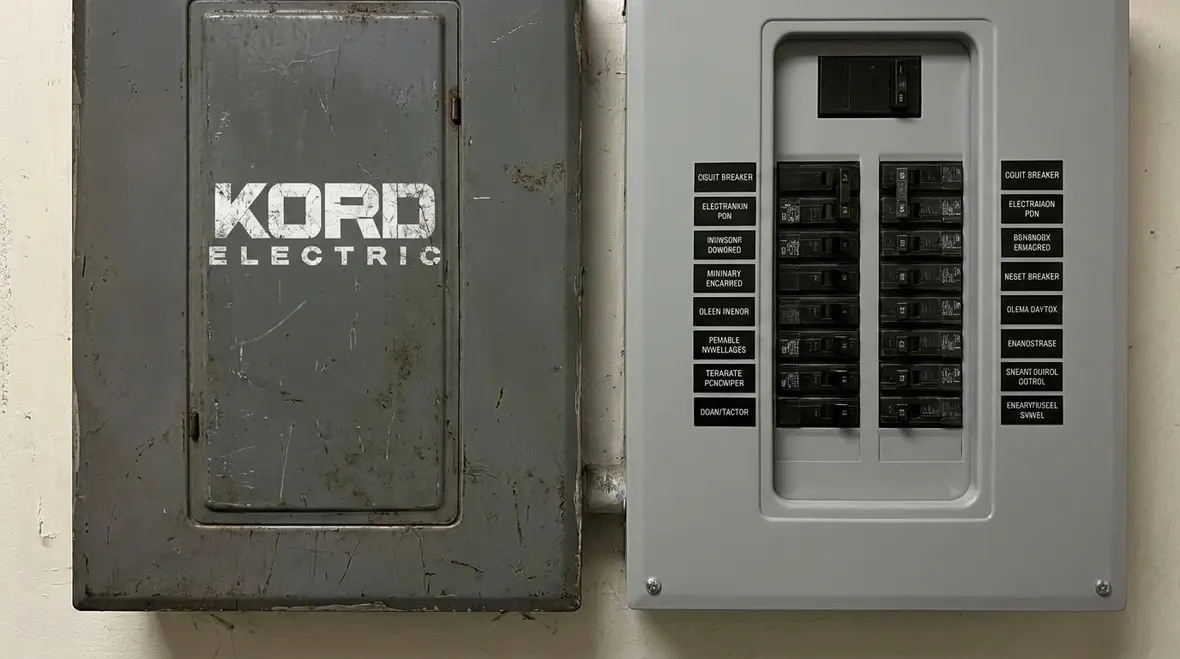
Balancing compliance, audits, and everyday maintenance
Commercial and industrial facilities live in the overlap between daily operations and formal compliance. Hospital Electrical Panel Labeling: Safety, Identification & Compliance supports both. It helps teams operate safely and helps auditors see order.
To support audits, labels must follow a consistent system and provide enough information to confirm circuit purpose. At the same time, maintenance teams want quick recognition. So our approach balances both viewpoints.
We also help coordinate changes when facilities modify equipment. For example, when a service team swaps out a device or reroutes a feeder, we ensure the labeling reflects the updated reality. That prevents a slow decay where the panel becomes less reliable as renovations pile up.
In addition, Kord Electric emphasizes documentation flow. Labels and panel schedules should agree. When they do, investigations take less time, and troubleshooting becomes more predictable. For facilities interested in tightening their inspection readiness beyond labeling, our broader code and inspection resources on the Kord Electric Blog can help shape a more complete strategy.
And if you are thinking, “But compliance is paperwork,” we hear you. However, in our experience, paperwork that matches the field is the paperwork that keeps people safe. Labels are not just for the audit binder. They are for the person standing in front of the panel, trying to do the job right.
What our technicians do during a hospital labeling project
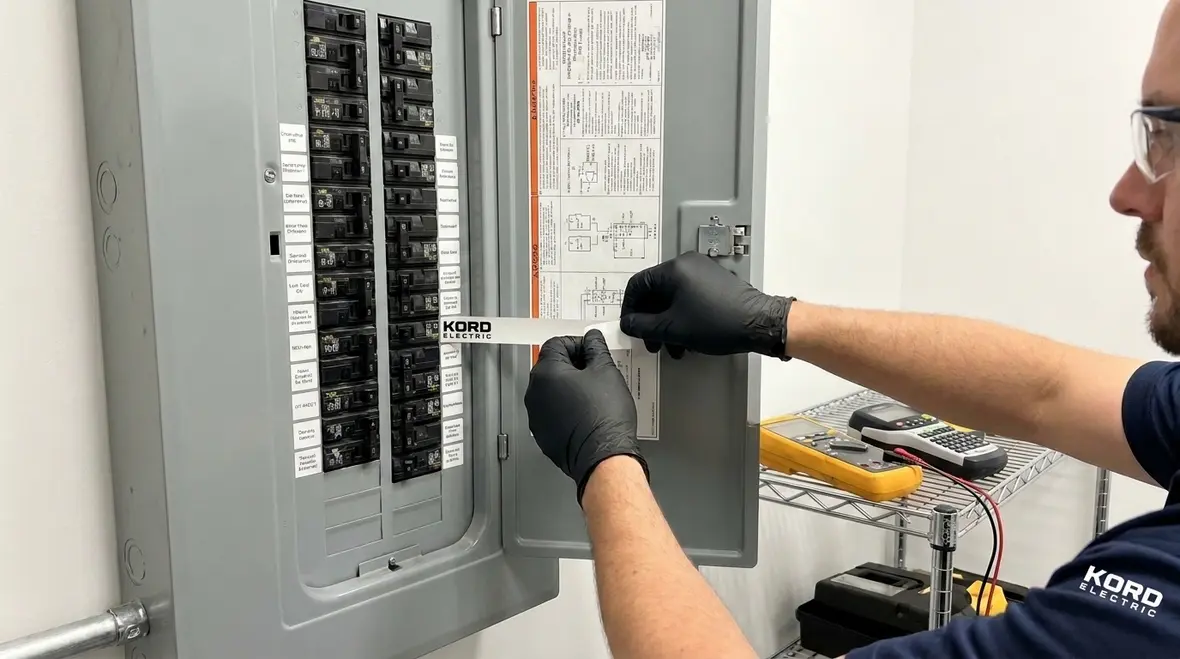
Our technicians approach labeling like a structured service task, not a quick sticker job. First, we review the facility’s electrical documentation and understand the scope. Then we verify circuit behavior and panel configuration. After that, we apply labeling and confirm readability, placement, and consistency.
In addition, we communicate clearly with facilities teams. We explain how labeling supports safe lockout and maintenance workflows. We also point out where confusion typically appears so staff can watch for future drift after changes.
To make it easy to see the process, we lay it out like this:
Step What we do
1 Review We study the existing panel schedule and site conditions, then confirm what must stay consistent across the building.
2 Field verification Our technicians verify circuit function in place so the label matches how the breaker actually operates.
3 Label build We plan wording, numbering, and formatting for clear reading and long term consistency.
4 Install and check We install durable labels and verify legibility from working positions.
5 Explain Our expert service staff explains what changed and how staff should use the panel information in daily work.
Because when people understand the system, they use it. And when they use it correctly, the hospital runs smoother. That is the calm professionalism we aim for at every major property project.
FAQ: Hospital electrical panel labeling
Call Kord Electric for hospital panel labeling that holds up
Hospital Electrical Panel Labeling: Safety, Identification & Compliance is not something we rush or guess. At Kord Electric, our technicians verify circuit function, install durable, readable labeling, and our expert service staff explains how the system supports safe maintenance and faster decisions. If your facility needs labeling upgrades for a hospital or major property building, we are ready to help. Contact Kord Electric today to schedule an assessment and get your panels organized like they mean it, not like a mystery novel.
For organizations coordinating broader upgrades across multiple locations, our regional Los Angeles County electrical services team supports labeling, maintenance, and capital projects under one roof. We can integrate panel work with power quality improvements, emergency power planning, and long term reliability strategies so your electrical systems stay calm, even when operations are busy.
If you are also refining how panels are documented for future projects, you may want to align your hospital labeling standards with how you handle commercial facilities. Our article on electrical panel labeling for commercial facilities shows how consistent, building-wide logic can make every inspection, shutdown, and upgrade more predictable, whether you are supporting patient care, production lines, or large tenant spaces.
When you unify documentation, labels, and procedures, your panels stop being a puzzle and start acting like a reliable map. That is the standard Kord Electric brings to Hospital Electrical Panel Labeling: Safety, Identification & Compliance—clear, consistent, and ready for the next inspection, outage, or everyday task.