Smart Lighting for Warehousing: Automation, Sensors & Energy Savings
Smart Lighting for Warehousing: Automation, Sensors & Energy Savings helps facilities control light only when people and machines actually need it. Instead of blasting every aisle at full brightness all day, we help warehouses use sensors, scheduling, and smart controls to match illumination to real activity. As a result, energy use drops, maintenance needs fall, and operations stay steady even when shift patterns change. And yes, your lights stop acting like they have endless vacation time.
In this article, Kord Electric explains how smart warehouse lighting works, what to plan before installation, and how our technicians make the process clear from start to finish. Others might sell hardware. We focus on systems that perform in the real world of commercial and industrial facilities.
Smart lighting for warehousing that cuts waste without cutting corners
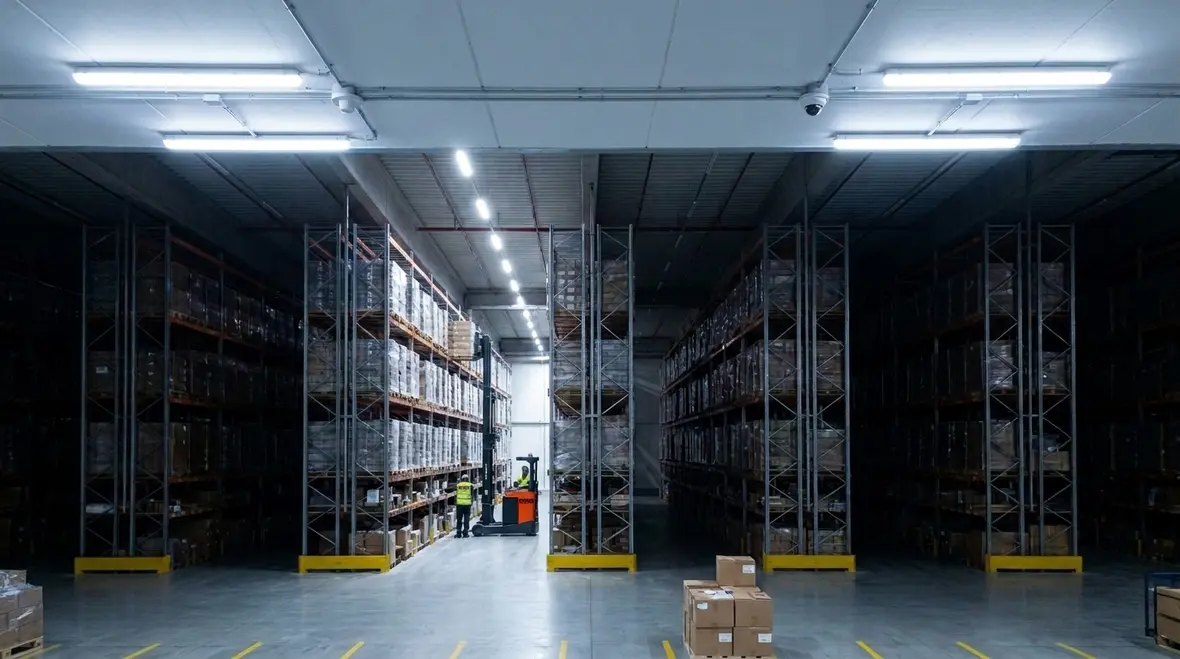
Smart warehouse lighting is not about chasing every new gadget. It is about using automation, zoning, and sensors so your lighting behaves like part of your operation, not a separate mystery. When a warehouse treats lighting like an operating system instead of a wall switch, energy savings show up alongside steadier visibility, safer aisles, and fewer “who left these on all night” accusations.
Kord Electric designs smart lighting for warehousing around how forklifts move, how pallets flow, and how people actually work. We combine controls, LED fixtures, and automation strategies so dock areas, storage aisles, offices, and staging zones each get the light they need, when they need it. That way, you spend less money lighting empty space and more time keeping inventory and orders moving in the right direction.
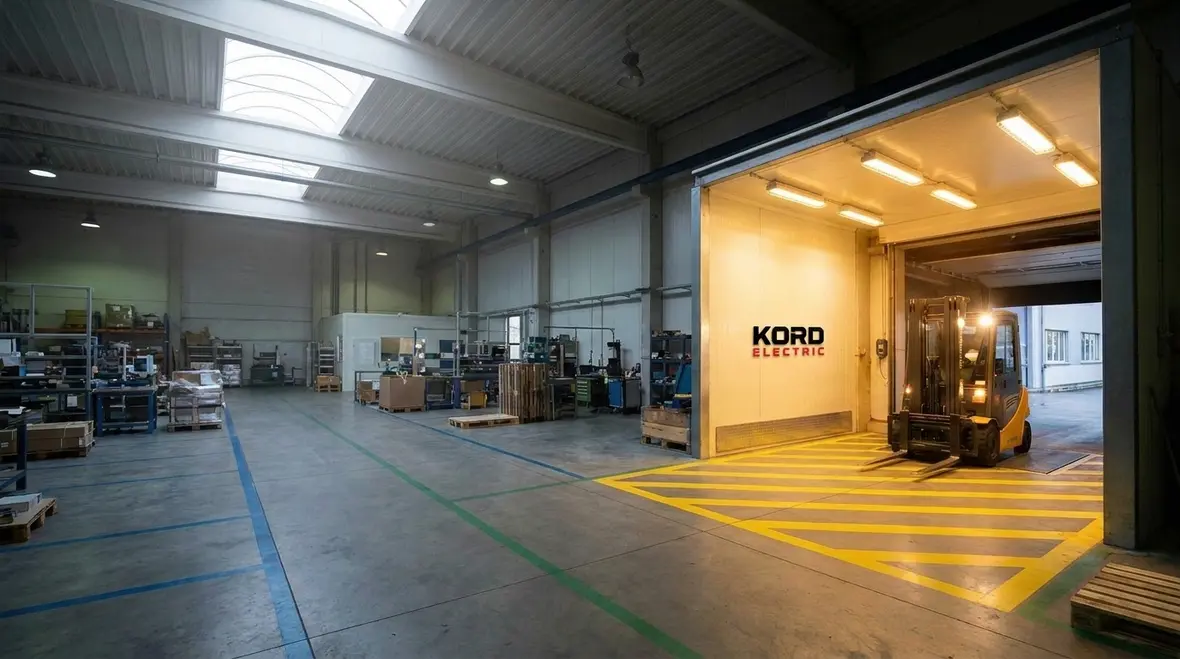
If you are comparing smart lighting with broader warehouse upgrades, Kord Electric’s Warehouse LED Lighting Benefits and ROI guide shows how fixture efficiency and controls work together so savings are not just theoretical. Fixtures do the shining. Controls make sure they shine at the right time and the right level.
How smart warehouse lighting automation works in real operations
Warehouses move fast, and lighting needs to keep up. First, smart controls break the building into zones like dock areas, storage aisles, and staging zones. Then, the system adjusts lighting level based on activity. For example, motion and occupancy sensors can raise brightness when forklifts enter a zone and return it to a lower setting when the area sits idle.
Next, scheduling takes over for predictable cycles such as shift start times, receiving windows, and overnight processes. However, automation should not behave like a one size fits all timer. Our expert service staff helps teams tune the logic so the lighting supports throughput without creating flicker or sudden changes that distract workers.
Additionally, daylight harvesting can integrate with skylights or high roof windows. When daylight is strong, the system reduces artificial output in the affected zones. When clouds roll in, it restores brightness smoothly. This matters in big buildings where some areas get plenty of sun and others feel like they are lit by a single stubborn lamp from 1998.
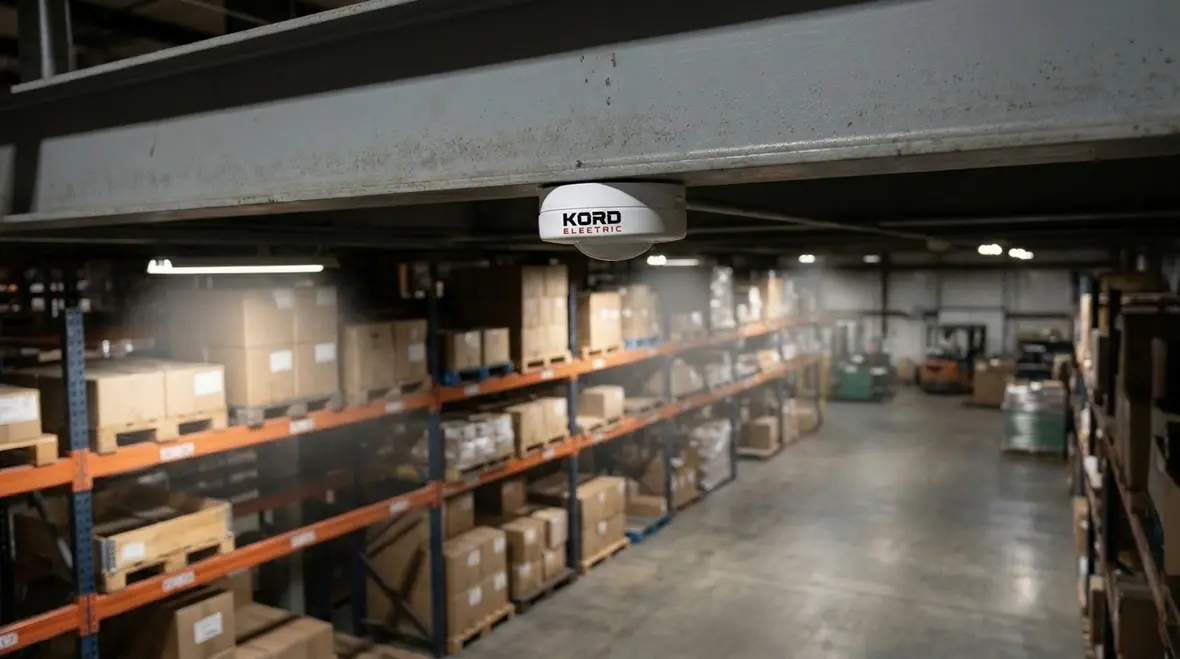
For leaders who want more detail on how automation logic ties into shift patterns and daylight changes, Kord Electric’s Warehouse Lighting Automation Efficiency Guide walks through real control strategies that match how warehouses actually run instead of how a generic diagram says they should.
Sensors that sense what matters, not just what they can
Sensors are the heart of any smart lighting plan. Yet the best approach depends on the space. For instance, occupancy sensing helps when people move through aisles, while motion sensing fits areas where activity is less frequent but still time based. In high bay areas, we consider coverage height and beam angles to ensure the sensor reaches the zones it must control.
We also help clients handle sensor placement, mounting, and sensitivity. If sensors cover too much, lighting changes spread farther than needed. If they cover too little, workers end up in dim corners and everyone starts complaining, often loudly, often at the worst time. Our technicians prevent that by validating coverage patterns during design and commissioning.
Moreover, smart systems can include options for maintenance alerts and performance monitoring. Instead of waiting for a failure, the control layer can flag a fixture group that is drifting out of range. That reduces unplanned downtime, which matters for commercial and industrial operations with strict shipping schedules.
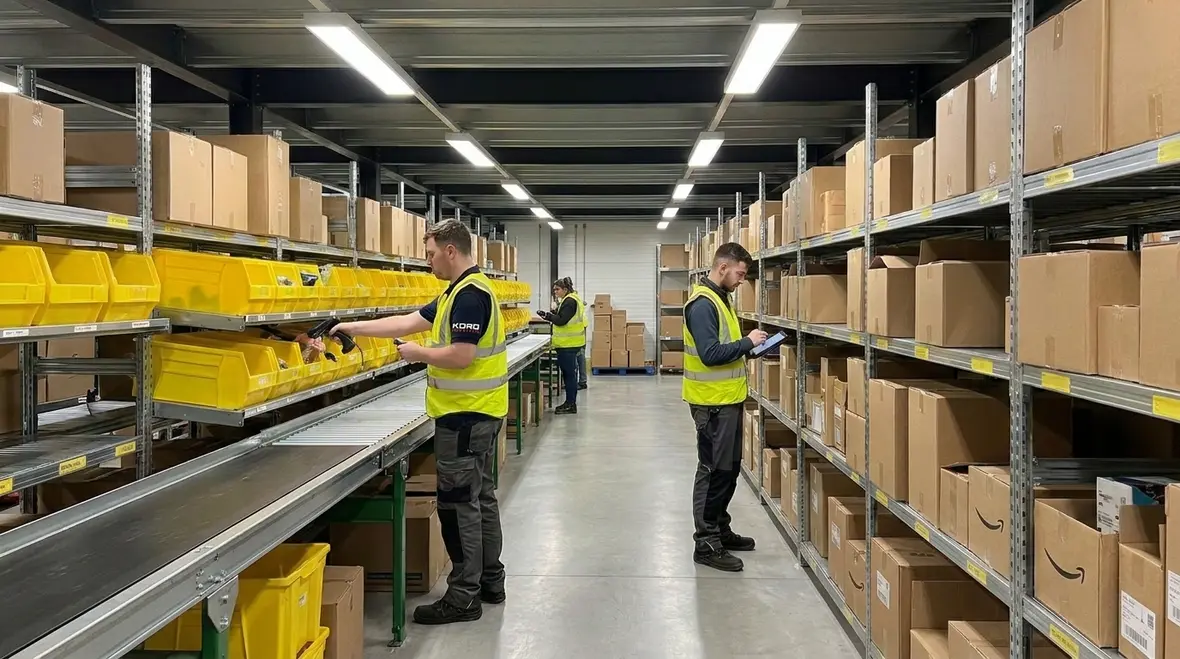
When sensors, zoning, and dimming all work together, smart lighting supports safer workflow instead of surprising staff. Kord Electric’s Warehouse Smart Lighting Controls for Safety article digs deeper into how controls protect aisles, crosswalks, and dock areas where pedestrians and forklifts share the same space.
Energy savings that hold steady after installation
Energy reductions often sound simple on paper, but the real goal is steady savings across months and seasons. Therefore, Smart Lighting for Warehousing: Automation, Sensors & Energy Savings works by reducing hours at full output, not by turning lights off too aggressively. We typically aim for a practical approach: keep safety levels consistent while lowering light when areas are empty.
Next, zoning improves fairness across the facility. If one section runs busy while another stays quiet, you should not pay full power for the quiet one. In addition, dimming curves matter. Smooth dimming avoids the “why does this look different today” problem that makes people lose trust in the system.
Finally, smart controls reduce waste from manual overrides. Many teams still use switches, but smart systems can respect occupancy while limiting how long lights stay high. In other words, your staff can do their jobs without accidentally turning the warehouse into a giant stage light for the entire night.
For facilities planning a broader retrofit, Kord Electric’s Commercial Lighting Control Retrofit: Costs, Benefits & Energy Savings resource outlines how to connect warehouse lighting controls with the rest of your commercial lighting strategy so savings stay on track as operations change.
Light quality, safety, and worker comfort in industrial spaces
A warehouse is not a showroom, but workers still need clear sightlines. Smart lighting should improve visibility, reduce glare, and keep color consistent. When fixtures dim down, we want the lighting to remain usable for tasks such as order picking, label reading, and equipment movement.
To accomplish this, we evaluate fixture placement and aiming, not just controls. We consider height, aisle width, and reflectance from floor and racking materials. Then, we align illumination targets with the tasks performed in each zone. This is where our expert service staff explains tradeoffs in plain language so stakeholders understand the “why,” not just the “what.”
Additionally, emergency lighting integration matters. Smart systems must work with life safety requirements. We coordinate with facility standards so emergency behavior stays reliable during normal operations and during events. That keeps compliance teams calm and keeps operations moving.
When you combine light quality with smart control, you get the full benefit of Smart Lighting for Warehousing: Automation, Sensors & Energy Savings instead of a partial upgrade. For a deeper look at how lighting control fits into modern facility electrical design, Kord Electric’s Modern Electrical Systems for Commercial Buildings: Technologies & Benefits explains how distribution, protection, and controls all support each other.
Planning and commissioning steps that avoid headaches later
Smart lighting projects fail when teams skip early planning. Kord Electric approaches design like a partnership. First, we assess the site: lighting layout, existing controls, power constraints, ceiling height, and typical activity patterns. Then, we map zones that make operational sense for the facility, not just what looks good on a drawing.
Next, we define control behavior. For example, we decide what happens when a dock door stays open for long periods, or when a zone receives intermittent activity. We also set minimum light levels so work stays safe even during low activity.
Then comes installation and commissioning. Our technicians do verification checks like sensor coverage testing, dimming performance review, and schedule validation. After that, we provide onboarding so others on site can use schedules and override options responsibly.
Because facilities evolve, we also plan for updates. If a warehouse expands or reorganizes, the control system should support the change without turning the project into a full rebuild. That is how you protect your investment.
For operators who want a broader framework, the Advanced Power Distribution for Warehouse Efficiency resource shows how measuring, tuning, and documenting your electrical systems—lighting included—keeps upgrades manageable instead of mysterious.
What Kord Electric brings to smart warehouse lighting
We serve commercial and industrial facilities, along with major property buildings, and we keep the focus on outcomes. We do not just swap fixtures and walk away. Instead, we guide the process from assessment to commissioning, and we explain the controls so teams can operate the system with confidence.
Our expert service staff shows how automation affects daily work. Moreover, we help clients avoid common mistakes like mismatched zoning, unrealistic schedules, and sensor layouts that do not fit real traffic. In short, our approach turns a complex project into a manageable plan that supports safety and efficiency.
And if someone asks, “Does this mean we never touch the switches again?” we answer honestly. Smart systems can reduce manual use, but staff still needs simple overrides for unusual situations. We make sure those overrides behave predictably, not like a pop quiz nobody studied for.
If you are exploring larger lighting control strategies beyond the warehouse floor, Kord Electric’s Commercial Lighting Control That Saves Energy With Automation guide connects warehouse controls with broader commercial sites so your whole portfolio benefits, not just one building.
Kord Electric also supports regional customers with a full range of electrical and lighting services. For facilities in Southern California, our Los Angeles County electrical services team can integrate smart lighting projects with broader power distribution, maintenance, and troubleshooting work so everything stays aligned.
FAQ
Conclusion: Upgrade your warehouse lighting with Kord Electric
If your warehouse still uses fixed lighting schedules, you pay for light when you do not need it. With Smart Lighting for Warehousing: Automation, Sensors & Energy Savings, you gain zoned control, smoother dimming, and measurable energy reduction while keeping safety consistent. Kord Electric designs these systems for commercial and industrial facilities and major property buildings, then commissions them with care. Contact us today for an assessment and a clear plan built for your workflow, not a generic one that misses the real details.
To see how smart warehouse lighting fits into a wider strategy, you can also explore Kord Electric’s related resource on Smart Warehouse Lighting Benefits for Facilities, which connects automation, sensors, and energy savings across multiple facility types.
When you are ready to align automation, sensors, and real energy savings, Kord Electric is ready to design, install, and support a system that fits how your warehouse actually runs.