Warehouse Lighting Automation Efficiency Guide
Warehouse lighting and automated control that actually improves efficiency
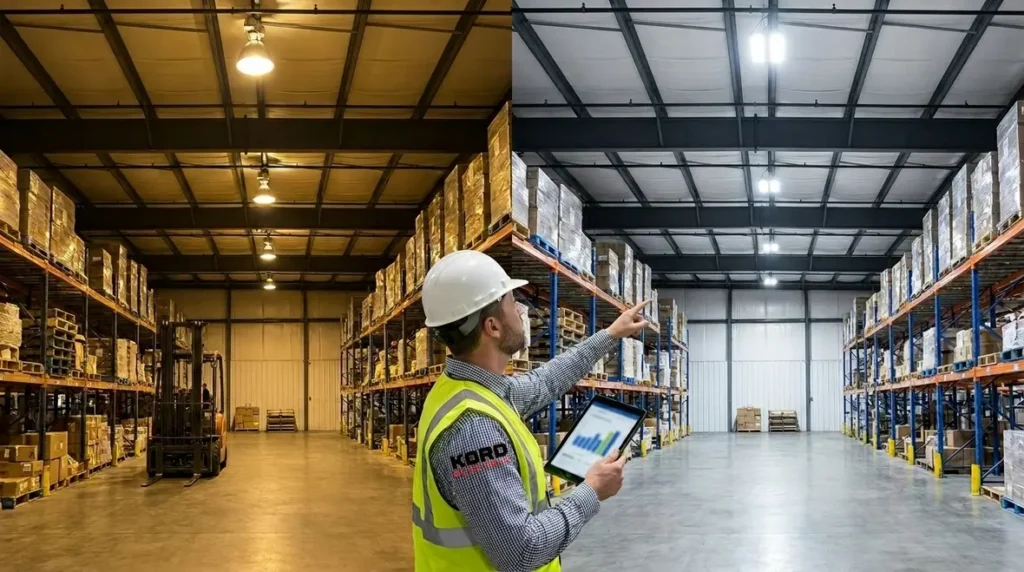
At Kord Electric, we see warehouse lighting automation efficiency show up the moment a facility stops treating lighting like a switchboard project and starts treating it like an operating system. When lights respond to real conditions like occupancy, daylight, and shift schedules, energy use drops, maintenance costs flatten, and safety improves without adding complicated steps for staff. And yes, that means fewer “why is this still on?” conversations at 2 a.m. Meanwhile, our team of technicians and expert service staff explains the why behind every recommendation, so operators understand what they get and why it matters.
In this article, we outline how automated lighting control systems optimize warehouse operations in a practical, code-aware way. Also, we keep it business casual, not rocket science, because warehouses already have enough “special equipment” to deal with.
Automated lighting control for warehouses: what it changes in day to day work
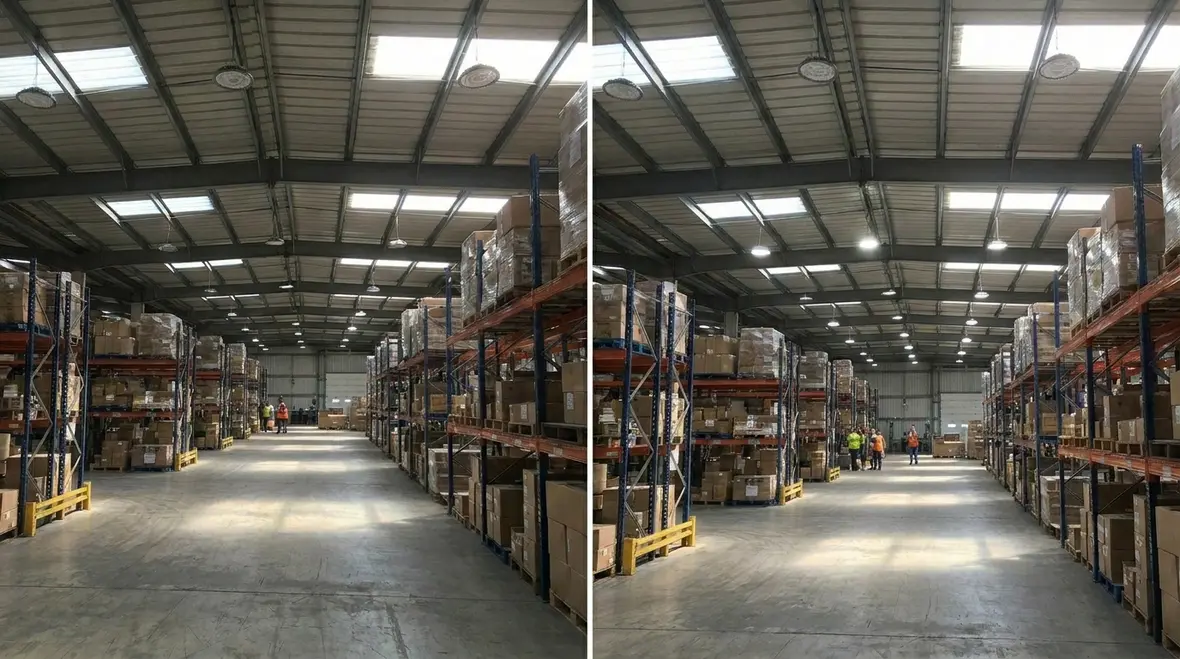
Automated lighting control systems change daily workflow by removing guesswork. Instead of running full output all day, our approach helps facilities match light levels to what the warehouse actually needs. For example, lights can dim when daylight enters through skylights or warehouse doors, then increase when conditions shift. When motion detectors or occupancy sensors detect activity in a zone, lighting ramps up and stays stable for a set period.
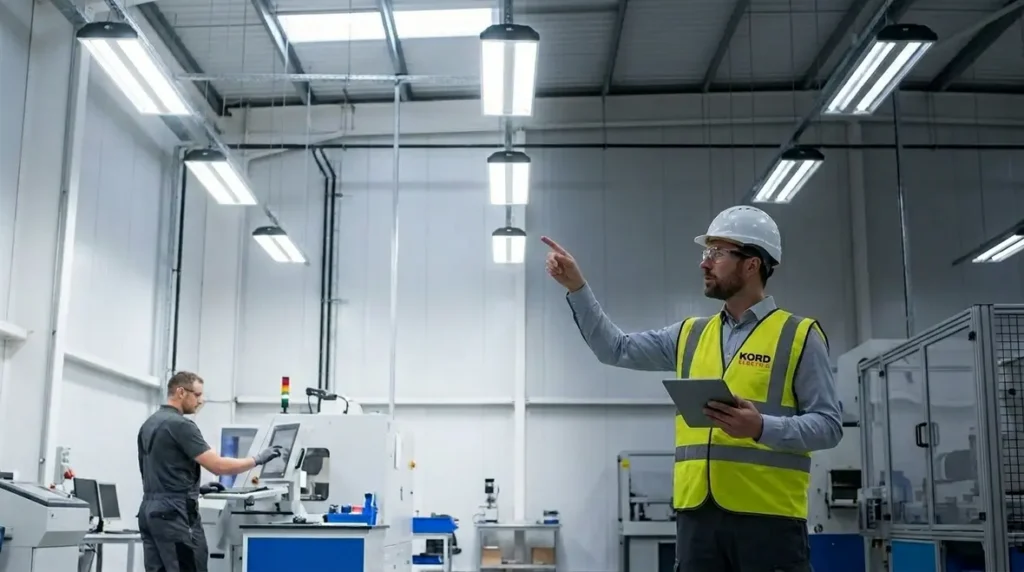
As a result, workers see better contrast in aisles, picking paths, and staging areas. Furthermore, automated controls reduce glare and uneven lighting, which supports safer movement around racks, conveyors, and high traffic doors. At the same time, operations teams gain predictable behavior, because controls follow a schedule and logic rather than human habits.
And here is the part most people forget: reduced runtime means fewer lamp replacements and fewer callouts. In other words, the system does not just save energy, it also saves time and budget. Then again, time is money, and warehouses run on both.
Designing a zoning plan that follows the building, not a guess
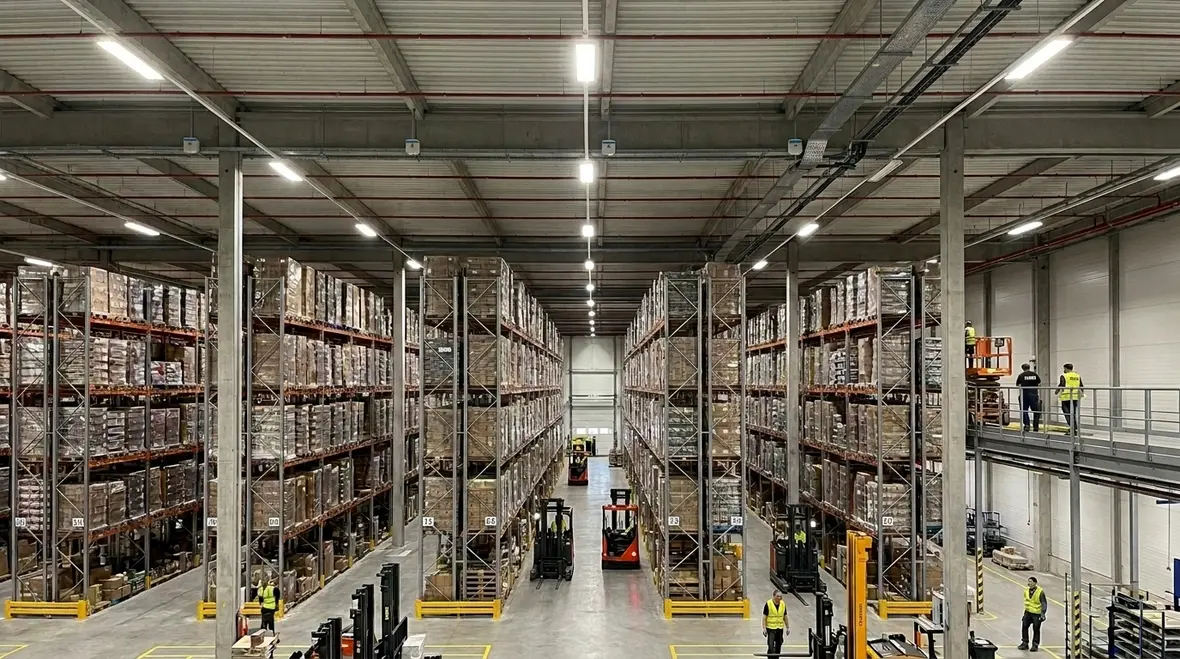
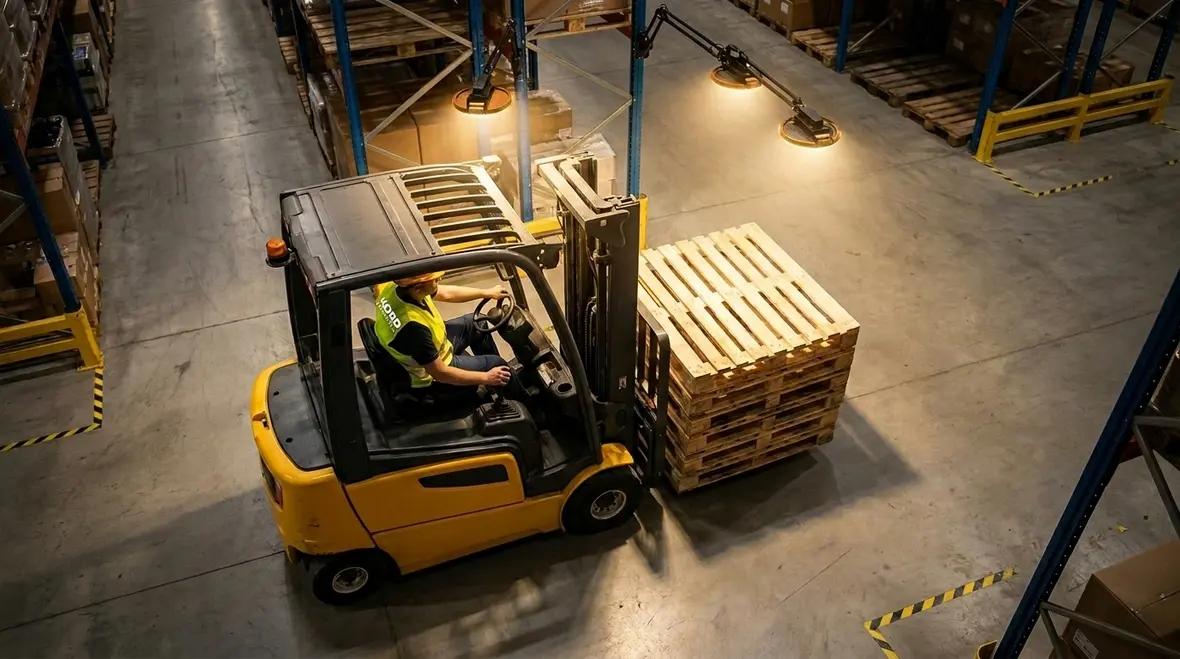
To optimize operations, we build zoning around how materials actually move. We do not design zones based on ceiling layout alone. Instead, we map areas like receiving bays, picking aisles, high bay storage, office corridors, and dock areas, then align control zones with those workflows.
For instance, receiving zones often see bursts of activity. Therefore, controls can keep lighting at a lower level when idle, then raise it during forklifts entering, unloading, or inspection work. Picking aisles may require consistent clarity, so we tune dimming limits and sensor response time to avoid noticeable flicker. Meanwhile, dock doors may benefit from separate control groups, because door openings create shifting light conditions throughout the day.
Our technicians and expert service staff review these patterns on site and explain what they find. They also help the team decide which zones need high reliability and which zones can accept gradual dimming. That conversation matters, because a zoning plan that ignores operations becomes a zoning plan that nobody trusts. Then the system gets overridden, and we all lose.
Energy savings without compromising visibility and safety
Warehouse teams want lower utility bills, but they also need clear visibility. So we avoid “cheap savings” that reduce light levels too aggressively. We instead use staged control strategies that protect worker sightlines while still reducing unnecessary output.
One common strategy uses daylight harvesting. As outdoor light changes, the system adjusts interior lighting levels. However, we configure this carefully so warehouse glare stays under control and workers do not experience sudden shifts. Another strategy uses occupancy and motion detection for low traffic areas like storage perimeters or secondary corridors.
In addition, we support task focused lighting when the layout allows it. Rather than lighting the entire space at full intensity, the design targets the areas where tasks occur. Then we let remaining zones run in a reduced state. This supports safe movement around racks and staging while keeping energy use disciplined.
And when teams ask if automation ever goes too far, we tell them the truth. If we set the controls without operator input, yes, it can feel “too smart.” That is why we tune settings with your workflow and we explain every adjustment in plain language.
Scheduling and controls that match shifts, not generic calendars
Warehouses do not operate on one universal routine. Shifts change, seasonal demand rises, and maintenance work interrupts traffic patterns. Automated lighting control systems handle this better when schedules match real operations, not a template.
We implement time based controls for daily routines, then we layer sensor logic where it makes sense. For example, during a night shift, a warehouse might keep hallway and aisle zones at a steady reduced level, then brighten only when motion confirms activity. During weekends or slow production windows, schedules can reduce output across selected zones.
Because facilities often require predictable behavior for audits and inspections, we also support standardized scenes and override rules. Our expert service staff helps teams understand how manual overrides work, how long overrides last, and what happens when overrides end. This prevents frustration and reduces the temptation to bypass automation.
Finally, we consider how lighting behavior impacts productivity. When workers can trust lighting performance, they move efficiently. And when they move efficiently, operations improve. It is simple, calm logic, like a well timed song at the right moment, not noise all day.
Staying code aware: electrical standards and safe control integration
When we integrate automated lighting control systems, we also stay aligned with the electrical standards that protect people and equipment. Electrical design choices involve wiring, equipment ratings, control wiring methods, and installation practices. In other words, automation still rides on solid electrical fundamentals.
Kord Electric addresses these topics with the same seriousness we bring to the rest of facility electrical work. We also reference the type of guidance found in our technical reading on Understanding NFPA 70: The National Electrical Code explained for 2026, because warehouse lighting projects must consider safe installation requirements, conductor details, and protection considerations as they connect to equipment and control strategies.
Now, we are not turning this into a textbook. But we do make sure the controls you install behave safely under real conditions: vibration, humidity, temperature swings, and heavy industrial use. Additionally, we coordinate with facility rules for power distribution, panel labeling, and inspection readiness. That way, the final result does not just look good on day one. It holds up after a year of forklifts, dust, and real life.
And if anyone asks why we care so much about standards, we answer with a simple joke. Because nothing ruins productivity like a problem that could have been prevented. The warehouse does not need surprises. It needs solutions.
Monitoring, maintenance, and continuous tuning after installation
Automation does not end at commissioning. After install, we tune settings based on how the facility performs in real schedules and conditions. Then we train staff to operate the controls correctly. This matters because sensor placement, daylight patterns, and usage patterns often shift after teams settle in.
We also support maintenance planning. When lighting zones and control devices fail, faster diagnostics reduce downtime. Therefore, we design systems so teams can identify affected areas quickly. Furthermore, we document configuration details to help with future upgrades and seasonal adjustments.
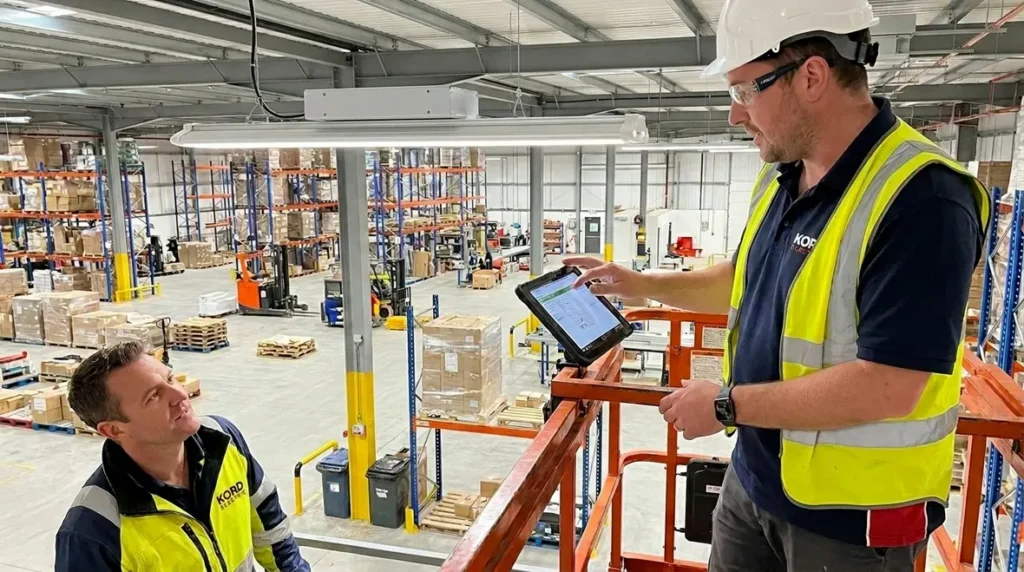
Our technicians and expert service staff stay involved through the service process. They help operators understand how to recognize normal behavior versus abnormal behavior. Then they explain what to do first, what to check next, and when to escalate to service support. That approach reduces nuisance calls and keeps operations running.
Over time, continuous tuning improves warehouse lighting automation efficiency further. It refines schedules, updates sensor settings when traffic patterns change, and adjusts daylight harvesting strategies when rooftop or skylight conditions evolve. It is a quiet kind of improvement, and honestly, that is the best kind.
FAQ: warehouse lighting automation efficiency and control systems
Ready to optimize your warehouse lighting operations?
If your warehouse lighting runs too long, hits the wrong brightness levels, or creates avoidable maintenance calls, we should talk. At Kord Electric, we design and service automated lighting control systems for commercial and industrial facilities and major property buildings. Then we explain each step through the eyes of your operators, not just the spec sheet. Contact us for an on site review of your zones, schedules, and control needs, and we will recommend a practical path to measurable improvements.
If you are planning a larger upgrade that goes beyond controls into fixture changes, layout improvements, or compliance updates, our dedicated Lighting Installation Services help tie warehouse lighting automation efficiency to long term performance, safety, and code readiness across your facility.
For warehouses that also need structured inspections, testing, and documentation around critical electrical systems, programs like our Electrical Preventive Maintenance services support a bigger reliability picture. Lighting, controls, panels, and distribution work together, and treating them as a coordinated system keeps your operation calmer, safer, and far more predictable.