Smart Warehouse Lighting Benefits for Facilities
Commercial and industrial sites live or die by uptime, safety, and energy cost control. When we help a facility move from basic lighting to warehouse smart lighting benefits like responsive dimming, zoning, and data-driven control, the payoff shows up fast. There is less wasted electricity, fewer lighting surprises, and more consistent visibility for staff who need to work with precision. And yes, we also reduce the “lights flicker, panic begins” moments. As our team explains it, you do not have to chase the latest tech just to feel modern. You chase it because it helps your building run better. We guide major property owners and operators through the decision with clear steps and practical outcomes.
What a smart lighting layout does for a facility
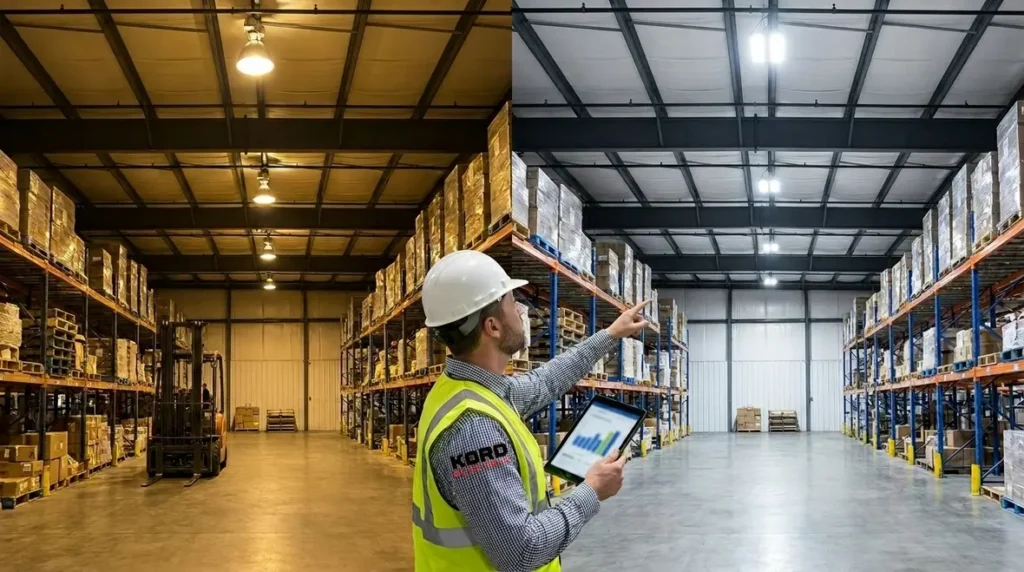
In a traditional setup, lighting stays on the same schedule even when conditions change. Meanwhile, a smart system watches what is happening across the space. For example, it can adjust light levels by zone based on motion, time of day, daylight, and occupancy patterns. As a result, it keeps work areas bright when people are present and reduces output where it is not needed. We also avoid “one size fits all” design, because warehouses and distribution centers vary by aisle, dock activity, rack height, and task type.
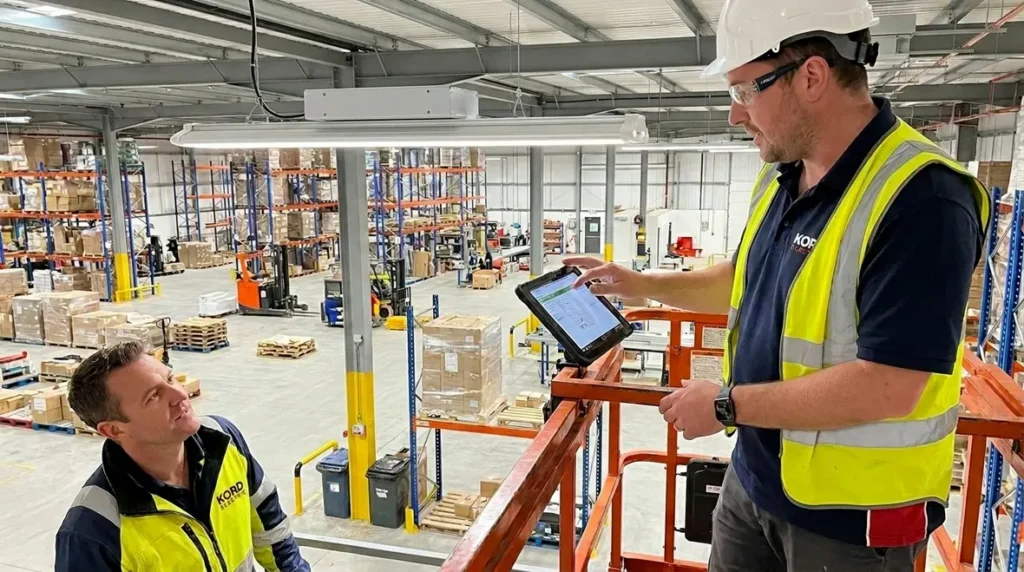
At Kord Electric, our expert service staff walks stakeholders through a layout that matches real usage. We look at where forklifts travel, where pickers stop, and where loading bays sit idle at night. Then we propose control logic that supports those patterns. Our technicians do not just install and disappear. They explain what each control does, so the facility manager can predict behavior instead of guessing.

Energy savings that stick, not just a one week honeymoon
Many projects start with a goal like “use less power.” However, the real savings come from how the controls reduce waste over time. Because smart lighting benefits include automatic dimming and occupancy-based operation, lights do not run at full output during low activity hours. Additionally, daylight harvesting can lower energy use when natural light already covers parts of the building. This matters in commercial and industrial facilities where schedules swing between peak shipping and slower overnight periods.
We also help clients plan for measurable results. After installation, our team can support commissioning steps that confirm sensors, schedules, and zoning work as designed. Then the facility can track energy trends, instead of hoping the spreadsheet looks nice. And to be honest, a “nice spreadsheet” is great, but it is not the real win. The real win is fewer wasted kilowatts day after day.
When we quote a project, we focus on practical controls, not flashy marketing. If a zone never sees motion after 9 pm, the system should not light it like a football stadium at kickoff.

Safer work conditions for teams and equipment
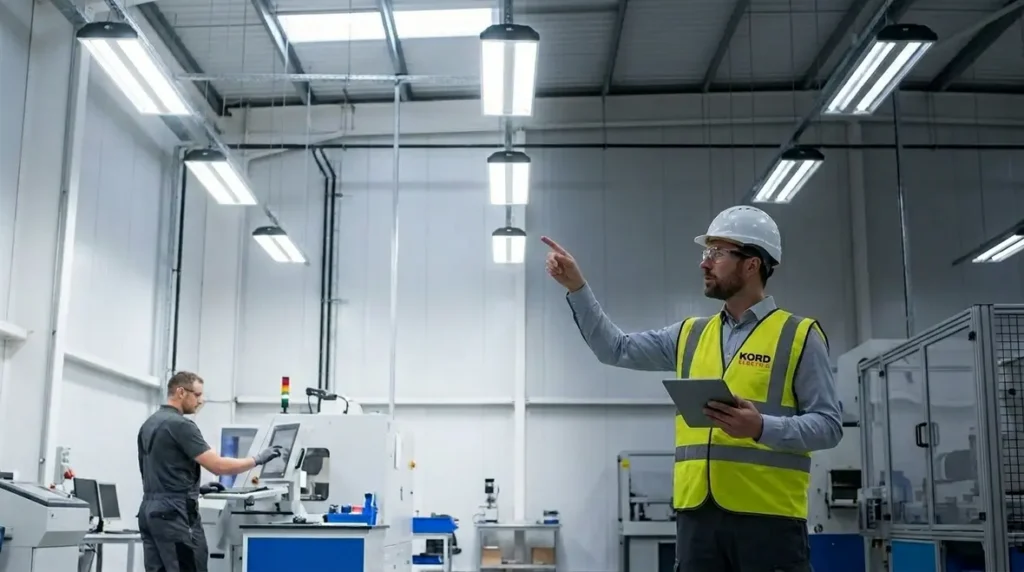
Safety improves when lighting supports how people actually move. Smart systems help maintain consistent brightness at task height and reduce glare that can come from poorly aimed fixtures. Furthermore, when zones transition smoothly rather than switching abruptly, it supports better visibility for staff handling pallets, reading labels, and operating equipment. Over time, that reduces eye strain and supports fewer near misses caused by harsh shadows or sudden changes.
We also like systems that support alerts and maintenance planning. Instead of waiting for a fixture to fail, controls can flag issues earlier. As a result, our customers reduce unplanned downtime during peak operations. In industrial spaces, a small outage can ripple into a big workflow problem. So we design smart lighting to protect both people and process.
Our technicians explain these safety impacts in plain language, so leaders understand what they gain beyond energy reduction. We show how the control design supports traffic patterns, dock scheduling, and high-contrast tasks. If you are comparing lighting and safety tradeoffs, it can help to look at how poor lighting slows people down and drives incidents in our related article on workplace lighting safety hazards that hurt productivity at this link.
Better control and fewer headaches for property managers
Commercial and industrial buildings often run under tight operational calendars. So managers need lighting to behave predictably, especially during shift changes, special events, or seasonal demand. Smart controls allow facility teams to manage lighting by area and schedule, without relying on constant manual adjustments. As daylight changes throughout the week, the system can compensate automatically. That means fewer complaints like “why does this aisle feel dim today?”
Moreover, smart systems make it easier to coordinate lighting with other building operations. We can align schedules with security routines, after-hours access policies, and maintenance workflows. Then your team stops treating lighting like a separate universe with its own rules. It becomes part of the facility control strategy.
Our expert service staff also documents the setup so others can understand it later. We do not believe in handing over a system that only the installer can interpret. If your operator needs to adjust a schedule or update zones, the approach should be straightforward and supported.
And yes, we have heard the joke: “The lights should work like the building itself, not like it is thinking through a horoscope.” Smart control reduces that kind of uncertainty.

Lower maintenance demands and smarter replacement planning
When lighting fails in a warehouse, it rarely fails at a convenient time. It fails when people are busy, inventory is moving, or traffic lanes stay in constant use. Smart systems support maintenance by giving visibility into performance and operating patterns. That means facilities can plan replacements and service visits based on real conditions rather than “schedule it and hope.”
Additionally, dimming features can reduce stress on fixtures by preventing unnecessary full output during low demand periods. Over time, this can help extend useful life for certain components, depending on the design. We still recommend proper maintenance, but we help reduce how often surprises disrupt operations.
We often review existing fixture types, control wiring, and ceiling layouts before we propose upgrades. Then we design a plan that fits the realities of commercial and industrial buildings. Our technicians also explain the service approach so facility teams know what to expect during commissioning and follow-up checks.
Integration and design choices that match real warehouse conditions
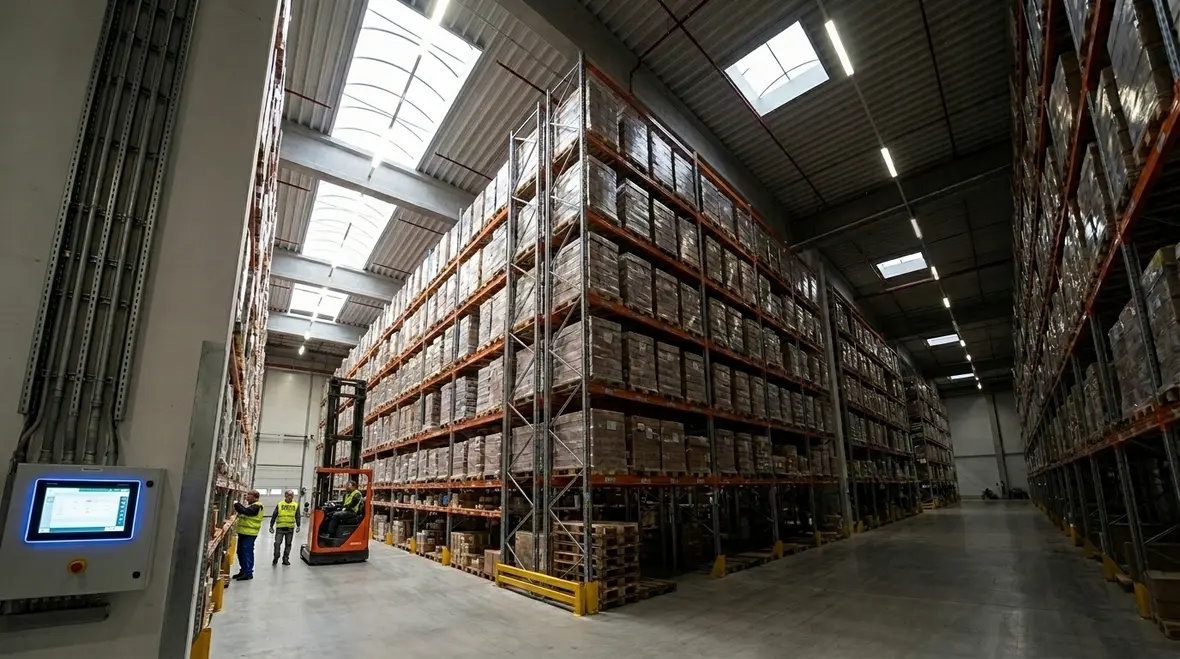
A smart lighting project works best when the design matches the building. For instance, high-bay areas require careful sensor placement and lighting distribution planning. Dock zones need schedules that reflect loading patterns. Picking aisles need consistent visibility, while storage areas may benefit from deeper dimming. In addition, older buildings may need evaluation of wiring, mounting points, and control panel capacity.
Because Kord Electric focuses on commercial and industrial facilities and major property buildings, we bring a process that considers throughput, safety codes, and operational constraints. We map zones, review light levels, and align control logic with workflow. Then we implement with an installation approach that reduces disruption to business hours.
When we use information from our commercial electrical guidance, we treat lighting as part of the larger electrical and systems picture. You can see how modern building electrical planning supports performance and growth in our blog article on commercial electrical systems for modern buildings at this link. Our goal stays consistent: deliver a smart lighting upgrade that supports the building today and does not box it in tomorrow.
As we often tell clients, upgrading lighting is not just swapping fixtures. It is designing how the facility sees and responds.
Case-style examples: what changes after installation
Let’s make it practical. Imagine a distribution center with high daylight in the front and less daylight deep inside. After smart controls go in, zones near windows dim less often and hold more consistent levels throughout shifts. Meanwhile, interior areas reduce output when nobody moves through them. As a result, the facility cuts energy without sacrificing visibility for active work.
Now consider a manufacturing warehouse with frequent schedule changes. Smart schedules can follow shift patterns while still responding to occupancy. Then managers stop overriding lighting every day. They set rules once, and the system keeps up. Meanwhile, maintenance teams benefit from fewer emergency calls caused by unexpected outages.
In another major property building, the team can coordinate lighting with security timing and after-hours access. As a result, the building feels secure without lighting every square foot at full brightness all night. And if that sounds like the difference between “doing the job” and “overreacting,” it is. The best systems reduce effort and waste at the same time.
FAQ
What we recommend as the next step
If you manage a commercial or industrial facility and you are ready to reduce energy waste without harming visibility, Kord Electric is ready to help. We send our technicians and expert service staff to review your warehouse lighting layout, discuss zoning needs, and explain control options in plain terms. Then we plan an upgrade built for how your operation actually runs. Call Kord Electric today for an on site assessment and a practical proposal. Let’s turn your lighting into a system your team can trust, not a mystery that keeps you up at night.
For facilities planning broader upgrades that go beyond lighting, you can also review how power distribution, controls, and infrastructure come together in our guide to commercial electrical systems for modern buildings at this link. When you are ready to connect lighting design with the rest of your electrical strategy, our commercial and industrial service team can coordinate both.
If your facility is considering a larger lighting retrofit that must align with energy codes and modern warehouse standards, our team can also help you tie smart controls and layout changes into broader commercial lighting upgrade planning and compliance reviews. To explore how those services fit your property, visit our service overview and schedule a conversation at this link.