Commercial Electrical Circuit Troubleshooting Guide
Introduction: A manager’s first look at a commercial electrical circuit troubleshooting guide
Kord Electric offers a practical commercial electrical circuit troubleshooting guide that managers can use when things go wrong in the field. First, we define what is normal, then we isolate the fault zone, and finally we confirm the fix without guessing. In the first hours after an outage, decisions move fast, and so does the cost. That is why our expert technicians teach a calm, repeatable method rather than a frantic hunt for the problem like it is hidden treasure. If the lights flicker, motors stall, or panels run warm, this guide helps others act in the right order, and it helps our team communicate clearly with building operations.
When a facility team needs answers fast, start with the basics
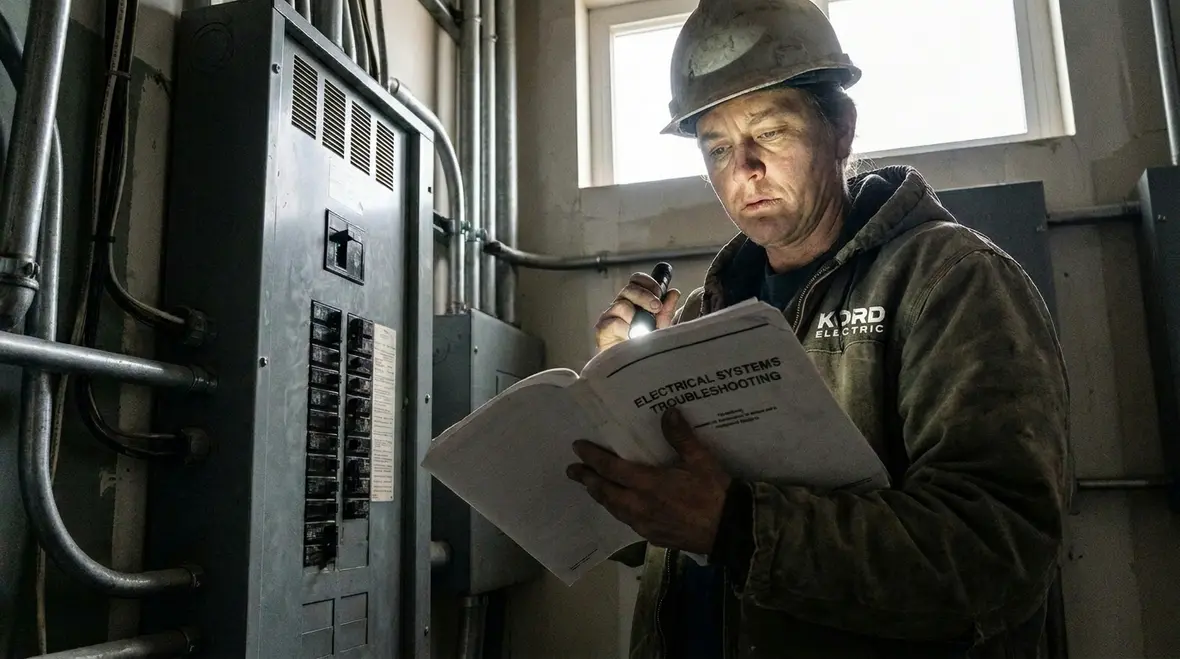
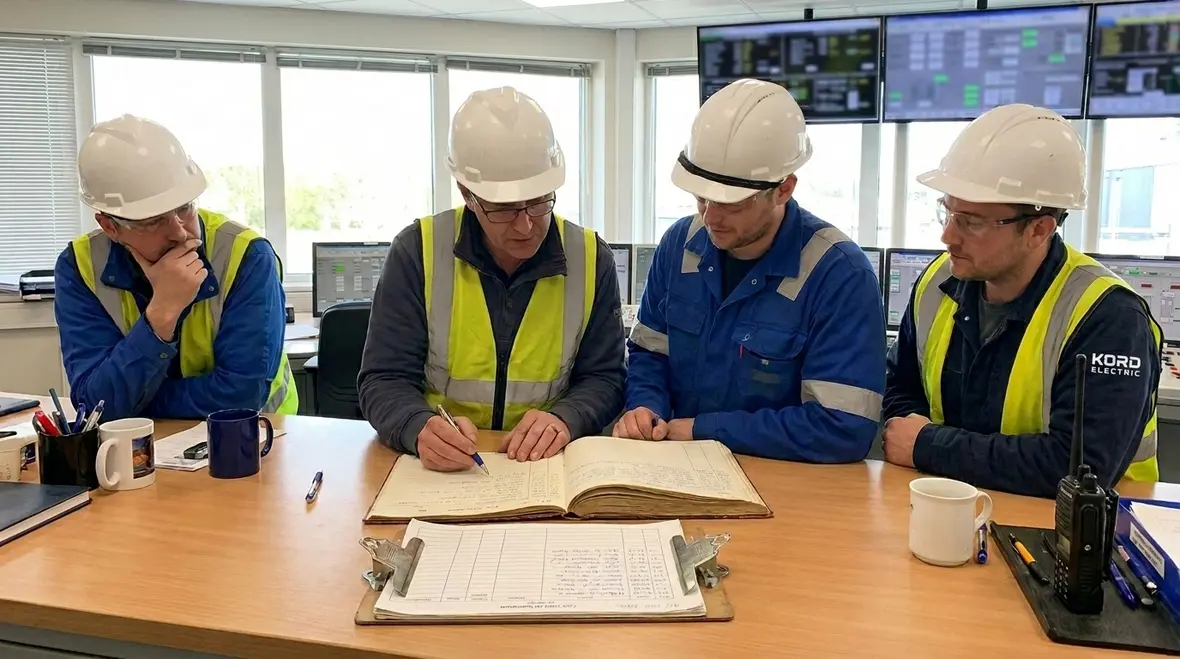
Third person clarity matters in commercial and industrial buildings, because multiple roles need the same picture. Therefore, managers should ask for a quick status snapshot before anyone opens panels. We recommend that the site lead collects the symptoms, the time of failure, and the area affected, then we compare that data to the building log. After that, our technicians confirm whether the event matches a power quality issue, a load fault, or an equipment protection event.
At this stage, you do not need deep theory. You need good observations. For example, if only one floor fails while neighboring areas stay steady, that points to a local circuit or distribution path. If breakers trip immediately on reset, the issue often sits downstream. And if the problem changes with door openings or HVAC cycling, then controls and interlocks may contribute. Managers can also reduce stress by setting a simple rule: one team works on fault isolation while another records readings, otherwise the data becomes a mess like a streaming service queue at peak hour.
Understand how commercial distribution behaves before you touch anything
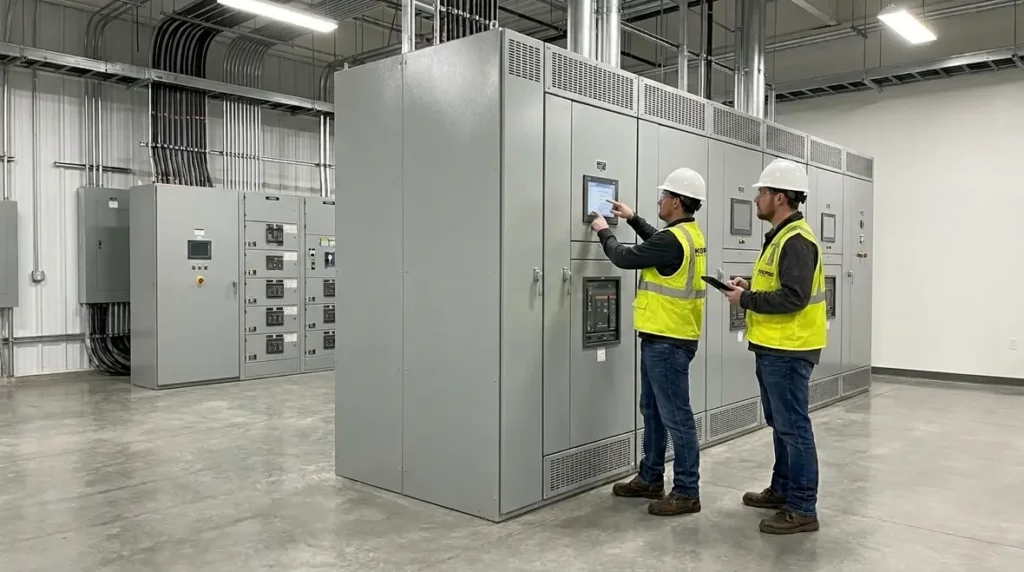
In major property buildings, electrical systems usually include utility service gear, transformers, switchgear or main distribution, branch panels, and feeder circuits. Additionally, protective devices coordinate across levels so the system isolates the fault closest to the problem. Our expert service staff emphasizes that coordination is the hidden logic behind many successful repairs. When a manager understands that logic, they avoid delays such as resetting upstream devices repeatedly.
Therefore, managers should know what “good” looks like during operation. For instance, breaker trip curves, typical thermal patterns, and expected voltage ranges act like a map. When an incident occurs, our team checks whether protective devices behaved as designed. If they did not, that may indicate a miswire, an incorrect rating, or a failing breaker mechanism. We have seen situations where the breaker trips, but the load fault remains, because someone fixed only the symptom and not the cause. So, we push for confirmation, not just relief.
Isolate the fault zone using a reliable step by step method
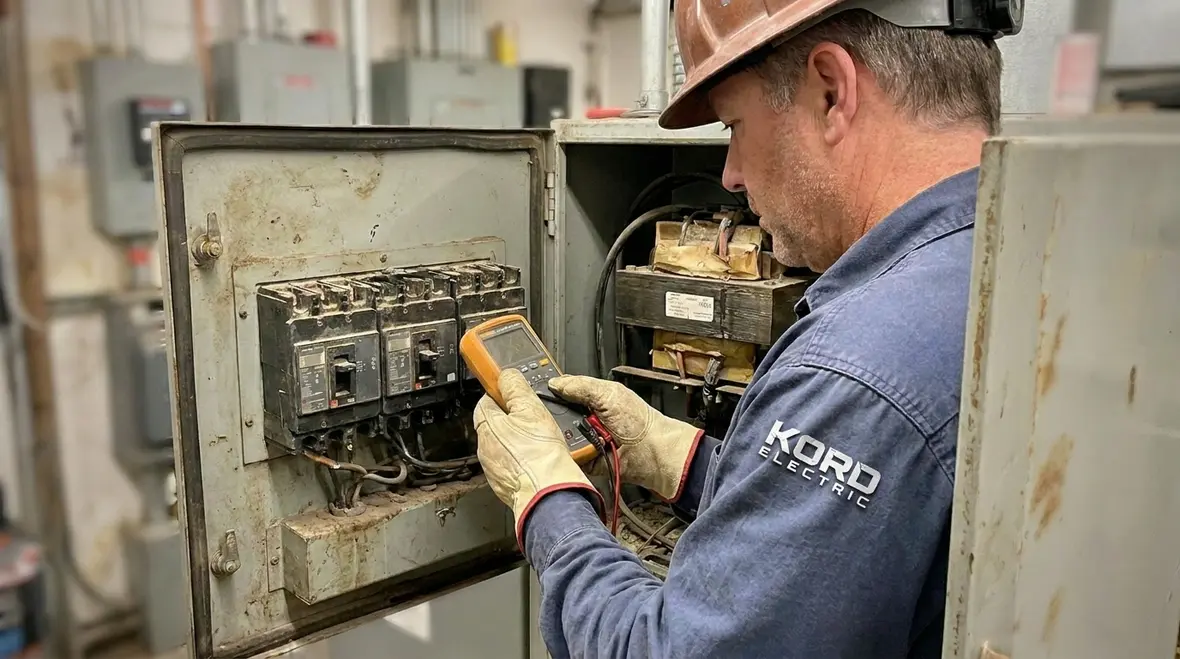
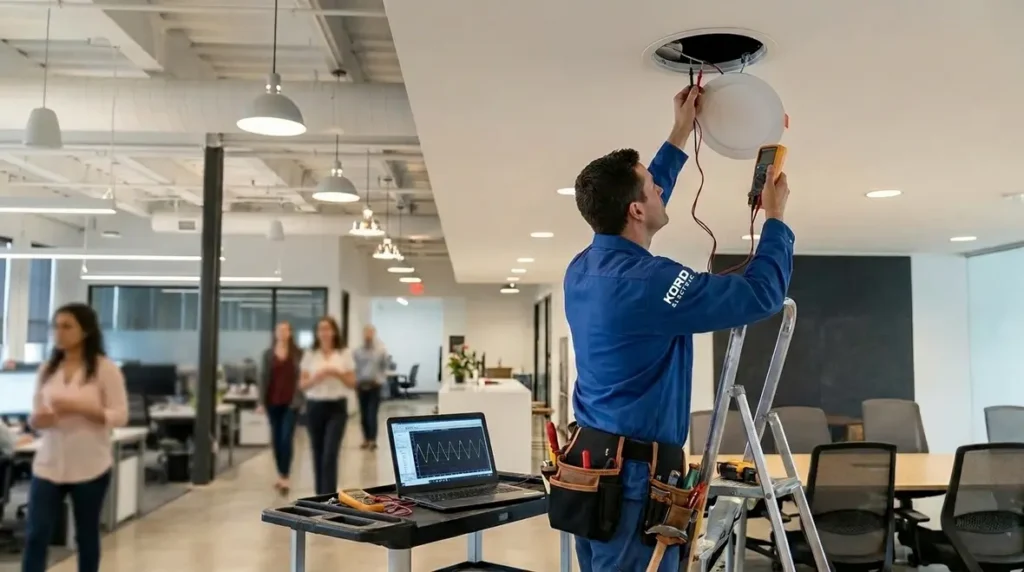
A strong commercial electrical circuit troubleshooting guide focuses on isolation. To isolate efficiently, our technicians use a method that moves from the safest observation to the most direct test. First, they verify power availability and then confirm which devices are opening or staying closed. Next, they measure at likely bus points and branch feeders to narrow the problem area. After that, they shift attention from distribution to specific loads, such as lighting panels, receptacle circuits, pumps, or AHU units.
Here is how we guide managers through a practical workflow. We keep it straightforward so others can follow it under pressure.
- Confirm the reported symptom in the field and mark the exact locations affected.
- Check whether only one phase shows abnormal behavior, because that can point to a phase imbalance.
- Inspect for visible conditions like moisture, loose conduit, or heat discoloration before any test that could escalate risk.
- Verify breaker and contactor status, including whether trip indicators match the event timeline.
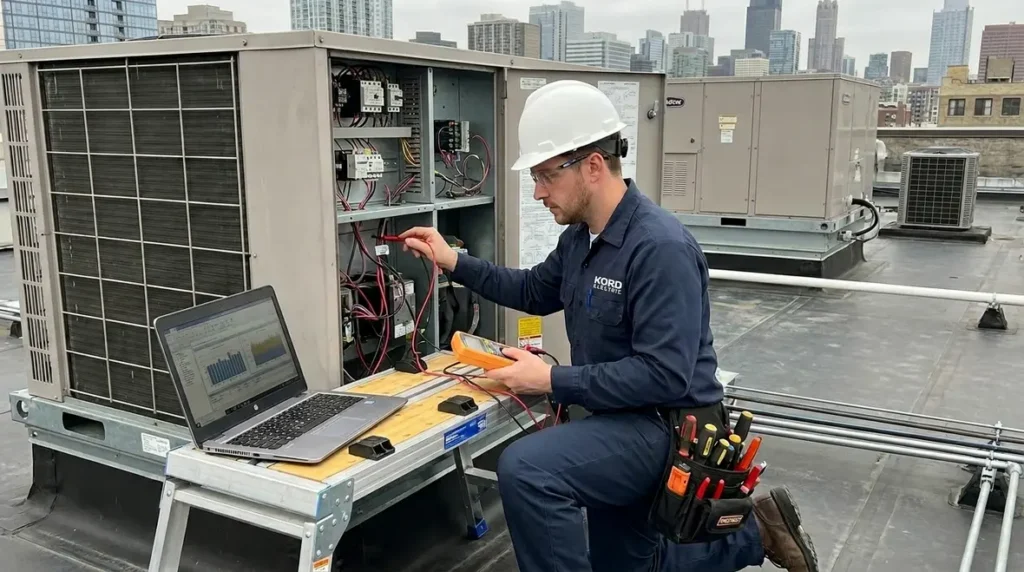
- Measure voltage and current at logical points to find the boundary between good and bad supply.
- Once the boundary narrows, test the affected circuit path toward the load, not just around the panel.
And yes, sometimes the “fault” is a false alarm caused by a control interlock or a misfiring contactor. Our expert staff explains these scenarios with patient clarity, because managers do not need a textbook; they need a path to resolution. A pop culture example fits here: chasing random leads feels like a detective show with the clue swapped at the last minute. Isolation prevents that chaos.
Common issues managers see in commercial buildings, and what to do next

Managers often report recurring patterns in major property buildings. We see three categories most frequently. First, overload and thermal issues show up as warm panels, nuisance trips, or dimming lights during high demand periods. Second, wiring and termination problems appear as intermittent failures, high resistance, or corrosion near connections. Third, protection and coordination issues show up as improper tripping, wrong device settings, or selective coordination breakdown.
When these issues appear, we recommend managers act in an ordered way. They should request infrared scans or thermal imaging if the building supports it, because it reveals abnormal heat without guesswork. Then, they should ask for inspection of terminations and connections in the affected distribution area. After that, our technicians verify breaker ratings, torque values, and protective device settings against the design intent.
If the facility suffers from recurring tripping after repairs, then the problem may sit in the load itself. Therefore, our team tests motor feeders for insulation resistance where appropriate, evaluates starter contactors, and checks for failing components in control circuits. We also help managers interpret what the tests mean, in plain language, so others in operations can make consistent decisions. That is how we keep the building running, not just the lights on for a night.
For teams who want to stay ahead of these problems, structured programs such as commercial and industrial electrical maintenance plans can turn troubleshooting from a fire drill into part of a steady, long term reliability strategy.
Prevent repeat failures with commissioning, documentation, and clear communication
Repairs that do not stick often come from incomplete documentation or weak follow up. For commercial and industrial facilities, repeat failures can cost more than the original event because work crews lose time, tenants lose comfort, and operations lose trust. We help managers prevent that by pairing troubleshooting with verification and by updating records. Our expert service staff builds a clean paper trail that supports maintenance planning and future audits.
First, we recommend that managers ensure the electrical as built drawings match reality. If changes occurred during tenant improvements, then outdated single line diagrams can send troubleshooting in circles. Second, we advise confirming that panel schedules and breaker labels reflect actual circuits. Third, we encourage periodic reviews of protective device settings, especially after major load changes like new refrigeration, expanded kitchens, or additional production equipment.
Next, we suggest staff training that covers basic symptoms and reporting expectations. Our team can help others learn what details matter, like which circuits failed, whether the fault persisted after reset, and whether the event matched a specific operating cycle. That is how a manager turns a frustrating incident into useful learning. Think of it as corporate flossing: nobody loves it, but it prevents problems later.
If this kind of structured follow up feels like the missing piece, exploring services such as hidden electrical risk assessments for commercial buildings can reveal issues before they turn into the next outage story everyone remembers for the wrong reasons.
FAQ
Conclusion: Get the right fix the first time, call Kord Electric
When an outage hits a commercial or industrial facility, managers need calm actions and accurate evidence, not lucky guesses. Kord Electric brings expert technicians who follow a proven troubleshooting path, isolate the fault zone, and verify results so failures do not return in a week. If your panels run warm, breakers trip, or equipment behaves unpredictably, contact us for support. We will help you protect uptime, reduce repeat work, and keep your building operating with confidence. Let us handle the electrical chaos before it handles you.
For facilities that want ongoing support instead of one time fixes, Kord Electric’s electrical repair and troubleshooting services give managers a direct line to specialists who know commercial systems inside and out, from emergency response to long term reliability planning.