Office Building Electrical Maintenance Schedule
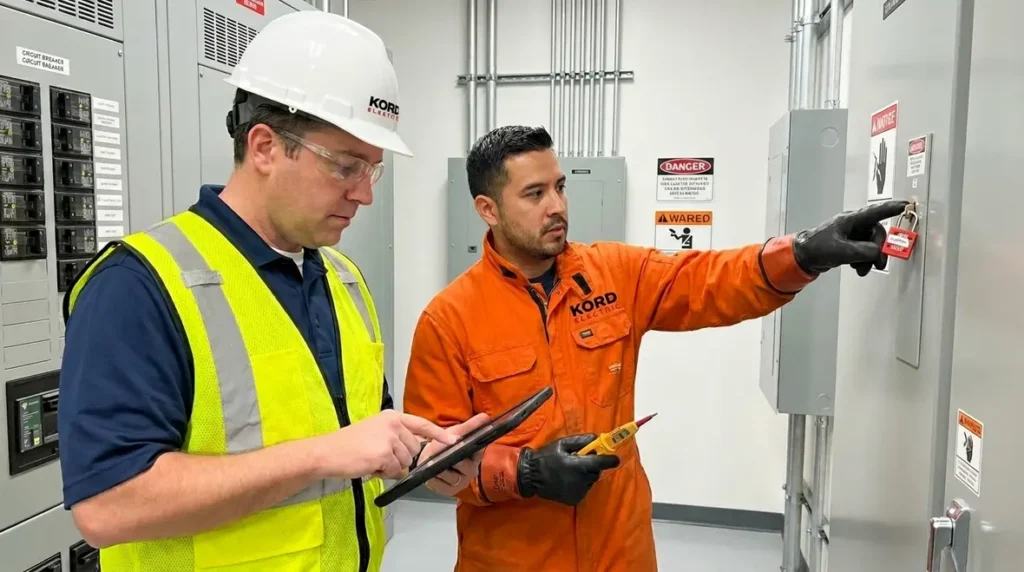
At Kord Electric, we build an office building electrical maintenance schedule that actually makes sense once real work starts. In other words, our approach does not stop at a few checkbox tasks. Instead, we map inspections, tests, and fixes across the year so managers know what happens, when it happens, and why it matters. Then we assign the right level of attention to each system, from panels and breakers to grounding, life safety tie ins, and power quality. After that, our technicians document results in plain language so others can plan repairs before small issues grow into big ones, like a minor flicker turning into a full lobby blackout. Nobody wants that. Not even your building’s “smart” thermostat.
What should a commercial electrical plan include?
Others often treat electrical maintenance like a once-in-a-while chore. However, major property buildings need a structured plan that follows the way electrical systems age. Therefore, we start with a scope that covers the full electrical distribution chain, not just what looks obvious. Then we add tasks based on risk, usage, code needs, and manufacturer guidance.

At Kord Electric, our team focuses on systems commonly found in commercial and industrial facilities, including switchgear, transformers, feeders, branch circuits, and emergency power interfaces. In addition, we include grounding and bonding checks, insulation condition review, and protective device verification. We also capture operational details, like load profiles and areas that see the heaviest use, so the maintenance schedule aligns with how the building actually behaves.
To keep the plan useful, we explain each task in practical terms. Our expert service staff does not hide behind jargon. Instead, they tell building teams what the test measures, what a pass looks like, and what the next step is if something trends out of spec.

How do we build a reliable office building electrical maintenance schedule?
First, we gather the facts. That means reviewing equipment data, previous service history, one line diagrams, load changes, and any known events like nuisance breaker trips. Next, we group tasks by system and frequency, then we place them into a yearly calendar. As a result, the office building electrical maintenance schedule becomes more than a list. It becomes a working tool for risk control.
Many facilities follow a basic rhythm, but we refine it. For example, preventive tasks that reduce shock and fire risk get higher priority. Also, items that can fail silently, like insulation wear and connections with heat damage, get scheduled earlier. Then, when we find defects, we adjust the next cycle so the plan improves over time instead of repeating the same issues forever.
We also plan for downtime. When work involves shutdowns or load transfers, our technicians coordinate windows to protect tenants, operations, and safety systems. In other words, we do not surprise the building. We bring clarity, and we bring a plan.

Weekly, monthly, and quarterly tasks that prevent failures
A strong plan stays active between major service dates. Therefore, we include routine checks that catch early signs of trouble without waiting for a big annual test. The exact list varies by facility, but typical tasks in commercial and industrial environments include visual inspections, housekeeping checks, and operational reviews for key equipment.
In many cases, the plan includes weekly or monthly items such as:
- Inspecting panel labeling, door latches, and signs of moisture or contamination
- Checking for abnormal odors, discoloration, or loose cable routing near electrical enclosures
- Confirming that ventilation around switchgear and control cabinets remains clear
- Monitoring for repeated breaker trips in high demand areas
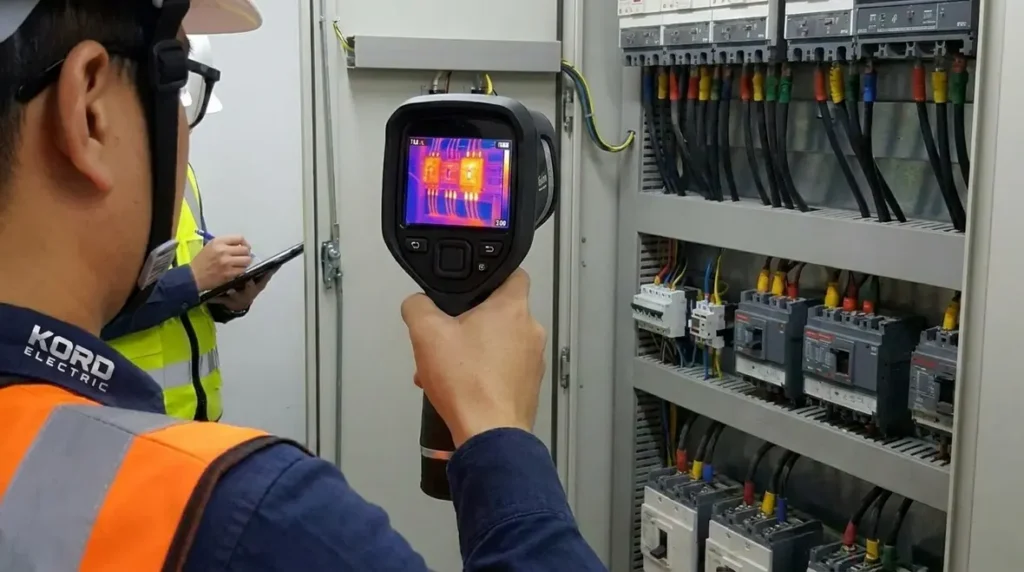
Then, quarterly tasks often expand into measurement and verification. For example, our expert service staff may verify torque integrity indicators where appropriate, review thermal trends if available, and confirm protective device settings match the intended system behavior. Additionally, we look for signs of corrosion or water intrusion in outdoor or high humidity sections, since those issues rarely announce themselves with a dramatic movie scene. They just quietly get worse.

Annual testing for panels, grounding, and power quality
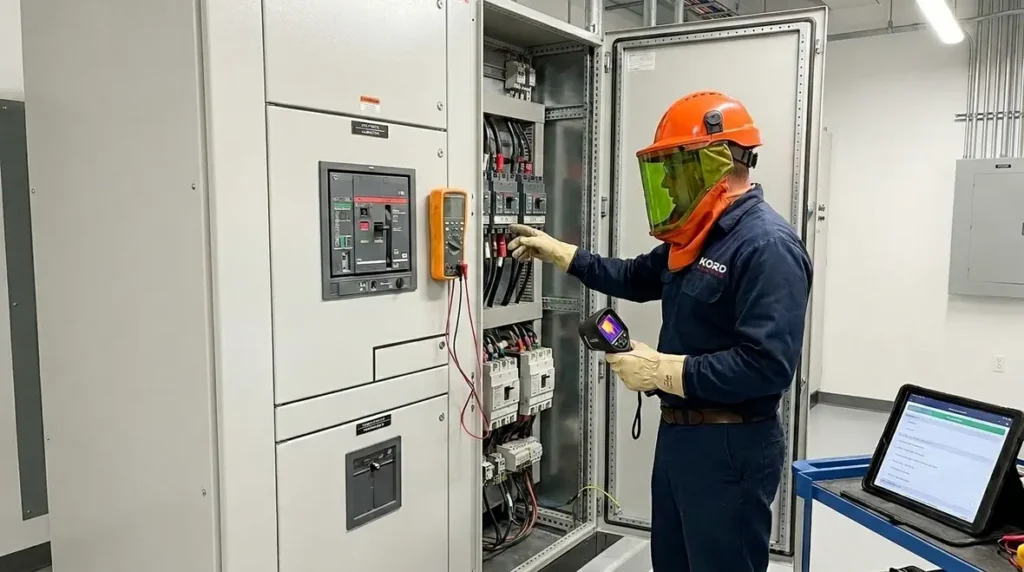
Annual work carries weight because it reveals what routine checks cannot. So we plan comprehensive testing that supports safety and reliability. Grounding and bonding checks matter here, because poor grounding can lead to shock risk and equipment damage. In the same way, insulation condition tests and protective device evaluations help prevent faults that could disable critical loads.
For commercial facilities, we prioritize the systems that keep business running. That includes:
- Inspection and testing of switchgear, switchboards, and distribution panels
- Verification of grounding electrode systems and bonding connections
- Tests that assess insulation condition for conductors and components
- Power quality review where load conditions demand it, including harmonics and voltage issues
- Emergency power related checks to confirm readiness and proper interface behavior
Moreover, we document results in a way facility teams can use. We do not just hand over numbers. Our technicians explain what the results mean, which items need attention first, and how long fixes typically take. Then we help others plan budgets and work orders, so the next phase does not become a scramble.
If you want to see how this kind of structured approach looks at the property level, explore our article on commercial and industrial electrical maintenance plans, where we walk through how proactive care supports long term reliability across large facilities.
Using risk levels to decide what gets fixed first
Not every electrical finding needs immediate action the same day. Still, every finding deserves a clear path. That is why we rank maintenance items by risk. First, we consider safety impact. Next, we consider impact to operations. Then we consider repair effort and how close the issue is to a likely failure point.
For instance, a loose connection in a high load panel can lead to heat damage. Therefore, our technicians treat it as a higher urgency item than a missing label on a non critical circuit. Likewise, a grounding defect that affects fault clearing and step potential gets immediate focus, because it changes safety behavior.
Meanwhile, smaller items still matter. They may not stop the lights tomorrow, but they can shorten component life and increase future repair costs. In addition, our expert service staff includes recommendations that match the realities of commercial and industrial operations. So we align the maintenance schedule with business continuity, not theory.
How Kord Electric coordinates schedules with building teams
Even a perfect plan can fail if communication is messy. So we coordinate from the start. We set expectations for access, any planned outages, and safety procedures. Then we confirm which areas require special handling because tenants, production systems, or critical services run there.
During the planning phase, we also align with the building’s workflow. For example, we schedule work to reduce disruption during peak hours and we stage materials so crews work efficiently. As a result, others experience less downtime and fewer surprises.
Below is a simple example of how we often structure timing for major property buildings. It is not universal, but it shows the thinking:
Maintenance window
- Quarterly: visual checks, operational verification, select measurements
- Semi annual: deeper inspection of key distribution components
- Annual: full testing program and protective device evaluation
Typical outcomes
- Early detection of heat or moisture related risks
- Better fault protection behavior
- Clear next steps with prioritized repair actions
For buildings facing recurring issues like nuisance trips or unexplained flickers, pairing this kind of schedule with an electrical preventive maintenance service gives managers both a roadmap and a service partner who can execute it consistently.
FAQ about an office building electrical maintenance schedule
Ready to tighten reliability and reduce electrical risk?
When electrical issues wait too long, they stop being “maintenance” and start being “emergencies.” Kord Electric builds a practical office building electrical maintenance schedule for commercial and industrial facilities, with technicians who explain the results in clear business terms. If your building team wants fewer surprises, better documentation, and a plan that supports uptime, reach out to us. Let our expert service staff review your current program and recommend a schedule built for your equipment and your operating reality.
If your property is also planning upgrades or wants a fully structured program, you can pair this schedule with our dedicated electrical preventive maintenance services so inspections, testing, and repairs stay aligned with how your facility actually runs.
For sites where lighting performance, safety, and energy use are major priorities, integrating maintenance with a focused service like our lighting installation services helps keep critical areas bright, compliant, and ready for daily operations.