Modesto Commercial Lighting Guide for Installation Code Ready
Modesto Commercial Lighting Guide: what facilities need to know before the first switch gets flipped
At Kord Electric, we follow a practical plan with our Modesto Commercial Lighting Guide: Installation, Upgrades & Code Requirements so Modesto commercial and industrial facilities get lighting that works, lasts, and passes inspection. In the first days of any project, we map the space, confirm the code path, and then design controls that make sense for how people actually move through your building. After that, our expert service staff and technicians explain the choices in plain language, because nobody should need a PhD to understand why a luminaire changes. And yes, we do warn clients that the lighting bill can look “mysteriously” smaller when efficiency is done right. We handle only commercial, industrial, and major property buildings, and we treat every site like it matters, because it does.
Site walkthrough, layout, and load planning that avoids surprises later

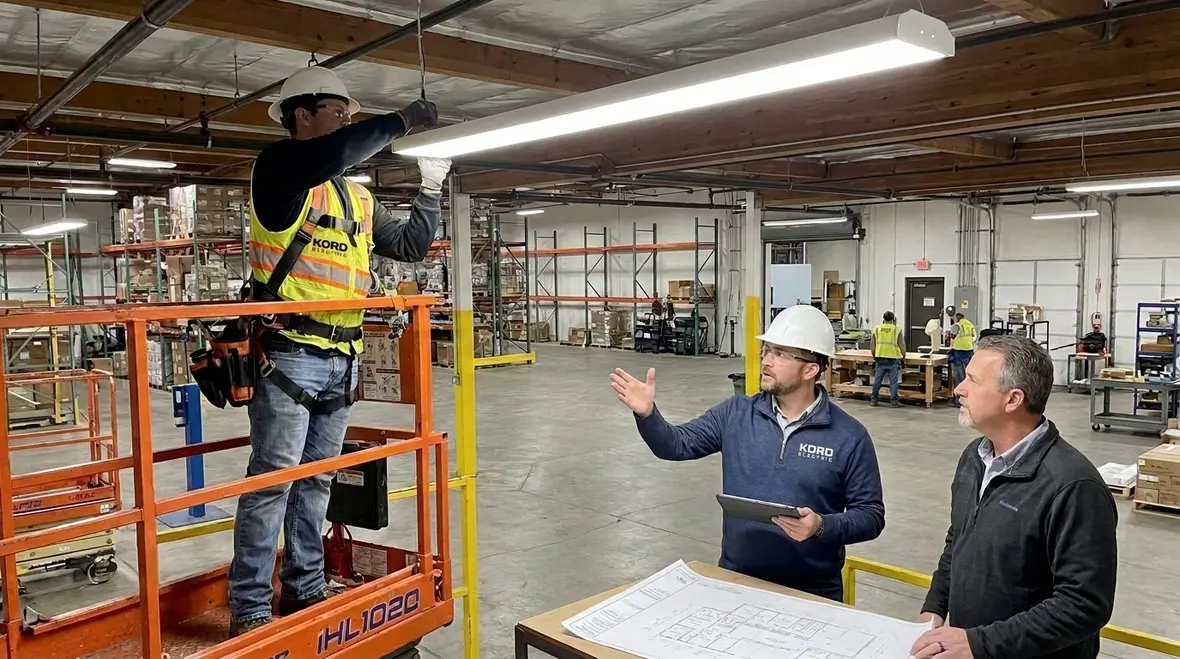
We start with a real walk through, then we translate what we see into a plan. First, we study ceiling height, mounting surfaces, and obstructions like ducts, beams, and racking. Next, we measure where light needs to land, including task areas, circulation paths, and entry zones. Then, we check the electrical side, because even the best fixture design fails if the load and wiring path do not match.
Our technicians also look at how the building operates throughout the day. For example, a warehouse with shift work needs a different strategy than an office with long periods of steady occupancy. Additionally, we consider whether doors open often, whether daylight enters through large glass areas, and whether glare could irritate workers or customers. Meanwhile, we keep the process calm. We explain what we propose and why, so you do not feel like you are being “sold” lighting. Honestly, lighting should not feel like a magic act. It should feel like engineering.
When we map out Modesto facilities, we also think ahead to future changes. Racking may grow taller, offices may expand, and production lines may shift. By planning wiring paths, panel capacity, and control zones with those possibilities in mind, we help your lighting system adapt gracefully instead of needing a full redo every time operations change.
Controls and daylighting: the difference between “on” and “smart”
Once we understand how the space functions, we design controls that fit that reality. We often recommend occupancy sensors for back corridors, restrooms, storage rooms, and stairwells. However, we do not treat sensors like universal magic. Instead, we place them so they reliably detect real activity and do not trigger off-cycle because a curtain moved. Then, for areas with consistent activity, we may use scheduling and step dimming to reduce energy without affecting comfort.
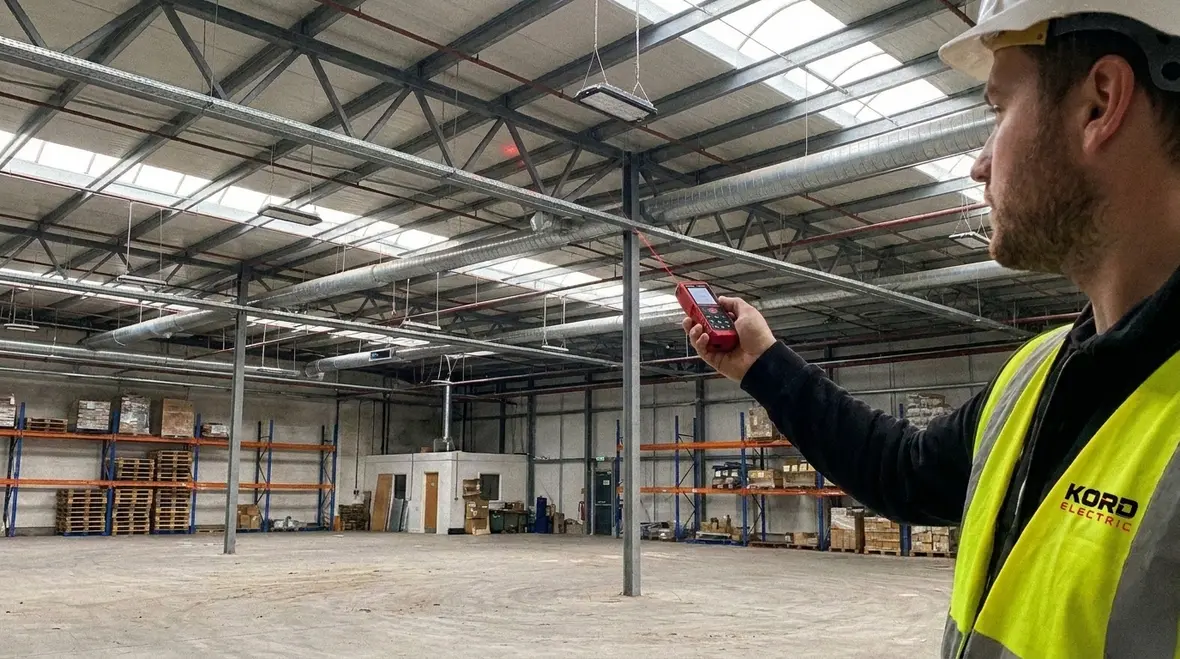
Daylight harvesting can help as well, especially near skylights or window walls. If your facility has zones where daylight contributes, we coordinate lighting levels so artificial light complements natural light rather than fighting it. As a result, you maintain the visual quality people expect, while reducing unnecessary run time. And if someone asks, “Will it look dim?” our expert service staff tells them what the measurements say. If it looks wrong, we adjust before we call it done.
In Modesto’s mix of warehouses, food processing plants, and office spaces, controls also help with consistency. Schedules can align with shift changes, occupancy sensors can protect low-traffic areas from wasted runtime, and daylight zones can respond to that Central Valley sun without employees needing to touch a single switch. That is the difference between “lights on” and a system that quietly does the right thing all day.
Why the California commercial code path drives design choices

Lighting for commercial sites does not live in a vacuum. We align designs with California requirements and local enforcement expectations, and we keep the project organized so documentation and approvals do not become a last minute drama. In fact, code touches multiple areas: fixture efficacy, control requirements, power and wiring rules, and how the project gets verified.
For the 2026 cycle, our team uses the same structured approach described in our California Commercial Lighting Code Guide for 2026 to support planning. We review what applies to the scope of work, including whether you face a retrofit, a lighting upgrade, or a bigger remodel. Then we map requirements to equipment selections, because compliance should guide the design, not chase it after the fixtures arrive.
Also, we pay attention to how the project will be inspected. We help facilities prepare by confirming labeling, documenting control strategies, and ensuring the layout meets the intended zones and coverage. In other words, we build confidence into the schedule. You get fewer surprises, fewer callbacks, and fewer moments where everyone stares at the ceiling like it owes them money.
Because California Title 24 and related rules evolve, we treat code as a moving target, not a one-time memo. Our Modesto Commercial Lighting Guide: Installation, Upgrades & Code Requirements stays grounded in today’s expectations while anticipating what might arrive in the next cycle, so your investment stays relevant longer.
Upgrade planning: retrofits, replacement, and phasing for active buildings

Many commercial facilities cannot simply shut down for a week and start over. Therefore, we plan upgrades with the building still running. We phase work zone by zone, protecting access routes and keeping operations safe. In addition, we coordinate with your maintenance staff and managers so hot areas get handled during lower traffic windows.
We also evaluate what to replace and what to reuse. Sometimes the best path includes replacing fixtures and drivers while keeping existing wiring if it meets requirements. Other times, the “cheap” option becomes expensive once you consider labor, performance issues, and rework. Our technicians look at the condition of the electrical components and how the existing system performs. Then we explain tradeoffs clearly, including what changes will improve light levels, reduce glare, or enhance control behavior.
Upgrades also include emergency lighting considerations. Even if the main focus is energy savings, emergency performance must stay reliable and compliant. We keep those systems separate in planning so your safety requirements stay solid while your utility bills drop.
In multi-tenant Modesto buildings, we also think about how lighting upgrades affect shared corridors, lobbies, loading docks, and parking areas. We coordinate with ownership and property managers so tenants experience improvements, not disruptions, and so life safety systems stay protected throughout every construction phase.
Installation details that affect performance, warranty, and inspection outcomes
Here is where projects either shine or stumble. We install with attention to mounting stability, aiming, and spacing, because those details shape the final light distribution. We verify that fixtures align to the layout and that any adjustments match the lighting plan. Then we check the electrical terminations and control wiring paths, because loose connections can cause intermittent failures that feel “random” until you track them down.
We also confirm correct settings for dimming and control logic. For example, some facilities need scenes that support mixed use, like customer areas that should feel warm during open hours and brighter during peak times. Meanwhile, back office spaces can run at lower levels when occupancy is low. We test after installation so the system behaves like the design, not like a guess.
Additionally, we document what gets installed and how it gets configured. That documentation supports warranties and simplifies future service. And if you ever need ongoing changes, our expert service staff can return to the site with context, instead of playing detective with old labels and unclear notes.
For Modesto commercial and industrial sites that must meet tight inspection windows, this level of detail becomes the quiet hero. Inspectors see labeled panels, clear control diagrams, and fixtures installed per plan. You see a project that passes without drama and a lighting system that supports daily operations instead of distracting from them.
Maintenance, rebalancing, and performance checks over time
Lighting should stay consistent, not degrade into a patchy ceiling story. Therefore, we recommend maintenance checks based on your facility type and usage. We look at failed components, changes in reflectance from new equipment, and whether control behavior still matches occupancy patterns. Over time, a space may add workstations, new racking, or different workflow habits, and light distribution can shift.
When we do performance checks, we focus on practical outcomes. We verify that light levels remain appropriate for task needs, that glare stays under control, and that sensors continue to trigger correctly. We also monitor energy performance when possible, which helps catch issues like stuck relays or misconfigured schedules. This is where our service team shines, because we treat maintenance as prevention, not repair.
And yes, we do get the occasional joke about “lights that mysteriously stop working.” Usually it turns out to be a control setting, a driver issue, or a connection that needed tightening. We fix it with care and we explain what changed, so you understand your system instead of fearing it.
For larger commercial properties and portfolios, tying these checks into your broader electrical maintenance schedule can save time. Our team can align lighting reviews with panel inspections and other service tasks, giving Modesto facility managers one clear rhythm for keeping systems code-ready and reliable.
Featured FAQ: fast answers for Modesto commercial lighting
Frequently asked questions about code and inspections
Ready to light your Modesto facility the right way?
If you want lighting that supports safety, comfort, and compliance, call Kord Electric. We help Modesto commercial and industrial facilities plan upgrades, install with care, and verify performance so your team gets dependable light without surprises. Our expert service staff explains each step in plain language, and our technicians handle the details that inspectors care about. Take the next step now. Contact us to review your current system and map a clear plan for installation, upgrades, and code-ready results.
For property owners and facility teams who want to coordinate Modesto lighting work with broader regional support, our commercial and industrial electrical crews also serve larger markets. Explore how our teams support complex buildings, portfolios, and regional operations by reviewing our service coverage for Los Angeles County and other California commercial hubs, then bring those same standards of code-ready design and installation to your Modesto site.