
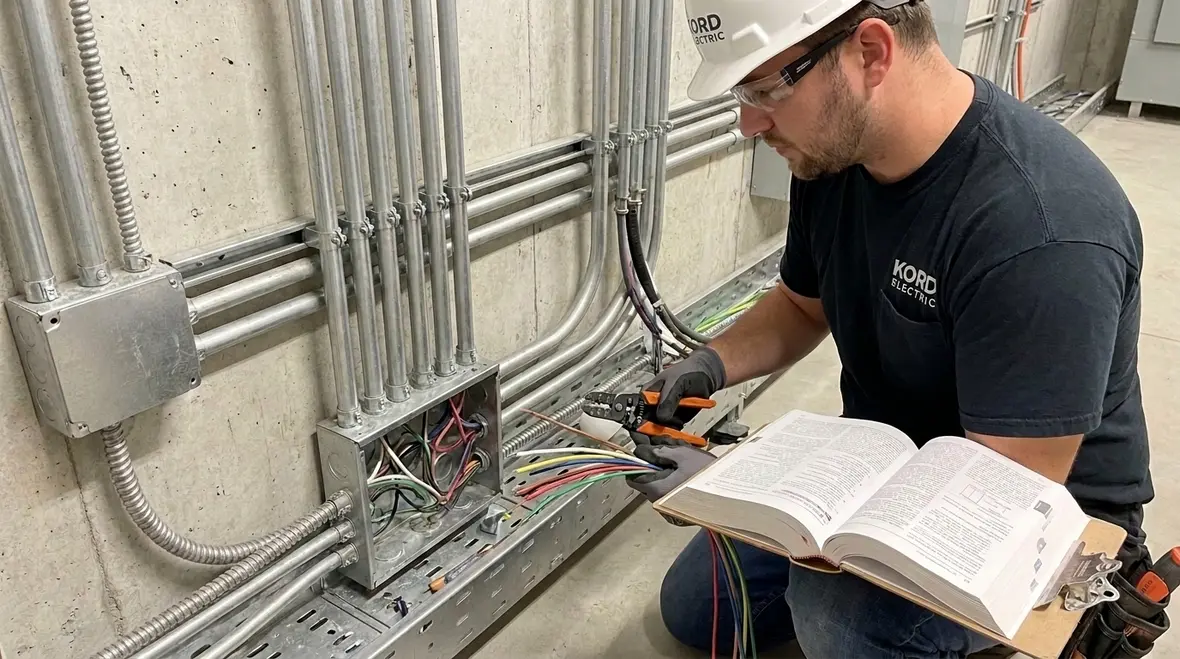
NEC 334.104 Guide for Branch Circuit Conductors Compliance
NEC Chapter 3 and Section 334.104 in plain business English
At Kord Electric, we see NEC branch circuit conductors show up in real projects every day, especially in commercial and industrial facilities where downtime costs more than a late coffee run. In NFPA 70 Section 334.104, the NEC sets rules for how branch circuit conductors must be installed, protected, and sized. Because when the rules are followed, systems stay steady and inspectors stay calm. And yes, if someone ever tells you “it’s just wiring,” we politely invite them to stand next to a switchgear room during a live test. That usually changes their tone.
In the rest of this article, our experienced technicians and expert service staff explain the practical meaning of 334.104, how it affects conductor choices, and what leads to common failures. We also connect the dots to the broader NEC framework so your team can plan, install, and verify work with confidence.
What NFPA 70 Section 334.104 actually governs
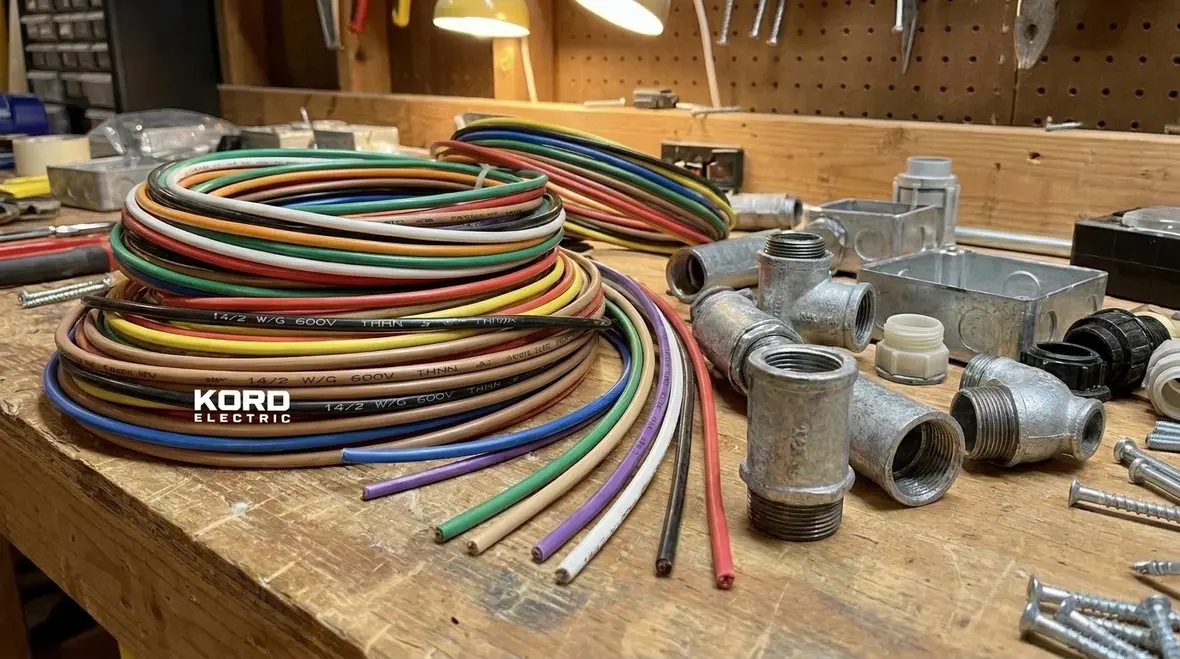
To put it simply, NFPA 70 Section 334.104 focuses on branch circuit conductors and how they run inside raceways and wiring methods that fall under Chapter 3 rules for cable and conduit systems. It does not replace the rest of the NEC, and it does not override basic requirements for ampacity, insulation, and overcurrent protection. Instead, it helps define how conductors in these specific wiring assemblies should be handled so the installation stays compliant and safe.
Moreover, 334.104 ties into a bigger story: the NEC wants consistent protection from the source to the load. Therefore, if you plan conductor routing without considering 334.104, you may later discover mismatches between conductor type, thermal limits, and the raceway environment. And that is when teams start doing late changes with the same energy people use when they realize they left the tickets at home.
Our experts at Kord Electric often tell facility teams this: “If we get conductors wrong early, we pay for it later, with labor, testing time, and the kind of rework that eats schedules.” Then we smile, because we like saving money, not just paperwork.
How to plan conductor sizing for real commercial loads
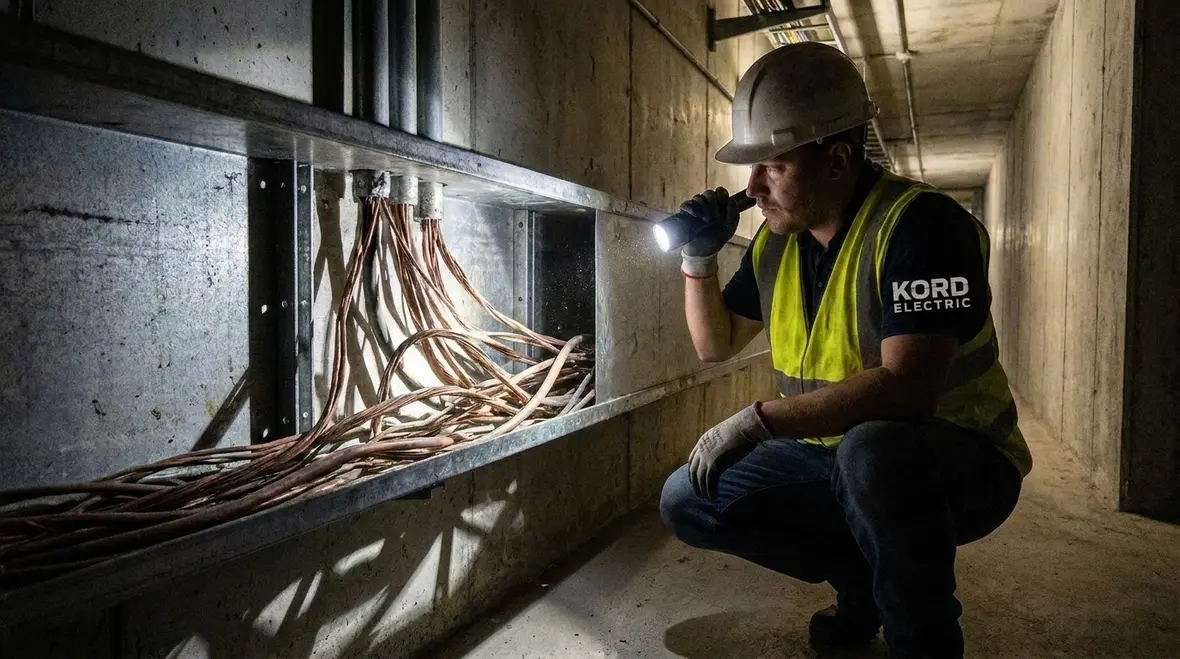
Commercial and industrial buildings depend on steady power. So, before a single conductor gets pulled, we help others plan the job like a system, not a pile of parts. In practice, NEC branch circuit conductors sizing must match the load, the conductor ampacity, and the protection device rating. Also, installers must consider termination limits, conductor insulation temperature ratings, and how the wiring method affects heat.
When teams ignore these details, they may choose conductors that “seem close enough.” However, electrical systems do not run on vibes. They run on heat, current, and clear standards. For example, a conductor that works in one environment might fail early if installed in a wiring system that traps heat or restricts airflow.
That is where our technician-led approach matters. We explain how NEC rules connect to your equipment nameplate ratings, demand factors, and typical operating schedules. Then we help your team confirm that the plan translates into a clean installation, not a last minute puzzle.
And if you ever wondered why electricians talk about “heat rise” so much, that is because heat rise is like a bad plot twist. You do not notice it until it ruins the whole story.

Conductor type, insulation, and wiring method details
Section 334.104 sits inside a web of NEC requirements. Therefore, when we review a project, we focus on the full chain: conductor insulation rating, conductor material, and the wiring method. Conduit style, raceway fill, and allowable installation conditions influence whether the conductors can safely carry the intended load.
For many facilities, the wiring method includes raceways and cable assemblies that must be installed with care. As a result, you cannot treat routing like an afterthought. Proper handling prevents damage during pulling, reduces stress at bends, and supports long term reliability.
Our expert service staff explains this in plain terms. They walk clients through what the insulation marking means, why the jacket and conductor design matter, and how correct installation practices help the assembly perform as designed. Also, they show how to document decisions, so the inspection process does not turn into a guessing game.
We often recommend that facilities build a simple checklist for field verification. Then our team can quickly confirm conductor identification, termination quality, and the wiring method setup before things get covered or buried behind finished surfaces.

Common mistakes we see during inspections and troubleshooting
Even well staffed crews can make avoidable errors, especially when project pressure rises. Still, many failures trace back to a few repeating issues. First, some teams misapply ampacity based on the wrong installation conditions. Next, others ignore raceway fill limits or assume “extra room” in a conduit means “extra safety.” Unfortunately, that assumption does not survive reality.
Another frequent problem involves conductor handling. If conductors get nicked, stretched, or overheated during pulling, the damage may not show right away. Then the system works until it does not, which is exactly when people start asking for a “quick fix.”
At Kord Electric, we step in with field experience and clear explanations. Our technicians explain what went wrong and why it mattered, so your maintenance staff can avoid the same issue next time. For major property buildings, we also help coordinate testing and verification with your operational needs, because your facility schedule deserves respect.
We have seen cases where a small installation detail created a chain reaction, leading to repeated troubleshooting. So we focus on preventing those ripples early.
Documentation and compliance for audits in major property buildings
Commercial and industrial facilities often face audits, insurance reviews, and inspection schedules that do not move for anyone. Therefore, documentation becomes part of safety. You need records that prove the installation matched the design and complied with NEC requirements, including the intent behind NFPA 70 Section 334.104.
We help others build project documentation that supports real compliance needs. That includes conductor schedules, wiring method notes, equipment identification, and verification steps performed by qualified staff. Also, we encourage teams to keep clear records of changes, because the field always offers adjustments.
And yes, sometimes changes happen because materials arrive late. Other times, the building layout shifts during coordination. Either way, our process keeps those changes trackable and aligned with the NEC framework.
When audits come, we want your facility to look organized and confident, not like someone taped the plan to the wall and hoped the inspector would forget.
Service approach from Kord Electric for commercial and industrial projects
Our work serves commercial and industrial facilities and major property buildings. We do not build our process for quick residential jobs. Instead, we bring a steady project rhythm, expert field coordination, and detailed communication.
Our technicians and expert service staff take time to explain decisions, not just complete tasks. For example, we explain how conductor routing choices affect wiring method performance, how field conditions influence safe installation, and how to verify results. Then we connect those explanations to your operating reality, including the loads your facility actually runs.
If you engage us during planning, we help reduce rework. If you engage us during troubleshooting, we help locate the root cause faster. Either way, you get a calm, professional partner that understands how electrical work impacts the entire building.
And if you are wondering whether we offer a “magic shortcut,” the answer is no. Magic fails under load. Standards do not.
Connecting NEC 334.104 with broader NEC resources
Branch circuit rules do not live in isolation. When our team explains NEC branch circuit conductors requirements, we also point facility managers to supporting references so they can understand how all the pieces fit together. On the code side, that includes the broader NFPA 70 framework, load calculation rules, and wiring method articles that surround Section 334.104.
For example, one useful companion is our internal guidance built around specific purpose load calculations. That approach helps make sure feeder and branch circuit planning line up with the way your equipment actually operates, instead of relying on guesswork or overly generic assumptions.
If your team wants more context on how the National Electrical Code keeps evolving, you can also review educational pieces from the Kord Fire side of the family, including their explainer on NFPA 70 and why the NEC 2026 cycle matters for long term safety and compliance across commercial properties.
Together, these resources give owners, engineers, and facility managers a clearer roadmap: use NEC 334.104 to guide conductor choices, use load and system planning articles to shape equipment sizing, and use NFPA 70 overview content to keep an eye on the bigger compliance picture as editions update.
How NEC 334.104 shows up in real project workflows
In day to day work, Section 334.104 becomes part of checklists, coordination meetings, and field walk downs. Our technicians do not treat it as an abstract rule. Instead, they translate it into practical steps that keep NEC branch circuit conductors aligned with the wiring method and the environment.
During design assist or preconstruction, we help project teams review one-line diagrams and panel schedules with an eye on conductor types, installation methods, and raceway conditions. That is where questions about insulation ratings, derating factors, and routing paths get answered before anyone shows up with a reel of cable.
In the field, our crews use structured pull plans and installation practices so conductors are not damaged before they ever see service. That includes monitoring pulling tensions, using appropriate lubricants and supports, and verifying that raceway conditions match the assumptions used during planning.
Before closeout, we tie it all together with documentation and verification. That might include updated schedules that reflect final routing choices, photos of critical terminations, or notes about any approved deviations. By the time an inspector or auditor arrives, the story of your branch circuits is clear, not improvised.
Linking NEC 334.104 to reliability, uptime, and service
Compliance is the starting line, not the finish. When NEC 334.104 is applied well, it supports a bigger outcome: electrical systems that behave the way your operations expect. Conductors sized and installed correctly are less likely to overheat, degrade insulation, or create nuisance trips that derail production or events.
Because Kord Electric works across complex commercial and industrial properties, we see how good conductor installations pay off years later. Branch circuits that respect their thermal environment, raceway fill, and termination limits need fewer emergency calls and produce fewer “mystery” failures. That steadiness shows up in uptime metrics, maintenance reports, and the simple relief that comes from panels staying quiet.
When facilities want to turn that stability into a broader strategy, we often connect NEC-focused work with structured electrical troubleshooting, preventive maintenance programs, and long term electrical system design support. That way, a single project rooted in 334.104 compliance becomes part of a larger shift toward predictable performance instead of constant reaction.
If your building portfolio stretches across Los Angeles County, that bigger picture approach becomes even more important. Standardized conductor and wiring practices, tied back to NEC expectations, help make sure each site behaves consistently under load instead of acting like a separate experiment.
FAQ
Call Kord Electric for confident branch circuit conductor installs
If your commercial or industrial facility needs dependable power distribution, trust Kord Electric to handle NEC branch circuit conductors work with care and clarity. Our technicians explain the “why” behind the rules, and our expert service staff helps teams plan, install, verify, and document so compliance stays solid. If you are upgrading systems, correcting issues, or preparing for inspection, contact us. We will bring calm, practical guidance from first pull to final verification, without the drama.
For facilities that want a broader view of how branch circuit work ties into system-wide planning, you can also explore Kord Electric resources on NEC specific purpose load calculations and NFPA 70 explainers. Those articles show how careful conductor decisions today support better panel design, safer equipment operation, and fewer surprises as your building’s electrical needs grow.
When your projects extend across Los Angeles County and you need a field-proven partner for inspections, upgrades, and long term reliability, our Los Angeles County electrical services for commercial and industrial facilities bring the same NEC-focused discipline to distribution, troubleshooting, and preventive work that we apply to every branch circuit decision.
Whether you are planning new installations, addressing recurring issues, or tightening compliance ahead of an audit, we are ready to help your team turn NEC 334.104 from a code citation into a clear, reliable practice across your properties.


