NFPA Emergency Lighting Standards for Facilities
Emergency and Exit Lighting Requirements for Commercial and Industrial Facilities
In every commercial tower, distribution center, manufacturing plant, and multi building campus, safety begins long before the lights go out. At Kord Electric, we ground every design and installation in the NFPA emergency lighting standards, which set clear expectations for illumination levels, duration, placement, and performance. Within the first seconds of a power failure, those standards step in where normal power steps out. They guide how emergency luminaires activate, how exit paths remain visible, and how systems sustain life safety for at least ninety minutes. The rest of this article explores how those rules shape real world systems, and how our technicians translate code into calm, reliable performance.
Now, take a slow breath. Imagine the hum of a busy facility suddenly replaced by silence. No dramatic movie soundtrack. No heroic slow motion. Just darkness. That is the moment when preparation either proves itself or exposes shortcuts. We prefer the former.
Why Emergency Lighting Matters in Large Facilities
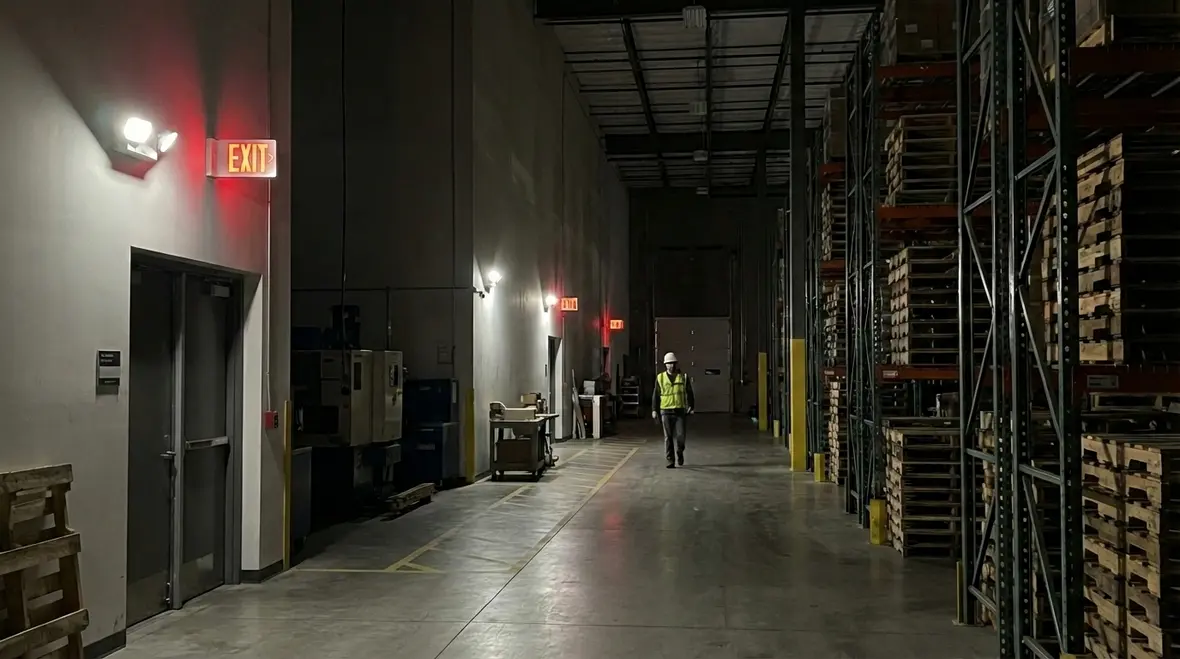
Commercial and industrial properties are not small spaces with a single hallway and a polite exit sign. They are complex environments with long corridors, production floors, storage racks, mezzanines, loading docks, stairwells, and sometimes more twists than a season finale of your favorite streaming series. Because of that complexity, emergency lighting carries serious responsibility.
First, it protects occupants. Employees, visitors, contractors, and tenants rely on visible egress paths during power loss, fire alarms, or system failures. Clear lighting reduces panic and guides people to exits in an orderly way. Secondly, it protects operations. Although emergency systems are not meant to power entire production lines, they provide enough visibility to shut down equipment safely and prevent secondary hazards.
Moreover, compliance is not optional. Authorities Having Jurisdiction enforce life safety codes that reference the NFPA emergency lighting standards. Failing inspections can lead to fines, delayed occupancy, or worse, liability in the event of injury. Therefore, facility managers who treat emergency lighting as an afterthought often discover that inspectors have long memories and short patience.
At Kord Electric, we remind property leaders that emergency lighting is not about checking a box. It is about creating predictable safety in unpredictable moments.

Understanding NFPA Emergency Lighting Standards in Practice
The NFPA emergency lighting standards outline how systems must perform during an outage. However, reading code language and applying it to a 400000 square foot warehouse are two different tasks. That is where experienced technicians matter.
In practical terms, the standards address several core elements:
- Minimum illumination levels along the path of egress
- Maximum spacing between luminaires
- Required duration of emergency operation, typically ninety minutes
- Automatic activation upon loss of normal power
- Periodic testing and documentation
Our expert service staff often explain it this way. The code tells you the destination. Engineering judgment determines the safest and most efficient route to get there. For example, illumination levels must average at least one foot candle along the path of egress. However, in an industrial facility with tall racks and moving equipment, shadows can form in unexpected places. Therefore, we evaluate mounting heights, beam spread, and obstructions before selecting fixtures.
Additionally, battery units, inverters, and generator backed systems must transition quickly when normal power fails. The standards require prompt activation, which means wiring methods, transfer equipment, and control integration must be carefully designed. Our technicians walk clients through these details in plain language. No code poetry. No confusing jargon. Just clear explanations and practical solutions.

Designing Systems for Commercial and Industrial Realities
Large properties present unique challenges. High ceilings demand higher output fixtures. Wide open production floors require strategic placement to avoid dark pockets. Multi tenant office towers need coordinated systems across floors and common areas. Because of that, design must go beyond generic layouts.
We begin with a detailed site review. During that process, we evaluate:
- Occupant load and traffic patterns
- Exit access routes and final exits
- Stairwells and vertical shafts
- Areas of refuge and assembly spaces
- Hazardous locations that may require specialized equipment
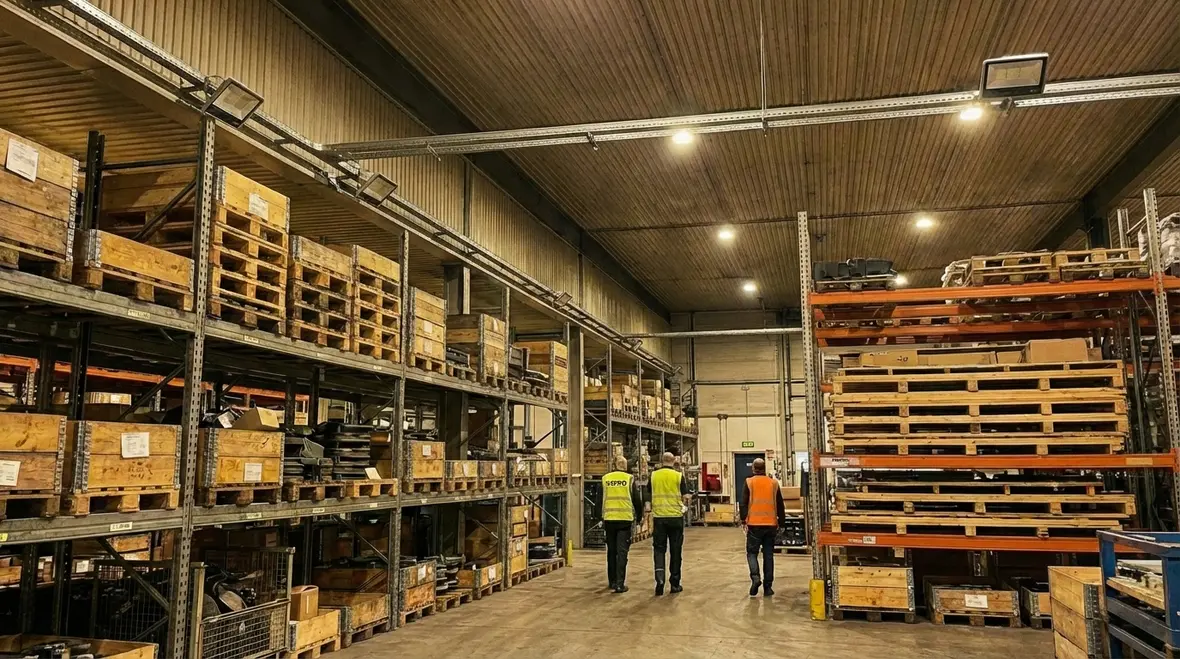
Then, we align those findings with the life safety code lighting requirements that support the NFPA emergency lighting standards. While the code sets minimums, we often recommend enhancements for complex facilities. For instance, in high bay warehouses, we may use remote heads or centralized inverter systems to achieve consistent coverage. In critical manufacturing environments, we may integrate emergency lighting with generator backed panels to ensure reliability.
And yes, sometimes we gently tell clients that placing a single exit sign above a distant door in a football field sized warehouse will not pass inspection. We say it kindly. We even smile. But we say it.
Side by Side: Code Requirements and Real World Application
Below is a practical comparison our technicians often share during planning meetings. Think of it as a calm conversation between the rulebook and the job site.
Column One: What the Code Requires
- Minimum average illumination along egress paths
- Battery or alternate power lasting at least ninety minutes
- Automatic operation upon power failure
- Periodic functional and annual testing
- Visible exit signage with proper placement
Column Two: How We Apply It in Large Facilities
- Photometric layouts to eliminate shadows between racks and equipment
- Central inverter systems for easier maintenance in large campuses
- Dedicated emergency circuits with clear panel labeling
- Digital testing logs for multi building portfolios
- Strategic sign placement at corridor intersections and long sight lines
By pairing these two perspectives, we bridge theory and execution. Furthermore, we help facility managers understand not just what is required, but why it matters in daily operations. For many properties, that means coordinating emergency lighting layouts with broader lighting installation services that already support production areas, offices, and shared spaces.
Installation: Precision Over Guesswork
Proper installation determines whether a system performs when needed. Even the most carefully designed layout can fail if wiring is incorrect, batteries are undersized, or fixtures are poorly mounted. Therefore, our crews follow strict quality control procedures.
First, we verify dedicated emergency circuits and confirm separation from normal lighting where required. Next, we install luminaires and exit signs at approved heights and locations. After that, we test transfer times to ensure automatic activation meets the expectations tied to the NFPA emergency lighting standards.
In industrial settings, we also account for vibration, dust, moisture, and temperature extremes. A battery unit mounted above a furnace line faces very different conditions than one in a climate controlled office corridor. Because of that, we select equipment rated for the environment and secure it with appropriate hardware.
Our expert service staff often tell clients, “Hope is not a wiring method.” It usually earns a small laugh. However, the message is clear. Emergency lighting must be installed with intention, not optimism.
Inspection, Testing, and Documentation Without the Headache
Compliance does not end after installation. Ongoing inspection and testing are essential parts of meeting the NFPA life safety lighting requirements. Monthly functional tests and annual ninety minute tests confirm that batteries, lamps, and controls still perform as designed.
For large commercial and industrial portfolios, tracking this information can feel overwhelming. Multiple buildings, hundreds of fixtures, rotating maintenance teams. It can resemble a spreadsheet thriller that no one asked for. Therefore, we offer structured testing programs.
Our technicians perform scheduled tests, document results, and flag deficiencies before they become violations. If a unit fails, we repair or replace it promptly. Additionally, we maintain organized records that facility managers can present during inspections. That way, when an Authority Having Jurisdiction asks for proof, the answer is ready.
By aligning maintenance practices with the NFPA emergency lighting standards, we help clients reduce risk and maintain confidence. After all, paperwork may not glow in the dark, but it can certainly save the day during an audit. These same structured programs often fit naturally into broader electrical preventive maintenance plans for critical facilities.
Common Challenges in Major Properties and How We Solve Them
Large facilities rarely fit into neat templates. Instead, they evolve over time. Tenants change. Production lines shift. Storage layouts expand. Consequently, emergency lighting systems must adapt.
One common challenge involves renovations. When walls move or new equipment blocks existing paths, original lighting layouts may no longer satisfy the NFPA emergency lighting standards. We conduct updated evaluations after major changes to ensure continued compliance.
Another issue arises with aging battery units. Over time, batteries lose capacity, even if indicator lights still glow. Therefore, we recommend proactive replacement schedules rather than waiting for failure during a test.
In multi building campuses, coordination becomes critical. Different structures may use different system types, including unit equipment, generator backed circuits, or central inverters. Our team standardizes documentation and maintenance practices across the portfolio, which simplifies management and improves reliability.
And then there is human nature. Sometimes exit signs get disconnected during other electrical work. Sometimes fixtures are painted over. Yes, it happens. We address these issues through regular walkthroughs and clear communication with onsite teams. Because while emergency lighting may not be the star of the facility tour, it is certainly the unsung hero.
How Kord Electric Guides Facility Leaders Through Compliance
Commercial and industrial property managers carry significant responsibility. They must balance budgets, oversee contractors, support tenants, and maintain safe environments. Emergency lighting is one piece of that puzzle, yet it carries serious weight.
At Kord Electric, we approach each project as partners, not just installers. We explain how the NFPA emergency lighting standards influence design choices. We outline options for equipment types and power sources. We clarify testing schedules and documentation needs. Moreover, we answer questions directly, without hiding behind technical language.
Because our focus remains on large commercial and industrial facilities, we understand the scale and complexity involved. From distribution centers to high rise office buildings, we tailor solutions that support occupancy loads and operational demands. When emergency lighting intersects with broader upgrades like panel changes, voltage corrections, or lighting installation services, we coordinate those scopes so that compliance and performance move forward together.
In short, we bring calm expertise to a topic that often feels technical and dry. And yes, we occasionally compare a well designed emergency system to a good seatbelt. You rarely think about it. However, when you need it, you are very glad it is there.
Frequently Asked Questions
Conclusion: Steady Light When It Matters Most
Emergency lighting protects people, property, and reputation. At Kord Electric, we design, install, and maintain systems that align with NFPA emergency lighting standards and the real demands of commercial and industrial facilities. Our technicians bring clarity, precision, and steady guidance to every project. If your property needs evaluation, upgrades, or ongoing testing, we are ready to help. Let us keep your paths clear and your compliance strong.
For facility leaders who want emergency lighting, power quality, and everyday operations to work together smoothly, our team can connect NFPA compliant lighting with broader services like electrical preventive maintenance and emergency electrical services. That way, the same partner who keeps your systems running day to day also makes sure they perform when the lights go out.