Retrofit Facility Lighting and New Build Strategies
From Retrofit to New Build Lighting Installation Strategies That Actually Work
In the world of commercial and industrial facilities, lighting is never just about brightness. It is about safety, output, energy control, and long term value. That is why Retrofit facility lighting plays such a critical role in how Kord Electric approaches every project. Whether they are upgrading a decades old warehouse or designing illumination for a new distribution center, their technicians understand that lighting decisions shape how a building performs for years. From the first walkthrough to final commissioning, their expert service staff explain each option in plain language. Because when property managers understand the “why,” the results tend to last.
Lighting may not win awards at dinner parties. However, in a commercial facility, it can quietly determine productivity, maintenance budgets, and even insurance costs. Therefore, having a strategy that works is not optional. It is essential.
Understanding the Difference Between Retrofit and New Construction
Before wires are pulled or fixtures are mounted, Kord Electric makes one thing clear. Retrofit and new build projects require different thinking. Although both aim for efficiency and reliability, the path to get there changes.
In an existing facility, lighting upgrades must respect what is already in place. Electrical panels, ceiling heights, racking layouts, and operating schedules all shape the plan. Therefore, their technicians begin with a detailed audit. They measure light levels, review energy usage, and inspect infrastructure. Then, they present a clear roadmap. No mystery. No guesswork. Just facts.
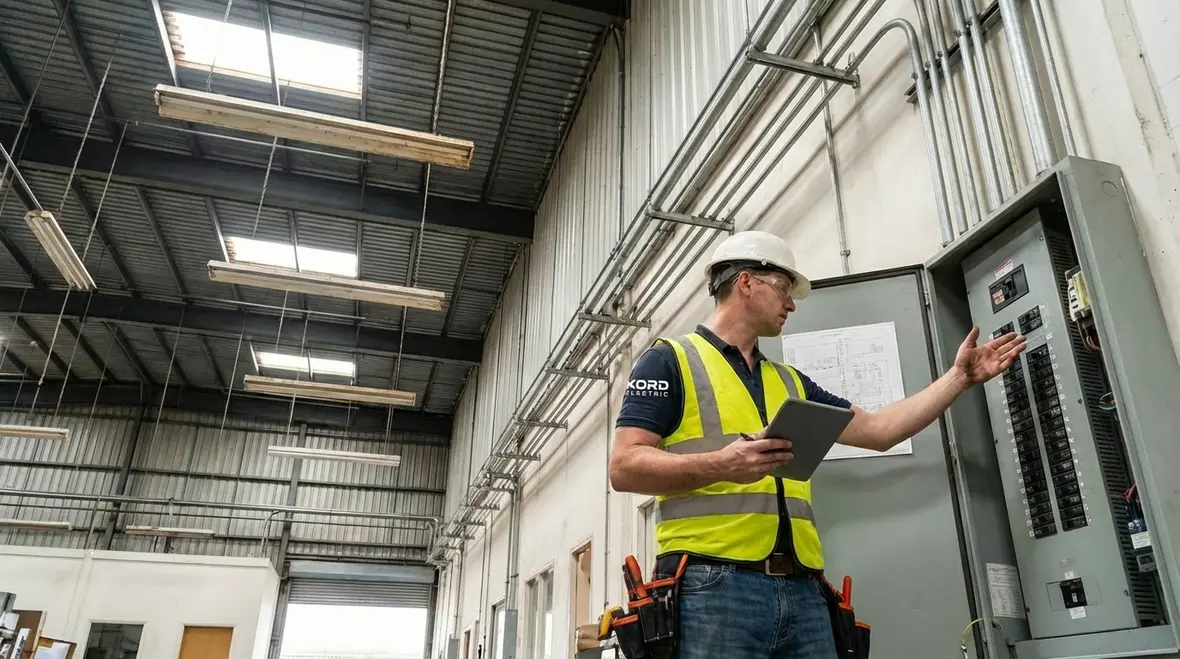
On the other hand, new construction offers freedom. With blank ceilings and open panels, the team can design lighting systems that match the building’s future workload. However, that freedom can also invite costly mistakes if not guided by experience. Because while a blueprint may look perfect on paper, real world conditions demand practical insight.
So, instead of treating every project the same, Kord Electric aligns the strategy with the building’s lifecycle. That is where real savings begin.
Retrofit Facility Lighting Strategies That Deliver Measurable Results
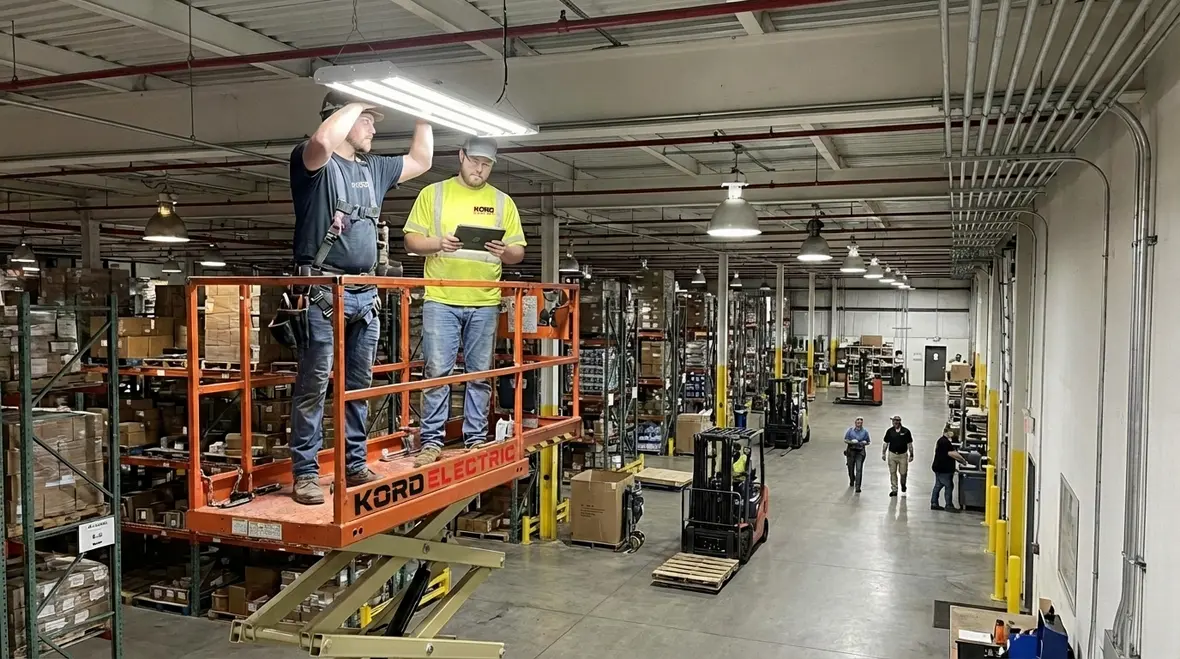
When upgrading an operational facility, downtime becomes the villain of the story. No one wants forklifts idling while electricians work overhead. Therefore, Kord Electric schedules installations around business hours, production cycles, and safety requirements. In many cases, they complete phased upgrades so that operations continue without disruption.
More importantly, they avoid the trap of simple fixture swaps. Yes, replacing old metal halide fixtures with LED options cuts energy use. However, true performance improvement requires more than a new bulb. Their experts evaluate beam angles, mounting heights, glare control, and uniformity ratios. Because uneven lighting can create shadows, and shadows create risk.
Additionally, they integrate smart controls where appropriate. Motion sensors in low traffic aisles. Daylight harvesting near skylights. Zoned controls for large manufacturing floors. Each layer reduces waste without sacrificing visibility.
And here is where their service staff shine, figuratively and literally. They walk facility managers through projected savings, maintenance reductions, and payback periods. They answer questions patiently. Even the ones that start with, “What happens if someone hits a fixture with a forklift?” The answer is usually practical, sometimes humorous, and always backed by experience.
As a result, Retrofit facility lighting upgrades move beyond cosmetic changes. They become operational improvements that support throughput, safety, and long term asset value.
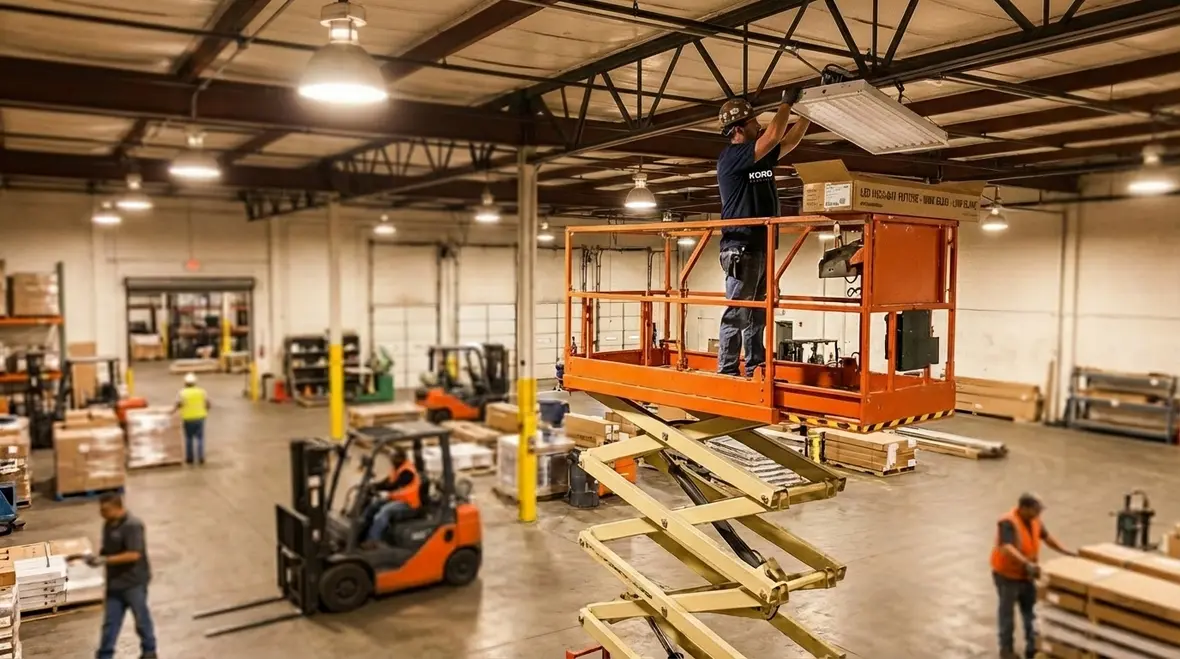
For facility leaders who want to dive deeper into safety and productivity risks before a retrofit begins, resources like Kord Electric’s insights on workplace lighting hazards help connect the dots between poor illumination, accidents, and lost output, so retrofit plans target the real problems instead of just swapping fixtures for looks.
How Should Lighting Be Designed for a New Commercial Building?
For new construction, lighting design must align with the building’s purpose from day one. Kord Electric begins by asking detailed questions. What type of equipment will operate inside? How high will racking systems reach? Will the facility run one shift or three? Because each answer affects fixture type, spacing, and control strategy.
Then, their team works alongside architects, engineers, and project managers. They review photometric layouts to ensure proper illumination levels. They confirm that panel capacities support future expansion. And importantly, they build flexibility into the system. After all, businesses evolve. A warehouse today could become a fulfillment center tomorrow.
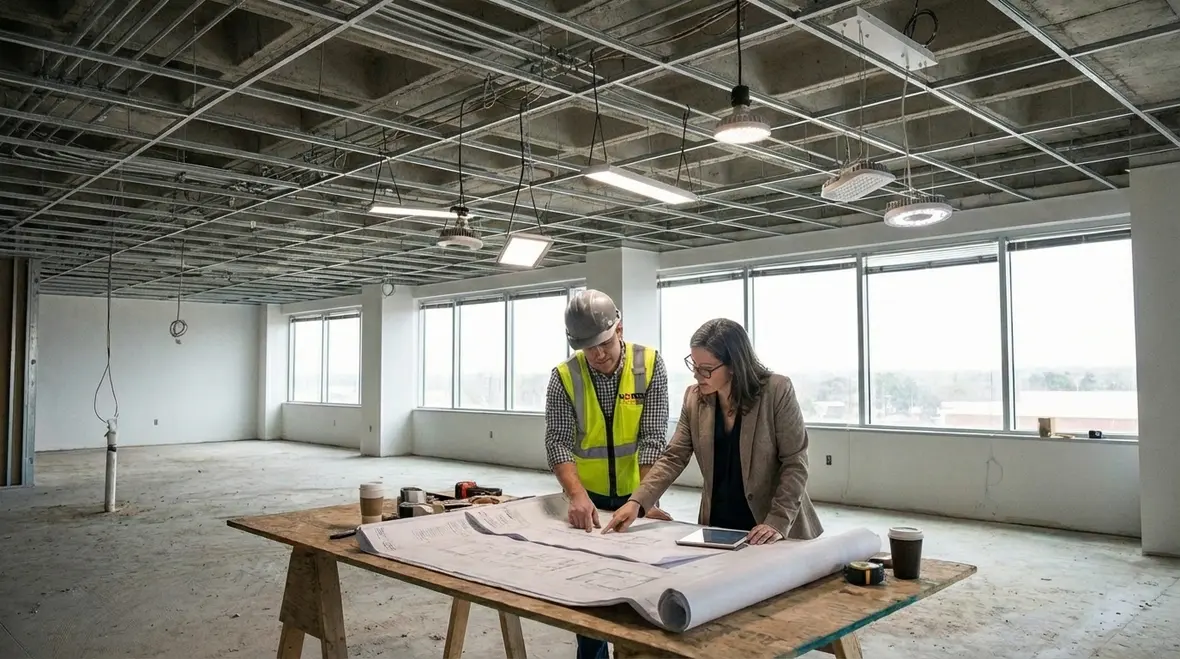
Furthermore, they prioritize durability. Industrial environments often include dust, vibration, temperature swings, and heavy equipment movement. Therefore, selecting the right housing materials and ingress protection ratings matters. A light fixture should not behave like a delicate flower in a machine shop.
Throughout the process, their technicians explain tradeoffs. For example, higher output fixtures may reduce quantity but increase upfront cost. Alternatively, more fixtures with lower wattage may improve uniformity. Rather than pushing a single option, they present clear comparisons. Consequently, building owners make informed decisions instead of rushed guesses.
For property managers in California, these early design decisions must also align with commercial lighting code requirements. Partnering lighting layout, control zones, and fixture selection with current Title 24 standards keeps projects compliant and avoids costly redesigns after inspections.
Comparing Retrofit and New Build Approaches
Retrofit Projects
- Work within existing electrical systems
- Focus on minimizing downtime
- Upgrade to energy efficient LED systems
- Integrate controls into current layouts
- Emphasize rapid return on investment
New Build Projects
- Design electrical systems from the ground up
- Coordinate with architects and engineers
- Plan for expansion and scalability
- Optimize fixture placement before ceilings close
- Balance first cost with long term performance
Although the paths differ, the objective remains the same. Deliver reliable, efficient, and code compliant lighting that supports commercial and industrial operations, whether a facility is decades old or brand new.
Energy Efficiency Without Compromising Performance
Energy efficiency often becomes the headline. However, Kord Electric refuses to chase rebates at the expense of performance. Instead, they balance energy reduction with task visibility and worker comfort.
For example, high bay LED fixtures can cut energy use dramatically compared to legacy systems. Yet if spacing ignores ceiling height and beam spread, workers may experience glare or dark spots. Therefore, calculations matter. So do real world observations that confirm how light actually lands on aisles, equipment, and work surfaces.
Additionally, lighting controls offer another layer of savings. Timers, occupancy sensors, and networked systems allow facility managers to monitor usage patterns. Over time, data reveals opportunities for further optimization. Consequently, buildings operate smarter, not harder.
In Retrofit facility lighting projects, these efficiency upgrades often translate into immediate utility savings. Meanwhile, in new builds, they lock in lower operating costs from day one. Either way, the goal stays consistent. Reduce waste. Maintain visibility. Protect productivity.
Safety, Compliance, and Long Term Reliability
Commercial and industrial buildings must meet strict codes. From emergency egress lighting to proper illumination levels in work zones, compliance cannot be an afterthought. Kord Electric builds every design around current electrical and safety standards. Therefore, inspections move smoothly and liability risks decrease.
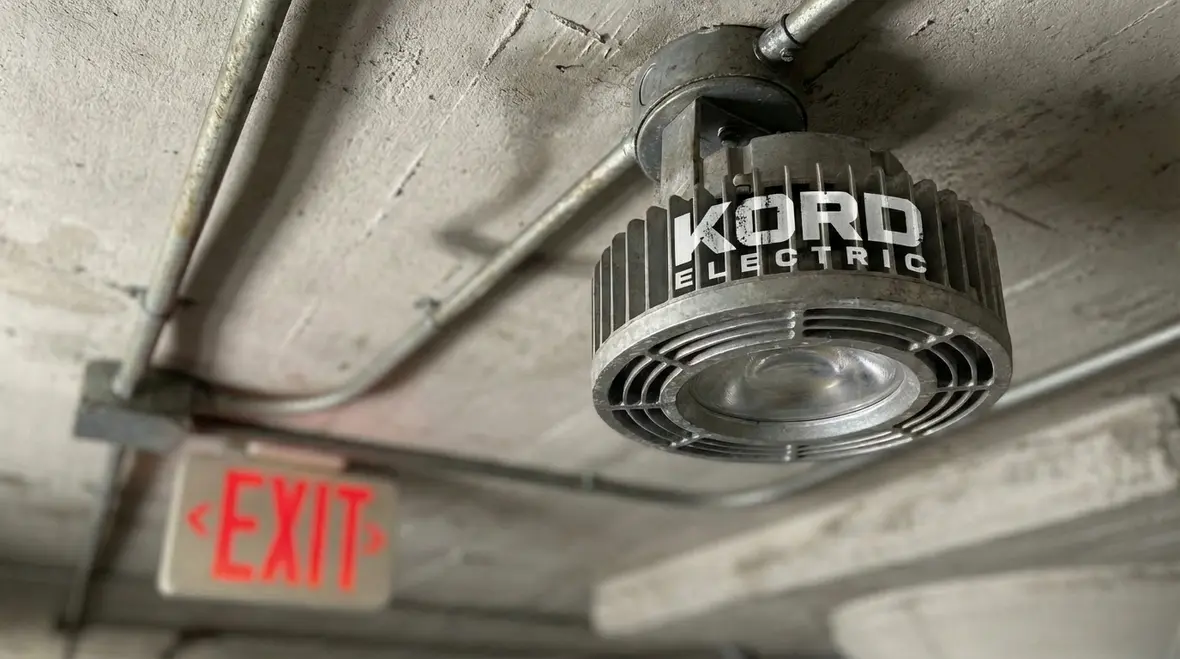
Moreover, they select components rated for industrial use. Heat management, driver quality, and mounting integrity all receive careful attention. Because replacing failed fixtures at twenty five feet in the air is not anyone’s favorite pastime.
Their technicians also provide clear maintenance guidance. They explain expected lifespans, cleaning intervals, and inspection schedules. As a result, facility managers avoid surprises. And in large properties, predictability is priceless.
In both retrofit facility lighting upgrades and new installations, long term reliability drives product selection. Not the lowest price tag. Not the trend of the month. Just dependable performance that supports daily operations year after year.
The Human Side of Technical Decisions
Lighting affects people more than most realize. Bright, even illumination reduces eye strain. Clear visibility lowers accident risk. Comfortable lighting can even improve morale. Therefore, Kord Electric considers how employees move through a space.
During site visits, their experts observe traffic flow, workstation placement, and storage layouts. They ask managers about common problem areas. Dark corners. Overlit offices. Maintenance headaches. Then, they tailor solutions accordingly so that lighting supports how people actually work—not just how the drawings looked on day one.
Importantly, they communicate in straightforward terms. No jargon heavy lectures. No cryptic charts without explanation. Just steady, confident guidance. It is the kind of approach that makes even complex electrical discussions feel manageable. Think less rocket science, more practical wisdom from someone who has wired a few hundred thousand square feet.
Because at the end of the day, technology should serve people. Not confuse them.
Planning for Scalability and Future Growth
Industrial properties rarely stay static. Production lines expand. Storage racks rise higher. Tenants change. Therefore, lighting systems must adapt.
In new builds, Kord Electric often recommends panel capacity allowances and control systems that can handle additional zones. They also consider fixture layouts that accommodate higher racking in the future. While this foresight may add modest upfront cost, it prevents major rework later.
Similarly, in retrofit facility lighting projects, they evaluate whether current infrastructure can support advanced controls or higher efficiency drivers. If upgrades are possible without full rewiring, they outline those pathways. If not, they explain why. Transparency remains central to their process.
After all, a lighting system should not limit a company’s growth. It should support it quietly in the background, like a dependable stage crew making sure the spotlight always lands where it should.
Frequently Asked Questions
Connecting Retrofit Facility Lighting to Full-Service Support
Retrofit facility lighting and new build strategies rarely live in isolation. They tie into broader electrical reliability, code compliance, and long term planning. That is why many property managers partner with Kord Electric not only for project based upgrades, but also for ongoing preventive work and future system improvements that keep their buildings safe and resilient.
From complex lighting installation services across large campuses to targeted recessed lighting installation in key production zones, the same disciplined process shows up repeatedly: evaluate, design, install, test, and support. It is a calm, methodical approach that respects budgets, schedules, and the people who rely on the lights being on every single day.
Conclusion
From complex upgrades to ground up installations, Kord Electric delivers lighting strategies that serve commercial and industrial facilities with clarity and precision. Their technicians combine technical skill with calm, practical guidance. Therefore, property managers gain more than fixtures. They gain confidence. For facilities ready to improve performance, reduce waste, and build for the future, Kord Electric stands prepared to bring the right light to every square foot.
If your facility is considering Retrofit facility lighting, planning a new distribution center, or simply tired of dealing with unreliable illumination, now is the ideal time to map out a long term strategy. With a proven commercial lighting installation process and deep experience across industrial environments, Kord Electric helps transform lighting from a recurring headache into a quiet advantage built into every shift.
Whether you are reworking a single warehouse or coordinating a multi building portfolio, aligning retrofit and new build lighting decisions with a dedicated commercial and industrial lighting partner ensures that today’s choices still make sense five, ten, or fifteen years from now.
To explore how a tailored lighting plan can support your next project, connect directly with Kord Electric’s lighting installation team and start with a focused, no pressure estimate.
For facilities that need more than a one time project, Kord Electric’s broader service offerings—spanning lighting installation services, recessed lighting installation, electrical preventive maintenance, and voltage stability solutions—create a single, reliable partner for both today’s priorities and tomorrow’s upgrades.
When you are ready to align Retrofit facility lighting or new construction lighting with long term performance, safety, and compliance, their team is ready to help design, install, and maintain systems that quietly do their job while your people focus on doing theirs.
To take the next step, schedule dedicated lighting installation services support and see how a structured, code compliant strategy can reshape the way your facility works after dark.