Smart Commercial Lighting Controls Integration for Savings
At Kord Electric, we build and integrate Smart Commercial Lighting Controls: Design, Automation & Energy Savings for commercial and industrial facilities and major property buildings. We focus on real-world results: steadier light quality, fewer manual overrides, and automation that helps your site run smarter after hours. And yes, we also help teams avoid the classic problem of “someone turned the lights on and forgot.” That is not a lighting strategy, it is just improv theater.
In this article, we explain how smart control integration works, how our technicians walk teams through setup, and how the system scales from one floor to an entire facility. We keep it practical, calm, and business focused, because your lighting should not feel like a science project.
Smart Commercial Lighting Controls that Cut Waste and Keep Spaces Comfortable
Smart commercial lighting controls are about more than putting a new app on someone’s phone. For facilities across Los Angeles County and beyond, they combine design-level planning, field-tested automation, and careful commissioning so lighting behaves the way your operations actually work. Done correctly, the system takes the late-night “who left the lights on again?” debates off your plate and replaces them with predictable, steady performance.

When these controls are integrated with the rest of your electrical story, they support code-driven lighting strategies, documented savings, and smoother inspections. Many teams pair smart lighting upgrades with broader planning through Kord Electric’s Los Angeles County electrical services so lighting, power distribution, and maintenance all move in the same direction.
If your facility is already exploring automation or lighting audits, it can also help to see how controls connect to topics like California commercial lighting code and energy-focused lighting audits. Those related efforts keep your smart lighting strategy grounded in real requirements, not just wish lists.
How smart commercial lighting control integration actually works
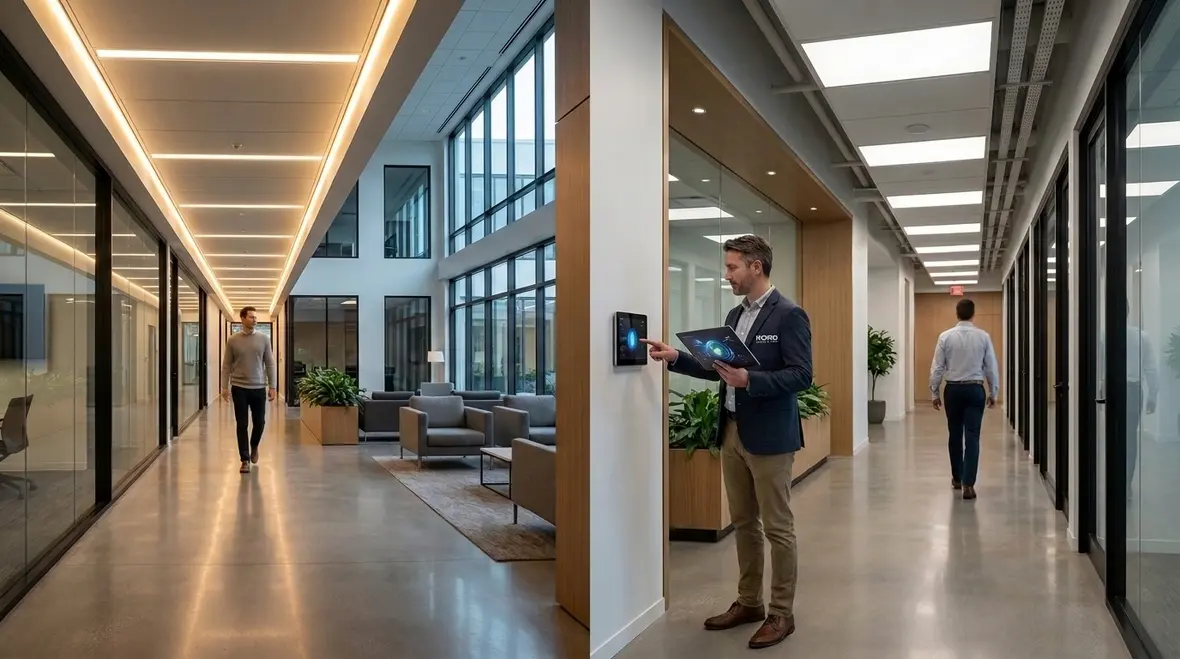
When others talk about automation, they usually stop at the app screen. We go further. Smart commercial lighting control integration ties together sensors, dimming drivers, switch interfaces, and a control network so the system can respond to what the space needs, not what someone remembers.
First, lighting zones get defined. Then, we choose the control method based on how the building behaves: occupancy patterns, daylight exposure, equipment heat needs, and how people use each area. After that, we configure schedules and scene logic so the lighting behaves the same way every day unless conditions truly change.
Next, we integrate with the building environment so the system does not operate in isolation. For example, we coordinate responses based on occupancy and time, and we tune settings to avoid harsh transitions when someone walks into a room. Meanwhile, daylight harvesting can reduce output when windows provide enough natural light, which keeps offices comfortable while lowering energy draw.
Finally, we verify the system in the field. Our technicians test behavior step by step, so the controls react the way the design intended. In other words, we do not just install equipment, we make it perform.
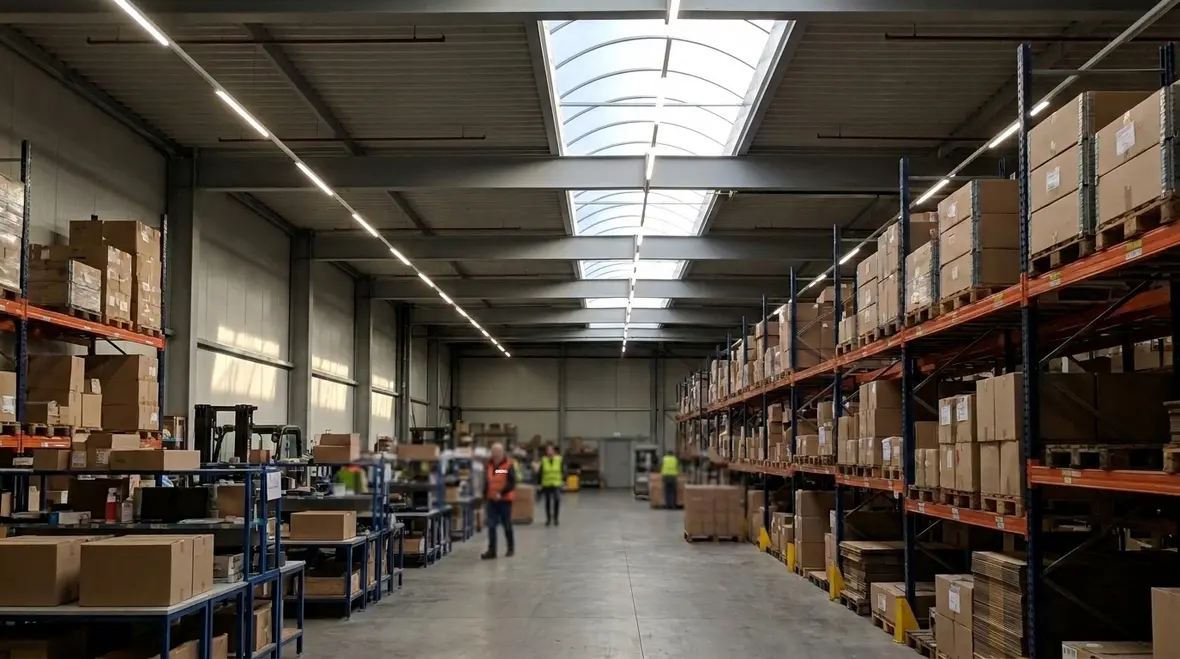
Because controls sit inside a broader electrical ecosystem, we align integration with upstream design work. If your project also involves distribution upgrades or data-driven electrical design, the lighting controls are built to cooperate, not compete, with the rest of your system.
What facilities gain from design level control planning
Smart lighting does not start at the ceiling. It starts with planning. We design control strategies around how your facility functions. Therefore, the system supports the operational reality of commercial and industrial buildings, not a generic template pulled from thin air.
When we design lighting zones, we consider visibility needs, task lighting requirements, and where glare can happen. We also align controls with how maintenance teams access spaces, because if the system is hard to manage, it will drift over time. Then we define a sensible control hierarchy: local sensing where it makes sense, and centralized scheduling for consistency across larger areas.
We also plan for future changes. Companies remodel. Managers reassign space. Warehouses expand. So we choose control components that support growth and add flexibility. In practical terms, this means you avoid the “rebuild everything” moment that every building eventually meets, like a sequel nobody asked for.
During installation and commissioning, our team documents zone behavior and settings. That matters because it helps operators understand what the system is doing and why. We keep the operation simple, so the building staff can run the system without constantly calling for help.
For property teams that want a deeper dive into planning, it can be helpful to connect smart lighting controls with broader topics like data-driven electrical design or tenant improvement electrical planning. That way, your lighting control strategy lines up with panel capacity, wiring methods, and long-term electrical reliability instead of being bolted on at the end.
Energy savings that come from automation, not guesswork
Energy savings should be measurable, not hopeful. With Smart Commercial Lighting Controls: Design, Automation & Energy Savings, the system reduces usage by dimming lights when conditions allow, by turning off lights when spaces are empty, and by preventing “stuck-on” behavior.
To make that real, we configure dimming levels and timing windows based on space use. For example, production areas might need immediate occupancy response but could still benefit from daylight and staged warm up. Offices and corridors typically gain from gradual transitions and scheduled behavior that matches work hours.
We also manage overrides. If your staff overrides the system, the control logic should return safely to scheduled operation. Otherwise, overrides turn into permanent habits. And habits, like New Year resolutions, tend to fall apart by March.
In addition, we tune performance for stability. Lights should not flicker because a sensor is confused by HVAC airflow or movement patterns. Therefore, we test sensor placement and settings so the control strategy stays steady across the day and seasons.
Once the system runs, we help you track results through commissioning reports and system documentation, so you can verify that the savings come from automation, not from luck. If your facility needs a broader roadmap for lighting improvements, resources such as Kord Electric’s California commercial lighting code guides and lighting audit articles can help tie those savings to compliance and long-term performance.
Occupancy sensors, daylight harvesting, and tuning for comfort
Occupancy sensing and daylight harvesting are the two pillars most people recognize. However, the comfort comes from how those pillars work together.
Occupancy sensors detect presence and set the lights to the right brightness level quickly, then reduce output after a space stays empty. Daylight harvesting measures natural light levels and adjusts artificial output to maintain target illuminance. In the best setups, staff feel consistent lighting without noticing the behind-the-scenes changes.
Still, tuning matters. We account for task types and human comfort. For instance, retail spaces and labs need different target brightness and different dimming curves. Also, we consider how sunlight moves through the day, because a zone that looks perfect at 10 AM can become too bright at 2 PM.
Our technicians handle the tuning during commissioning. They review sensor behavior, confirm dimming response, and align schedules so the system does not fight your operations. Then they show your team how to interpret what they see, so staff can trust the system instead of questioning it every time motion triggers a change.
That is where our expert service team earns its keep. People can buy hardware. They still need someone who explains setup clearly, walks through adjustment options, and helps prevent “mystery behavior” that makes teams blame the lights when the real issue is configuration.
Scaling controls across a facility without chaos
As facilities grow, controls should grow with them. Therefore, we design lighting control systems for consistency across floors, wings, and zones. We avoid complicated setups that work for one area but fail during rollouts.
When we plan scalability, we use a zone approach that keeps behavior logical. Instead of turning every room into its own universe, we group spaces based on similar use patterns. For example, we align zones for areas with comparable occupancy and lighting requirements. Then we apply schedules that match building operations, and we keep scenes manageable for operators.
We also handle integration points so the system stays coordinated with building operations. That helps when you operate multiple systems and still want lighting to respond correctly. We support commercial and industrial facilities and major property buildings, so we plan around the complexity that comes with real occupancy and real infrastructure.
To keep things calm on install day, we structure commissioning in steps. We test each area, then move outward, and we document what works. So, the project does not turn into a “guess and check” scenario. It stays organized. And yes, that organization matters more than people think, like having a spare tire before you need it.
When you are ready to see how controls operate alongside other smart building systems, resources like Kord Electric’s article on smart commercial lighting control that actually saves energy can help you compare strategies and align your rollout plan.
FAQ: smart commercial lighting control integration
Common concerns we address before installation
Most decision makers have the same concerns, and we take them seriously. First, people worry about reliability. Therefore, we test sensor response and dimming behavior in the field so the system performs consistently.
Second, teams worry about complexity. So, we design for clarity. We keep zone names and behavior logical, and we provide commissioning documentation. When your staff can understand what is happening, they trust the system.
Third, facilities worry about disruption during installation. We coordinate installation activities with your building needs and focus on commercial and industrial environments where downtime decisions carry real weight.
Finally, people ask about long-term value. We help you preserve that value by tuning the system during commissioning, educating operators through our expert service staff, and setting the stage for future updates as spaces change.
In short, we treat smart lighting controls like a living system, not a one-time product handoff.
Connect smart lighting controls with broader electrical services
Smart Commercial Lighting Controls: Design, Automation & Energy Savings becomes even more effective when paired with a broader view of your electrical system. For example, projects that combine lighting control upgrades with panel load testing, power reliability audits, or data-driven electrical design tend to achieve steadier performance with fewer surprises.
Because lighting is one of the most visible parts of your electrical infrastructure, it often becomes the first touchpoint for a more coordinated strategy. Kord Electric’s Los Angeles County electrical services for commercial and industrial facilities help ensure the rest of your power story can support smarter controls, from feeders and panels to maintenance and emergency response.
If you want to see how.smart lighting fits alongside other upgrades like tenant improvements, Title 24-driven retrofits, or lighting maintenance programs, Kord Electric’s blog offers practical, plain-language resources that connect these pieces so your next project does not live in a vacuum.
Ready to modernize your commercial lighting controls?
If you are ready to upgrade for comfort, control, and measurable energy savings, Kord Electric can help you plan and integrate a system built for commercial and industrial facilities and major property buildings. We design smart zoning, automate schedules, and commission controls with a calm, step-by-step approach from our expert technicians. Then, we explain the system clearly so your team can operate it with confidence. Contact us today to discuss your facility and build a lighting control strategy that works as well as it looks.
When you are ready to see how smart controls interact with other intelligent systems, you can also explore related topics like commercial lighting control that actually saves energy or smart code-focused lighting design resources on the Kord Electric blog. Together, these approaches help you move from one successful project to a repeatable playbook for every building in your portfolio.
And if your facility is already running automation but feels more like a disco than a steady workspace, we can review your current controls, document what is happening, and rebuild a calmer, more predictable strategy that respects both your utility bill and your sanity.