Electric Fleet Planning: Charging Infrastructure and Capacity
Electric Fleet Planning Starts With Charging Infrastructure and Real Electrical Limits
In Electric Vehicle Fleet Planning: Charging Infrastructure & Electrical Capacity, we help commercial and industrial facilities avoid the classic surprise: the charger arrives, then the site power says, “Not today.” In this article, others ask how to plan fleet electric vehicle charging so it fits real electrical capacity, real duty cycles, and real building operations. We explain it in plain terms, and our technicians and expert service staff back it up with practical guidance, not vague promises. If you have a fleet and a facility, you already know timing matters. So we map the electrical side first, then we plan charging routes, locations, and schedules. And yes, we also save you from the kind of meeting where everyone nods and nothing gets decided.
Assess the Fleet Duty Cycle Before You Touch Any Hardware
Fleet planning begins with how vehicles actually run. First, we look at routes, miles per day, idle time, shift patterns, and driver behavior. Then we translate that into charging needs. Because charging is not a “one size fits all” purchase, we help our clients model energy demand by hour, not by guesswork.
We also ask a few practical questions that save money later. For example, what happens during peak demand when multiple vehicles plug in at the same time? Also, do vehicles return to the facility every shift, or do they come back unevenly? If your operations run like a movie scene with constant interruptions, we plan charging around that reality.
Our technicians and expert service staff then help teams connect the dots between fleet needs and electrical design. In other words, we avoid building a system that charges well on paper but performs poorly during the busy hours.
How We Plan Site Power for Electric Vehicle Fleet Planning
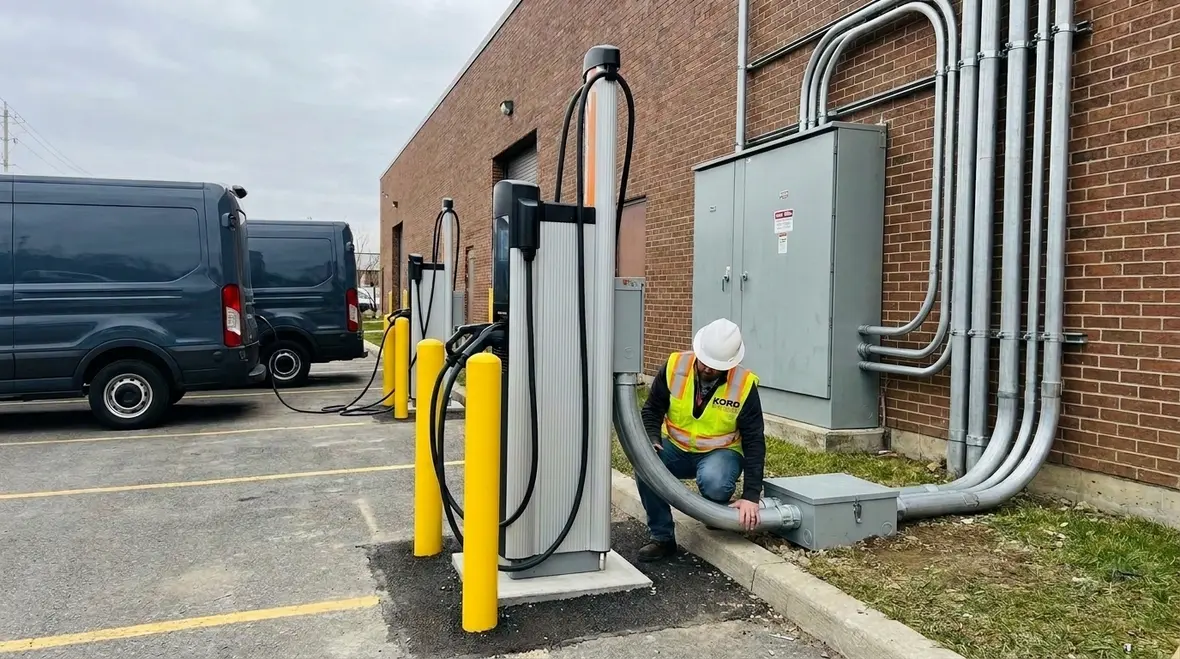
Now we move to the electrical side, where most plans either hold up or fall apart. Electrical capacity drives everything: transformer size, service upgrades, feeder capacity, panel space, conductor routing, and safety settings. And importantly, we focus on commercial and industrial facilities and major property buildings, because those sites need reliable power that supports operations, not just convenience.
In Electric Vehicle Fleet Planning: Charging Infrastructure & Electrical Capacity, the goal is simple. We match charger power to what the building can support now, and what it might need later. To do that, we review load calculations, utility tariffs when available, and the building’s existing electrical profile. Then we look at how charging loads will add to that base load during different periods.
At this stage, we consider demand charges and peak management options. If a facility faces high utility costs during peak hours, we plan to reduce spikes through smart charging strategies. In addition, we evaluate whether the site needs staged construction so operations keep running while electrical upgrades happen.
For facility leaders who want a deeper dive into how this connects with broader commercial EV planning, it also helps to review resources like Kord Electric’s Commercial EV Charging Planning Guide: Scaling Infrastructure With Confidence and the detailed EV charging infrastructure planning for commercial growth articles, which walk through phased upgrades, demand modeling, and long term capacity decisions in more detail.
Design Charging Locations for Workflow, Safety, and Maintenance
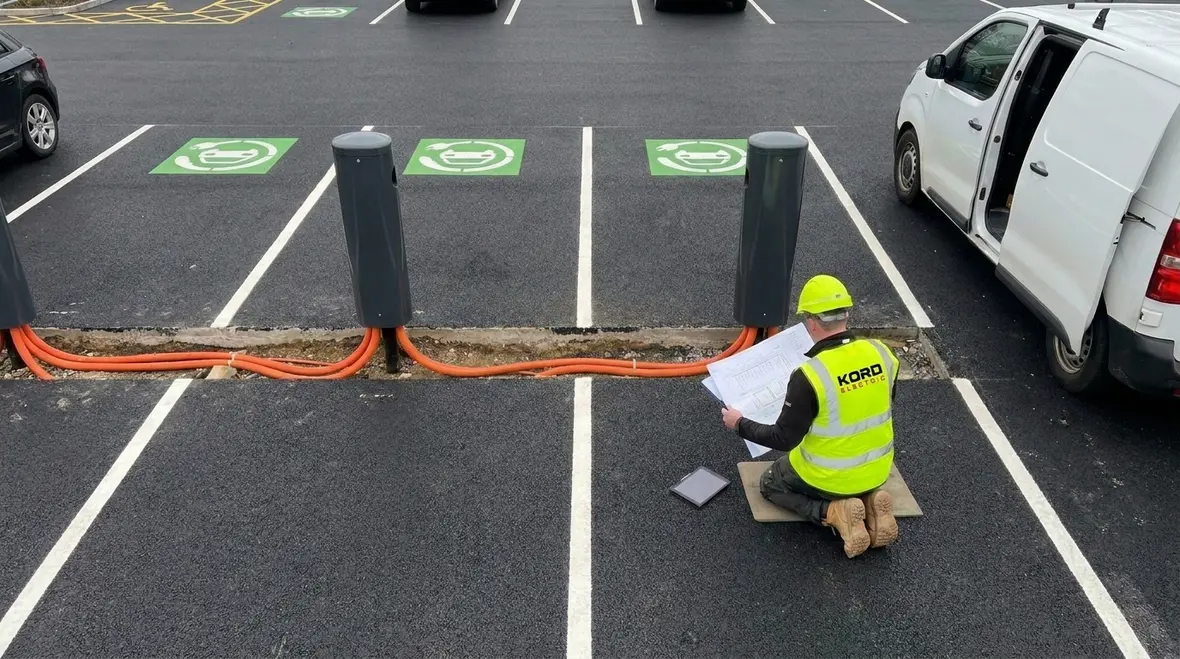
Even perfect electrical capacity can fail if chargers sit in the wrong place. So we plan charger locations based on traffic flow, parking patterns, pedestrian separation, and vehicle access. We also think about cable routing, trenching, conduit sizing, and protection from vehicle impacts. Because if a cable gets hit, the system stops. And nobody wants downtime that feels like a sitcom punchline.
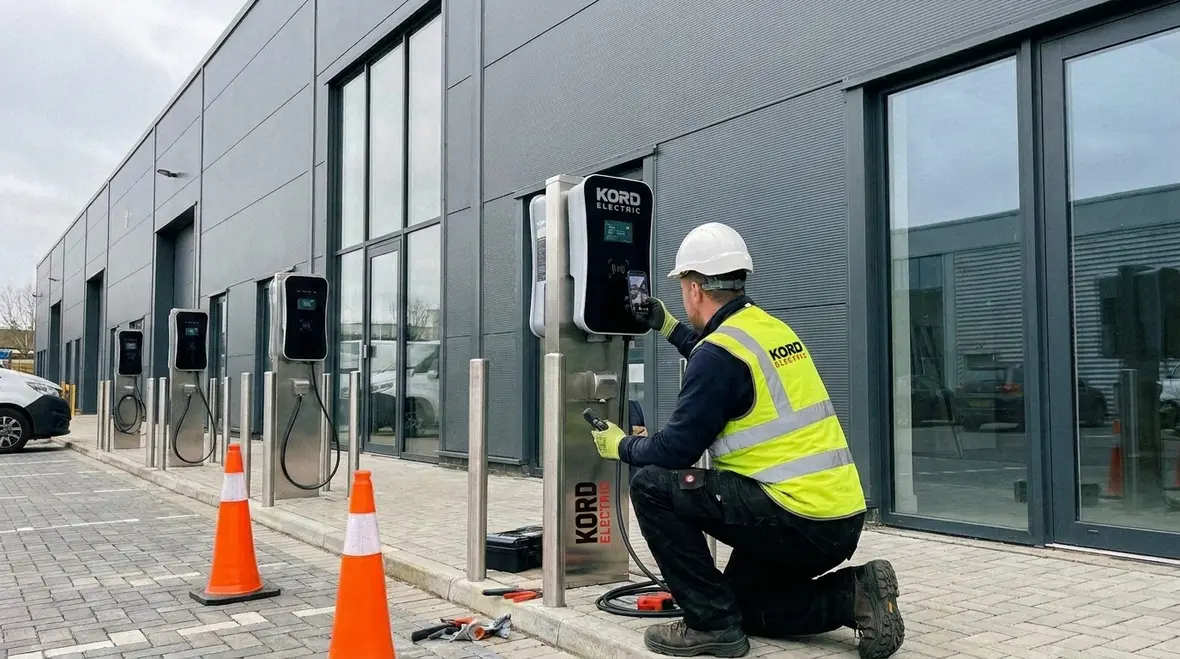
Next, we align charger placement with fleet charging habits. Some fleets plug in only after their shift. Others do partial top ups. We design the layout so drivers reach the connector without confusing lane changes or blocking loading docks. Then we coordinate with building teams about permitting, signage, and any work restrictions.
Our technicians work through the practical details that property managers care about. We confirm mounting methods, grounding, weatherproofing, and clearance requirements. Meanwhile, our expert service staff helps explain the plan to facility owners in clear language. That way, teams do not rely on guesswork or “word of mouth” in the field.
Build a Smarter Charging Strategy That Matches Your Real Schedule
Once we know the duty cycle and site power, we choose a charging strategy that fits. For commercial and industrial fleets, the best approach often blends scheduling with load balancing. That means chargers do not all draw maximum power at the same moment. Instead, the system spreads demand across the available capacity.
We also consider the charging window. If vehicles return with plenty of time to charge, we can charge slower and reduce electrical stress. If vehicles return with limited time, we might use higher power charging but only where electrical conditions allow. This strategy helps avoid expensive upgrades for a peak that only lasts a short window.
Additionally, we plan for growth. Fleets expand, routes change, and budgets get revised. So we design with future capacity in mind, including space in electrical rooms and pathways for added conduits. In short, we build for today and tomorrow, without turning the project into an ongoing emergency.
If your facility is mapping out long term rollout across multiple phases, Kord Electric’s broader commercial EV charging infrastructure planning resources pair well with this Electric Vehicle Fleet Planning: Charging Infrastructure & Electrical Capacity framework, especially when you want every stage of expansion to support the next instead of creating surprises.
Use a Planning Guide to Reduce Risk and Speed Up Approvals
We use a structured approach aligned with our EV charging infrastructure planning guide, so teams reduce uncertainty from the start. First, we gather site data and review existing electrical drawings. Then we verify field conditions that can change the design, like panel locations, conduit paths, and equipment clearances. After that, we develop an electrical plan that supports charger needs while staying within safe limits.
Next, we help clients connect the plan to permitting and stakeholder discussions. Because in many major property buildings, approvals involve several groups, including facilities, safety, and sometimes property management committees. Therefore, we present the charging plan with clear documentation and a logical rationale for capacity decisions.
Finally, we coordinate installation sequencing. This matters because downtime costs money. We plan for safe work windows, staged upgrades, and clear cutovers so operations continue with minimal disruption.
For teams that also manage broader electrical reliability across Los Angeles County and Southern California, resources such as Kord Electric’s Los Angeles County electrical services overview and related planning guides help align Electric Vehicle Fleet Planning: Charging Infrastructure & Electrical Capacity with everyday needs like troubleshooting, preventive maintenance, and future capital projects.
Connect Electric Fleet Planning With Broader EV Strategy
Electric Vehicle Fleet Planning: Charging Infrastructure & Electrical Capacity fits inside a larger ecosystem of EV decisions. For example, many facility teams use a step by step EV charging infrastructure planning guide to coordinate fleet projects with other commercial charging initiatives, or they review specialized content like Kord Electric’s California fleet charging and rebate guides when budgets and incentives enter the picture.
Because charging touches panels, transformers, parking layouts, and even lighting in some yards, tying your fleet project to an overall EV roadmap helps prevent duplicated work. Instead of designing fleet charging once and public or employee charging later, we often design them together so trenching, conduit, and capacity upgrades support all of it.
That same mindset applies when you move from planning into implementation. If your fleet project needs construction ready drawings and field execution, it often makes sense to align this Electric Vehicle Fleet Planning: Charging Infrastructure & Electrical Capacity framework with Kord Electric’s commercial EV charger installation services and related infrastructure design work, so the transition from plan to job site stays smooth end to end.
FAQ: Electric Fleet Charging for Commercial Sites
FAQ: Quick Answers for Featured Snippets
How can we avoid peak power problems?
We plan capacity up front and use smart charging schedules to limit simultaneous high load during peak building demand. That means modeling when vehicles actually plug in, coordinating Electric Vehicle Fleet Planning: Charging Infrastructure & Electrical Capacity with existing building loads, and using load management so multiple chargers do not all draw maximum power at the same moment.
What does Electric Vehicle Fleet Planning: Charging Infrastructure & Electrical Capacity include?
It includes load analysis, charger count and power selection, electrical design, cable routing, installation sequencing, and growth planning. We tie those pieces together with a clear schedule and staging plan so upgrades, inspections, and commissioning fit around real operations instead of shutting your site down at the worst possible time.
Do you only serve commercial and industrial buildings?
Yes. We focus on commercial and industrial facilities and major property buildings, where reliability and long term operations matter most. That focus helps us design Electric Vehicle Fleet Planning: Charging Infrastructure & Electrical Capacity projects that integrate with complex electrical systems, mission critical schedules, and demanding uptime requirements.
How long does a typical fleet planning effort take?
Timelines vary by site complexity, but we usually start by collecting data and evaluating electrical capacity, then we move to design and documentation for approvals. Simple sites can move from initial assessment to permit ready drawings quickly, while large campuses, multi building fleets, or constrained electrical services may require more detailed study and coordination with utilities and internal stakeholders.
Conclusion: Let Kord Electric Build a Charging Plan That Actually Works
If you are planning electric fleet charging for a commercial or industrial site, do not gamble with power limits, cable routes, or schedules. We at Kord Electric build Electric Vehicle Fleet Planning: Charging Infrastructure & Electrical Capacity plans that fit your duty cycle and your electrical reality. Our technicians and expert service staff guide you step by step, so you get a system designed for reliability and growth. For teams balancing fleets with other upgrades across Los Angeles County and Southern California, this planning approach also meshes with broader services like electrical troubleshooting, panel work, and lighting projects, so your site moves forward as one coordinated system instead of a patchwork of separate jobs.
When you are ready to move from ideas to execution, you can also review our focused resources like the EV charging infrastructure planning guide and related commercial EV planning content to see how this framework plays out in real projects. From there, scheduling a site evaluation with Kord Electric turns Electric Vehicle Fleet Planning: Charging Infrastructure & Electrical Capacity into a practical roadmap you can use, not just admire.
And if your facility is considering broader EV and electrical work beyond fleet charging alone, make sure to explore how our regional Los Angeles County electrical services support everything from code driven upgrades to long term reliability planning, so your fleet project becomes part of a stronger, more resilient electrical backbone.