EV Charging Infrastructure Planning Guide
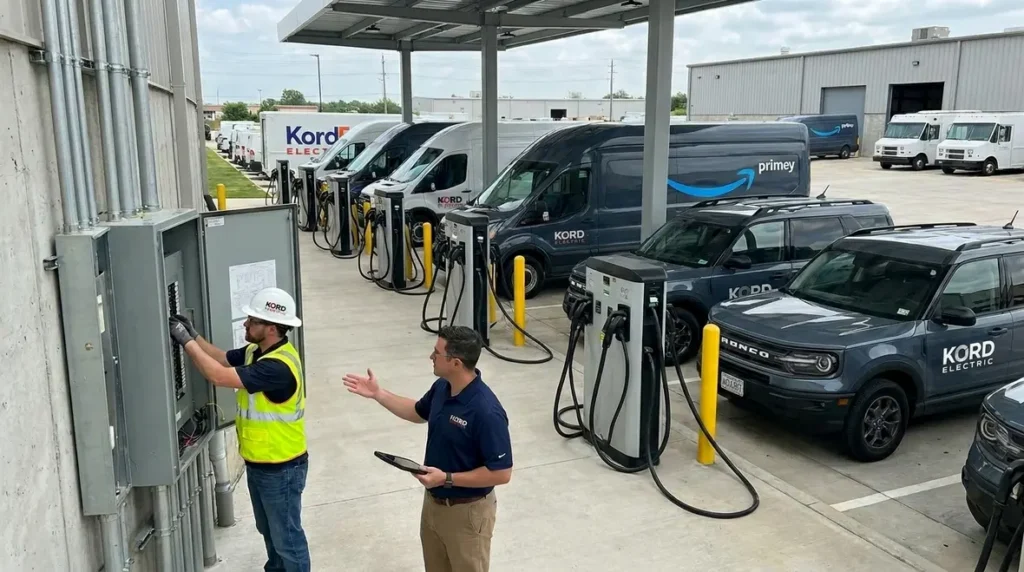
At Kord Electric, we help commercial sites move from “we should” to “we did” by building a thoughtful plan for ev charging infrastructure planning before permits, trenches, and vendor timelines start acting like a sitcom ensemble. In the first stage, we map load capacity, charger locations, power routing, and the real-world schedule needed for a clean rollout across offices, warehouses, campuses, and multi tenant properties. Then our team of technicians and experienced service staff steps in to explain what matters, what can wait, and what cannot. And yes, we keep it calm. Even when the project timeline feels like it was written by someone who thinks “rush hour” is a movie title.
Scope and goals for commercial rollout
Commercial and industrial facilities win when the plan begins with operational goals, not just hardware. We start by asking what vehicles the site will serve, how often they charge, and whether charging supports fleet operations, tenant demand, or visitor throughput. From there, we connect those goals to site rules like parking flow, access lanes, and safety zones around electrical equipment.
Next, we define the expansion model. Some clients want a modest first phase that proves performance. Others want near full buildout now, because downtime costs more than the added budget. Either way, we document milestones and decision points so others can keep the project moving without guessing.
Then we align the plan with property stakeholders. Facilities managers care about uptime and maintenance, while owners care about capital payback and risk. We speak to both, because our technicians and expert service staff explain tradeoffs in plain terms, not in mystery code. When someone asks, “Why not just add more breakers later?” we answer, “You can, but the panel and switchgear do not magically grow.”
Site survey and load modeling that actually holds up
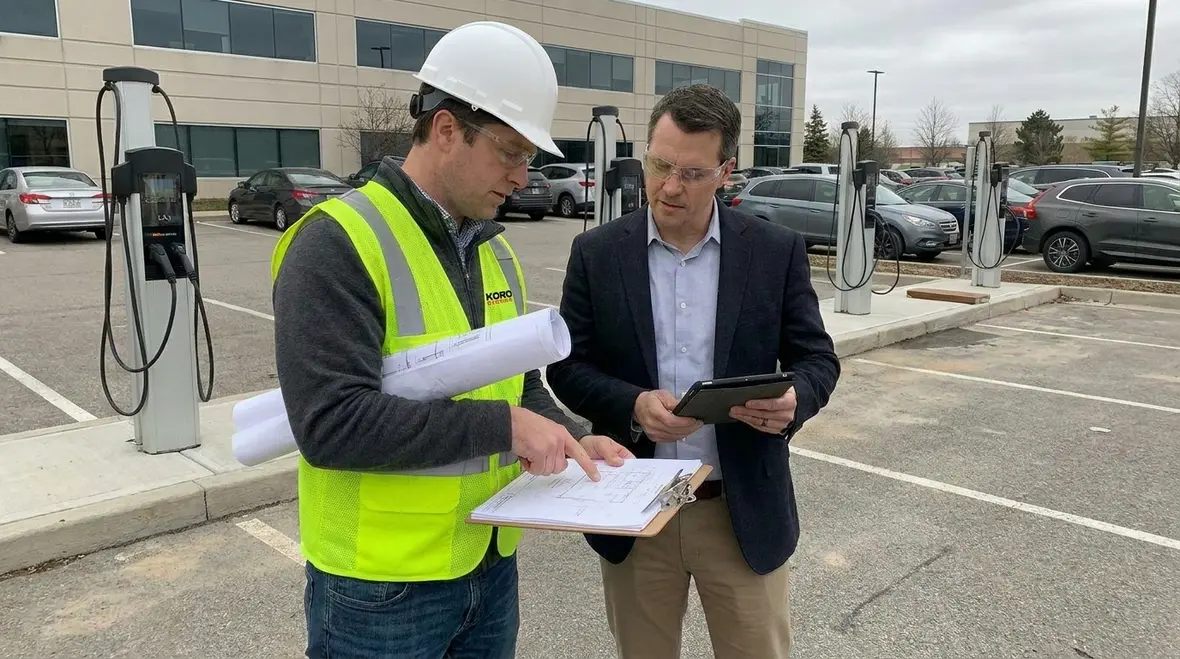
Once goals are set, we perform a detailed site survey. We review service size, existing feeder routes, panel schedules, transformer capacity, and demand patterns. After that, we build load modeling that reflects actual use, not optimistic guesses. For example, charging use often clusters in predictable windows, like shift changes for fleets or evening peak for public facing lots. Therefore, our load model includes when charging happens, not only how many chargers exist.
At this stage, we also look for limits that typically surprise teams. Voltage drop can matter for longer runs. Shared circuits can create uneven loading. And the physical layout can force changes to cable routes once real trenching conditions show up. So, we model early and revisit often, because “good enough” becomes “expensive” once construction begins.
Our technicians then cross check electrical constraints against equipment availability and future growth. This is the part where we prevent the classic scenario: the site wants more chargers in a year, but the electrical room is already packed like a radio station studio with three backup microphones and no space to breathe.
Infrastructure design: power paths, controls, and future growth
After load modeling, we design the infrastructure as a system. In practical terms, we plan power paths from utility service through switchgear and distribution, then onward to chargers and their controls. We choose routes that reduce rework and we plan cable sizing and raceways for real installation conditions.
Just as important, we select a control approach that can scale. We coordinate with the site’s charging strategy so the chargers can share power intelligently when multiple vehicles charge at once. That means fewer bottlenecks and more stable performance. In addition, we design the system so future phases connect without ripping out what already works.
Here we also consider the electrical room realities. If we cannot add capacity later, we design around that limitation. If we can expand, we plan for safe, organized additions. Our team follows disciplined maintenance thinking from day one, because electrical equipment does not love surprise stress.
Electrical panels and switchgear maintenance planning from day one
In our experience, the best ev charging infrastructure planning includes maintenance planning before the first charger ships. If a facility builds a charging system on top of electrical equipment without thinking ahead, the site will pay later in service calls and downtime. So, we use our long history with electrical panels and switchgear maintenance as part of the design strategy, not as an afterthought.
When we review panel and switchgear readiness, our expert service staff looks at components that affect reliability over time. For instance, we consider how connections hold under thermal cycles, how often internal inspections should happen, and what cleaning and torque checks need to be scheduled. We also advise on labeling and documentation so future service remains efficient.
In fact, our approach aligns with the careful maintenance mindset we share in our resources on NFPA 70B electrical panels and switchgear maintenance. That means we treat the electrical room like critical infrastructure, because it is. And yes, we have seen panels get “managed” the way people manage their gym membership: often, but never consistently.
Permitting, utility coordination, and schedule control
Even the strongest electrical design fails without a schedule you can defend. Therefore, we coordinate with utility requirements, service upgrade timelines, and any permit steps the authority requires. We also prepare documentation that helps stakeholders approve work without delays.
Next, we structure the rollout schedule to protect operations. For commercial and industrial facilities, downtime impacts payroll, shipping, security systems, and daily workflow. So we phase work in a way that keeps essential operations running. Where feasible, we plan for temporary power boundaries, staged cutovers, and clear communication on what will happen, when, and for how long.
We also help clients plan inspections and commissioning. Commissioning verifies that load sharing works, controls function correctly, and the system performs under expected conditions. Then we document it so future troubleshooting feels less like searching for a missing remote in a couch.
Installation quality, safety workflows, and technician communication
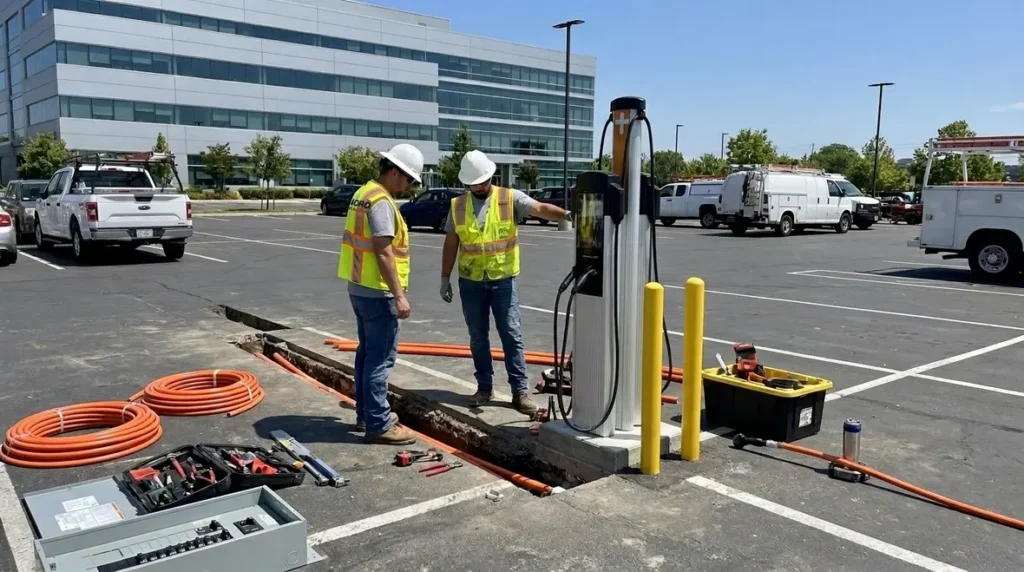
Construction is where good plans either become strong systems or turn into expensive lessons. We keep quality high by using repeatable safety workflows and by making sure our technicians follow a clear installation sequence. We verify cable routing, terminations, grounding, and labeling as we build.
Then we communicate. Our expert service staff explains what they are seeing in the field, why certain decisions matter, and how to operate the system correctly. This matters for maintenance teams and for anyone who may interact with the charging equipment later. A charging system can look simple on the outside, but inside it depends on correct electrical discipline.
In addition, we train facility staff on basics like what alarms mean, how to respond to service alerts, and how to report issues quickly. As a result, the site gets faster support and fewer “wait and see” delays that usually cost more over time.
Operational maintenance: uptime, inspections, and phased upgrades
Once the chargers go live, the plan shifts from build to run. We support operational maintenance that protects uptime and extends equipment life. That includes inspection cadence, documentation reviews, and attention to the electrical room conditions that affect performance.
We also help clients plan phased upgrades in a way that does not wreck the existing layout. When a site expands, the wrong upgrade can overload feeder paths or create control conflicts. So we track capacity and performance, then we plan additions with the same careful approach we used at the start.
Additionally, we recommend preventive checks for the components that affect long term reliability. This aligns with the maintenance principles we discuss in our electrical panel and switchgear guidance and it keeps the system dependable as usage grows.
Think of it like a good fleet service plan. You do not wait until the engine breaks to start caring about oil. You care early, and you keep moving.
FAQ
Ready to expand charging capacity without surprises?
If your facility wants EV charging that performs today and still scales tomorrow, we can help you build the right plan from the start. Kord Electric supports commercial and industrial owners with design support, coordinated installation, and a maintenance mindset that protects uptime. Contact us to review your site needs, walk through capacity and phasing, and map a clear path to commissioning. Let us handle the electrical details so your team can focus on running the business.
To move from planning into action, explore how our dedicated EV charger installation services connect design, construction, and long term maintenance into one coordinated approach for commercial and industrial properties.