Warehouse Lighting Efficiency Upgrades and Control
At Kord Electric, we see a lot of warehouses that waste light like it is free candy. That changes when we install warehouse lighting efficiency upgrades and pair them with smart control. First, we help facilities cut wasted energy by matching light levels to real work. Then we reduce maintenance by choosing controls that behave, not ones that “mysteriously” fail after a few months. Our technicians walk the floor, measure how people and machines actually move, and explain the plan in plain language. And yes, we even make lighting feel less boring than a stand up set that bombed in the loading bay.
Still, lighting is not just a bulb problem. It is a system problem. In commercial and industrial facilities, the right strategy improves safety, supports productivity, and protects your electrical distribution. As we build out solutions, we also keep reliability in mind, the same way the design principles we use for power distribution focus on dependable performance. If you want a deeper dive into how we think about reliability, you can also explore our companion guide on data center electrical distribution design for reliability and see how those same principles translate to warehouse lighting control.
Why warehouse lighting needs control, not just more fixtures
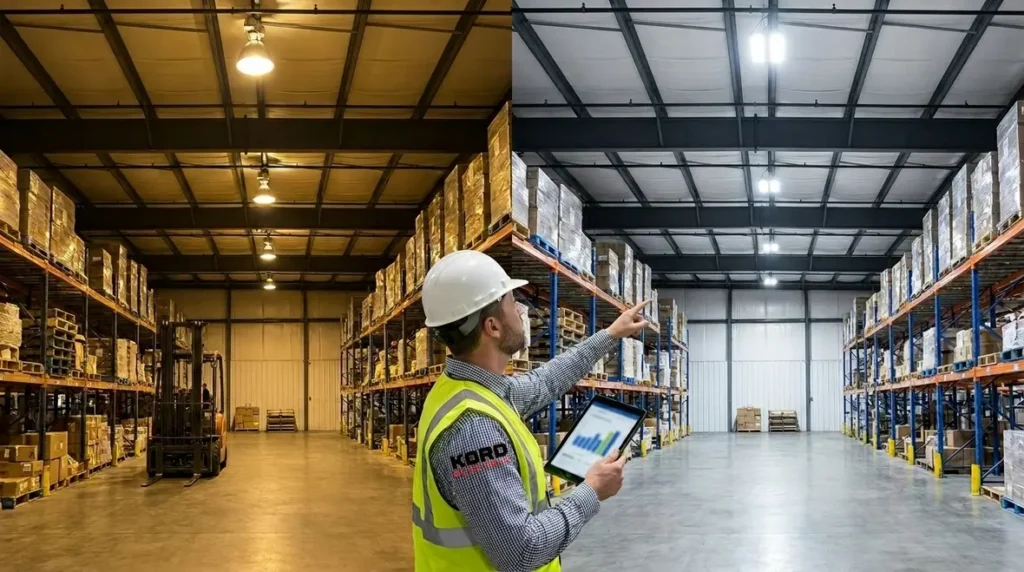
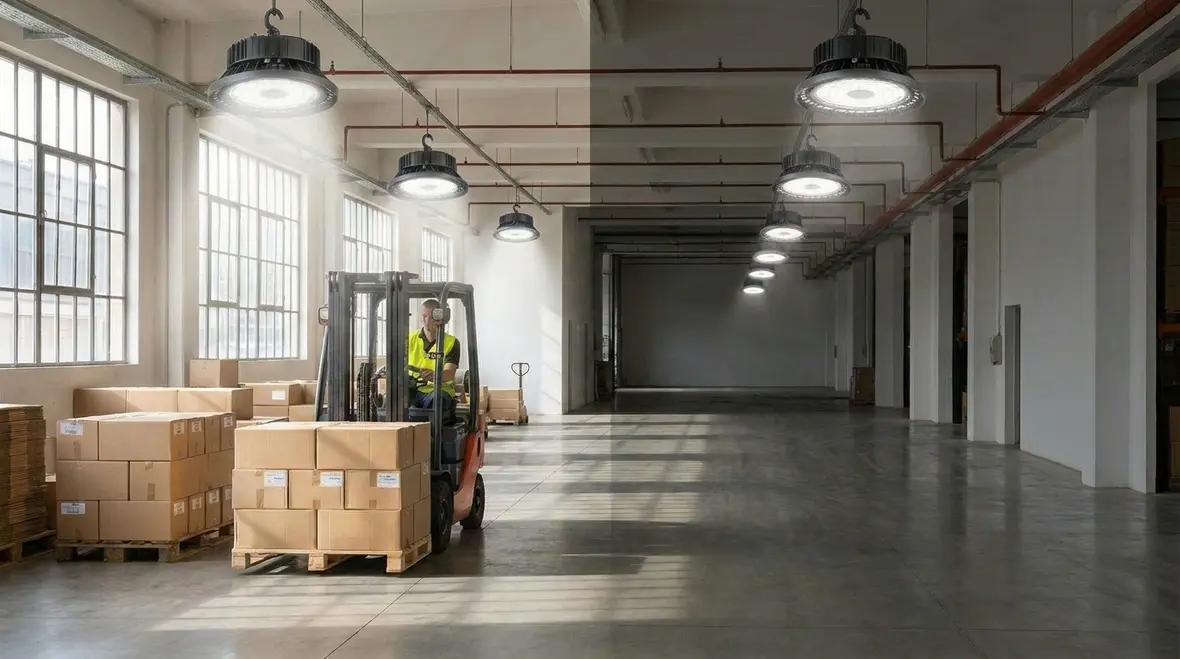
When teams rely on fixed lighting, they end up with a predictable outcome. Light stays on at full output even when aisles are empty. To make it worse, some zones get too much glare while others remain dim. That imbalance creates eye strain, safety risks, and constant complaints from supervisors who swear the warehouse “changed.” Yet the warehouse did not change. The control strategy did.
Lighting control solves this by treating light as a tool that can adjust. Then it supports how operations run across shifts, seasons, and different tasks. For example, a storage aisle might need strong illumination only during picking or inventory. On other days, lower output can keep visibility at safe levels while saving energy. In addition, modern controls let facilities respond to real occupancy, available daylight, and even scheduled work hours. And if you think this sounds like “set it and forget it,” we agree with the joke. The key is making sure it is actually set correctly at the start.
How we design lighting zones that match warehouse reality
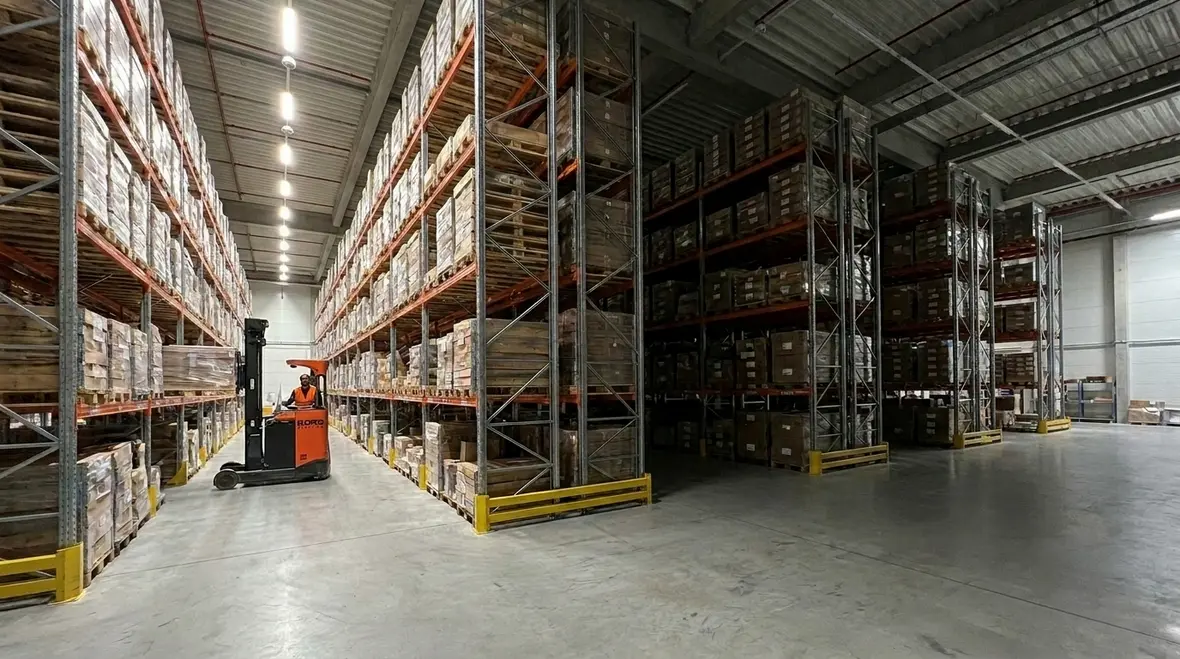
Our expert service staff starts with a simple question: where does work happen, and when? Then we translate the answers into lighting zones. Instead of one big switch, we use zone layouts that match traffic patterns, dock areas, packing stations, mezzanines, and pallet flow. Because warehouses rarely operate like a perfect grid, zoning keeps control precise.
Next, we choose sensor types based on the behavior of the space. For open aisles, occupancy sensors and time based scheduling can reduce runtime. For areas near windows, we apply daylight harvesting so the lights dim when sunlight covers the task. For dock doors and entrance ways, controls can respond faster to movement, so the floor does not feel like a cave during receiving.
After that, we tune the system. Our technicians review test results, adjust thresholds, and confirm that dimming does not create dark pockets. We also coordinate with electrical distribution so control circuits stay stable and the overall design supports reliability. If your warehouse lighting feels like it is running on vibes, it usually means nobody verified the electrical and control integration.

What advanced dimming and occupancy control should do for safety
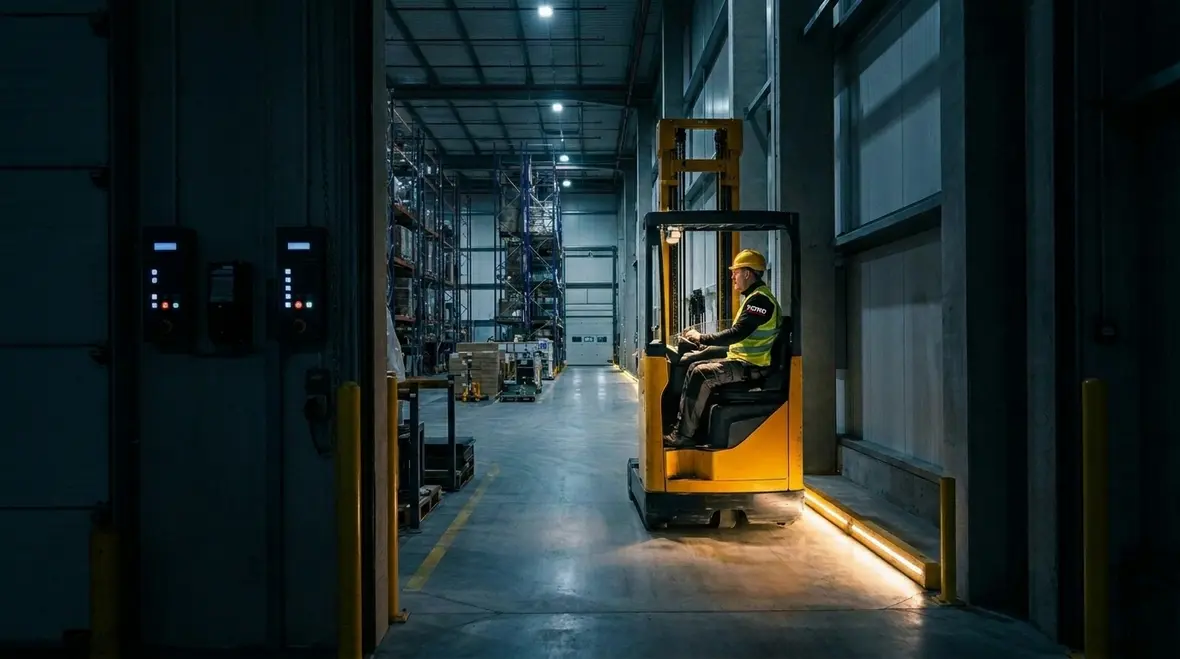
Safety improves when lighting controls support visibility during real activity. Therefore, the best designs avoid aggressive dimming that leaves critical paths under lit. Instead, we use staged lighting. That means the system can reduce light in low activity areas, but it still maintains a baseline level that supports safe footing and clear signage.
Occupancy control also matters because warehouses move in bursts. Forklifts, pallet jacks, and workers create unpredictable patterns. When controls update smoothly and predictably, people feel the change. When they do not, people assume the lights are “glitching.” We set up the logic so it responds quickly enough to match motion, while keeping delays short enough for safety.
Moreover, lighting control can support compliance and best practices for industrial environments. Even when the rules differ by site, the goal stays the same: consistent visibility in walkways, stairs, loading areas, and emergency egress zones.
And here is the pop culture version for the break room: good lighting control works like a good action scene. It keeps the camera on the important parts, not the empty hallway.
Managing glare and uniformity with layered lighting strategies
Efficiency is not just about lowering watts. It is also about improving how light spreads across the work surface. Poor placement creates glare that bounces off polished floors, while uneven coverage forces workers to lean or squint. Over time, that reduces comfort and can slow work.
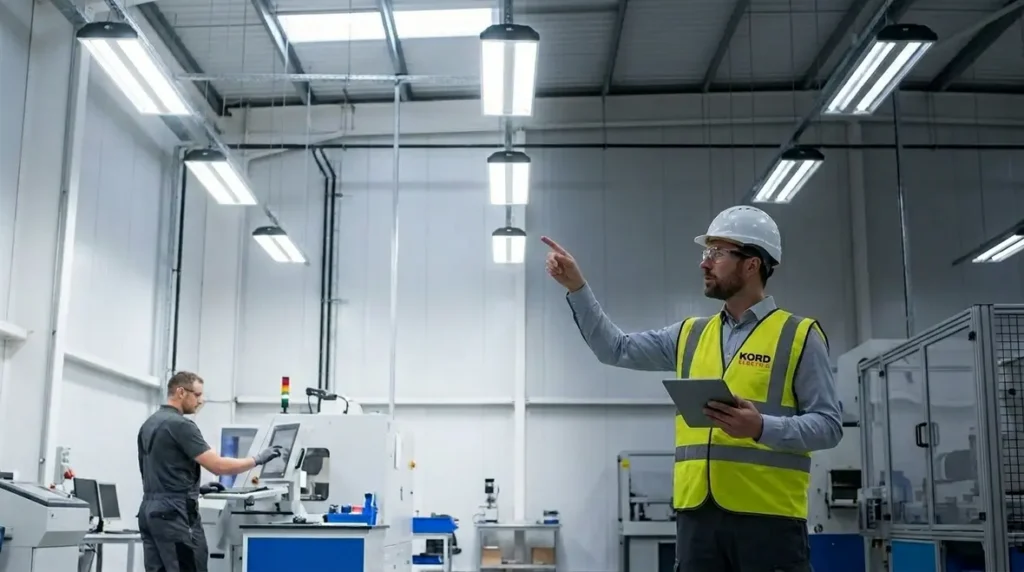
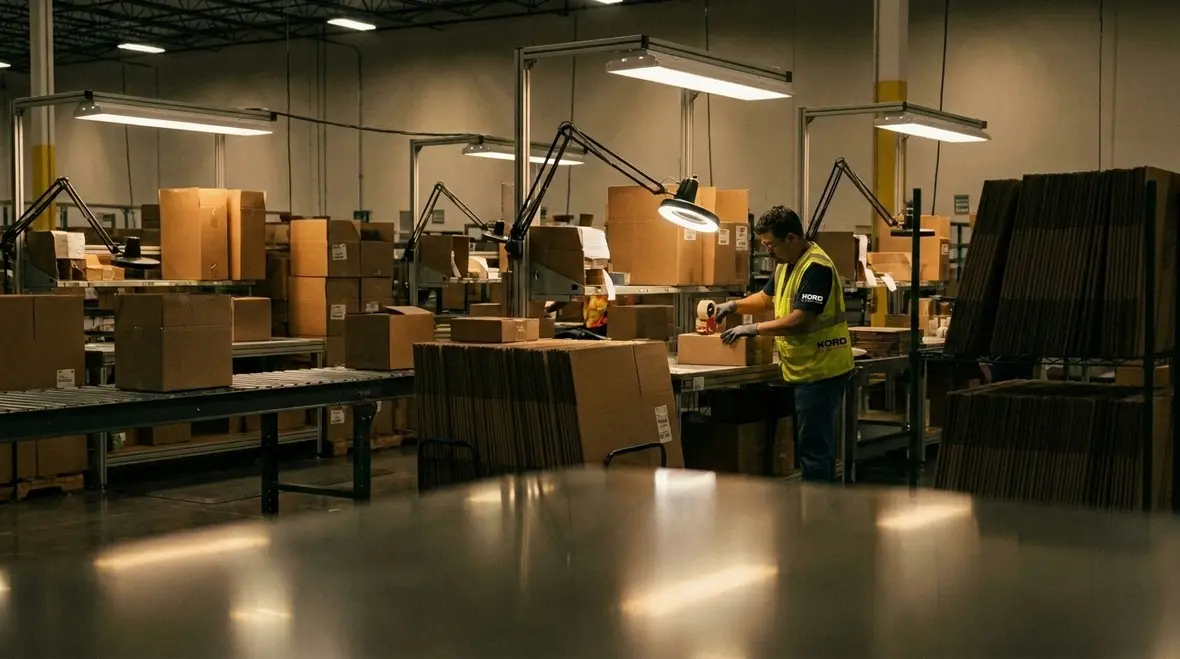
Layered strategies fix this by combining task oriented lighting with ambient coverage. Then we control output and placement to reduce harsh contrasts. For example, we may keep warehouse aisles at a balanced level and then increase local brightness at packing stations. That method reduces the total load while maintaining what the eye needs.
We also pay attention to reflectance and surface types. If you have high reflective finishes, sensors and dimming can perform differently than in matte environments. Therefore, our technicians review the space, confirm the mounting heights, and validate that the uniformity meets the practical goals of the operation.
In the background, we also consider electrical reliability. If distribution design in a facility supports stable power under changing loads, lighting control systems behave better. That is one reason we use the same design discipline we apply in data center distribution reliability planning: deliberate planning, proper coordination, and dependable performance.
Reliability and power coordination for lighting control systems
Industrial facilities depend on uptime. Lighting may not be the main production line, but it still affects safety, workflow, and incident risk. So we coordinate controls with the facility’s electrical distribution, including panel loading, circuit selection, and protection coordination. When we design the system right, controls keep working even when the warehouse draws power from many devices at once.
In practice, that means we avoid random circuit choices. We verify how control devices connect and how they share loads. Then we ensure the wiring and panel setup support consistent operation. If a control circuit shares power with equipment that causes noise or large voltage swings, you can see flicker or unexpected behavior. We prevent that with proper integration and testing.
Additionally, we plan for future changes. Many warehouses expand: more racking, more bays, more shifts. Our approach keeps controls flexible, so adding new zones does not require a full rebuild. It stays easier to manage, and it reduces downtime. Nobody wants a lighting upgrade project that turns into a long season of rework, like a TV series that got renewed for a sixth season without a plan.
If you are evaluating broader reliability upgrades, you can also pair warehouse lighting efficiency upgrades with larger preventive programs and distribution reviews, such as the structured maintenance and testing approach outlined in Kord Electric’s commercial and industrial electrical maintenance plans. Coordinating these efforts keeps your lighting control system aligned with the rest of your power infrastructure.
Commissioning, tuning, and ongoing monitoring for lasting savings
Here is where many projects fail. Teams install fixtures, set a few settings, and move on. Then months later, the building manager calls because energy use looks “off.” The lights might still work, but they do not behave the way they should.
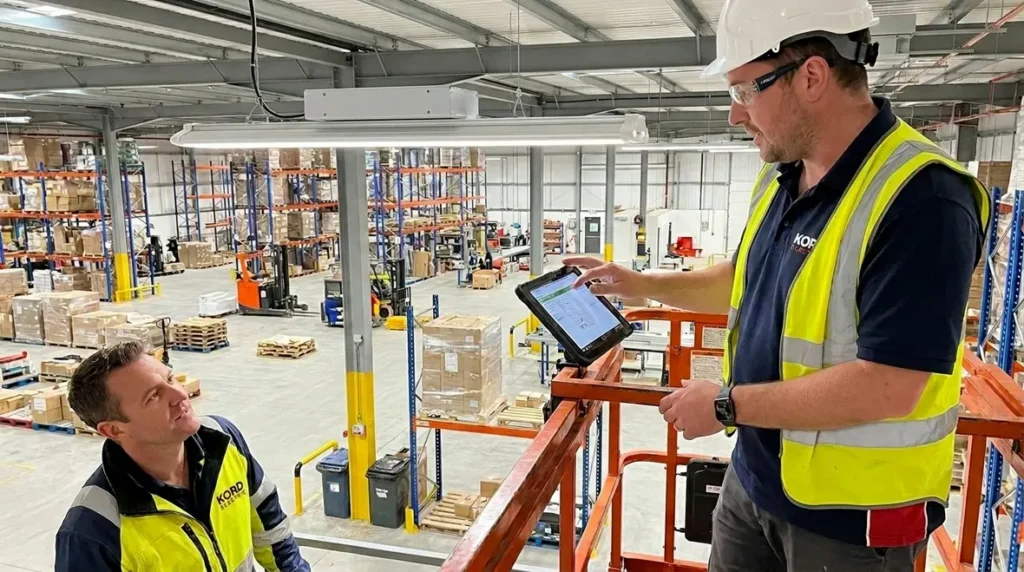
Our technicians commission the system with care. We review sensor coverage, adjust dimming curves, and confirm lighting levels across zones. We also test occupancy response times and verify that schedules match shift patterns. After that, we tune the system for seasonal changes. Daylight harvesting can shift when the sun angle changes, so we calibrate so the lights do not stay too bright or too dim.
Then we provide a clear explanation. Our expert service staff shows facility leaders what was changed, why it was changed, and how to maintain it. That reduces call backs. It also helps other contractors understand what they can and cannot alter. When everyone plays from the same rulebook, the system stays stable.
For large commercial and industrial facilities, we also discuss monitoring options. Proper visibility helps teams spot issues early, like a sensor that got moved during a remodel or a zone that needs retuning. In many cases, these conversations tie into broader electrical preventive maintenance programs, where lighting controls become part of a coordinated plan to protect critical systems and operations.
FAQ about warehouse lighting controls and efficiency upgrades
Getting started with our next lighting control upgrade
If you want dependable savings and safer visibility in your commercial or industrial warehouse, we can build the plan with you. Our technicians evaluate your zones, recommend lighting control strategies, and coordinate the system with your electrical distribution for reliable performance. Then our expert service staff explains each step in a clear way, so your team knows what to expect and how to maintain it. Call Kord Electric and let us map out your best path to warehouse lighting efficiency upgrades that hold up in the real world.
For facilities that are ready to move from planning to action, warehouse lighting efficiency upgrades also fit naturally into broader electrical preventive maintenance and retrofit work. Many property leaders pair lighting projects with targeted services such as recessed lighting installation and LED retrofit upgrades for other parts of the building, creating a coordinated, code-compliant strategy for both interior and exterior illumination.
Whether you are dealing with aging fixtures, unpredictable controls, or a warehouse that feels like it is lit for a previous decade’s workflow, Kord Electric can help you reset the baseline. We treat lighting control like the critical system it is—connected to safety, uptime, and the long-term health of your electrical infrastructure.
If you are ready to map out your upgrade, explore our reliability-focused approach, and coordinate lighting with the rest of your power system, our team is one call away.