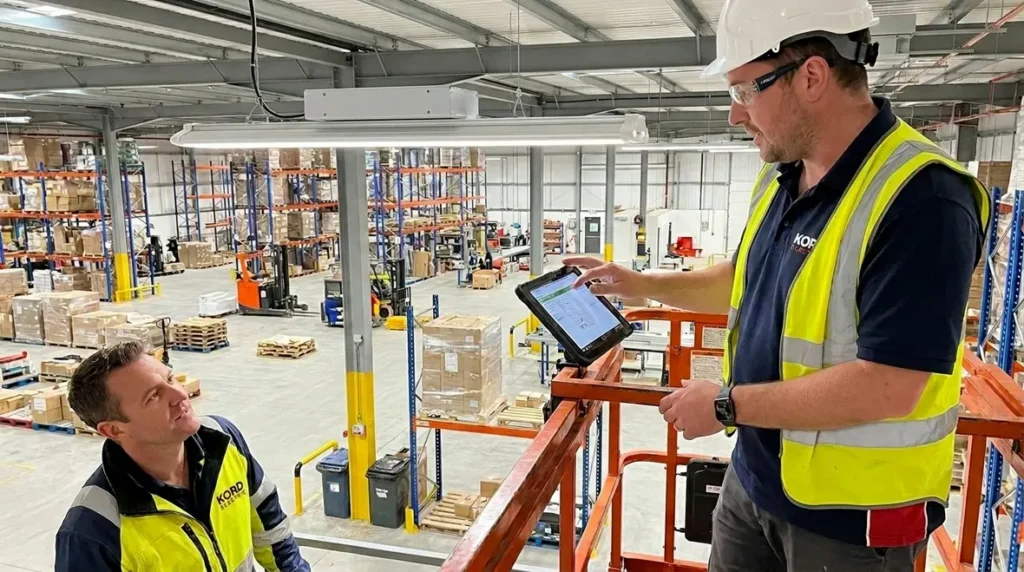
Commercial Lighting Compliance Trends 2026 Guide
Introduction: What Commercial Lighting Compliance Trends Are Changing Right Now
Commercial lighting compliance trends are moving faster than most building managers update their lighting layouts. In the near future, standards will keep tightening around energy use, controls, safety, and documentation. At Kord Electric, we see these shifts every time a facility plans a retrofit, a tenant improvement, or a full lighting upgrade. And yes, it can feel like the rules are changing right after you finish the invoice. Still, when we guide property teams early, they avoid costly rework and reduce the risk of failed inspections.
In this article, others in the industry may guess. We don’t. We rely on what our expert service staff and technicians see on real projects, then we explain it in plain, practical terms.
How Standards and Inspections Are Evolving Across Commercial Spaces
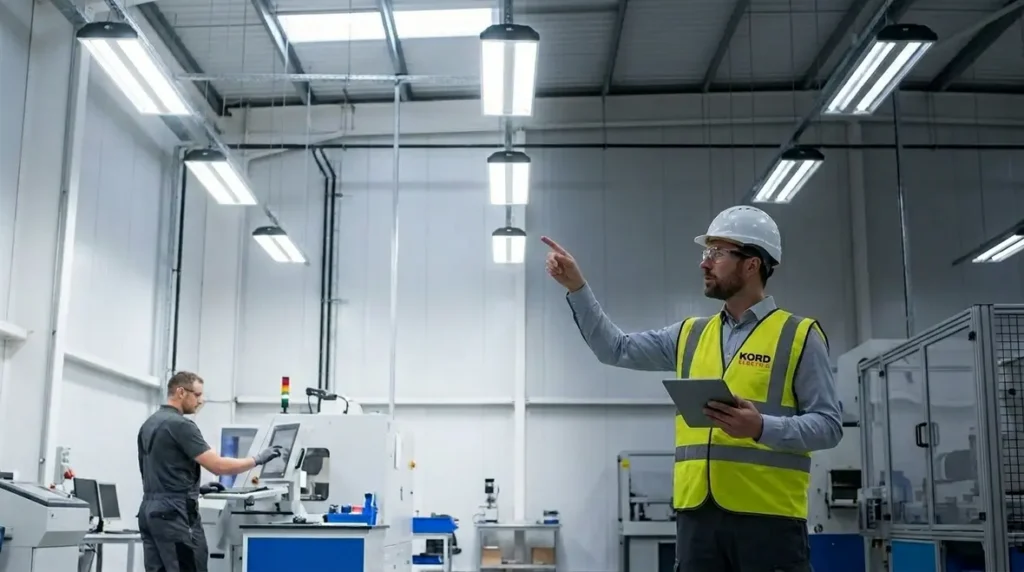
Commercial lighting compliance and standards do not stay still. Over time, authorities require clearer proof that designs perform as promised. Therefore, facilities must plan for more than “bright enough.” They must document controls, verify energy performance, and show that luminaires and wiring comply with current safety expectations.
We usually start with what the building expects and what the inspector will look for. Next, we map the lighting system to the code path, then we align the design, materials, and installation steps. That approach keeps projects from turning into a late night scavenger hunt for missing paperwork.
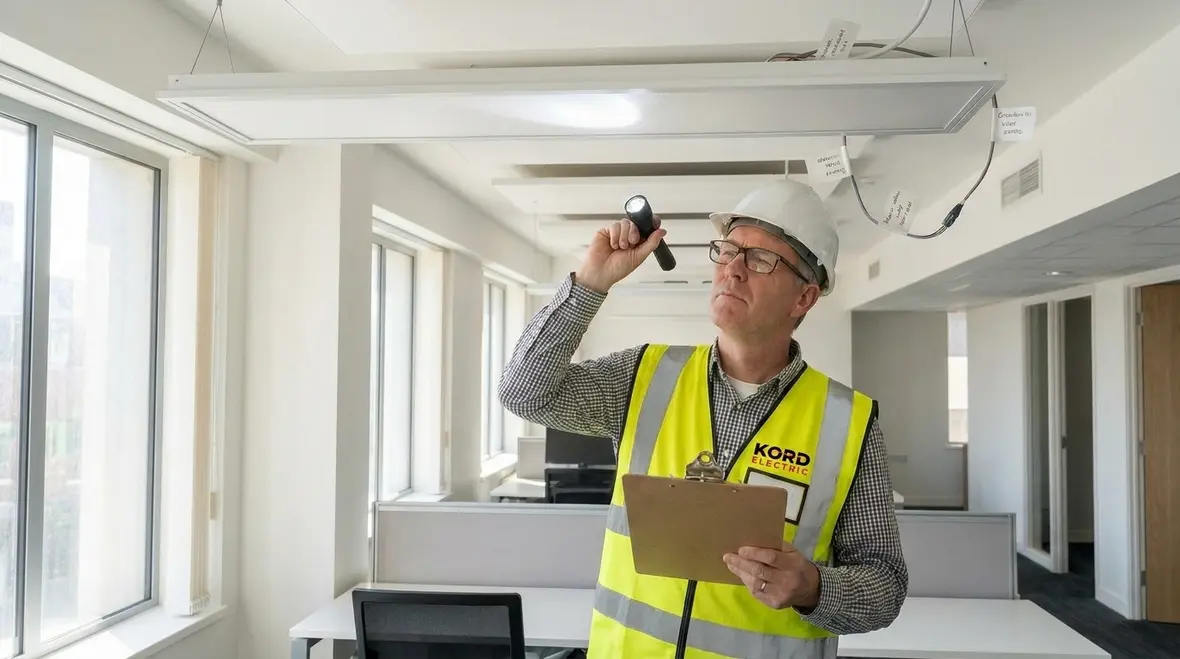
Our technicians also focus on field details that audits can catch. For example, they check wiring methods, component labeling, grounding, and how controls tie into the larger electrical system. In other words, we connect the lighting plan to the electrical reality.
For facility teams exploring both compliance and budgeting, our commercial lighting upgrade cost guide walks through how LED retrofits, controls, and layout decisions affect cost ranges and long term savings in commercial and industrial buildings.
Controls, Dimming, and Smart Systems That Meet Future Requirements
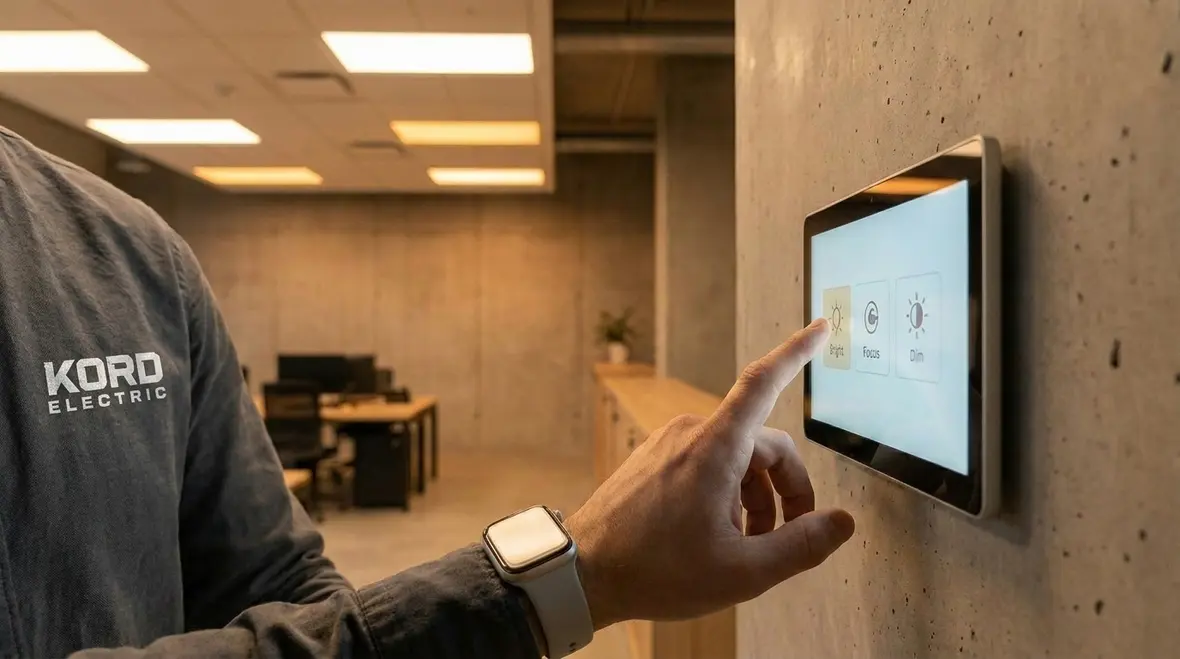
Many owners want convenience, but future requirements will often reward discipline. Today’s high performance commercial lighting compliance trends lean heavily on controls such as occupancy sensing, daylight harvesting, and scheduled dimming. Additionally, smart systems are not just for show. They support verification and can reduce energy use when spaces sit empty.
However, a controls plan fails when it treats lights as stand alone devices. So we treat them as part of the whole electrical system. We coordinate how lighting loads interact with panel capacity, circuit protection, and load management. Then we ensure control devices connect correctly and operate reliably.
When our expert service staff explains this process, we keep it grounded. We tell facility teams that “smart” still needs correct power, good wiring practice, and clean commissioning. If someone thinks they can skip that, we gently remind them: the building does not care how clever the app is when the circuit is miswired.
If you are evaluating how smart controls, dimming, and automation tie into the rest of your power distribution, the commercial electrical systems for modern buildings guide offers additional context for integrating intelligent lighting with panels, feeders, and life safety systems.
Choosing Efficient Fixtures and Making Sure They Perform as Designed

Efficient fixtures matter, but performance matters more. In the real world, a high efficiency product can underperform if it gets installed in the wrong layout, aimed poorly, or paired with incompatible dimming controls. Therefore, we help teams match photometric needs with the right electrical setup and control strategy.
For commercial and industrial facilities, we also consider maintenance cycles and safe access. We plan for how staff will replace lamps or drivers, how dust or vibration may affect performance, and how the wiring route will hold up over time. That way, the system stays compliant beyond the initial ribbon cutting.
We also remind decision makers that compliance does not only mean “install the fixtures.” It means the system works as intended on day one, and it keeps working. If the project team skips commissioning, it often turns into a future troubleshooting bill. Nobody wants that bill. Not even villains in action movies.
To understand how fixture choices, layout, and commissioning influence cost, energy savings, and documentation, many facilities pair this planning with Kord Electric’s commercial lighting upgrade cost guide so budget conversations stay aligned with compliance and performance goals from the start.
Electrical Upgrades and Rewiring Decisions Linked to Lighting Compliance

Lighting compliance and standards often push owners toward rewiring, even when they planned only a fixture swap. That happens because older electrical systems may not support modern control devices, new load patterns, or updated safety expectations. When facilities change lighting strategies, the wiring and power distribution may need to change too.
At Kord Electric, we help clients evaluate what they truly need. If the project involves rewiring, we guide them through scope and budget with practical clarity. We do this in a way that supports sound planning, because surprises rarely help anyone, especially in a commercial schedule that already runs like a tight runway.
If a team wants a cost guide that connects rewiring decisions to commercial electrical systems, our team provides support in our rewiring cost guide. There, we explain what drives cost such as system complexity, wiring pathways, panel work, and the level of disruption a facility can handle. Most importantly, we help customers make the decision with fewer unknowns.
We also advise on sequencing. First, we assess existing circuits and identify where controls and lighting loads will land. Next, we confirm whether panel upgrades or circuit additions are needed. Finally, we align the work plan with operations so the building keeps running. That prevents the “we upgraded lights, now the power trips” scenario that haunts many facilities.
Documentation, Commissioning, and Proof That Holds Up
Some people treat compliance like a final stamp. Yet future audits increasingly look for evidence. Therefore, facilities should plan documentation from the start, not as an afterthought. We build a paper trail that matches the actual work: what got installed, how controls were set, and how the system was tested.
Commissioning plays a key role here. During commissioning, we confirm control logic, dimming response, occupancy behavior, and daylight adjustments where required. Additionally, we check wiring terminations and ensure safety devices function as intended. Then we record test results in a format facility teams can use later.
We also coach building staff on handoff. Our expert service staff explains how to operate schedules, how to troubleshoot common issues, and what to watch for over time. That reduces downtime and helps the system stay aligned with the goals behind commercial lighting compliance trends. After all, a system that works today but gets tampered with tomorrow still fails the intent.
And yes, we have seen situations where someone “fixes” a setting without understanding it. It is like adjusting the steering wheel while the car is already moving. You may feel in control for a moment, but physics tends to call for a reset.
Project Planning for Commercial and Industrial Buildings: Timeline, Disruption, Risk
Commercial and industrial facilities do not pause for upgrades. So we plan for timeline, disruption, and risk. First, we review building hours, safety requirements, and any critical systems that must stay online. Then we build a phased approach so occupied areas do not lose lighting or power longer than needed.
Next, we confirm material lead times and installation constraints. That includes how technicians access ceilings, how they route wiring, and how they coordinate with mechanical trades where needed. Also, we consider how the lighting layout supports task performance, wayfinding, and safety for staff and visitors.
At Kord Electric, our method balances quality with schedule. Therefore, teams can move forward with fewer delays. Our technicians also use careful field checks to prevent rework. And when something changes, we document it and explain the impact clearly to the property team.
When these steps happen early, it keeps the project calm. Not “calm like a spa,” but calm like a professional who knows exactly where the breaker is labeled.
FAQ: Commercial Lighting Compliance and Standards
What Kord Electric Recommends Next for Your Lighting Upgrade
If your commercial or industrial facility plans a retrofit, tenant improvement, or system refresh, we recommend starting with a compliance minded electrical and lighting assessment. Our technicians and expert service staff will walk you through controls, wiring needs, commissioning, and the documentation that keeps inspections smooth. Then we build a phased plan that respects your schedule and reduces rework risk. Reach out to Kord Electric now, and let’s map your next upgrade with confidence.
For organizations ready to move from planning to action, Kord Electric’s dedicated lighting installation services connect commercial lighting compliance trends with practical field execution, from fixture selection and controls to safe wiring, inspections, and long term maintenance strategies.
If your broader electrical system also needs attention beyond lighting, their commercial and industrial electrical maintenance plans can be paired with your upgrade so that panels, feeders, and critical equipment stay aligned with your new lighting strategy and ongoing compliance requirements.