

Facility Energy Load Balancing for Commercial Buildings
At Kord Electric, we help large commercial facilities keep power smooth and predictable through facility energy load balancing, especially when demand swings like a bad stock app on payday. Instead of letting one part of a building get all the heat while another part runs cool, we balance the electrical load across panels, feeders, and critical circuits. As a result, our clients see steadier performance, fewer nuisance trips, and better use of existing capacity.
Our teams also explain what we are doing in plain language. In fact, our technicians and expert service staff walk property managers through each step, so the system does not feel like a mystery box. Then, we implement smarter control that matches how your facility actually operates, not how it was designed on paper years ago.
How smart load balancing works in large commercial buildings
Smart load balancing uses monitoring, control logic, and switching strategies to keep electrical demand within safe limits. First, the system measures real-time conditions across multiple loads. Then, it compares that usage to design targets and operational rules. After that, it shifts or reallocates power where it is needed most.
In large commercial and industrial facilities, load is rarely steady. One wing might spike during shift change, while another area surges during HVAC start up. Therefore, a basic panel schedule alone cannot keep pace. With our approach, we coordinate loads across building systems so that no single service or feeder becomes the “hero” that carries the whole story.
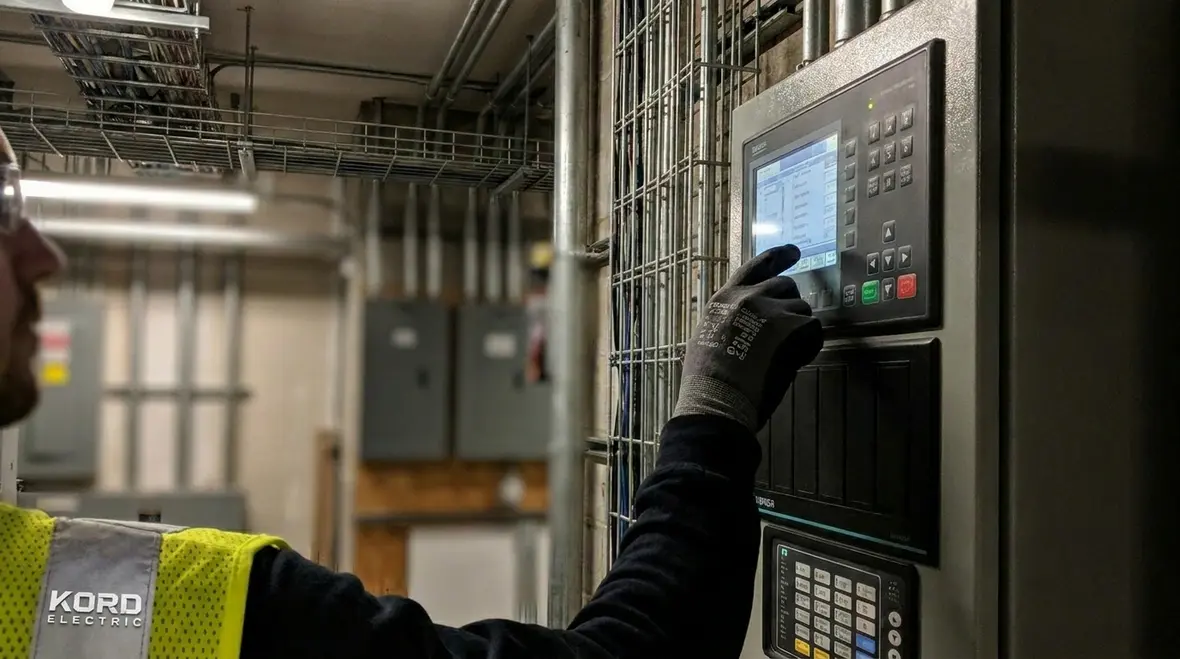
Our technicians also focus on reliability. So we design the strategy to preserve critical loads, prevent nuisance cycling, and keep coordination with upstream protection devices. Think of it like traffic control for electricity. No, it is not glamorous, but neither is a parking lot attendant and yet everyone depends on them.
For commercial and industrial facilities that already see voltage swings or overloaded circuits, this kind of calm, rules-based control often pairs well with targeted power quality work and system corrections. That is why many of our projects connect naturally with broader efforts to reduce hidden risks and smooth out unstable operation across the building.
Where balancing improves comfort, reliability, and cost control

When demand is managed well, the building runs with fewer interruptions. Comfort improves because HVAC systems, elevators, and lighting do not fight for power. Reliability improves because protective devices trip less often. And cost control improves because the facility wastes less capacity through inefficient operation.
Moreover, balancing helps when a facility grows. Many major properties add tenants, expand manufacturing lines, or install new data and life safety loads. Instead of upgrading everything at once, we often optimize distribution so the existing infrastructure carries more of the right work.
Our expert service staff also look at how the building behaves across the day. Then, we align control priorities with actual occupancy patterns and process requirements. In other words, we do not just balance load. We balance it to match your reality, not a generic template.
For properties that want an even more structured reliability strategy, load balancing often becomes part of a bigger preventive maintenance plan. When our teams combine monitoring, documented inspections, and planned electrical preventive maintenance, facilities get steadier operation and clearer insight into when it is time to adjust control logic or schedule upgrades.
Designing for critical loads, peak events, and code driven needs

Large buildings have layers of responsibility. Some loads can pause briefly. Others cannot. Therefore, smart load balancing must respect critical circuits and life safety requirements. Kord Electric plans the strategy around protection coordination, equipment limitations, and operational rules.
We also account for peak events. These are the moments when the facility feels like it is juggling too many things at once. Examples include seasonal HVAC changes, refrigeration ramp up, cold starts in warehouses, or simultaneous operations in multi shift industrial sites. As these peaks approach, the system can redistribute demand, stagger start sequences, or adjust operating priorities based on pre set thresholds.
Additionally, our team works to maintain safe operation across normal and abnormal conditions. So the control logic includes guardrails that prevent rapid switching, avoid overload conditions, and keep energy delivery steady. If a system makes decisions too fast, it can create new problems. We prefer calm, deliberate control, like a confident foreman who never yells unless the situation demands it.
This design work becomes especially important in facilities that also operate emergency systems, backup generators, or EV charging infrastructure. In those environments, we coordinate facility energy load balancing with fault protection, transfer schemes, and power quality requirements so that critical loads stay protected even when everything else is moving.
Monitoring and data: the part everyone forgets, until it hurts

Smart load balancing is only as good as the visibility behind it. We install monitoring that captures the right electrical signals at the right locations. Then, we tune the system using that data so it responds accurately to real demand.
In practice, monitoring identifies hidden patterns. Sometimes a facility looks balanced on paper, but field data reveals that certain feeders run hotter or that a panel serves more dynamic loads than expected. Other times, the building experiences brief spikes that never show up in outdated reports. Consequently, the facility accumulates stress that can shorten equipment life.
Our technicians and expert service staff review the trends together with property stakeholders. We translate the data into operational insight: which loads drive peaks, how schedules shift demand, and where corrective action provides the strongest payoff. Then, we implement updates that improve performance without turning your building into a science fair.
This same monitoring foundation supports broader reliability efforts across your property. When we integrate facility energy load balancing with preventive maintenance and voltage stability work, facilities can tackle flicker, nuisance trips, and sensitive equipment issues with a single, data-driven playbook instead of a patchwork of one-off fixes.
Quick comparison
| What we evaluate | What it prevents |
| Real-time current and power measurement | Overheating, unstable distribution, and surprise trips |
| Load priority rules for critical circuits | Unwanted shutdowns during peak demand |
| Staggered control sequences | Simultaneous inrush that overloads feeders |
| Ongoing trend review | Recurring issues that never get fixed |
Implementation steps Kord Electric uses on commercial and industrial sites
We keep implementation structured, because shortcuts are how systems end up working against people. First, we assess the facility electrical architecture. We review panel schedules, one line diagrams, existing protection settings, and how loads operate throughout the day.
Next, we identify the control targets. That might include balancing across multiple panels, managing demand at the service level, or coordinating key distribution paths. Then, we plan the integration so it supports existing equipment rather than forcing major rewiring.
After that, our team installs monitoring and control components and tests the behavior under different operating conditions. We do not just flip a switch and hope. We validate response times, check safety behavior, and confirm that the system respects critical loads.
Finally, we commission and train. Our expert service staff explains the system in clear terms for maintenance teams and facility leaders. They learn what the system does, how it reacts to peaks, and what to check during routine inspections. And yes, we also explain it without using so many acronyms that everyone needs a second cup of coffee.
For complex properties, this implementation often overlaps with other high-impact projects. Rewiring work, switchgear upgrades, or major tenant improvements are natural times to bring facility energy load balancing into the conversation, because the distribution system is already open for evaluation and design.
Common challenges and how we handle them without drama
Even well designed facilities face hurdles. One challenge is unpredictable load behavior. Tenants move equipment, schedules shift, and industrial processes change. Therefore, a balancing plan must adapt over time.
Another challenge is coordination with protection devices. If settings conflict, the system might cause unwanted trips. Our approach includes reviewing breaker behavior and protection coordination so the balancing strategy works with the electrical safety design you already have.
Space and access can also get in the way. Many major properties have tight electrical rooms, strict downtime rules, and shared infrastructure. Consequently, we plan installation windows, staging, and wiring paths to reduce disruption.
Finally, there is the human factor. Facility staff need confidence in the system. So our technicians do not just install. They explain what changes, what stays the same, and how to confirm safe operation. That communication prevents confusion later, when someone hears an alert and asks, “Is this urgent?” We want the answer to be clear.
Because commercial and industrial operations cannot afford extended downtime, we also align our work with emergency response planning. When facilities combine calm, well designed balancing with dependable emergency electrical services, they get both smoother day-to-day performance and a safety net when something unexpected happens.
What to expect after installation and how performance stays steady
After we implement facility energy load balancing, performance improves because the system continuously manages demand. However, stability requires follow through. We help clients confirm baseline operation, then we monitor results as the facility runs through different seasons and schedules.
We also recommend periodic reviews. This is not busywork. It ensures the balancing strategy stays aligned with changes in usage. New equipment, renovated areas, or updated production cycles can shift load patterns. When that happens, we adjust control priorities and thresholds so the system remains accurate.
Our expert service staff stays involved through service planning and documentation. We help property teams understand how to interpret system reports and what actions to take if conditions change. In short, we keep the control logic calm, so the building does not chase every tiny fluctuation like it is trying to catch a bus that already left.
Over time, this approach also makes future decisions easier. When it is finally time to upgrade panels, expand EV charging, or plan a major retrofit, the data from your load balancing system gives a clear picture of where the infrastructure is strong, where it is strained, and how to invest smartly instead of guessing.
FAQ
Ready to balance demand in your facility
If your commercial or industrial property sees peak surges, uneven feeder loading, or frustrating interruptions, Kord Electric can help you implement facility energy load balancing with a clear plan and expert installation. Our technicians and service staff will assess your system, design safe control logic for critical loads, and commission the solution so performance stays steady. Call us today to schedule an assessment for your major property. Let’s tame the electrical chaos before it becomes your favorite recurring meeting.
For facilities that want to go even further, we can pair your balancing strategy with structured electrical preventive maintenance services and voltage stability work so the entire distribution system stays healthy, documented, and ready for the next phase of your operation.
Whether you are planning a future expansion, troubleshooting recurring power issues, or simply ready to get more value from the electrical capacity you already have, our team is ready to help you line up monitoring, control, and maintenance into one calm, coordinated plan.
If your next project also includes new infrastructure such as EV charging, our dedicated commercial and industrial EV charger installation services can tie directly into your load management strategy so new equipment comes online smoothly and safely.


