Smart Meters for Commercial Buildings: Benefits, Installation & Energy Monitoring
In commercial spaces, energy costs and billing disputes can feel like a never ending season of a TV show you did not sign up for. That is why we help owners and facilities teams with Smart Meters for Commercial Buildings: Benefits, Installation & Energy Monitoring. With smarter metering, we reduce guesswork, improve how utilities measure usage, and give building teams clearer data for better decisions. Then, as our expert service staff walks through the process in plain language, the transition feels less like a mystery and more like a plan you can actually manage. In other words, we install the right equipment, we keep the setup safe and accurate, and we help your team track energy in a way that supports cost control and reliability.
Why commercial teams choose smarter metering
Commercial and industrial facilities run on schedules, equipment cycles, and real demand. However, many sites still rely on older measurement methods that cannot keep up with how buildings operate today. Therefore, when facilities teams want visibility, they need metering that captures usage trends with enough detail to spot issues early.
Smart meters help in three practical ways. First, they provide more timely readings, so budgets stay aligned with real consumption rather than delayed estimates. Next, they support better detection of spikes that can come from HVAC malfunctions, unusual plug load growth, or motor issues. And finally, they can streamline utility communication, which reduces back and forth that wastes staff time.
We also notice something else. When owners receive clearer data, internal conversations change. Instead of blaming “the building,” teams can point to measurable patterns and address root causes. That is when energy management stops being a monthly panic and starts looking like maintenance with a dashboard.
Benefits that show up on the monthly invoice
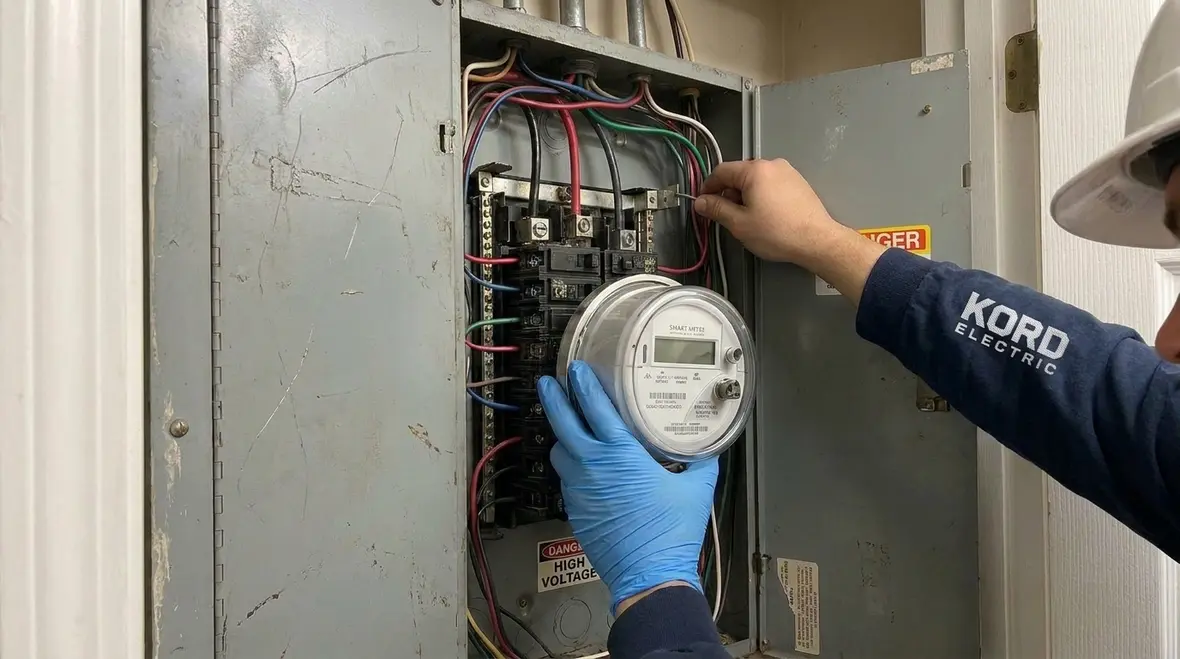
Let us speak plainly about benefits, because that is what commercial leaders care about. Smart Meters for Commercial Buildings: Benefits, Installation & Energy Monitoring delivers value that shows up in cost control, operational clarity, and fewer billing surprises.
More accurate usage data: We help confirm metering points and wiring setups so readings match what the facility actually uses.
Better demand awareness: When a site hits peak demand, the consequences can be immediate. Smart metering supports monitoring that helps teams plan load reduction.
Faster issue detection: If a line changes behavior, the team can investigate sooner. Early checks beat expensive emergencies.
Cleaner reporting for stakeholders: Facility managers, finance teams, and sustainability leads can all use the same numbers.
And yes, we sometimes hear the same joke from clients. They say, “If we had data sooner, we would have fixed this last year.” Well, that is true. It is also why we focus on installation quality and ongoing support. The meter is only the start. The real win is using information the right way.
If you want to see how smart metering supports broader electrical strategies, you can also explore our focused article on Smart Meter Installation for Commercial Buildings, which dives deeper into visibility, demand charges, and ongoing reporting workflows for commercial and industrial facilities.
How energy monitoring supports decisions, not just dashboards
A meter without context is just a fancy number generator. For that reason, our approach connects the monitoring output to how commercial buildings operate. We design the process around how electrical systems behave in the real world.
For example, many facilities run with seasonal HVAC changes and shift based operations. Therefore, the team needs data that can show when consumption patterns drift. When we install smart metering equipment, our technicians help align the measurement with the panels and circuits relevant to your operations.
From there, energy monitoring becomes a tool for decisions such as:
Scheduling improvements: We help teams see what happens when loads change, then adjust start times and set points.
Maintenance planning: If a compressor or pump shows inefficient behavior, the data supports targeted checks.
Load management: Instead of reacting after a peak, the team can plan actions during high demand windows.
Submetering strategy: For larger sites, monitoring at the right locations can show which areas drive cost.
Also, we explain the “why” behind each reading. Our expert service staff does not just hand over an app and walk away. They walk you through what a trend means, what to ask next, and how to use the information without drowning in it. Because nobody wants a report that reads like a novel. We aim for clarity.
Installation process we follow for commercial and industrial sites
Commercial and industrial facilities require careful planning. Equipment uptime matters. Safety matters. And the electrical environment is rarely simple. So our installation workflow focuses on accuracy, compliance, and minimal disruption.
Before any hardware goes in place, we review the site conditions. Then, our technicians confirm the correct metering location, check existing wiring paths, and plan how the installation will connect to the facility setup. Next, we handle the meter installation with attention to secure connections and correct labeling so maintenance staff can understand it later.
During commissioning, we validate performance. We confirm that readings align with expected usage and that communication pathways operate as designed. Only after that do we guide the facility team through the next steps for monitoring and reporting.
If you want a simple analogy, it is like installing a reliable thermostat. You do not slap it on a wall and hope. You check the system, verify operation, then show the owner how to use it. That is how we treat metering as well.
What our technicians explain so your team feels in control
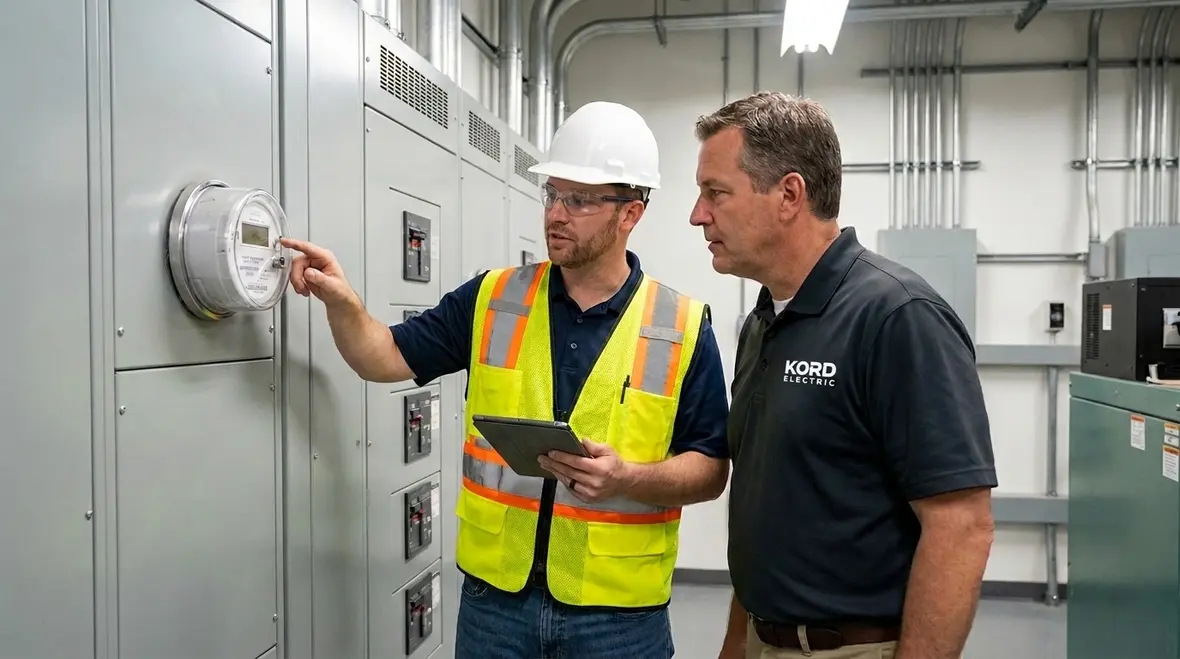
Many people fear energy projects because they assume it will be technical and hard to follow. We take a different approach. Our technicians and expert service staff explain each step in plain terms, then answer the questions that actually matter on a workday schedule.
Typical conversations we have on site include:
Where the meter reads: We explain what the meter measures and what it does not.
How to interpret changes: We show how spikes and dips can relate to HVAC cycles, production loads, or shift timing.
What to do after installation: We outline how to review data, what to look for first, and how often to check trends.
How to handle service requests: We explain our support path so the facility knows what comes next.
And if someone asks, “Will this shut down anything?” we answer honestly. We plan around downtime needs. In commercial environments, we schedule work so operations stay stable. Sometimes we even tell clients the truth like it is a superhero movie. You want the hero to show up, fix the problem, and leave before the credits roll. That is our goal.
Dual column view of outcomes and what to expect
Outcome you want |
How we support it |
Lower energy cost |
We help teams spot unusual usage patterns and plan adjustments tied to real readings. |
Clear utility communication |
We validate installation details and confirm meter performance during commissioning. |
Better peak management |
Monitoring supports trend checks so the team can act before demand charges hit. |
Reduced guesswork |
We connect data to building operations and explain how to interpret trends. |
Common challenges in commercial metering and how we handle them
Every facility has constraints, and metering can expose them. For instance, some buildings have panel layouts that require careful coordination. Others have legacy systems that need thorough inspection. Additionally, utility requirements can vary, and documentation matters.
We address these challenges by planning early. First, we confirm the correct measurement approach for the specific building type and electrical design. Next, we coordinate installation steps around operational needs, so teams do not get surprised. Then, we validate performance so the monitoring results make sense from day one.
We also focus on communication. When the facility team knows what to expect, fewer problems become “mysteries.” And when something does not match expectations, our expert service staff checks quickly and explains the issue with clarity.
In a way, we treat metering like preventative maintenance for your data. Because if your measurement is off, every later decision becomes off too. Nobody wants that. It is like using a GPS that shows you taking a left turn into a wall. We do not build that kind of experience for our clients.
FAQ
Ready to monitor energy with confidence?
If your commercial or industrial facility needs clearer data, fewer surprises, and smarter planning, Kord Electric is ready. Our technicians install and validate metering with care, then our expert service staff explains the monitoring in plain language so your team can act fast. Contact us to discuss your building, review your metering needs, and plan the next steps. Let us turn energy reporting from a headache into a tool you use every day. Reach out today and take control.
For facilities in Southern California that want metering and monitoring to sit inside a broader reliability plan, our dedicated Los Angeles County electrical services team supports everything from preventive maintenance and emergency response to targeted upgrades across panels, feeders, and critical loads.
When you are ready to connect smart metering with other improvements, you can also explore related Kord Electric resources on topics like commercial lighting maintenance, power reliability audits, and fault finding. Together, those services help your organization use data from Smart Meters for Commercial Buildings: Benefits, Installation & Energy Monitoring to drive practical changes instead of one-off fixes.