Troubleshoot Commercial Electrical Panel Issues
At Kord Electric, we help commercial facilities when the lights flicker, circuits trip, and the electrical panel starts acting like it has a mind of its own. In fact, when someone needs to troubleshoot commercial electrical panel issues, we begin with clear observations and then move to safe, proper testing. Over time, a panel can accumulate heat, dust, moisture, and invisible wear that do not always show up until they cause an outage. And because commercial and industrial buildings cannot just “wait and see,” we rely on our trained technicians to spot early warning signs before they turn into a costly problem. Yes, sometimes it feels like the panel is telling a joke, but electrical problems do not land punchlines. They land bills.
Below, we explain the common signs that a commercial electrical panel needs professional attention, what those signs can mean, and how our experienced service team works step by step. We keep the process calm, direct, and thorough, because other people’s downtime becomes your problem fast.
Signs of overheating and loose connections in a commercial panel
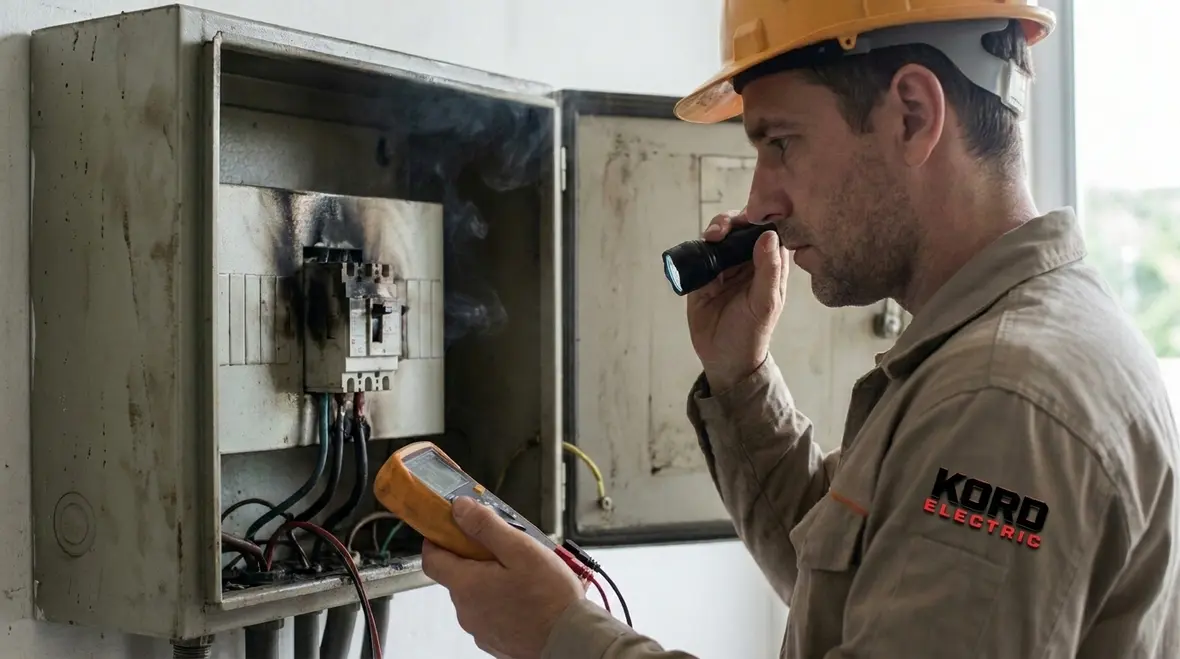
One of the most common indicators a panel needs attention is heat, especially when it appears at connections. Even if the building keeps running, a panel can get hotter than it should. For example, a loose lug or failing connection raises resistance. Then, the electrical load creates extra heat. Over time, this can damage insulation and increase the risk of a fault. You might notice this through discoloration, a burning smell, or a crackling sound behind the dead quiet hum you expect from a proper system.

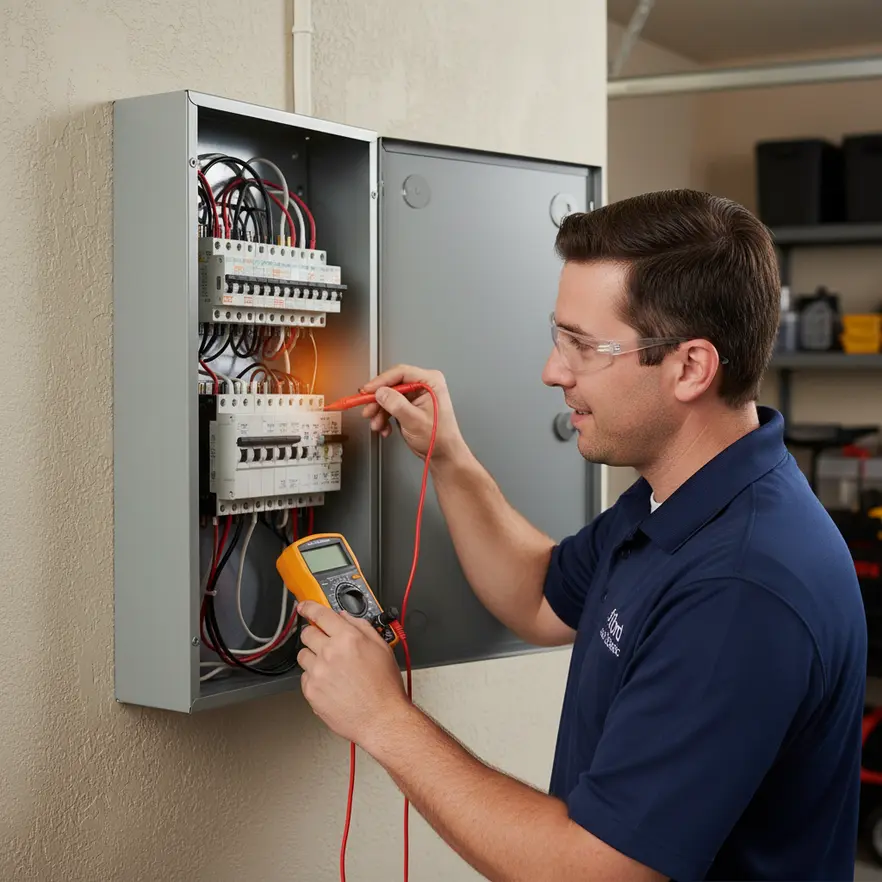
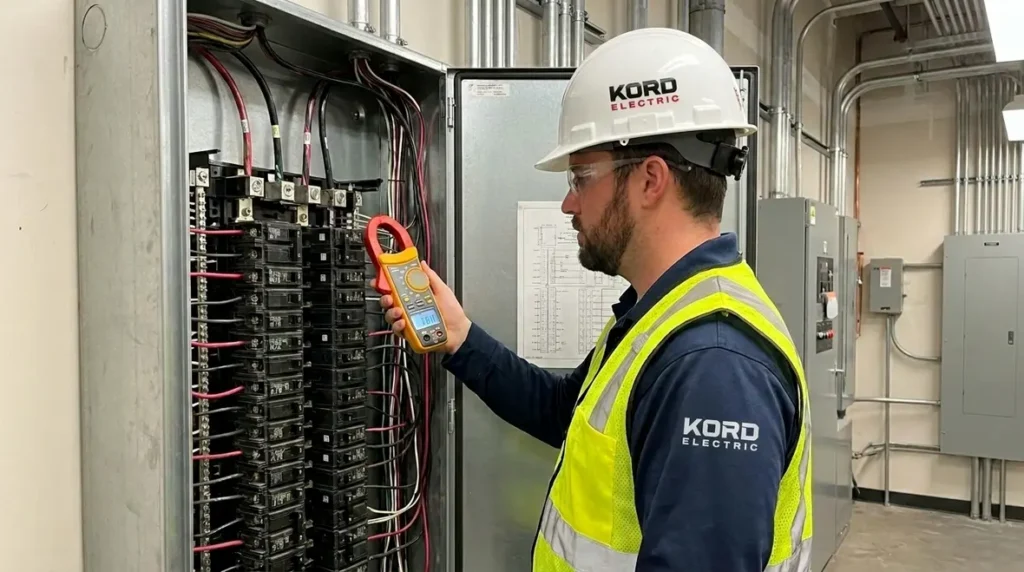
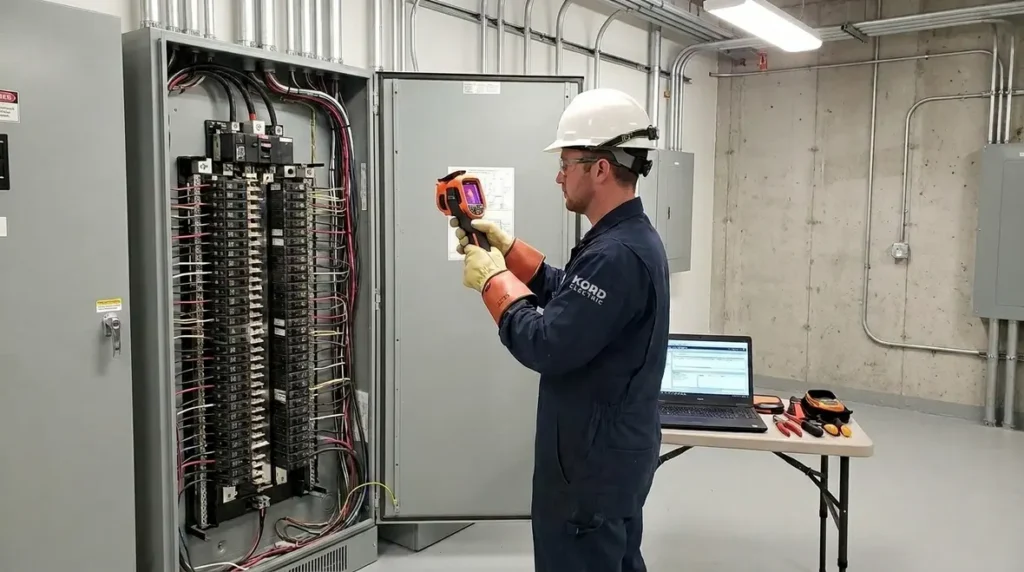
When our technicians arrive, they do not guess. First, they inspect the panel cabinet, breaker faces, and wiring terminations. Next, they verify load behavior and look for abnormal temperature patterns. Then, they confirm whether any breakers or busbar areas show signs of stress. If the building’s schedule allows it, we also help the property manager plan a safe inspection window so teams do not disrupt operations for no reason.
Loose connections can happen after maintenance work, expansions, or frequent switching, even in well-run facilities. In other words, the panel can look fine until it does not. And when it fails, it usually fails quickly.
How to spot nuisance tripping and what it really means
Many facilities call us after circuit breakers trip repeatedly. At first, it seems simple. Someone flips a breaker and life continues. However, constant trips often signal a deeper issue such as overload, aging breakers, damaged wiring, or short circuits with intermittent behavior.
To troubleshoot commercial electrical panel issues effectively, our expert service staff looks beyond the reset button. We ask what loads run when the breaker trips. Then, we check whether the trip pattern matches known equipment cycles like HVAC startup, refrigeration, compressors, or production motors. After that, we test the panel components that likely contribute to the problem. Because if the breaker trips at random, it may indicate a fault that needs repair, not a reset that delays the inevitable.
A quick joke that still carries a truth: resetting a breaker over and over is like unplugging a smoke alarm without finding the smoke. It feels like progress, but it is just avoiding the main issue. Eventually, the room fills up.
For facilities that struggle with unstable power feeding those breakers, it can also help to review how voltage fluctuations in commercial and industrial facilities affect equipment behavior and panel performance over time. Stable power makes nuisance trips easier to diagnose and prevent.
Moisture, dust, and corrosion: the panel’s slow, silent enemies
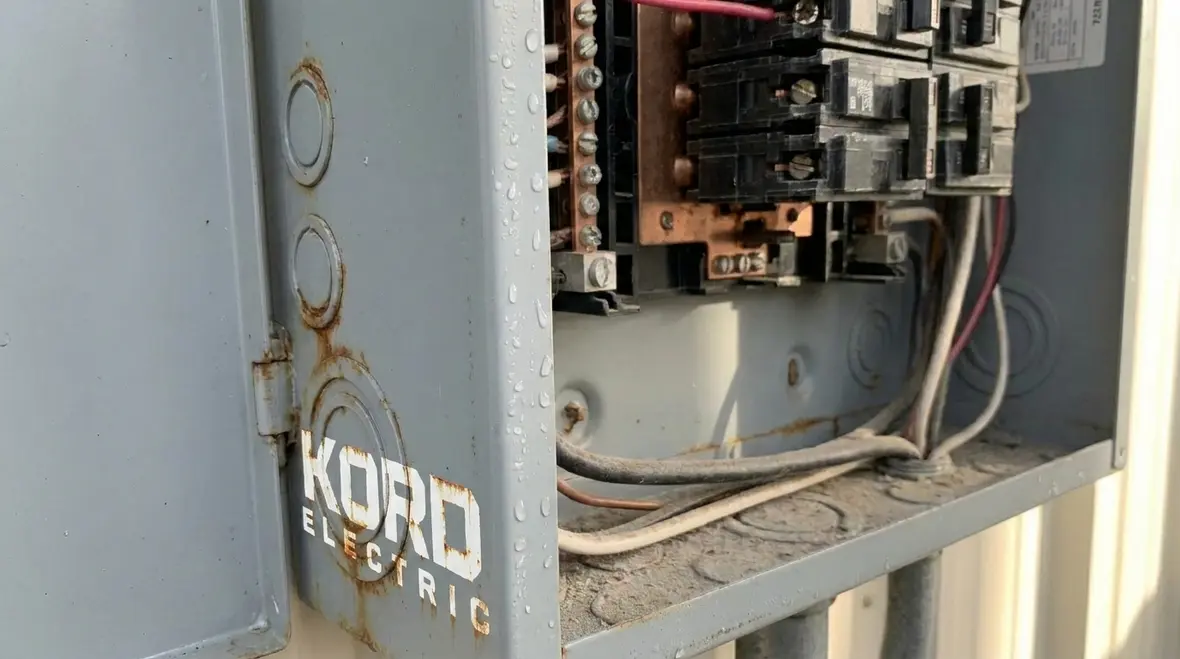
Commercial and industrial environments often include humidity, dust, and airborne particles. Even a clean-looking panel can develop moisture behind the door or inside conduits. When moisture meets metal parts, corrosion starts. Then, corrosion increases resistance, and resistance creates heat. It becomes a chain reaction that accelerates wear.
Our technicians look for signs such as water staining, rust around knockout areas, condensation residue, and corrosion on bus bars or breaker contacts. We also check sealing and entry points. If the panel uses vents or conduit fittings that allow humidity to travel inside, we recommend corrections that fit the building’s reality, not a fantasy scenario.
This matters even more in facilities like warehouses, manufacturing spaces, and large property buildings where temperature swings happen often. In those settings, a panel can “breathe” with the seasons. Consequently, what seems stable in summer can break down in winter.
Cracks, humming, or strange smells that should never be ignored
People hear hums and assume that electricity always sounds like that. Sometimes, it does. But certain sounds and smells indicate trouble. A buzzing or humming that suddenly becomes louder can point to an arcing condition or loose connections under load. A sharp popping sound can suggest internal failure. And if anyone reports a burning smell, that deserves immediate professional attention.
Because commercial operations depend on power quality, Kord Electric treats these signals as urgency cues. We inspect the breaker cabinet and identify which circuits or sections create abnormal behavior. Then, we verify insulation integrity and connection tightness where appropriate. If the panel shows signs of active arcing, we shift to safety-first steps and coordinate the best path to restore reliable service.
As we explain to our clients, it is better to address a warning signal early than to wait for the panel to announce the problem louder, like a bad neighbor’s leaf blower at 7 a.m.
Upgrades and expansions that outpace the original design
Another sign a panel needs professional attention shows up after growth. When a business adds equipment, new HVAC units, additional lighting, charging stations, or process loads, the electrical system can get stretched. The panel may reach its capacity limits. Even if breakers have not tripped yet, long-term stress can reduce reliability.
Our expert service staff reviews the facility’s electrical plan and current load profile. Then, we compare that information against the panel rating, breaker sizing, and conductor condition. If the building added load without a proper evaluation, we help the owner understand where risk increases. We also support major property buildings that require coordinated work to avoid outages in occupied spaces.
In many cases, the solution includes panel corrections, selective upgrades, or new distribution planning. In other cases, a full rework becomes necessary. Either way, we guide the decision with practical results and clear documentation.
If your property has already seen several rounds of renovations, it can be useful to compare current panel conditions with broader guidance like the insights in Kord Electric’s article on hidden electrical risks in commercial buildings so the panel does not quietly become the weak link in an otherwise modern facility.
Using proper testing to prevent future electrical panel failures
Sometimes, a panel looks okay. There is no smoke, no tripping, no obvious damage. Yet hidden risks still exist inside. That is why our team uses inspection and testing practices that go deeper than a quick visual check. In commercial environments, hidden issues can come from aging components, prior repairs, or wiring paths that trapped heat over the years.
Our Kord Electric team also draws on the same type of hidden-risk thinking we share in our blog about hidden electrical risks in commercial buildings. For example, we look for signs of insulation breakdown, overheating near bus bars, and unsafe conditions created by poor connections. Additionally, we check whether past modifications left the system vulnerable to strain during normal operations.
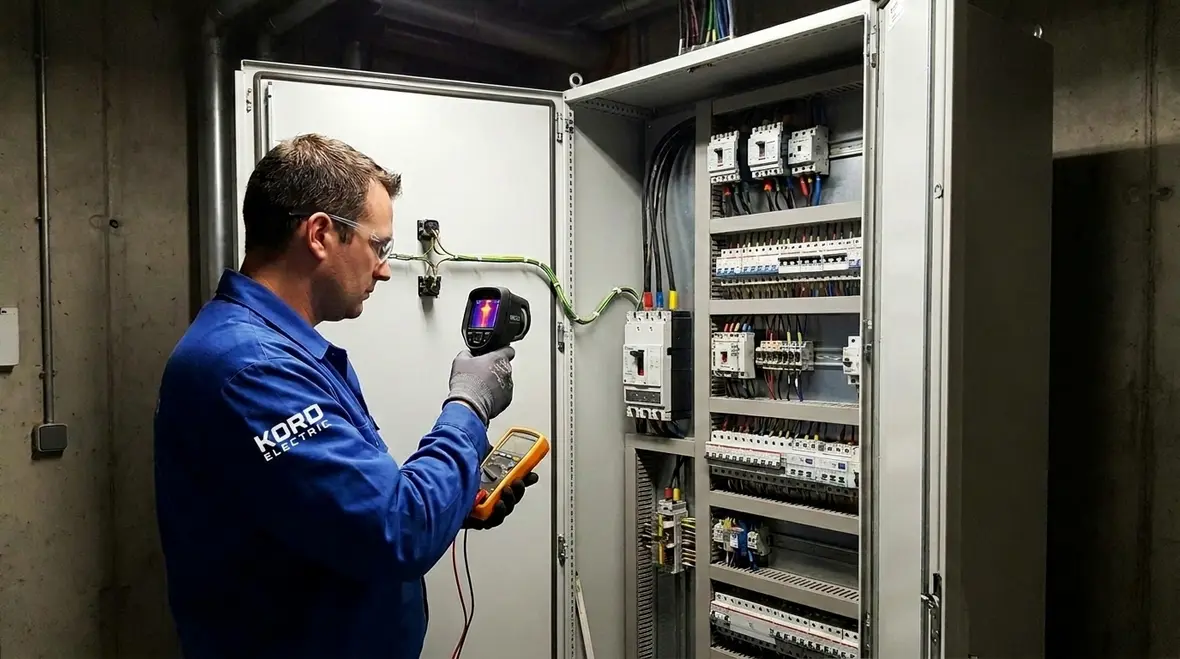
When our technicians troubleshoot commercial electrical panel issues, they prioritize accuracy and safety. Then, they provide a report the facility team can use. This helps the decision makers, not just the person holding a clipboard.
Typical issues we help uncover
- Hot spots at terminations and bus areas
- Intermittent faults that cause brief trips
- Moisture-driven corrosion inside enclosures
- Capacity stress after equipment additions
- Unsafe maintenance shortcuts from prior work
- Breaker aging and inconsistent performance
- Overloaded circuits that strain over time
- Evidence of insulation wear in conductors
- Loose hardware that increases resistance
- Misalignment between load and protection
FAQ for commercial electrical panel troubleshooting
Professional attention keeps power stable and operations running
When a commercial panel shows signs of heat, moisture, nuisance trips, or unusual sounds, it rarely improves on its own. Kord Electric steps in with calm, business-focused troubleshooting and testing so your facility can keep moving without risky guesswork. If you want to protect your building and reduce downtime, contact us today for an on site evaluation. Our expert service staff will explain what they find and recommend the right next step. Let us handle the voltage drama while you focus on your business.
For properties across the region, working with a commercial-focused electrical partner means panel issues can be tied into broader reliability planning, from emergency response to preventive maintenance. Exploring support such as Kord Electric’s Los Angeles County electrical services helps ensure that when your panel needs attention, the team arriving already understands the demands of large facilities, major property buildings, and mission-critical operations.
If you are ready to reduce surprise outages and bring your electrical panels in line with how your building really operates, professional testing, documentation, and long-term planning will pay off far more than another round of “reset and hope.”