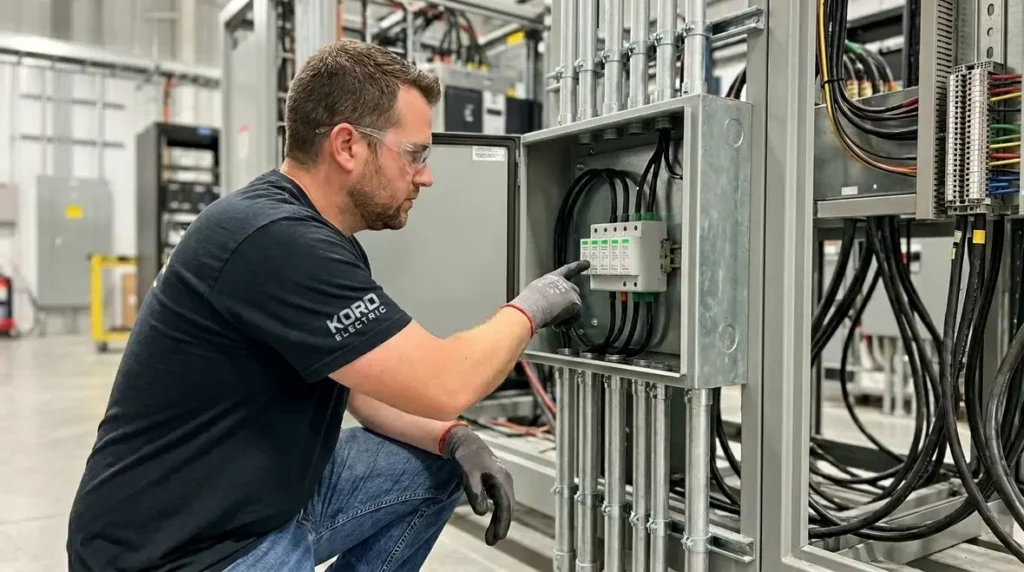
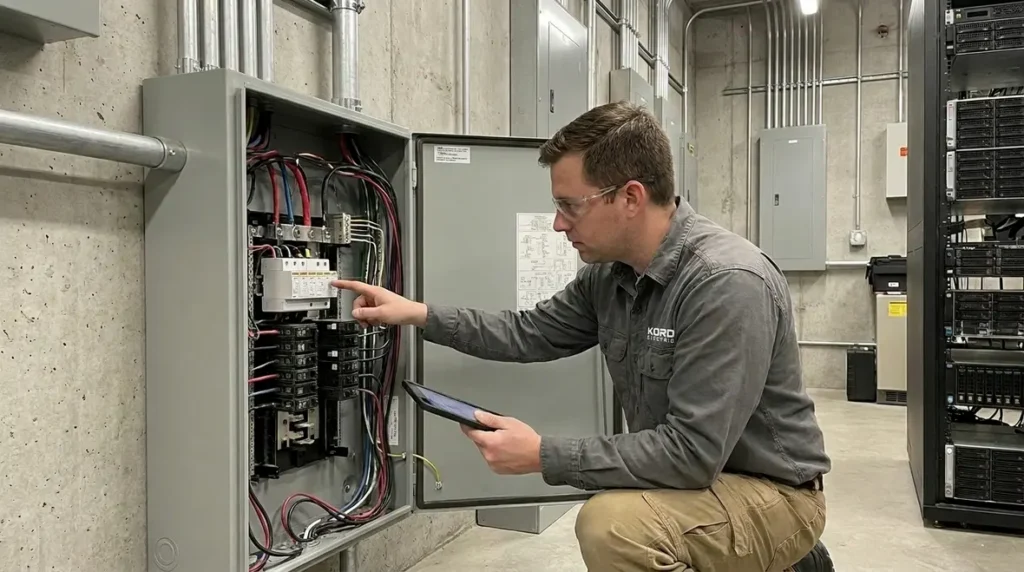
Commercial Electrical Power Surge Protection
Kord Electric helps commercial buildings and industrial facilities protect their sensitive equipment with commercial electrical power surge protection. Because power surges do not ask permission before they strike, we focus on prevention, proper design, and dependable installation. In plain terms, we help stop “mystery failures” that show up after storms, utility switching, or even big motors starting up down the street. And yes, we know it is tempting to shrug and say, “It worked yesterday.” That is the electrical equivalent of saying your smoke detector is decorative. Let our expert service team walk you through what to install, where to place it, and how to confirm it is doing the job.
Where surges come from in commercial and industrial settings
Power surges in business properties rarely come from only one place. Instead, they often stack multiple causes into one noisy event. First, utility grid events such as lightning near distribution lines can push high voltage into your incoming service. Next, internal switching events create transients when equipment starts, stops, or changes modes. For example, HVAC compressors, elevator drives, conveyor motors, and large process equipment can generate sudden electrical changes that stress sensitive electronics.
Additionally, long feeder runs and shared electrical paths can carry interference that behaves like a surge, even when the main voltage looks “normal.” As a result, computers, network switches, programmable logic controllers, biometric systems, and medical or lab equipment may experience hidden damage. Then later, parts fail early, and the business blames “bad luck” or “old hardware,” which is expensive and rarely the whole story.
To avoid guesswork, our Kord Electric technicians treat the facility like a system, not a bundle of outlets. They examine how power enters, how it routes, and what devices sit downstream, so the protection plan matches reality, not wishful thinking.
External vs internal surge sources
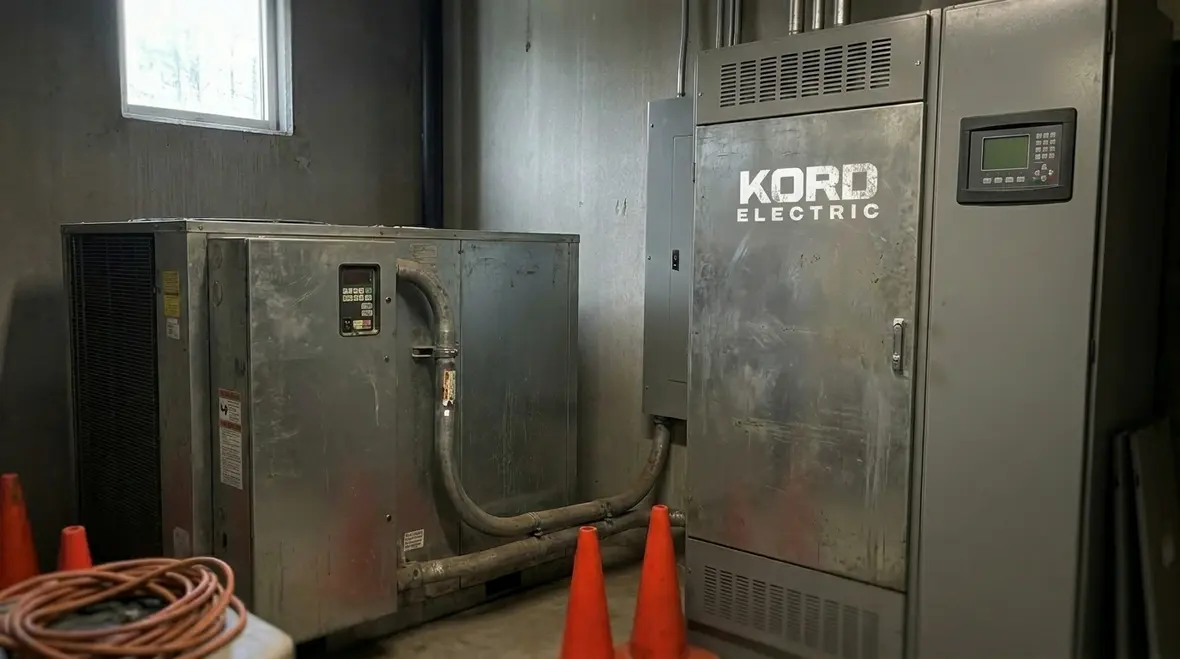
Most commercial surge events are a blend of outside and inside influences. Utility and weather events create the big-picture disturbances, but day-to-day operations inside the building constantly add their own switching transients. Our goal is to recognize both patterns, then design protection that does not just treat one side of the story.
How we design a surge protection approach that actually fits
Commercial surge protection works best when it follows a layered plan. Therefore, we do not start by throwing a single device at the problem. Instead, our expert service staff reviews the electrical one line, equipment list, and operating needs, then maps where surges will enter and where sensitive loads will be.
From there, we typically apply three ideas. First, we install protection at the service entrance so the bulk of energy gets managed before it travels deeper into the building. Second, we use additional stages near branch panels that feed critical equipment areas. Third, we coordinate with device level protection, where needed, to reduce residual voltage that can still reach electronics.
We also look at grounding and bonding because surge protection without a solid reference point is like giving someone a seatbelt with no car. We verify that the grounding system meets code expectations and supports safe surge diversion. Meanwhile, we confirm that the wiring type, conductor size, and routing support performance.
And yes, we check for the “hidden villain.” Loose connections, undersized conductors, and incorrect breaker panel bonding can turn a good protection scheme into a weak one. Our technicians catch those issues early, before commissioning, so the facility does not keep paying for surprises.
Matching protection to real-world loads
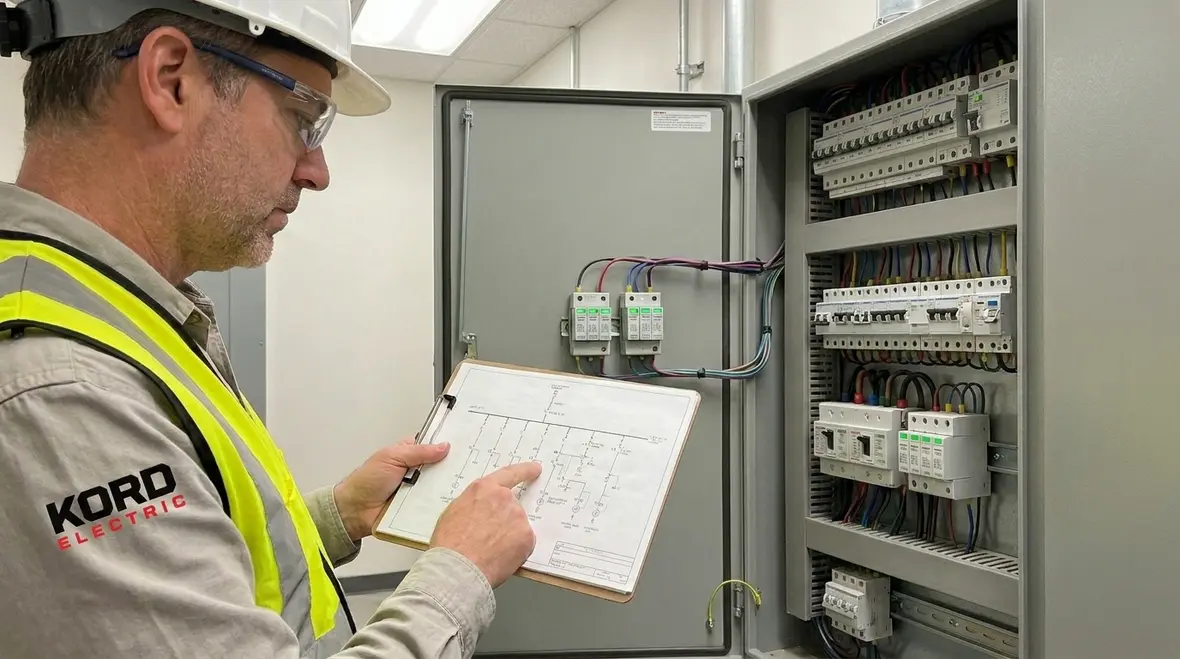
No two facilities run the same way. A data-heavy office tower, a production plant with large motors, and a medical laboratory all experience surges differently. Our design work focuses on aligning commercial electrical power surge protection with what the building actually does, instead of assuming every panel and device behaves the same way.
For teams thinking about broader system upgrades, our surge strategy can be aligned with structured programs like electrical preventive maintenance and long-term inspection schedules, so risk reduction and reliability move forward together instead of as separate projects.
What “layering” means for protecting servers, PLCs, and lab gear
When people hear “surge protection,” they picture a single shield. However, sensitive business equipment needs a coordinated response across the power path. So, we use layering to reduce both the peak surge impact and the remaining voltage after diversion.
Here is how it typically plays out in commercial and industrial facilities. At the main service, we place surge protective devices designed for heavy duty service conditions. This stage handles high energy transients and helps clamp the voltage before it moves through feeders.
Then, at key distribution panels, we add additional protection that matches the equipment category and the local environment. Next, close to sensitive loads, we may specify supplementary protection where the risk level calls for it. For example, high density data rooms, automation control areas, and controlled environment labs often receive more targeted protection.
Meanwhile, we also consider how equipment is wired. Some devices use dedicated transformers, others rely on shared feeders, and many facilities mix older and newer systems. Therefore, our approach adjusts to those realities, and our technicians explain each step in plain language so building teams can make informed decisions.
Think of it like plumbing. One valve at the far end helps, but multiple valves at the right points stop pressure problems from reaching the rest of the house. Electrical systems behave the same way, just with more smoke and fewer jokes.

Coordinating with broader electrical strategies
Layered surge protection fits naturally alongside other reliability efforts. When facilities explore upgrades like rewiring, automated lighting control, or expanded distribution, we can integrate surge protection into that roadmap instead of bolting it on later. That way, commercial electrical power surge protection supports both uptime and long-term system planning.
Step by step: implementing commercial electrical protection without disrupting operations
Implementation should be careful, fast, and repeatable. For major property buildings, outages and downtime cost money, so we plan for minimal disruption. First, our technicians start with site assessment and documentation review. Then, they verify the existing electrical system condition and study the load profile.
After that, we prepare a staged installation plan. We schedule work during low usage windows when possible, and we coordinate with building operations to keep critical systems online. Next, we install surge protective devices according to manufacturer requirements and applicable electrical standards. At the same time, we ensure correct conductor routing, termination torque, and protective device configuration.
Once installed, we verify performance through testing and inspection procedures. In addition, we label devices clearly so maintenance teams can service or replace components without guessing. Finally, we provide a concise record of what we installed, where it sits, and what it protects.
Throughout the process, our expert service staff does more than wire and tighten. They explain what they found, why a particular stage belongs where it does, and how the protection plan supports the facility’s actual equipment. That way, the facility owner does not get a “trust us” answer. They get understanding.

Planning around real-world operations
We understand that commercial and industrial facilities run on tight schedules. That is why we coordinate surge protection installs with maintenance windows, production pauses, and tenant needs. For sites across Southern California, our broader Los Angeles County electrical services support everything from emergency response to scheduled upgrades, so surge work is one part of a calm, organized plan instead of a last-minute scramble.
Choosing devices and locations for mission critical loads
In commercial and industrial work, the right device is not only about ratings. It also depends on location, wiring, and coordination. Kord Electric helps facilities choose components that match surge conditions at the service entrance and the downstream risk level.
For example, service entrance units need robust characteristics for high energy events. Meanwhile, branch panel protection supports the next stage of energy management. Then, where equipment requires tighter residual control, we discuss additional protection options aligned with the equipment sensitivity and wiring layout.
Location decisions matter because surges travel along conductors and return paths. Therefore, we place protection to intercept energy early and limit how much reaches sensitive circuits. Also, we confirm that the device connections align with correct polarity and grounding practices.
Our technicians also account for real building behavior. Facilities change: they add HVAC systems, upgrade IT racks, expand manufacturing lines, or replace power supplies. So, we recommend a practical review cadence rather than a one time install and forget. When others update electrical systems, we help ensure the surge protection strategy still matches the new design.
In short, we make sure the protection belongs where the surge energy actually enters and where your money equipment actually sits.
Connecting surge protection with power quality
Commercial electrical power surge protection is one piece of a bigger power quality picture. Facilities wrestling with voltage dips, flicker, or chronic disturbances can benefit from a combined look at surge devices, distribution design, and preventive maintenance. By tying these efforts together, buildings spend less time reacting and more time running smoothly.
Testing, maintenance, and documentation that keep protection reliable
Surge protection is not “set it and ignore it.” Conditions change, and equipment ages. So, our approach includes ongoing checks that keep commercial electrical power surge protection aligned with how the facility operates.
First, we inspect installed devices and verify connections during routine electrical service visits. Next, we review any indicators or status functions provided by the devices, since many include visual or remote signaling features. Then, we document findings and update the facility’s electrical protection records.
If the facility experiences notable transient events, we recommend follow up verification. That helps confirm whether the device performed as intended and whether replacement becomes necessary. Also, we coordinate maintenance with building schedules, so the process stays manageable.
Just like a fire extinguisher, the best protection is the one that is ready when it matters. Our expert service staff helps owners understand what to watch for and how to interpret device indicators without turning maintenance time into detective work.
Building a long-term protection plan
The most effective surge strategies do not live on a single drawing. They show up in maintenance logs, inspection routines, and capital planning discussions. We help facilities fold surge reviews into broader electrical maintenance plans so that every system check includes a quick look at the devices quietly keeping your electronics safe.
For organizations juggling multiple sites or complex campuses, pairing surge protection with structured services like electrical preventive maintenance programs and emergency response planning creates a practical path to fewer surprises, smoother audits, and fewer “why did that fail?” moments.
FAQ about commercial surge protection
Final CTA: protect your critical systems with Kord Electric
If a facility runs on electronics, then electrical protection is not optional. Kord Electric designs and installs surge protection for commercial and industrial buildings and major property structures, and we keep the process clear from assessment to testing. Our technicians explain each step, so your team understands what protects servers, controls, and critical systems. If you want a practical plan that fits your electrical layout and your downtime limits, contact Kord Electric today for a surge protection evaluation and next step recommendations.
When you are also navigating broader power quality issues, emergency response needs, or multi-site planning, our team can align commercial electrical power surge protection with your overall electrical strategy. From structured maintenance to urgent troubleshooting, we help serious facilities move from “hoping nothing fails today” to knowing there is a plan in place.
To explore related service options that support your surge protection strategy, review our dedicated pages on preventive maintenance, emergency electrical response, and other commercial and industrial offerings that keep your infrastructure running safely and reliably across every season.