Electrical Infrastructure Diagnostic Tools Guide
Kord Electric approaches reliability like it is a business goal, not a guessing game. We use modern electrical infrastructure diagnostic tools to test, measure, and verify power system health before small issues grow into costly downtime. Instead of waiting for a breaker to act like it is auditioning for a disaster movie, our team checks the data first. And yes, our technicians still remember what it feels like when a site runs on assumptions. So we trade that for evidence.
In this article, we explain the diagnostic workflow, the tools we rely on, and how our expert service staff communicates findings in plain language. If a facility manager asks, “What does this mean for my operation,” we do not respond with vague poetry. We respond with results.
Modern electrical infrastructure diagnostic tools for reliability testing
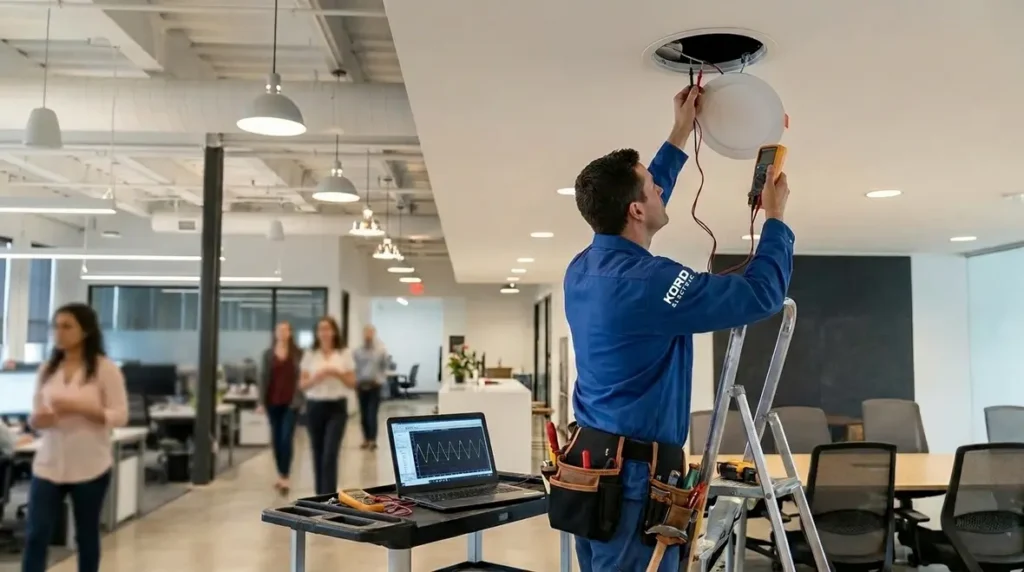
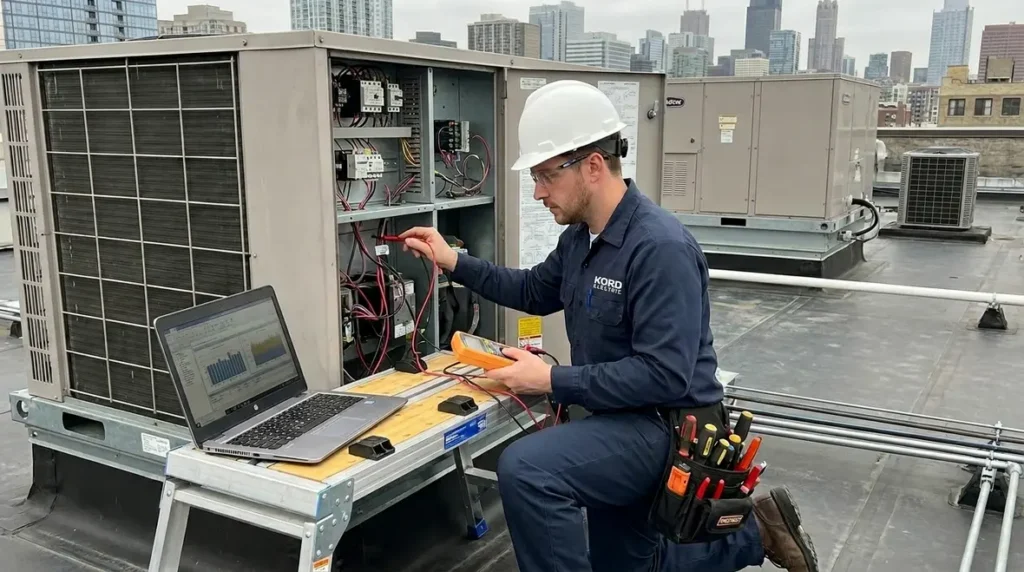
Reliable commercial and industrial power starts with seeing what is actually happening. Therefore, Kord Electric uses electrical infrastructure diagnostic tools to assess assets across generation, distribution, protection, and utilization systems. These tools work together, because one reading rarely tells the whole story. For example, a single thermal image can show hotspots, but the root cause often lives in load changes, poor connections, aging insulation, or settings drift in protection devices.
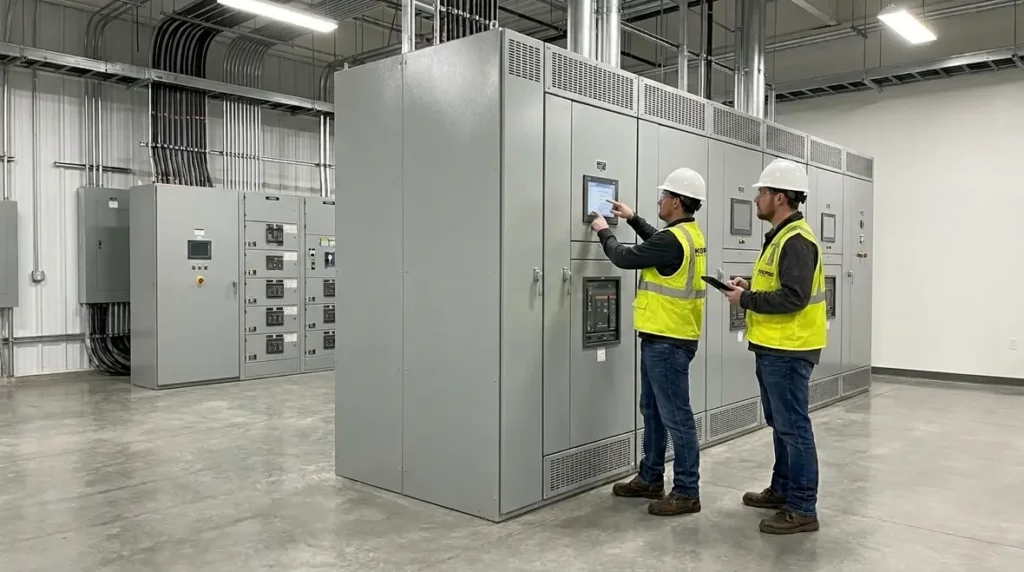
Moreover, our technicians treat test planning like a safety plan. We review one line diagrams, recent maintenance history, and operating schedules, then we choose test methods that match the site’s risk level. In other words, we bring the right measurement to the right moment, not the loudest gadget in the case.
How we build a diagnostic plan that matches your facility operations
Every major property building has its own “personality.” Some campuses run long hours, others juggle peak events, and some industrial sites see rapid load shifts. Consequently, Kord Electric designs diagnostic work to fit how the facility runs, not how our schedule wishes it would.
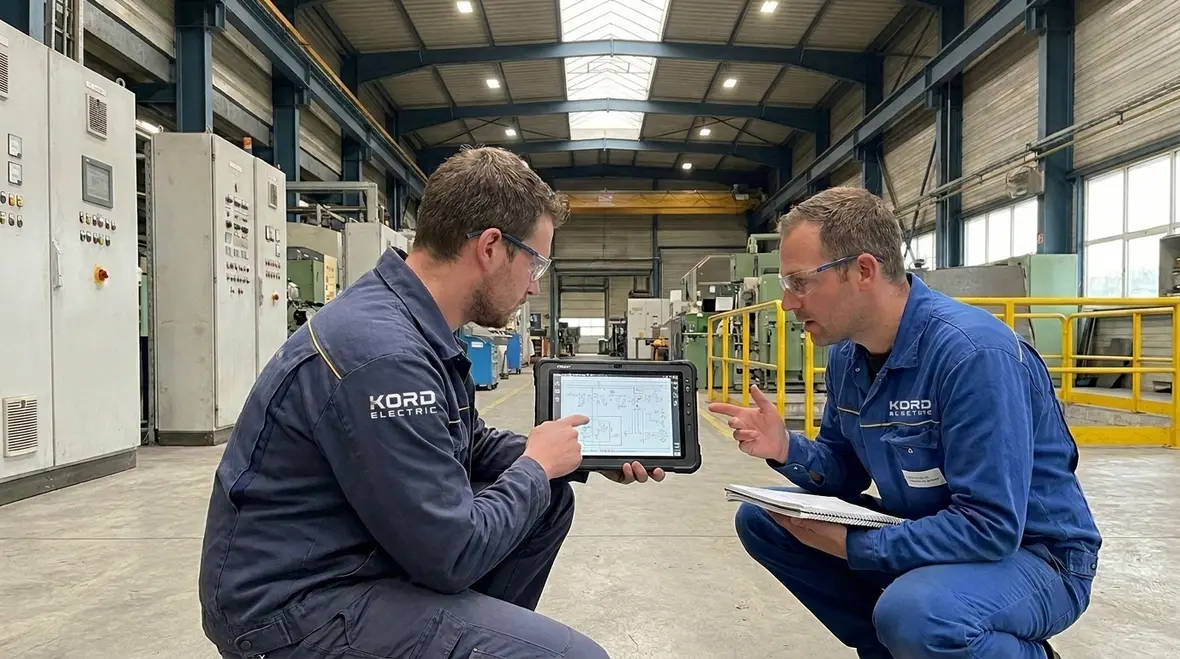
Our expert service staff typically begins with a short site review and a power system walkdown. Then we establish a test sequence that supports both accuracy and operational continuity. For instance, we may run baseline measurements first, then repeat key tests after targeted maintenance. This approach helps our clients see whether improvements truly changed system behavior.
Also, we document every step in a way that engineering teams can trust and operations teams can use. We do not bury important findings in a pile of charts that look like they were generated by a science fair with a caffeine problem. We present the story in business terms.
This planning mentality aligns closely with structured programs like Kord Electric’s electrical preventive maintenance services for commercial and industrial facilities, where repeatable testing and clear documentation form the backbone of ongoing reliability.
Insulation, moisture, and breaker health: what we test first
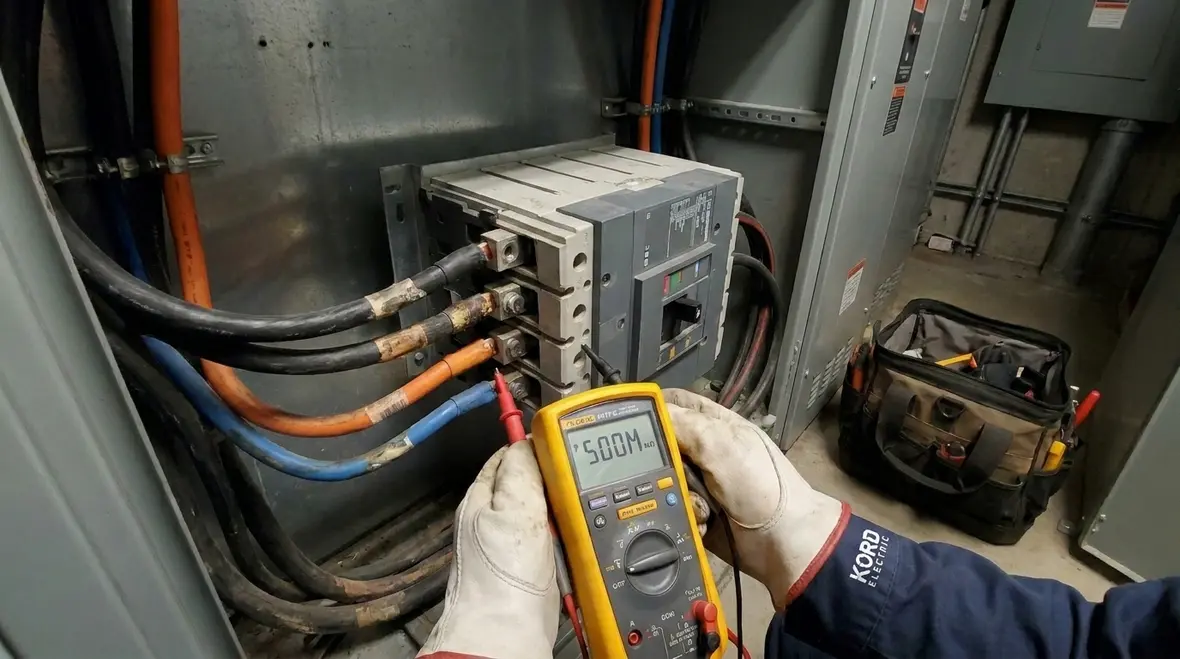
After the plan is set, Kord Electric focuses on the building blocks of reliability. To reduce unexpected outages, we test the insulation and condition of key components, including switchgear, bus systems, and cables. Moisture, contamination, and insulation aging quietly build risk over time. Yet, they often show early signs if someone bothers to look.
Therefore, our process commonly includes insulation resistance testing and targeted condition checks that help determine whether the system can safely carry load under real conditions. We also evaluate breaker mechanism condition and contact wear using appropriate diagnostics. When a breaker contacts surface wears unevenly, it can fail under fault conditions, and that is not a “later” problem.
Meanwhile, our technicians do not stop at “pass or fail.” They interpret the results in context, such as whether one phase shows different behavior or whether temperature trends line up with load patterns. That is how we shift from reactive maintenance to predictive reliability.
These early-stage checks tie directly into broader maintenance programs, including NFPA-informed NFPA 70B electrical panels and switchgear maintenance practices that keep critical equipment operating within safe limits over its lifecycle.

Thermal imaging and load analysis for hidden hotspots
Hotspots love two things: time and neglect. They often form at connections, terminations, and bus interfaces where resistance rises. Then heat increases, and the heat feeds the resistance, like a villain with a power bill.
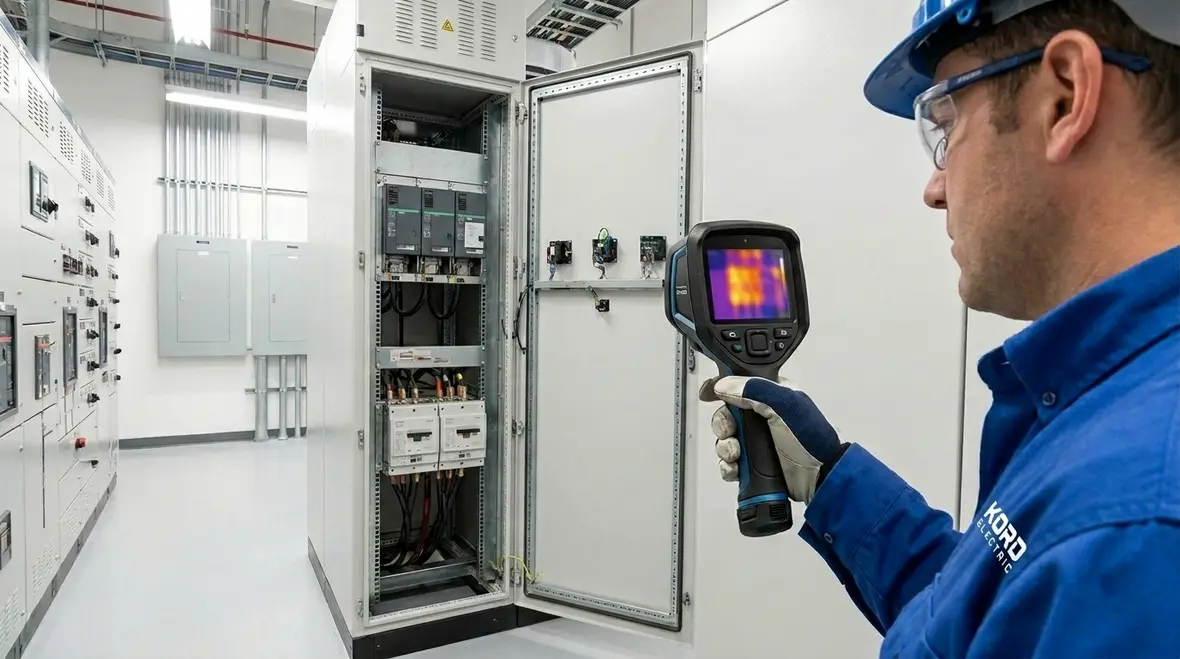
Because of that, Kord Electric uses thermal imaging alongside electrical measurements to locate abnormal temperatures without dismantling equipment. However, we avoid treating a thermal image like a standalone verdict. Instead, we combine it with load analysis and electrical checks. If a hotspot appears, we look for the electrical reason behind the heat and not just the visual symptom.
Additionally, our team checks patterns across phases and compares temperature readings to expected operating conditions. We also account for ambient conditions and time since last load change. This matters, since the same connection can look different depending on demand. We keep the interpretation grounded, calm, and accurate.
Thermal scans and load studies often become part of a larger reliability roadmap, especially for facilities that want structured programs like hidden electrical risk assessments in commercial buildings rather than one-time inspections.

Protection settings, coordination, and arc flash risk reduction
Many facilities test equipment, but they forget to confirm whether protective devices still protect the way the system expects. So Kord Electric verifies protection logic and coordination by reviewing settings and performance indicators. Over time, changes in load, equipment replacement, or component aging can shift system behavior. When that happens, protective devices may trip slower than expected, trip incorrectly, or create unwanted stress during faults.
At the same time, we help manage arc flash risk by supporting safer inspection and maintenance practices. When proper diagnostics identify weak points, facilities can target repairs before an incident occurs. Our technicians explain these findings using plain, direct language, which helps operations teams take action without needing a PhD in power engineering.
And yes, we sometimes use friendly analogies. For example, we explain coordination like a well-run fire drill: each device should act in the right order, at the right time, and for the right reason. If one part reacts too early or too late, the whole plan gets messy.
This level of coordination matters even more in complex environments like data centers, where Kord Electric’s data center electrical distribution design for reliability work depends on protection schemes that respond correctly under real-world fault conditions.
Using dual reporting to turn test data into decisions
To make results easy to use, Kord Electric delivers information in two formats: one for operations and one for engineering. That means the people who keep the lights on can move quickly, while the teams who manage standards can track specifics and recommendations.
Operational view
- Clear findings tied to equipment locations
- Action urgency level for each issue
- Recommended next steps for maintenance planning
- Notes on operational impact and safe scheduling
Engineering view
- Measured values with test conditions
- Trends across repeated measurements
- Coordination and protection setting observations
- Supporting references for follow-up engineering work
Consequently, our expert service staff supports handoff conversations on site. We explain what changed, what matters, and what can wait. This reduces debate, speeds approvals, and helps commercial and industrial facilities stay focused on uptime.
FAQ for infrastructure reliability testing at Kord Electric
Why Kord Electric is built for real-world reliability
Commercial and industrial sites cannot afford guesswork. Power systems demand respect, because one overlooked connection or drifted setting can turn into an outage that ruins more than a shift. Kord Electric brings disciplined testing, clear reporting, and the calm confidence of technicians who know how to explain complicated information without the drama.
And when you choose us, you get a team that supports both action and understanding. We translate results into next steps that fit schedules, safety needs, and operational goals. That is how we help your infrastructure stay reliable, not merely “functional.”
For organizations seeking a broader service partner across their portfolio, Kord Electric also delivers Los Angeles County electrical services for commercial, industrial, and major property facilities, so diagnostic work can connect seamlessly to upgrades, repairs, and long-term maintenance.
Ready to strengthen power reliability at your facility? Contact Kord Electric to schedule modern diagnostic services. Our expert service staff will review your site needs, recommend a focused test plan, and deliver findings in practical terms your teams can act on. Move from reactive repairs to planned, confident maintenance. Let us help protect uptime, reduce risk, and support your operational goals. Get in touch today to start.