Advanced Commercial Lighting Controls ROI Guide
In commercial and industrial buildings, lighting is not just “lights on.” It is a controllable system that can cut waste, tighten compliance, and support real comfort for people on site. At Kord Electric, we focus on delivering advanced commercial lighting control benefits that reduce energy bills, improve space use, and make maintenance calmer for the people who actually live with the equipment.
In this article, we will explain the ROI of Advanced Commercial Lighting Controls in a way building owners and facility managers can use. Then we will show how our technicians and expert service staff guide the plan, from code alignment to commissioning, so the numbers hold up after the lights are installed. And yes, we promise the math will be less painful than a corporate icebreaker.
Commercial lighting control benefits: how Kord Electric helps facilities save without guessing
Commercial lighting control benefits reach far beyond simple on and off behavior. In practice, the right controls help facilities reduce unnecessary runtime, match light levels to tasks, and keep spaces comfortable without wasting power. When a system pairs smart sensors with thoughtful zoning, the result feels less like a gadget and more like a steady, predictable part of the building’s daily rhythm.
At Kord Electric, we approach lighting controls as part of the broader electrical infrastructure, not an add on. That means we coordinate controls with panel capacity, circuit layouts, and long term maintenance expectations. Commercial lighting control benefits matter most when they keep delivering year after year, instead of becoming another orphaned system that no one trusts enough to use.

Because we work with commercial and industrial facilities every day, we also think about how lighting controls interact with other priorities: shift changes, security policies, overtime work, and even inventory checks that happen after “regular” hours. The commercial lighting control benefits you see on a spec sheet only matter if they still hold when the building runs through its real life routines.
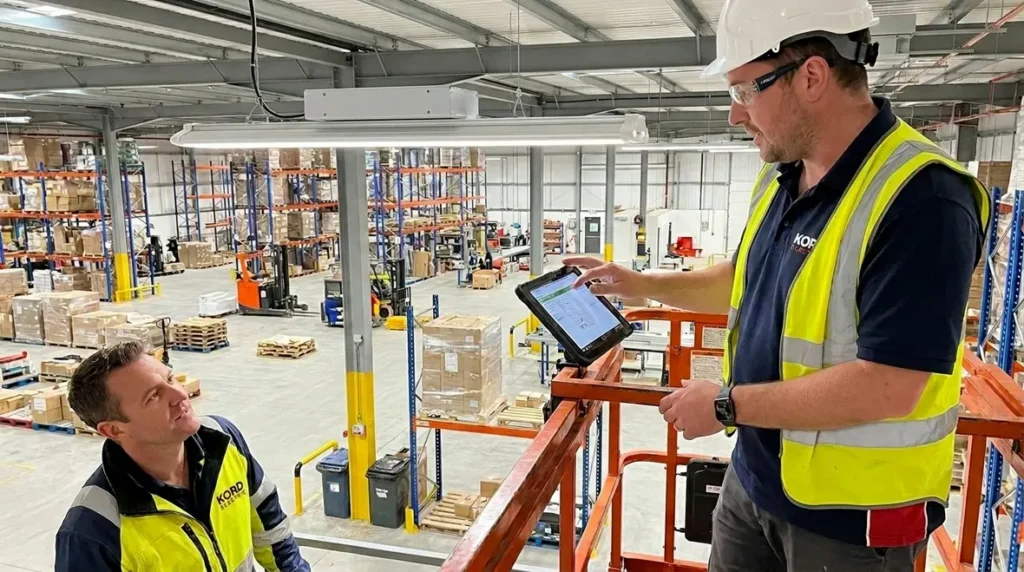
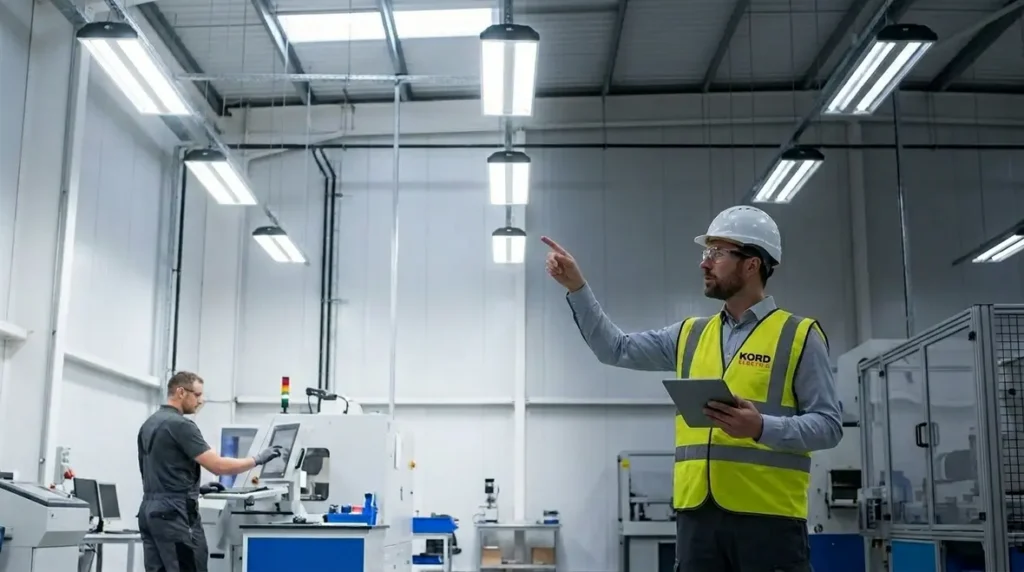
That is why we unify design, installation, and training. Our technicians and expert service staff explain what each zone does, how schedules work, and when overrides make sense. The result is a control strategy that your team can actually live with, not one they bypass the first time a deadline appears.
What drives ROI in advanced lighting controls?
When teams ask us about ROI, we do not start with marketing. We start with behavior and measurements. Lighting controls produce value because they change how power flows to fixtures, how long they stay on, and how well the building responds to real conditions.
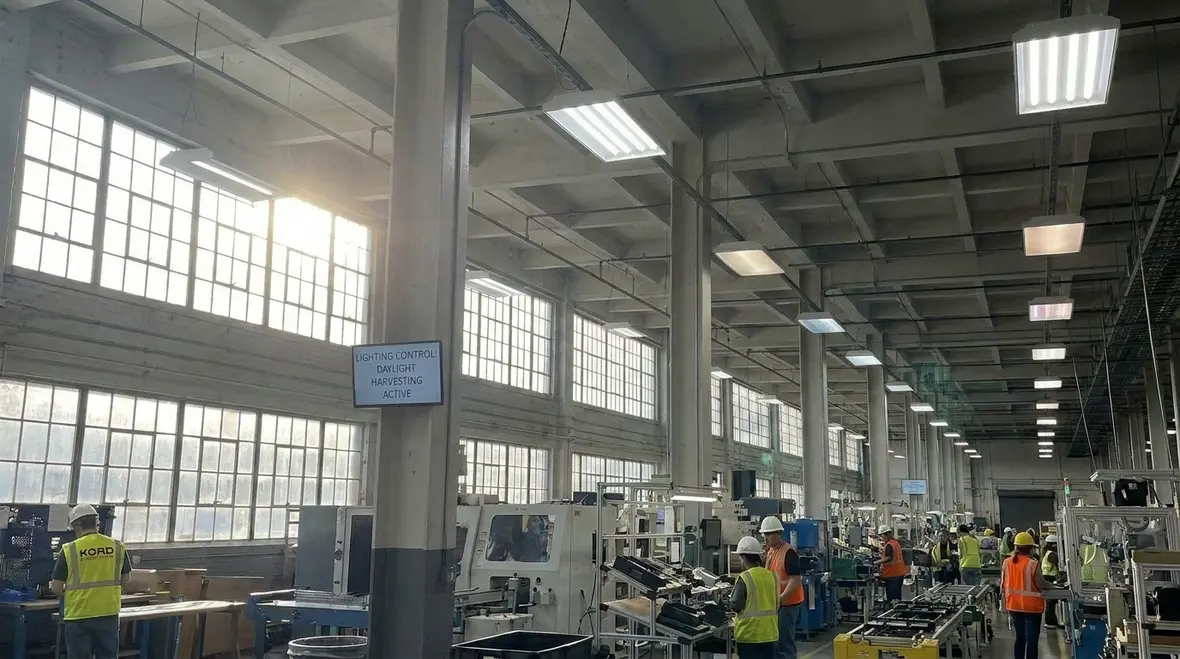
First, sensors and scheduling reduce unnecessary runtime. For example, when daylight increases near windows, the system can dim electric light instead of keeping brightness fixed. As a result, energy use drops without people feeling like they are working inside a cave.
Next, occupancy sensing and local control prevent “lights everywhere, all the time.” However, the bigger win usually comes from coordination across zones. Instead of one single on off plan for an entire floor, the building can respond room by room. Therefore, the ROI improves because the control strategy matches how spaces actually operate.
Lastly, advanced systems lower ongoing costs. They help facilities spot failing components sooner, and they simplify updates. In other words, the building becomes easier to manage. And when the people managing the building spend less time on troubleshooting, that is still ROI, even if it does not show up in a utility invoice.
We also pay attention to how advanced controls interact with existing electrical infrastructure. Poorly coordinated systems can react slowly or inconsistently, which frustrates users and erodes savings. When lighting controls align with panel capacity, breaker layout, and circuit loading, you get smoother operation and fewer surprise trips or nuisance faults down the line.
Energy savings: the part everyone understands, but not everyone models correctly
Energy savings often make up the largest share of the ROI story. Yet many projects underperform when teams use rough estimates or ignore how lights behave day to day.
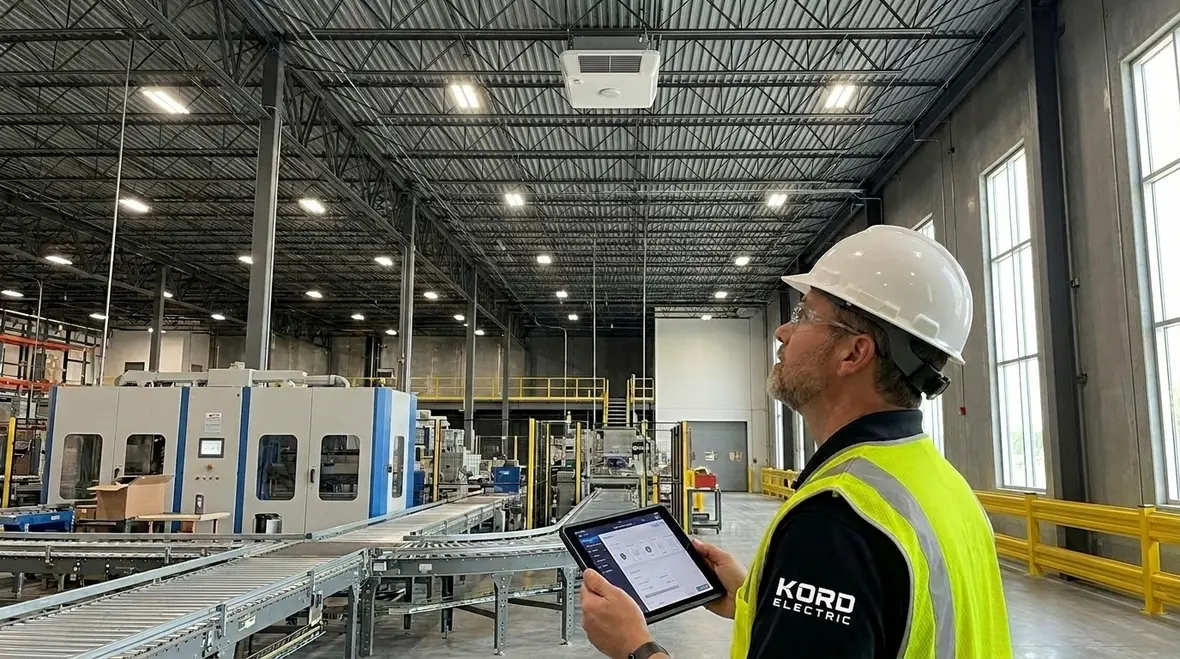
At Kord Electric, our expert service staff helps clients build a savings model that reflects the facility’s real schedule. We look at operating hours, occupancy patterns, and daylight exposure. Then we match control methods to those patterns.
For example, in a manufacturing area, occupancy and process timing matter more than “office hours.” In a lobby or corridor, daylight and pedestrian traffic guide performance. Meanwhile, in conference rooms and training spaces, usage cycles and manual override behavior determine whether people feel confident enough to let automation handle the routine.
Additionally, controls reduce demand costs in many utility structures. Some utility rate plans reward peak shaving. When dimming and shutoff reduce load during high demand periods, the building can lower peak charges. Therefore, the ROI strengthens when the facility has expensive peak demand rates.
We also emphasize that baseline assumptions must be honest. If a facility already operates with aggressive manual shutoff discipline, savings from automation may arrive differently than in a building where lights routinely burn all night. In either case, commercial lighting control benefits should be anchored in real data, not wishful thinking. Our technicians gather those details during site walks and interviews, so your projections stay grounded in the way your building actually runs.
Operational savings: the hidden ROI that facility managers quietly love
Energy is only one side of the ledger. Operational savings often arrive in a slower rhythm, but they can be just as real for commercial and industrial facilities.
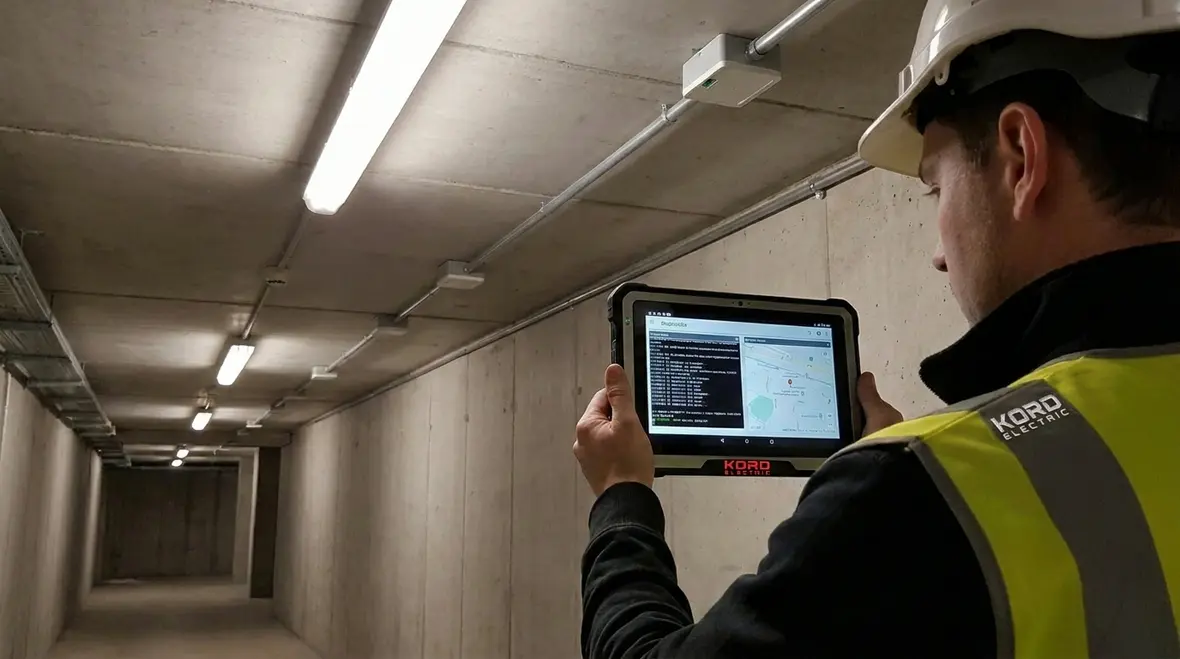
For instance, automated reporting reduces time spent inspecting panels, switches, and photocells. Instead of guessing which zone misbehaves, the system provides status information. Then technicians can focus on the actual issues, not the ones that only look like issues during a walkthrough.
Also, commissioning and ongoing service reduce call backs. Our technicians explain how the system works, how settings should match the space, and how to respond when users complain about glare or dimming. Because we teach the team what to expect, you avoid the classic “the lights are broken” situation when the real issue is a misunderstanding of dimming curves. That is less dramatic than it sounds, but it still happens. A lot.
Furthermore, controls can extend fixture and component life by reducing unnecessary stress from constant full output operation. While the main goal remains efficiency and comfort, fewer replacements lower labor and downtime. In facilities, downtime is expensive, and it almost always shows up in costs that do not get counted until later. We count it early.
Behind the scenes, well designed control systems also support smoother electrical maintenance. When zones, schedules, and sensor behavior are documented clearly, future upgrades become easier. That keeps your electrical team and your lighting vendor on the same page, which lowers the odds of unplanned shutdowns when it is time to expand or reconfigure a space.
Compliance and code coordination: ROI gets stronger when the system is built right
Advanced lighting controls do more than save energy. They also support safer, more consistent electrical operation and help teams avoid rework tied to code and standards. Kord Electric builds projects with coordination in mind, and we align control behavior with how the electrical system operates.
As part of our service approach, we also keep clients aware of major code expectations that influence system design and installation practices. For readers who want a deeper background on the National Electrical Code updates, we recommend reviewing our guide on understanding NFPA 70 and the National Electrical Code for 2026. That kind of clarity helps teams avoid surprises during permitting, inspection, and commissioning.
And when inspections go smoother, project timelines hold. That matters, because ROI depends on when savings start. If the system gets delayed due to installation gaps, the payback clock slows down. Therefore, we prioritize planning details early and we keep the control strategy consistent with the electrical design.
Our team also coordinates lighting controls with related safety requirements, including emergency circuits and life safety systems, so that automated behavior never conflicts with egress or safety expectations. When controls, wiring methods, and emergency power strategies all agree with the same code roadmap, facilities see fewer last minute revisions and change orders.
How we calculate payback: from first cost to yearly value
To estimate ROI, teams need a clean view of costs, benefits, and timing. We typically break this down into a few practical pieces so the discussion stays grounded.
Step 1: Identify the baseline. We establish how lighting operates today. Then we estimate the annual hours of use and the typical load pattern. After that, we measure or estimate how much of the load will change when controls add dimming, scheduling, or shutoff.
Step 2: Estimate control impact per space. Some areas respond fast to daylight dimming. Others benefit more from occupancy sensing or scheduled control. In a facility with many types of rooms, the blended result can look different than a single average number.
Step 3: Apply utility rate structure. We use the client’s actual rate plan when possible, including peak demand if applicable. Then we estimate energy cost reduction and any demand reduction.
Step 4: Include operational and maintenance effects. This part rarely gets enough attention. We include reduced labor time, fewer troubleshooting hours, and improved maintainability from reporting.
Step 5: Use a realistic timeline. Savings usually start after commissioning and staff training. Therefore, we plan the rollout so the system performs as intended from day one. And when our technicians and expert service staff explain the behavior to the building team, adoption improves. That can raise actual savings compared to “paper savings.”
If you want the short version, we do not just promise a payback. We map it to how the facility actually runs, using your schedules, your processes, and your risk tolerance as the starting point. That is how commercial lighting control benefits translate from project proposals into real numbers on future operating reports.
Risk control: what can break ROI if teams ignore it
Advanced commercial lighting controls deliver value when the design matches the building. Yet some common issues can shrink ROI, even when the equipment is high quality.
First, poor zoning can waste savings. If a zone covers mixed uses, the control logic gets stuck between competing needs. Then the building either dims too much in one area or stays too bright in another. Fixing zoning after install is possible, but it costs money and time.
Second, user behavior matters. People may override controls if they do not understand what the system is doing. That is why we explain the system in plain terms. Our approach includes showing staff how overrides work, what to expect during transitions, and why certain dimming levels feel different under varying daylight. When training is done well, complaints go down and the controls stay aligned with the intended strategy.
Third, commissioning and calibration protect performance. Sensor placement, mounting height, calibration, and verification tests determine whether the system responds correctly. Therefore, our technicians treat commissioning as a core step, not an afterthought.
Finally, maintenance plans sustain value. Controls need software updates, inspections of sensors, and verification that settings remain correct after renovations. When a facility leaves that to chance, ROI can drift. We help clients set expectations early and keep the system healthy.
If your facility already invests in structured electrical maintenance, advanced lighting controls fit naturally into that framework. They provide additional data points and event histories that your maintenance team can use to spot trends before they turn into outages or occupant complaints.
FAQ: ROI of advanced commercial lighting controls
Final word from Kord Electric: let us map ROI to your building
Our team at Kord Electric helps commercial and industrial facilities turn advanced lighting controls into measurable ROI, not guesswork. We model energy and operational value, align installation details with electrical planning, and commission the system so it performs from day one. Then our technicians and expert service staff explain the operation clearly, so your staff can use the system confidently. If you want a payback estimate that reflects how your building runs, contact us for an on site assessment and a control strategy built for your spaces.
Because lighting controls rely on sound electrical infrastructure, many facility teams pair a new controls strategy with broader service support. For organizations across Southern California, that often includes dedicated Los Angeles County electrical services that keep distribution equipment, panels, and circuits aligned with both code expectations and everyday operational demands.
If you are already planning upgrades or reviewing your facility’s broader electrical roadmap, exploring resources like Kord Electric’s NEC and lighting installation guides can help you connect commercial lighting control benefits with long term reliability and compliance. When controls, power distribution, and preventive maintenance all pull in the same direction, your ROI story becomes much easier to explain to leadership, tenants, and anyone else who signs off on capital projects.