Commercial Electrical Panel Load Management
Commercial electrical panel load management that keeps lights steady and bills predictable
In busy commercial buildings, electrical problems rarely announce themselves with a polite knock. Instead, they show up as flickering lights, tripped breakers, and heat inside panel parts that should stay cool. That is why we focus on electrical panel load management from the start. We help our customers set a clear plan for how power moves through their distribution system, then we keep refining that plan as equipment changes. When we do it right, we reduce overload risk, protect sensitive loads, and keep operations running through peak hours without surprise interruptions. And yes, we also save people from that classic “Why did the office go dark” meeting. Nobody has time for that.
What load management really means in commercial panels
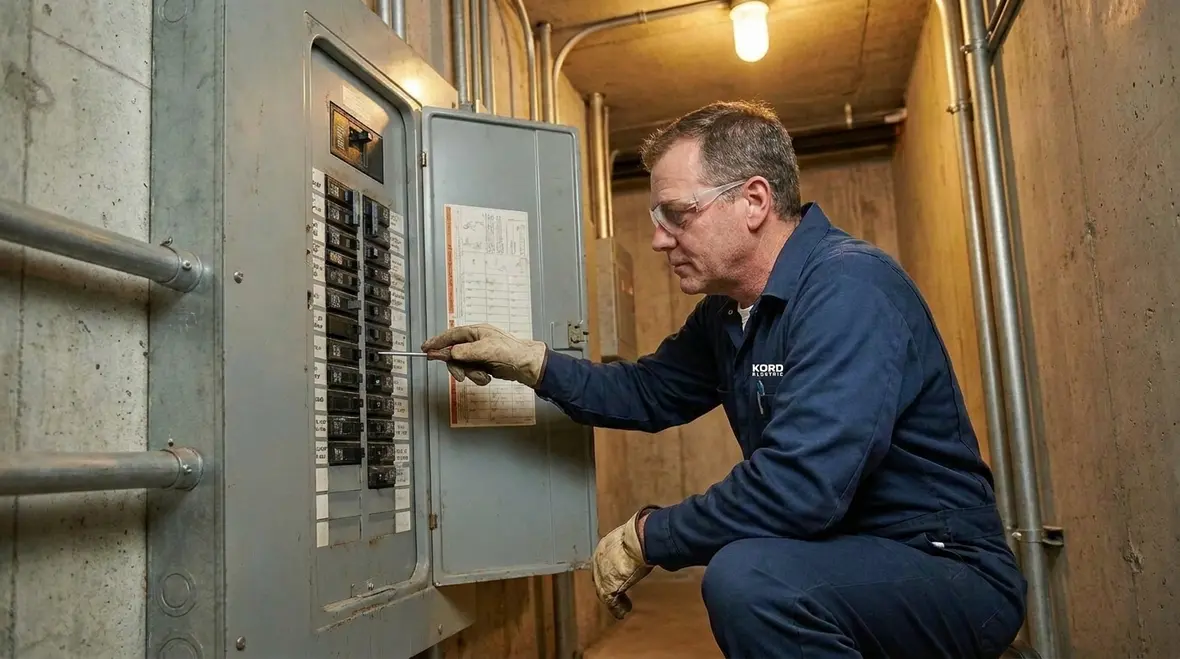
When other companies talk about load management, they often sound like they are reading a brochure. We keep it practical. In a commercial and industrial setting, load management means we evaluate every meaningful load and then we match panel capacity to real usage. That includes HVAC systems, lighting circuits, motors, elevators, refrigeration, EV charging, process equipment, and even intermittent loads that spike at specific times.
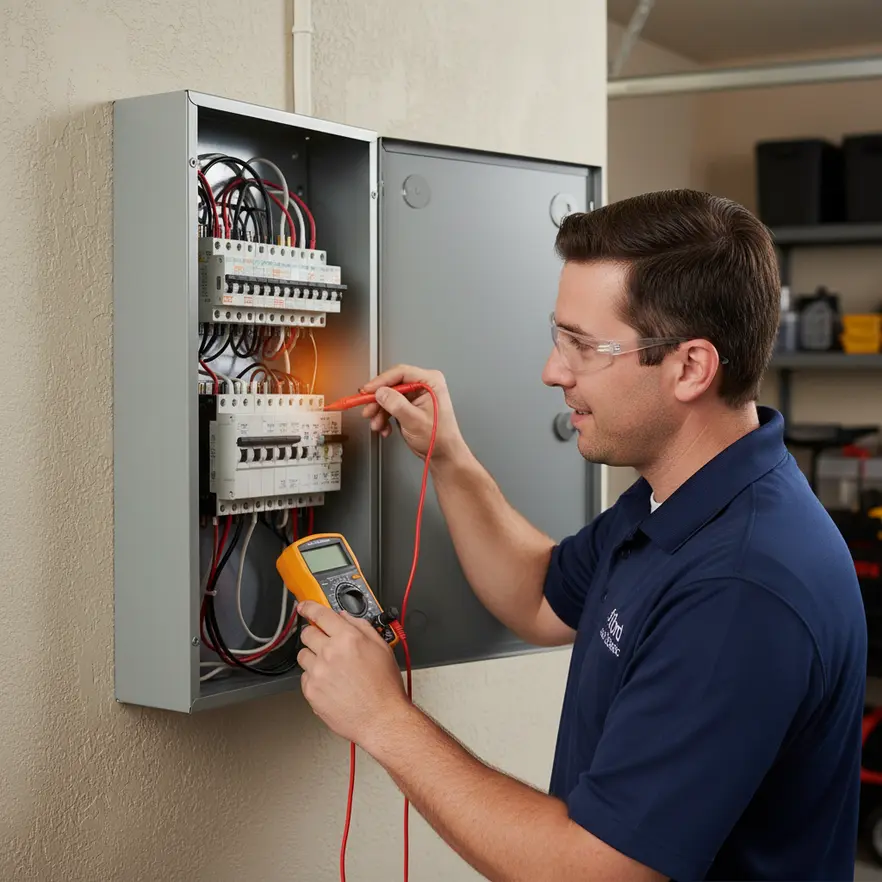
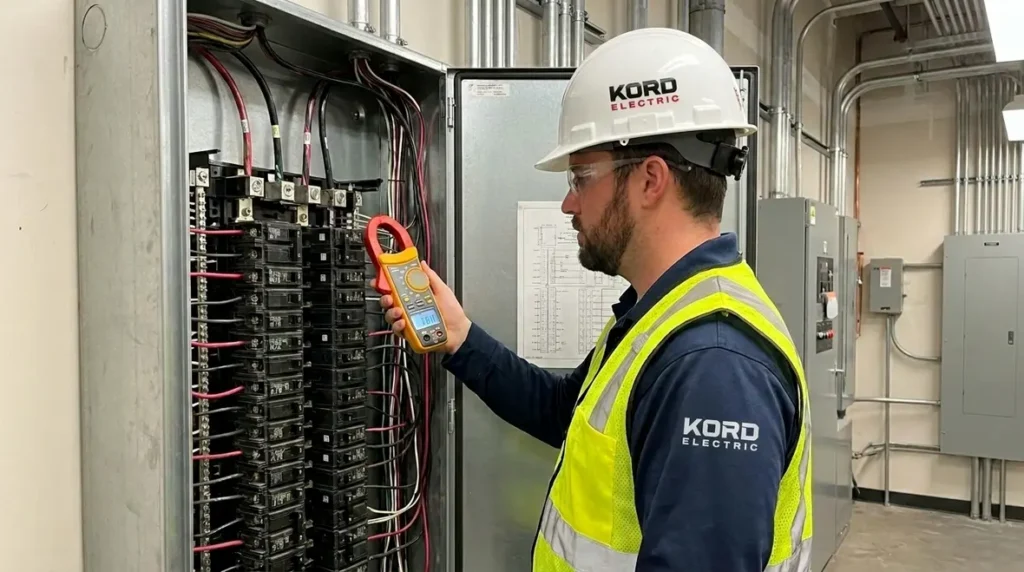
Our technicians approach this like a map, not a guess. First, we identify what is connected and how it behaves. Then we check the panel schedule, transformer data, and existing breaker ratings. After that, we measure current draw and look for imbalance across phases. Finally, we make sure the panel bus, breakers, and terminations can handle the expected load with a margin for growth.
As the building evolves, load management evolves too. A retail tenant remodel, a new production line, or additional servers can shift the demand quickly. Therefore, we treat load control as an ongoing process, not a one time checkbox.
How we prevent overload before it becomes a fire drill
Overload is rarely a single moment. It is usually a slow build. Loads increase, maintenance slips, connections loosen over time, and the panel warms up more than it should. Eventually, the system crosses a safety line. Then breakers trip, or worse, components degrade.
At Kord Electric, we prevent that arc by checking the things that cause failures, not just the symptoms. Our expert service staff looks closely at current levels, distribution balance, and panel temperatures. We also review whether breakers and conductors are sized correctly for the load type and duty cycle. Motor loads, for example, can draw more current during starting than their steady state numbers suggest.
We also evaluate selective coordination. In simple terms, the right device should trip first, not the biggest one. When coordination works, one affected circuit stays down while the rest of the facility keeps moving. That means fewer shutdowns and fewer frantic phone calls that start with “Is it supposed to smell like hot plastic?”
Balancing phases and reducing heat where it starts
Phase imbalance is a quiet performance killer. Even when total load looks acceptable, an uneven distribution can overwork one phase and underuse another. As a result, you get overheating at specific components. You might also see nuisance trips that feel random, like the building is choosing chaos.
Our team uses measurements and panel labeling to verify that each phase carries a fair share of the load. Then we adjust circuit assignments when needed, within code and engineering limits. We may also recommend changes such as relocating heavy loads, reworking feeder balance, or updating the load schedule used for planning.
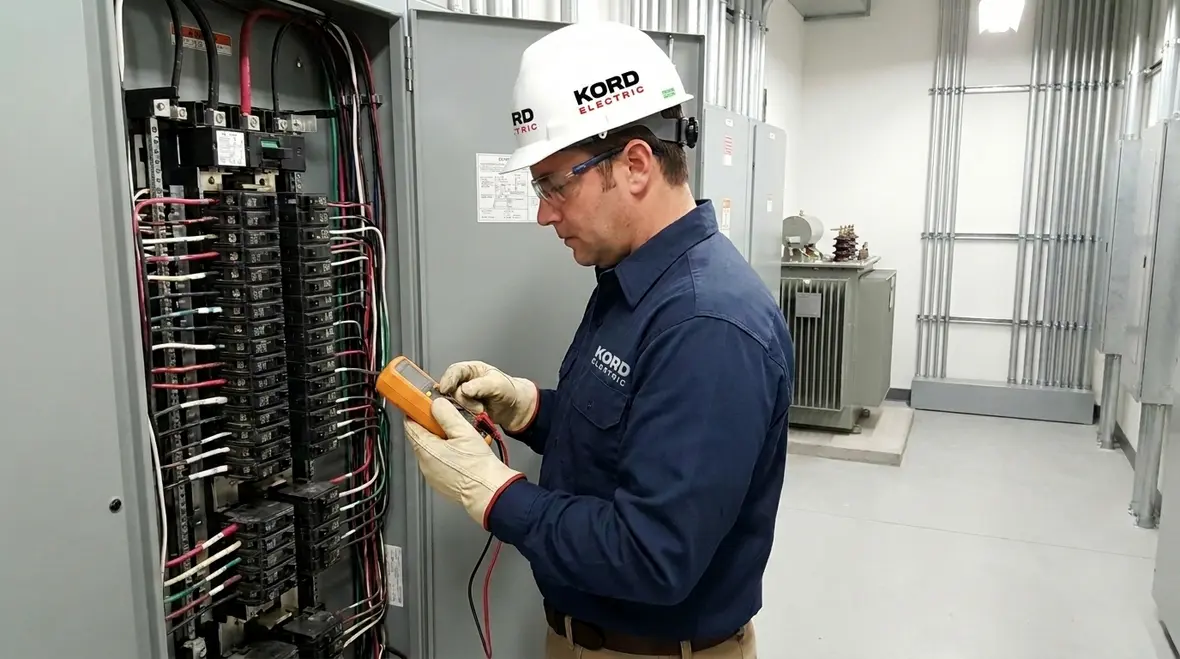
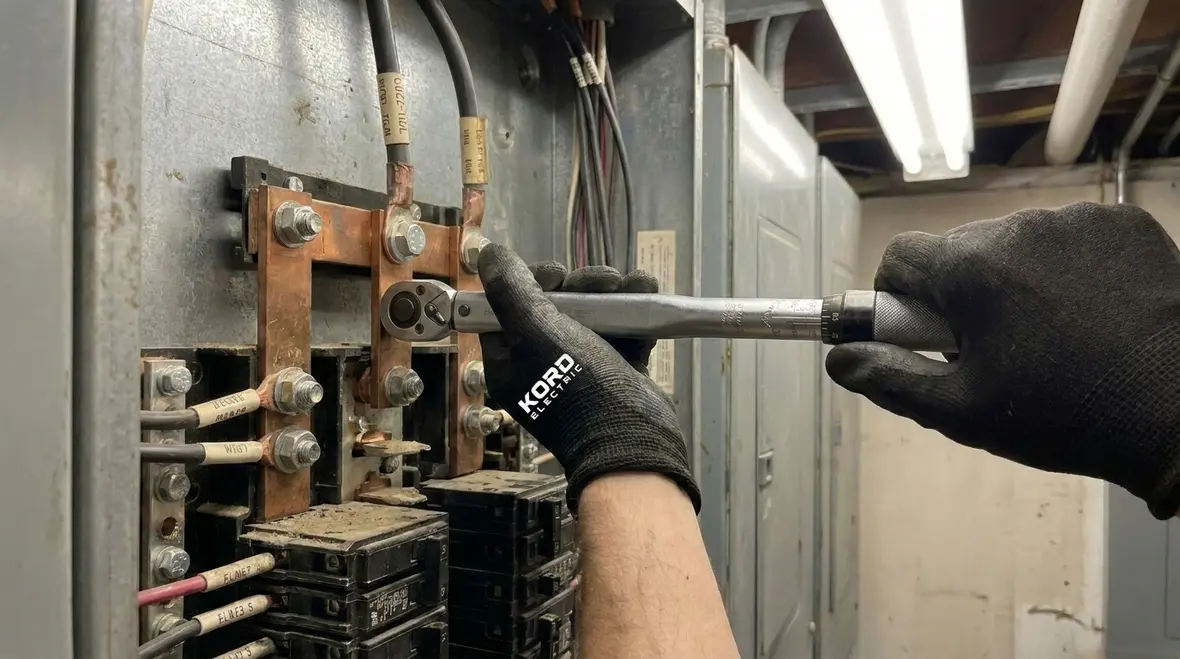
Just as importantly, we inspect terminations and bus connections. Loose or corroded connections create resistance. Resistance turns electrical energy into heat. So, we do not stop at “current looks fine.” We verify that connections stay tight, clean, and properly torqued.
In the end, the goal is steady thermal behavior. When the panel stays within design limits, reliability improves, and the building avoids costly downtime.
Load planning for upgrades, tenant changes, and future growth
Commercial properties never stay still. They add workstations, swap equipment, bring in new refrigeration loads, or install high draw tools. Meanwhile, the original panel may have been designed for a different era.
We help others plan upgrades using real electrical panel load management principles. That means we forecast demand growth and we define what “capacity” means for the full system. We also consider how adding new circuits affects feeder limits, breaker ratings, and downstream device loads.
If the building is expanding, we often recommend a path that avoids repeated panel modifications. Instead of adding random breakers and hoping for the best, we align the project with a staged plan. For example, we may add subpanels, increase distribution sections, or rebalance loads so future additions have room.
And when a tenant change comes with new power needs, we make sure the facility does not just accept the new load blindly. We verify the service impact and confirm that safety systems still work as intended. We are not here for surprises. We are here for stable power.
Preventive maintenance and what our team checks during service
If you want to know why panels fail, look at maintenance history. Our approach follows the same mindset we share through our electrical preventive maintenance work, where we focus on inspection, testing, and correction before issues escalate. You can see the general flow and priorities in our preventive maintenance guidance at kordelectric.com/electrical-preventive-maintenance/.
During our service, we typically review panel condition and performance with a careful, methodical process. We check for loose connections, signs of heat, dust buildup, corrosion, and damage that can compromise insulation or create arcing risk. We also verify breaker operation and examine protective devices for proper function. Then we document what we find and what we recommend, so the property team can act with confidence.
As we perform these checks, we tie the results back to load management. If a panel shows abnormal heat patterns, we do not just label it “maintenance needed.” We connect it to how current is flowing, where it is concentrated, and whether the panel configuration matches the present load reality.
That is how we turn preventive work into real risk reduction, not just a visit and a stamp. Think of it as panel care with a backbone.
Dual line of defense: protection and monitoring that fit real buildings
Some facilities rely on protection devices alone. Others rely on monitoring alone. We like a dual approach, because commercial life is complicated. You need breakers that protect during faults, and you need data that helps you detect problems early.
We help others strengthen protection by confirming breaker sizing, verifying coordination logic, and ensuring that devices match the load type. Then we support monitoring with practical steps such as recording load trends and watching for shifts that indicate changes in usage, equipment health, or wiring condition.
When monitoring shows abnormal patterns, it becomes a trigger for targeted inspection. For example, a sudden rise in current on a circuit might point to a failing motor, a compressor issue, or a mechanical load that drifted out of spec. We can then focus our work where it matters, instead of spreading time thin across the entire panel.
And yes, we keep things business friendly. We explain findings in plain language, so your team understands what changed, why it matters, and what the next step should be.
For facilities already seeing unstable voltage or nuisance trips, pairing this kind of monitoring with targeted services like voltage fluctuation diagnostics for commercial and industrial facilities helps keep sensitive equipment protected and electrical panel load management aligned with real world conditions.
How electrical panel load management supports broader facility plans
In many commercial and industrial settings, electrical panel load management sits at the center of a much larger reliability plan. When panels stay balanced, coordinated, and well documented, everything from rewiring projects to emergency response moves faster and with less guesswork.
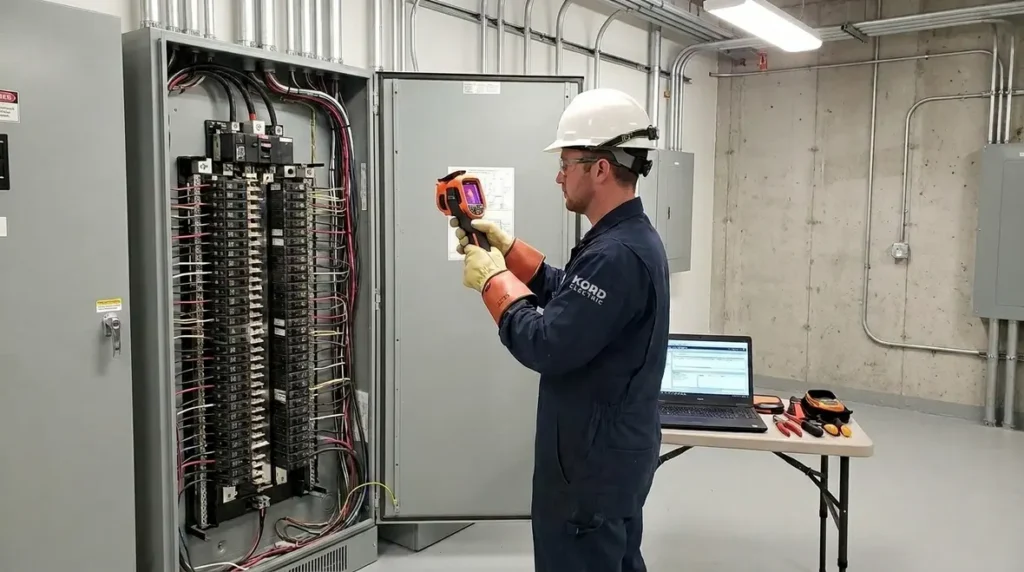
Structured maintenance programs, like those used in dedicated commercial and industrial electrical maintenance plans, often incorporate panel load reviews, infrared scanning, torque checks, and distribution updates into a single roadmap. That way, panel work is not an isolated task. It is part of a repeatable strategy that keeps the whole facility in step with how loads are actually behaving across seasons, shifts, and tenant cycles.
As loads evolve, a disciplined approach to panel configuration also supports budgeting and long term planning. When you understand where capacity is tight, which feeders are nearing their limits, and how much room is left for new process lines or server racks, you can plan capital projects with fewer surprises and more control over downtime windows.
Connecting panel load management to site wide electrical services
Panel performance does not live in isolation. It connects directly to upstream service equipment and downstream circuits that feed lights, HVAC systems, and production equipment. That is why many property teams fold panel work into broader programs like Title 24 lighting checks, outdoor system reviews, and scheduled preventive maintenance that keeps everything aligned.
For large properties, this kind of integrated strategy also pairs naturally with regional support. If your facility is operating across Los Angeles County, aligning panel load management with comprehensive Los Angeles County electrical services for commercial and industrial sites helps keep upgrades, repairs, and inspections moving under one consistent standard instead of a patchwork of one off fixes.
FAQ about electrical panel load management
Final call for commercial and industrial panel reliability
Commercial power demands change. So, we help you stay ahead with electrical panel load management that protects equipment, reduces downtime, and keeps operations calm when demand peaks. Our technicians and expert service staff explain what they find and what it means for your facility, in business friendly terms, not mystery talk. If your building is adding loads, seeing nuisance trips, or running hot panels, contact Kord Electric. We will review your system, recommend next steps, and help you run with confidence.
If you are ready to connect panel load management with a broader reliability plan, our team can align inspections, emergency response, and long term maintenance across your facility. From voltage stability and distribution balance to structured preventive programs, we support commercial and industrial properties that want quieter electrical rooms, steadier operations, and fewer “Why did everything just shut off” moments.
For facilities that need rapid help when issues do surface, we also support load related failures through targeted service offerings, so you are not left searching for a new provider in the middle of an outage. Integrating everyday panel care with responsive commercial support keeps your building prepared, not just hopeful.