Who Can Assess Emergency Power and Standby Generator Compliance
At Kord Electric, we help commercial and industrial facilities, along with major property buildings, protect people, assets, and operations during an outage. And when it comes to Who Can Assess Emergency Power & Standby Generator Code Compliance?, we make the answer clear from the start. We do not guess. We verify. We evaluate systems in the real world, not just on paper, using the National Electrical Code and the practical requirements that building owners face when reliability matters. Because if the lights go out and your generator acts like a “maybe later” customer, nobody wins. Not the owner, not the tenants, and not the facilities team staring at a control panel like it just told a joke in a language it does not speak.
In this article, we explain who can assess emergency power and standby generator systems for reliability and code compliance, what “qualified” really means, and how our technicians and expert service staff handle the work with calm, thorough detail. Others can market fast. We focus on correct.
1. Who can assess emergency power and generator reliability for code compliance?
In our experience, the people who can assess emergency power and standby generator systems for reliability and code compliance must have three things: hands on electrical knowledge, familiarity with emergency power rules, and a methodical way to document results. Therefore, we recommend owners rely on professionals who routinely work with emergency and legally required standby systems in commercial and industrial settings.
When others try to “eyeball” compliance, they often miss the details that inspectors and plan reviewers care about. Next, they may overlook the differences between emergency systems and legally required standby systems, and that gap can turn a simple maintenance plan into a costly fix. Then again, a generator that starts is not the same as a generator that starts and transfers correctly every time.
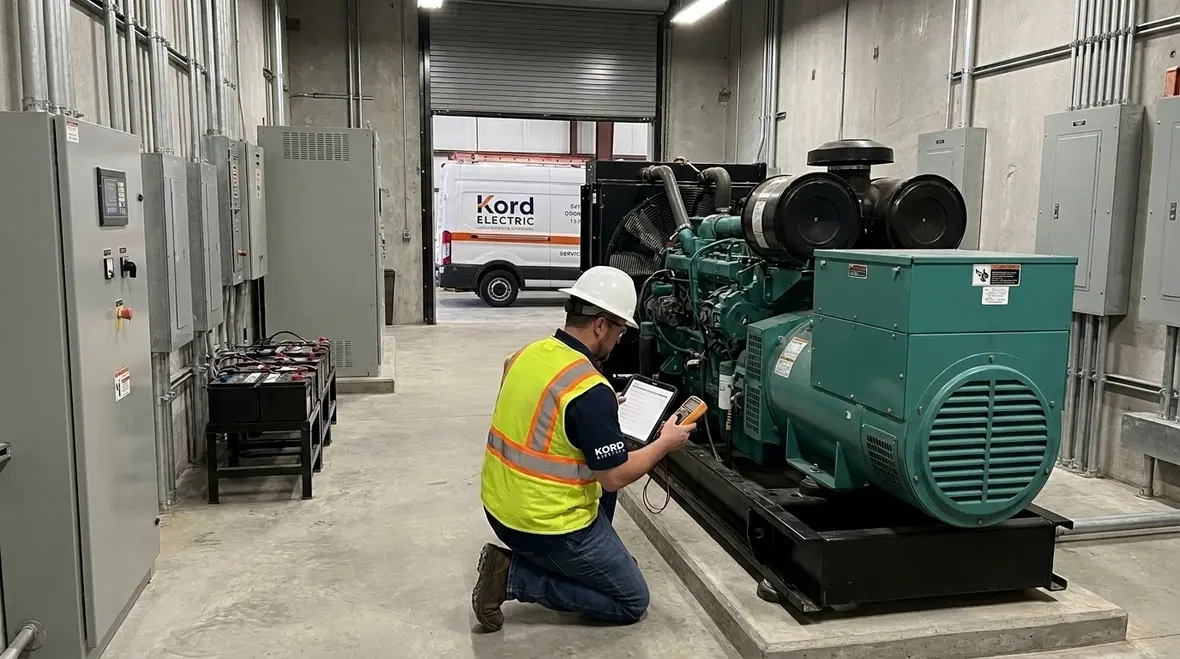
At Kord Electric, our technicians and expert service staff assess systems end to end. We look at electrical components, wiring integrity, transfer equipment behavior, protective devices, and the way the system operates under load. And because code compliance does not exist in a vacuum, we connect our findings to how the building actually runs.
2. Code compliance starts with the right rules, not guesswork
Emergency power requirements change based on the facility type, the system classification, and how the building uses power. We make this easier by applying the NEC framework and the expectations that building owners must meet. In our blog, we outline NEC emergency power requirements for building owners, and we treat those guidelines like the foundation of a real assessment. For a deeper dive into those requirements and how they affect commercial facilities, many property teams review our guide on NEC emergency power requirements for building owners alongside planning resources like our emergency power for business continuity design article in the Kord Electric blog.
For example, the NEC focuses on reliable operation and correct transfer. It also drives requirements for how equipment must respond when normal power fails. As a result, an assessment must check more than nameplate ratings. We examine how the system behaves when it matters, and we confirm the design intent matches what the field actually installed.
Even when a system looks clean, it still needs validation. Over time, connections loosen, controls drift, and loads change due to tenant upgrades. Consequently, compliance is not a one time event. It is an ongoing performance expectation that should tie into your broader reliability planning, including emergency power system testing for commercial buildings and proactive power reliability audits.
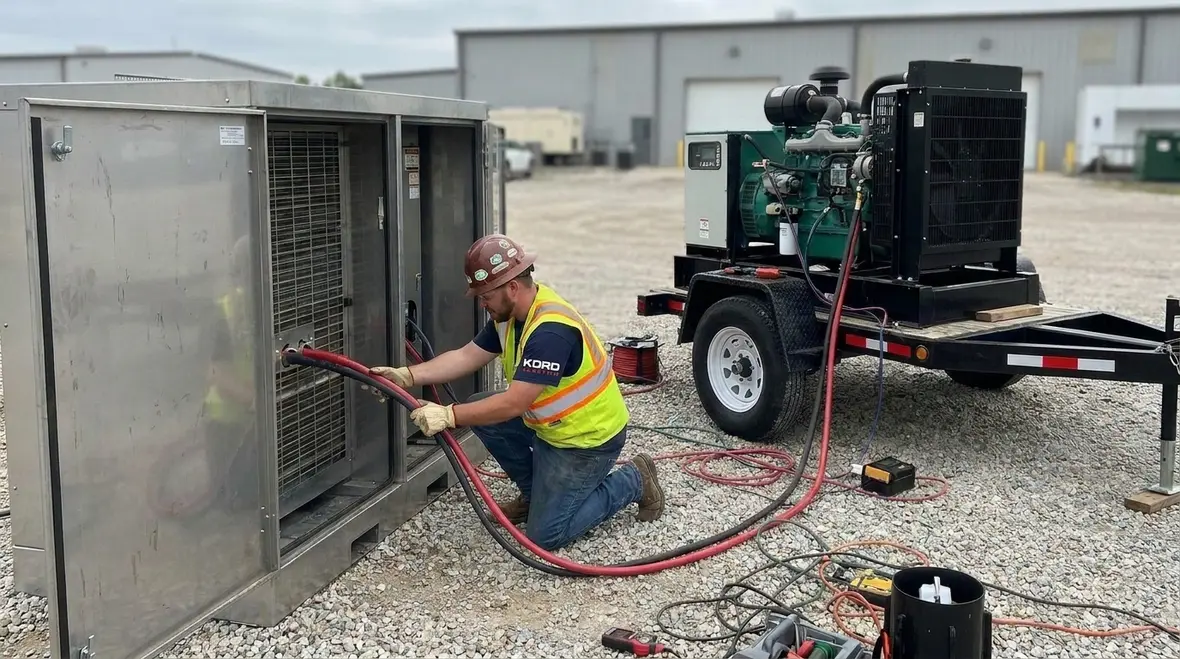
3. What a real reliability assessment includes for standby generator systems
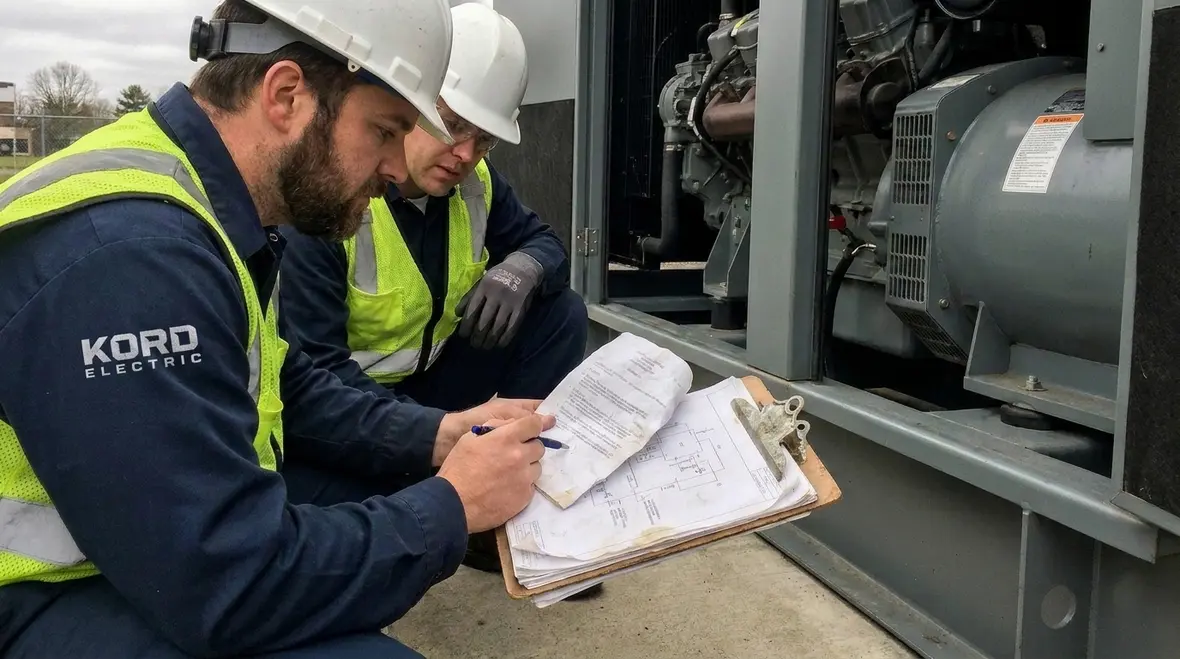
Let’s talk about the work that separates a proper assessment from a casual walkthrough. First, we review system documents and operating history when available, including one line diagrams, transfer switch information, and past test records. Then we inspect the physical and electrical condition of the system components.
Next, we evaluate the system’s transfer and startup performance. We do not treat the generator like a magic box. We focus on the path the power takes, including how the transfer switch senses conditions, how it switches under real conditions, and whether the sequence matches the system design.
After that, we look at the emergency loads and coordination in a way that supports safe operation. If load priority is wrong, the system can start but fail the purpose. And if protective settings drift, nuisance trips can show up right when you cannot afford them. So we confirm the system can carry what it needs to carry.
Finally, we document the results clearly and recommend next steps. We make sure owners can understand what we found, why it matters, and what it takes to bring the system closer to dependable operation. Our goal is calm certainty, not “panic with paperwork,” which some teams unfortunately treat as a service model.
4. Why “qualified” people must handle load, testing, and documentation
Qualified assessment involves more than being able to wire something. It requires the ability to test and interpret results without creating new risks. For commercial and industrial facilities, that matters because emergency systems support critical operations, life safety functions, and continuous business needs.
Therefore, our technicians follow structured test planning and safe procedures. They verify that testing aligns with the system type and the building’s operating constraints. Then, they record outcomes in a way that supports code compliance reviews and internal maintenance planning.
We also explain what the results mean in plain language. Our expert service staff can point to the exact component that behaves a certain way and connect it to the real-world consequence. For instance, if transfer timing is off, we explain how that can affect connected equipment. If voltage regulation shows signs of drift, we show what it could mean under load.
And yes, sometimes owners ask if a generator “just needs fuel.” That is like asking if a sports car “just needs wheels.” Fuel matters, but the system is a whole team. We help owners see the full lineup.
5. Dual column comparison: assessment scope vs typical shortcuts
To keep things simple, here is how a proper assessment compares to common shortcuts we see in the field.
Proper assessment by Kord Electric
We verify transfer and startup performance under conditions that reflect the system design and emergency purpose.
We inspect control devices, protective equipment, and electrical connections for condition and alignment with the design.
We evaluate emergency loads and how the system supports them with correct priority and safe coordination.
We produce clear documentation that supports ongoing compliance and maintenance decisions.
Typical shortcut by others
They focus on whether the generator can start, not whether the transfer and sequence work as intended.
They rely on appearance and skip deeper checks that show up during operation.
They skip load review, even though building use changes after tenant improvements.
They provide vague notes, and the owner still cannot explain results to inspectors or internal stakeholders.
6. Common gaps that hurt compliance and reliability in commercial buildings
Even with a properly installed generator, gaps can appear. First, we often see facility changes without matching updates to emergency power documentation. A new area tenant may add equipment, and the emergency load list may not change the way it should. Then, the system can carry the wrong load set, which undermines reliability.
Next, we see wear and drift. Transfer switches and controls can develop issues over time. Batteries age. Sensors can drift out of spec. Load banks and test practices vary across organizations. As a result, systems may pass a test today and disappoint next quarter.
We also find issues with maintenance records and clarity. When others cannot show what testing occurred, when it occurred, and what was observed, compliance becomes harder and repairs become more expensive. That is why we prioritize documentation as part of the assessment itself.
Finally, we see misunderstanding around system classification. Emergency versus legally required standby systems serve different purposes. If someone treats them as the same, the assessment may miss required expectations. We help owners avoid that trap by applying the right logic to the right system, and by aligning emergency power work with broader planning like commercial emergency power generator planning and emergency power failures analysis.
7. FAQ: code compliance, testing, and assessment basics
When building teams ask, “Who Can Assess Emergency Power & Standby Generator Code Compliance?”, they usually bring a list of follow up questions about testing, load behavior, and documentation. We hear those questions every week from commercial and industrial facilities across Los Angeles County and beyond, so we pulled several of the most common topics into one place.
8. Call Kord Electric for an assessment that owners can trust
When the time comes to verify emergency power readiness, we do not sell hope. We deliver an assessment built on real tests, careful inspections, and clear documentation. Our technicians and expert service staff explain the findings step by step, so your team can make confident decisions. If your building is commercial or industrial, and you want reliability with code alignment, reach out to Kord Electric. Let us evaluate your emergency and standby generator system and map next steps today. Because outages do not wait for “later.”
Property teams that want to connect assessments with a broader reliability strategy can also review related resources in the Kord Electric blog, including power reliability audits for commercial facilities and commercial emergency power generator planning. Those guides help owners see how generator assessments fit into long term infrastructure planning instead of one time projects that fade into a file drawer.
If your facility is in Southern California, it also helps to think beyond a single piece of equipment. Kord Electric’s Los Angeles County electrical services support commercial and industrial properties with panel upgrades, preventive maintenance, emergency response, and project work that keep emergency power systems aligned with the rest of the electrical infrastructure.
And for building owners who want to keep learning, our NEC-focused article on emergency power requirements for building owners is a natural companion to this discussion, giving you additional context on classifications, transfer expectations, and documentation that inspectors expect to see when emergency power and standby generator systems come under review.
When you are ready to move from “we hope the generator works” to “we know how it performs, and we have the records to prove it,” Kord Electric is ready to help. Our team will walk your site, review your documentation, and deliver a practical plan for code conscious, reliable emergency power.