Industrial Smart Lighting Maintenance: Controls, Sensors & Troubleshooting
Industrial Smart Lighting Maintenance: Controls, Sensors & Troubleshooting for commercial and industrial sites
How smart controls shape energy, comfort, and uptime

Kord Electric builds long term reliability into Industrial Smart Lighting Maintenance: Controls, Sensors & Troubleshooting for commercial and industrial facilities and major property buildings. We help others keep lights efficient, stable, and safe by maintaining the systems that make modern lighting “smart” in the first place. And yes, we treat it like more than a bulb swap. Our technicians and expert service staff explain the why behind each step, so your maintenance team does not feel like they are guessing in the dark. After all, nobody wants a lighting system that behaves like a sitcom: confusing at first, then suddenly acting up at the worst possible time.
Others often think smart lighting only reduces electricity use. However, controls do more than that, because they influence comfort, safety, and uptime across large spaces. When we maintain the control side, we protect how occupancy zones respond, how daylight dimming behaves, and how scheduling matches real operations. In addition, strong control maintenance improves commissioning for future expansions, and it reduces the chance that someone “tweaks” a setting and accidentally changes the whole building rhythm.
From the field, we see the same pattern again and again. A site installs smart fixtures, then years pass with partial testing and light system data that nobody fully reviews. Then the building management team notices flicker during shift change or lights that never return to the expected level. At that point, a troubleshooting plan matters, and that is exactly where our technicians step in with clear explanations.
What sensors should report, and why failures hide in plain sight
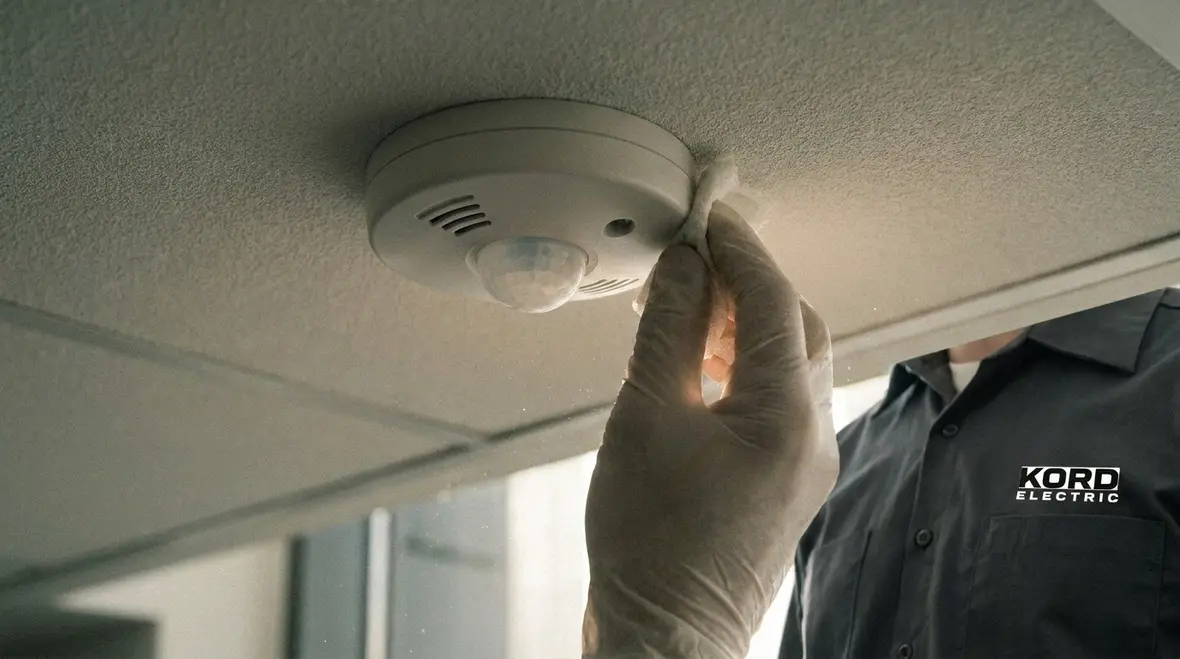
Many facilities rely on multiple sensor types, such as occupancy sensors and ambient light sensors. Yet failures often stay quiet until they cause comfort complaints or higher energy use. For instance, an occupancy sensor can drift over time due to dust buildup, airflow patterns, or changes in furniture layout. Similarly, a daylight sensor can read wrong values because of paint, signage, or nearby reflective surfaces. And when this happens, the lighting system may dim when it should hold steady, or it may stay bright long after a zone becomes empty.
To prevent that, we use our Industrial Smart Lighting Maintenance: Controls, Sensors & Troubleshooting approach to check sensor health, verify detection logic, and validate sensor output against expected building conditions. We also review installation details like mounting height, aiming direction, and coverage overlap between neighboring zones. Think of it like tuning a band: if one mic is pointed slightly off, the whole performance sounds off, and customers hear it first.
Maintenance routines that keep performance consistent
We follow structured routines so your lighting system stays predictable. First, we confirm control logic and time schedules still match your site operations. Then we inspect sensor surfaces and verify signal strength where the system uses wireless components. After that, we test dimming behavior across representative rooms and corridors, because a system can perform well on paper yet drift in the real world.
Our team also documents findings in a way that helps other contractors and facility managers act quickly. Instead of vague notes like “sensor seems weak,” we explain what we measured, what changed, and what we recommend next. Moreover, we plan maintenance around building schedules, so your day shift does not have to endure a lighting event that feels like a rehearsal for a sci fi movie.
Industrial smart lighting troubleshooting when lights flicker or waste power
When a system misbehaves, we start with the least disruptive checks first. If flicker appears, we investigate driver behavior, dimmer compatibility, and control commands traveling through the system. If lights stay on in empty areas, we check occupancy logic, sensor placement, and settings that might have been modified during a network change. And if a zone seems too bright or too dim, we evaluate daylight thresholds, calibration, and potential obstructions near the sensor.
From there, we move to structured isolation. We compare behavior across zones that share a control profile and across zones that have different profiles. Then we check whether the fault follows a control group, a sensor, or a power segment. This method reduces guesswork and prevents repeated visits that cost time and money. In other words, we troubleshoot like professionals, not like people trying to “reset the internet” and hoping the universe fixes it.
Keeping controls and networks healthy at scale
Commercial and industrial buildings often scale smart lighting across large areas, and that is where network health becomes a real factor. We make sure the control system remains stable through firmware checks, configuration review, and validation of device communication. Additionally, we confirm that any integration with building management systems uses correct data mapping, because mismatched points can trigger schedules that look fine but behave wrong.
We also support major property buildings where tenants change, layouts evolve, and operations shift. When those changes happen, smart lighting should adapt rather than stumble. Our technicians help facilities update occupancy zone boundaries, revisit daylight sensor placement when partitions or signage move, and re-check load profiles after renovation. As a result, the system stays aligned with how people actually work, not how the building worked on day one.
Here is the key: smart lighting controls and sensors only deliver savings when the system remains coherent. Therefore, we treat the network and control configuration as part of the electrical system, not an afterthought.
How others can plan Industrial Smart Lighting Maintenance with us
Kord Electric supports Industrial Smart Lighting Maintenance: Controls, Sensors & Troubleshooting through practical planning for commercial and industrial facilities and major property buildings. We align maintenance with facility goals, safety requirements, and downtime tolerance. Then we propose a service schedule that fits your operational calendar.
Because each facility differs, we tailor a plan around your lighting layout, the control architecture, and the sensor density. Also, we focus on action items that reduce downtime and uncertainty for your maintenance staff. You get clear priorities, and our expert service staff explains what we find in plain language so you can make informed decisions.
If you want to see how controls strategy connects to project planning and energy outcomes, you can also read our related piece on industrial smart lighting controls to cut costs, which walks through how smart controls, zoning, and scheduling come together in real commercial and industrial facilities.
Service support comparison for a typical site
|
What we check
|
What you gain
|
FAQ
Ready to protect performance and cut waste
Smart lighting should feel steady, efficient, and dependable, not like a mystery novel you did not ask to read. Kord Electric helps commercial and industrial facilities and major property buildings maintain Industrial Smart Lighting Maintenance: Controls, Sensors & Troubleshooting with technicians who explain every step and document results you can act on. If your system shows flicker, unnecessary runtime, or zone inconsistencies, contact us for a maintenance and troubleshooting review. We will bring clarity to the controls, and calm to your lighting schedule.
For facilities across the region, our team also delivers broader electrical and lighting services that keep systems safe, efficient, and ready for expansion. If you are coordinating upgrades or maintenance beyond lighting controls alone, explore our Los Angeles County electrical services overview to see how panel work, circuits, and system planning can support your lighting strategy.
When you are ready to connect this level of smart lighting maintenance with a wider facility strategy, you can also review more topics on the Kord Electric blog, where we cover industrial lighting control benefits, retrofit planning, and energy management approaches that pair well with ongoing maintenance.