2023 NEC EV Charger Requirements for C and I
2023 NEC EV Charger Safety Rules: What C&I Buildings Must Do First
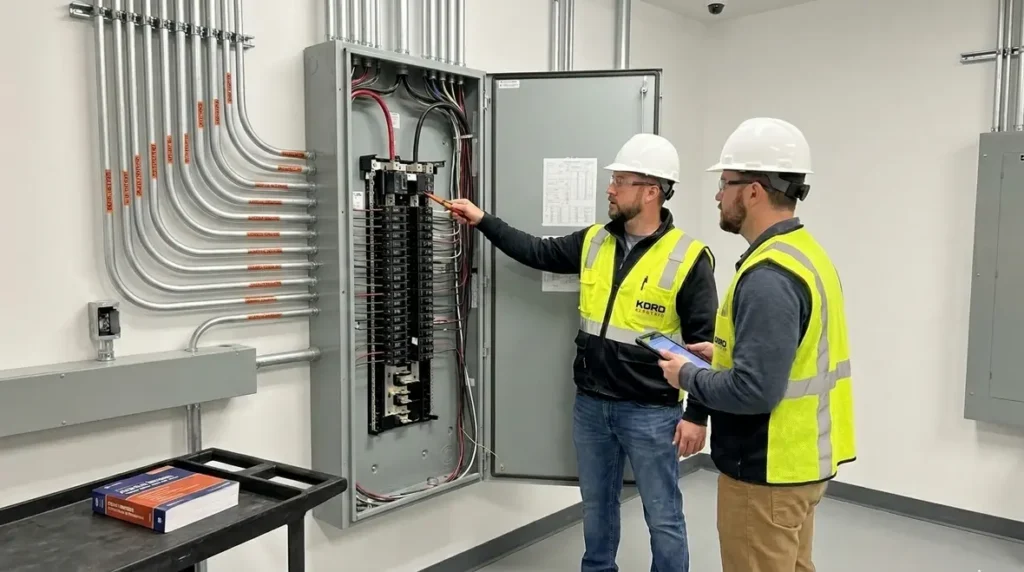
In 2023, the NEC tightened key EV charger requirements to improve electrical safety and reduce shock and fire risks. Early on, we see facility teams ask the same question: “What changed, and what do we have to do now?” In our experience, the answer starts with planning your EV charging installation the right way, because the 2023 NEC EV charger requirements touch wiring methods, protection, overcurrent rules, grounding and bonding, and how chargers interact with the building electrical system. Then, once the design is set, we lean on our skilled technicians and expert service staff to explain what the code means in real jobsite terms. After all, compliance should not feel like decoding a sci fi manual. It should feel like getting the right thing installed the first time.
How Kord Electric Interprets NEC 2023 for Business Charging Installations
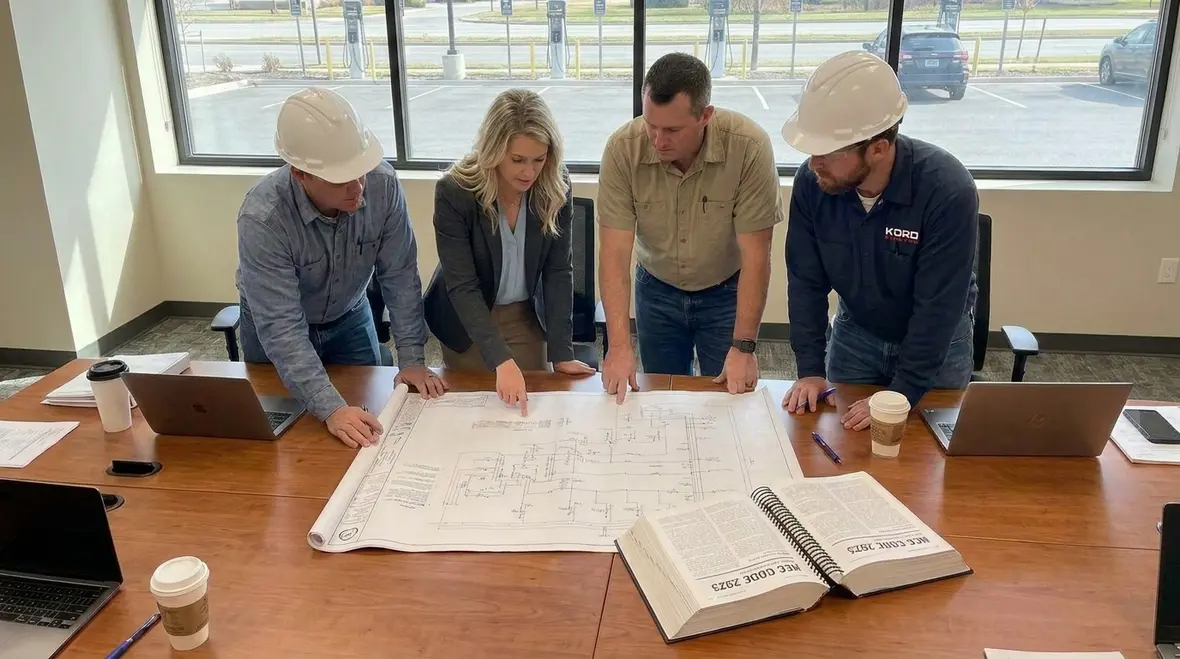
Most commercial and industrial facilities do not want surprises during inspection, and they definitely do not want rework because someone chose the wrong cable, conduit, or protection setup. Therefore, our team approaches each project with a methodical checklist that ties directly back to the 2023 NEC EV charger requirements. First, we review the site layout, the charger locations, and the power source. Next, we confirm the electrical classification of the area and the installation environment. Finally, we map the feeder routing, conductor sizing, and protective devices so the charger system stands up to both day to day loads and fault conditions.
While the NEC language can look dry, we make it practical. Our technicians walk facility managers through the “why,” not just the “what.” And yes, we sometimes use humor to keep the meeting from turning into a PowerPoint marathon. Think of it like this: the code is the safety playbook, and we help your project follow the play.
On top of that, we connect EV projects to the bigger picture of code compliance. Our team regularly works with NFPA 70 updates and evolving safety guidance, so we translate “article and subsection” into real-world decisions about how you route conduit, size conductors, and protect equipment. That way, your EV charging plan fits cleanly into the way your facility already approaches electrical safety and maintenance.
Because many commercial properties are already juggling other upgrades, we also fold your EV planning into your broader electrical priorities. Whether you are addressing hidden electrical risks in commercial buildings, planning voltage stability improvements, or mapping out future expansions, a well-designed EV layout becomes part of a larger reliability strategy instead of a one-off project that strains your infrastructure.
Conduit, Conductors, and Protection: The Parts That Prevent Real Problems
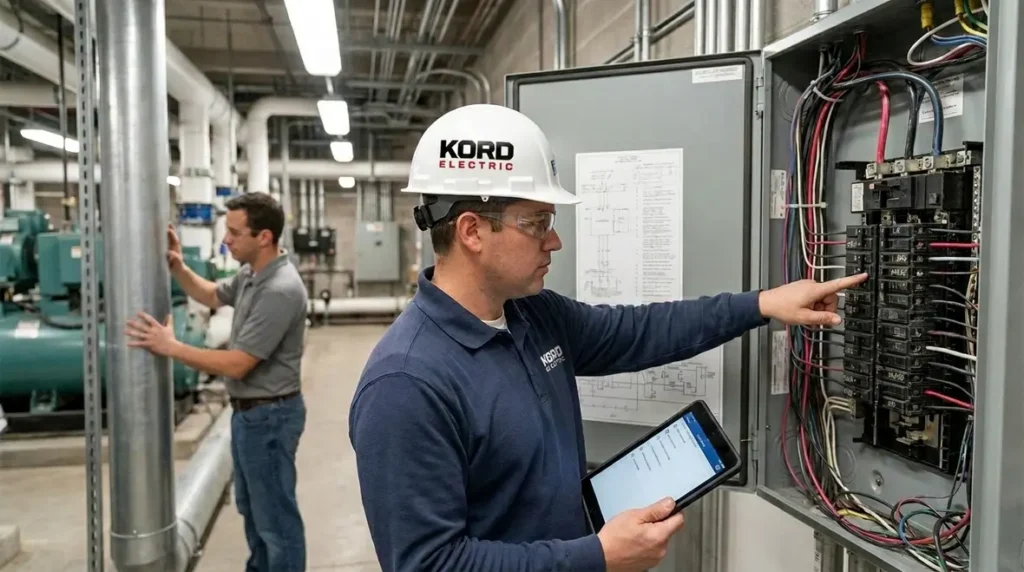
When we discuss electrical safety for EV charging, we focus on the parts that actually prevent failure. That means conduit and wiring that resist damage, conductors that match the load, and protection devices that interrupt faults quickly. In addition, proper routing matters because chargers often sit in locations with vehicle traffic, weather exposure, and maintenance access. So we plan pathways that keep cables safe and serviceable.
Our expert service staff also verifies that the charger circuits use the correct grounding and bonding approach. This step reduces the chance of energized metal parts during a fault, and it helps protective devices work as intended. Moreover, we confirm that overcurrent and equipment protection align with the charger design and the building electrical system. In practical terms, if a fault happens, the system should stop it fast, not just hope for the best. Hope is not a protective device, and we say that with a straight face.
Commercial EV infrastructure also changes the way your distribution system behaves under load. Pulling high current for multiple chargers can highlight weaknesses you already have, such as voltage fluctuations in commercial and industrial facilities or long-standing imbalances between phases. That is why our conduit and protection planning does more than “meet minimums.” We look at how feeders, transformers, and panels respond when chargers ramp up, so you are not trading one hidden problem for another.
For facilities already considering bigger upgrades—such as a rewiring cost guide analysis for commercial electrical systems—we often integrate EV charging feeders into that planning. This helps you avoid running separate parallel projects that each open ceilings and trenches on their own schedule. Instead, you get a coordinated approach that respects both 2023 NEC EV charger requirements and your long-term capital plan.
Grounding, Bonding, and Fault Safety for EV Charging Installations
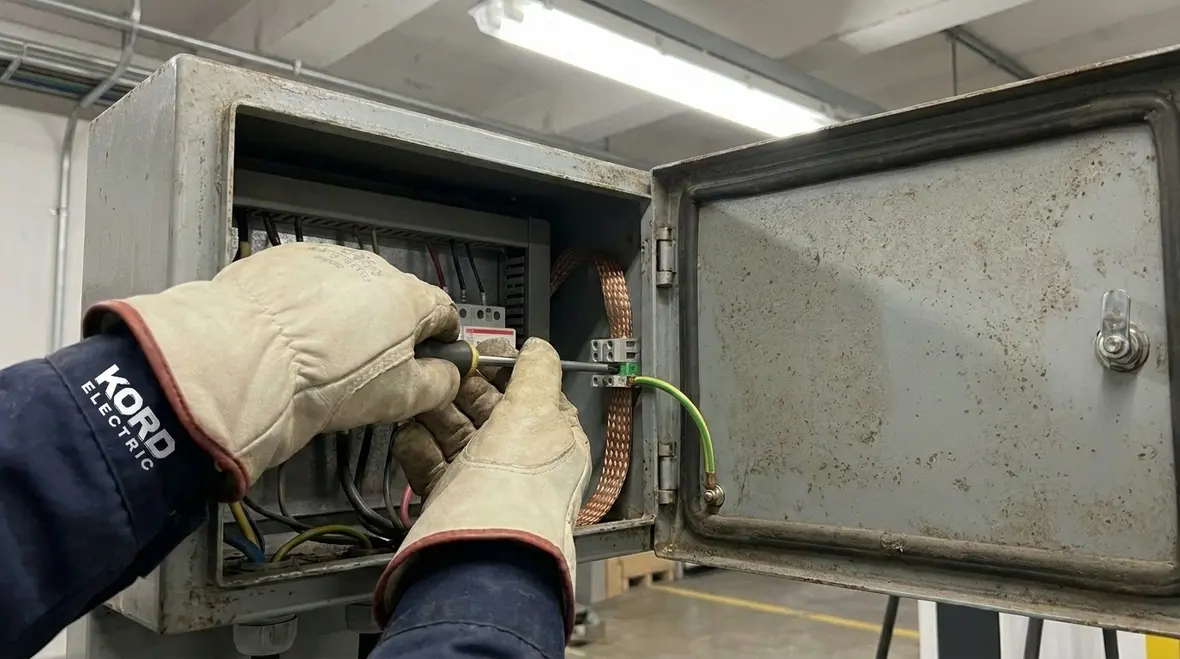
Grounding and bonding may sound like the boring cousin of the electrical world, but it plays a starring role when something goes wrong. For C&I buildings, we treat this step as non negotiable. First, we identify where bonding must occur so metal enclosures and related components stay at a safe reference. Then we verify that the grounding path is continuous and properly connected. After that, we confirm the system design supports safe operation during abnormal conditions.
Because EV chargers connect to power and interact with vehicles, the safety chain must hold. Therefore, we do not just “install and move on.” We check details such as enclosure integrity, cable termination quality, and correct grounding conductor routing. Then, when inspectors ask how a component is grounded, our technicians can explain it clearly, because they built it with that knowledge from the start.
That same mindset shows up in our broader maintenance and risk work. Hidden electrical risks in commercial buildings often trace back to overlooked grounding and bonding issues: paint under lugs, loose terminations, or modifications that quietly broke continuity. By catching those issues early—before EV chargers go live—we help your facility avoid nuisance breaker trips, intermittent voltage problems, and worst case scenarios where exposed metal parts can become energized.
When you add EV infrastructure to a site that already runs 24/7 operations, data centers, or commercial kitchens, the tolerance for fault events drops even further. Integrating 2023 NEC EV charger requirements with your grounding and bonding strategy does more than “pass inspection.” It gives your team confidence that, if a fault happens, it is contained and cleared the way the code intends.
Location and Accessibility: What Inspectors Look For at Commercial Sites

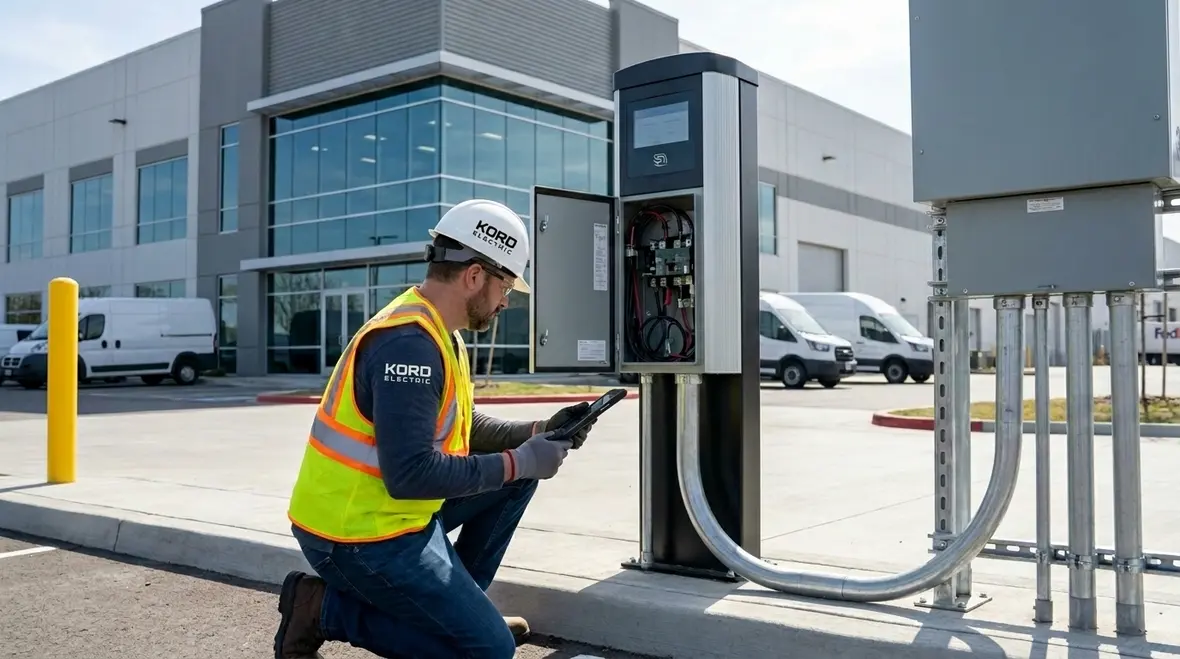
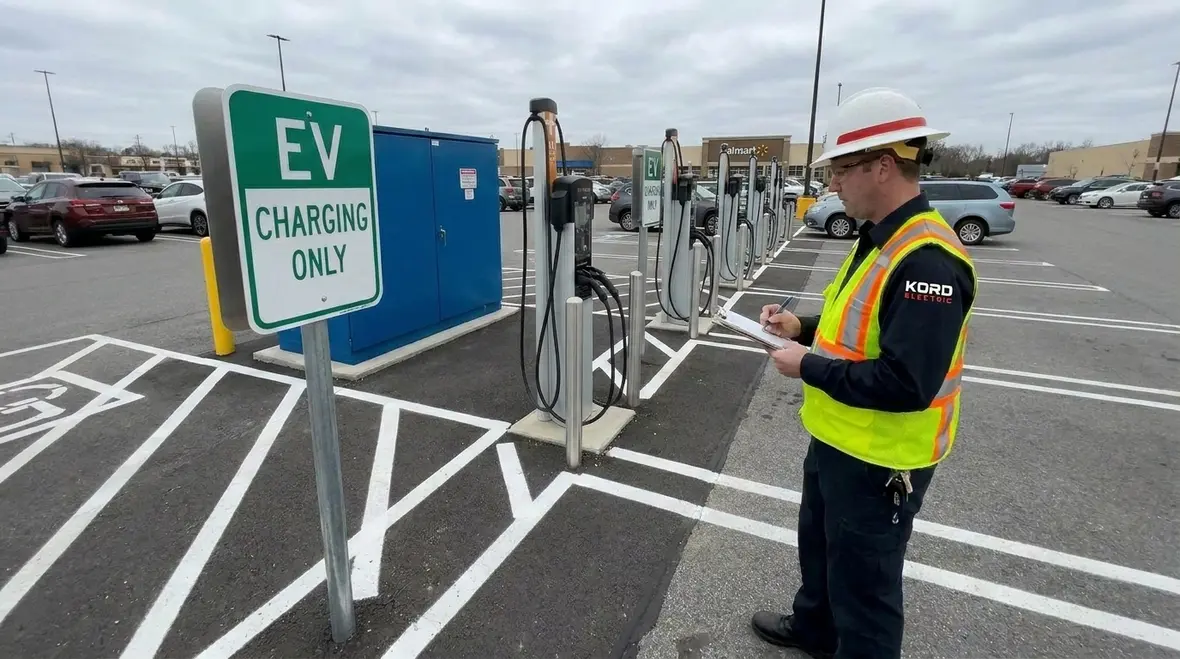
Even when wiring and protection are correct, installation details can trigger inspection delays. For commercial and industrial facilities, we focus on charger placement, clearances, and physical accessibility for maintenance and emergency response. Additionally, we consider whether the charger area has exposure to moisture, dust, temperature swings, or impact risks from equipment and vehicles.
Our team also reviews labeling and operational visibility. Facility staff should be able to identify the charger, understand basic operation, and know what to do during abnormal situations. In many cases, we help owners coordinate signage and access routes so safety procedures remain simple. And since we work with property teams that manage people, deliveries, and vehicle flow, we schedule work so the building keeps running. After all, a charging station that shuts down half the parking lot is not a win. It is a slow-motion complaint.
For larger campuses or multi-building sites, we treat EV placement as part of a wider infrastructure plan. That might mean coordinating with lighting installation services to ensure charger areas are well lit at night, or aligning trenching and conduit work with other projects so you only tear up the parking lot once. By thinking a few moves ahead, we help you avoid the “we just finished paving and now we have to cut it again” problem.
We also keep accessibility needs and emergency paths on the radar. Clear working space around equipment, logical routing for first responders, and intuitive signage all contribute to smoother inspections and safer daily use. When inspectors walk the site and see a thought out layout, discussions about 2023 NEC EV charger requirements become collaborative instead of combative.
Dual Column Breakdown: Common EV Charger Code Items and How We Handle Them
Below is a quick dual column view of what C&I facilities typically ask about, and how our technicians address it in the field.
| EV charging safety focus | How Kord Electric supports C&I installs |
| Wiring methods and routing | We plan conduit and conductor runs for protection, durability, and service access, so cables do not get exposed to damage from the real world. |
| Circuit protection and overcurrent | We size protection devices to match the charger design, so faults interrupt safely and quickly instead of lingering. |
| Grounding and bonding continuity | We verify bonding points and grounding paths so the system maintains a safe electrical reference during abnormal conditions. |
| Equipment setup and enclosure integrity | We check terminations, hardware, and enclosure details so the charger stands up to commercial duty use and inspections. |
| Integration with existing electrical systems | We review panel capacity, voltage stability, and distribution design so EV chargers complement your system instead of overloading weak points. |
| Long-term maintenance and documentation | We provide clear documentation and tie EV charging into your broader commercial and industrial electrical maintenance plans. |
Because many facilities are already thinking about commercial and industrial electrical maintenance plans, we align our EV charger documentation with your preventive maintenance approach. That means panel schedules, load data, grounding points, and equipment details do not live in a random folder that disappears after startup. They become part of a consistent, repeatable program your team and service partners can follow.
Why Expert Service Still Matters After the Installation
Once power gets turned on, some teams treat EV chargers like they are self maintaining, like a robot but with fewer speeches. In reality, chargers still require inspection habits, cleaning routines, and periodic checks to catch issues early. Therefore, we build a maintenance mindset into our support, especially for commercial and industrial facilities that depend on uptime.
Our expert service staff explains what to monitor, such as signs of damage, abnormal indicator behavior, or recurring protective device events. In addition, we help owners understand how changes to the site, like new parking layouts or electrical upgrades, might affect the charging system. And if something fails, we troubleshoot with the original installation logic in mind, not with guesswork.
We also help facility teams connect EV charger care to the rest of their electrical ecosystem. For example, electrical preventive maintenance visits can include checks on charger terminations, infrared scans of feeder connections, and testing of protective devices that support both chargers and other critical loads. Instead of scheduling separate fragmented visits, you get a unified maintenance rhythm.
If your site has already dealt with issues like voltage fluctuations in commercial and industrial facilities, adding EV chargers without a service plan is like bolting new weight onto a bridge you have not inspected yet. By pairing installation with ongoing support, we help you stay ahead of those quiet problems that only show up when usage peaks or when equipment starts aging.
FAQ: 2023 NEC EV Charger Requirements for Commercial and Industrial Facilities
Ready to Meet NEC 2023 Standards Without the Headaches? Call Kord Electric
If you manage a commercial or industrial facility and you are planning EV charging, we help you do it the right way, with safety in mind and code expectations handled from the start. Our technicians and expert service staff explain the details in plain business terms, so your team understands what gets installed and why it matters. Then we support the installation so you can move forward with confidence, not delays. Contact Kord Electric today to plan your compliant EV charging system.
For facilities that want to go deeper, we can also connect your project with related resources on commercial and industrial reliability—whether that means exploring hidden electrical risks in commercial buildings, reviewing a rewiring cost guide for commercial electrical systems, or building out comprehensive commercial and industrial electrical maintenance plans. No matter where you start, we design your EV charging path so it fits naturally into a safer, more resilient electrical infrastructure.
If you are ready to move from research to action, our EV charger installation services give you a direct path from concept to energized chargers, with 2023 NEC EV charger requirements built in from day one.