2023 NEC Code Changes for Commercial Facilities
At Kord Electric, we stay ahead of the paperwork and the power, and the 2023 NEC code changes matter because they touch how commercial and industrial facilities keep people safe and systems reliable. In the first place, the new requirements around panel work push teams to be more consistent with labeling, conductor routing, and the way equipment gets protected and documented. Next, grounding and bonding updates tighten how electrical paths for fault current get planned, installed, and verified. Then, emergency system requirements also receive added clarity, especially around what gets powered, how it gets switched, and how installations stay dependable when normal power does not.
And yes, this is the part where many people say, “We’ll deal with it later.” We do not. While some “later” is harmless, electrical safety is not a Netflix season you can binge next week. Our experts review the intent behind the changes, explain it in plain language, and help others build installs that hold up on inspection and in the field.
Commercial and industrial panel requirements in the 2023 NEC updates
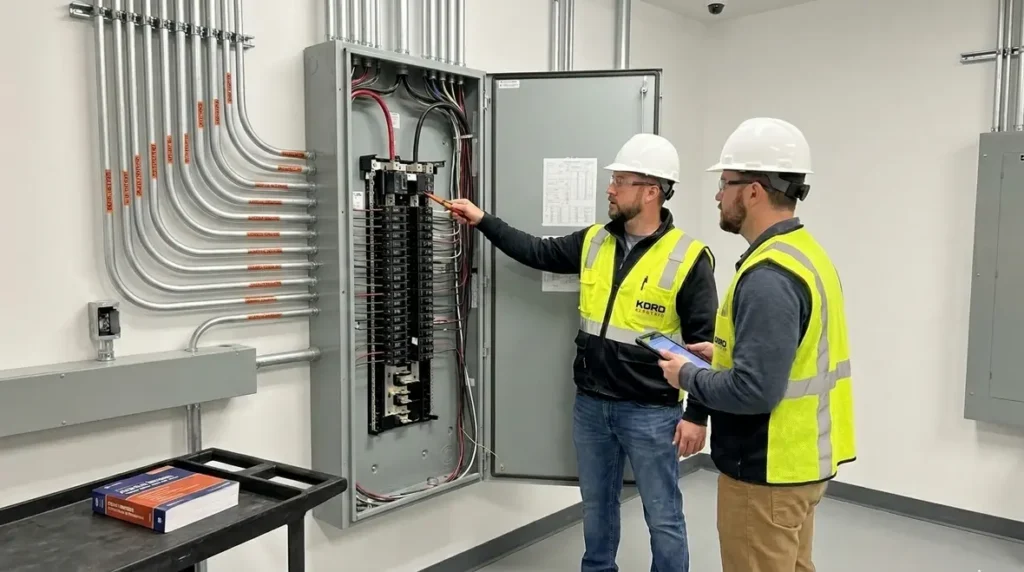
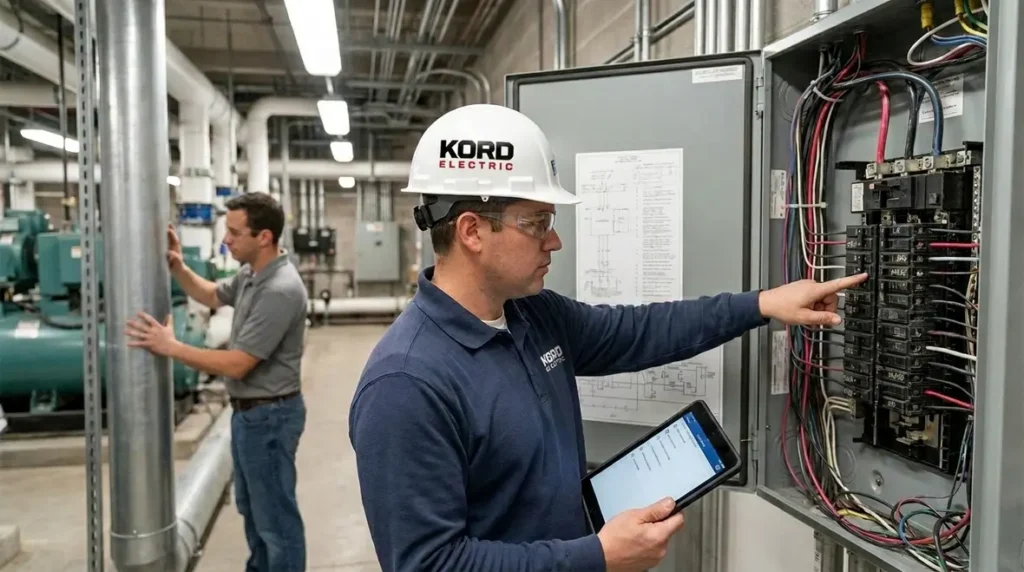
When a commercial or industrial facility asks for panel upgrades, Kord Electric treats the panel like the control center it really is. Therefore, we focus on how the new rules influence the complete installation, not just the final screw or cover plate. In practice, the 2023 NEC updates emphasize consistent installation methods, better identification, and stronger requirements that reduce confusion during maintenance. That matters because maintenance is where good plans either turn into reliable service or turn into long troubleshooting sessions.

Our technicians often explain this with a simple analogy: panels are like building directories. If the signs are messy, nobody finds the right room quickly, and the day gets longer than it should. Similarly, when labeling and circuit identification do not match field reality, facility staff end up guessing, and guessing burns time and money.
At the same time, the changes encourage cleaner organization of conductors and equipment, which improves access and reduces the chance of accidental contact. For commercial sites with shared spaces, multi-tenant buildings, and high load density, small installation discipline can prevent cascading problems. That is why we document what we install, verify terminations, and check how the system behaves under realistic loads.
- We confirm conductor routing supports safe working space and clear access.
- We verify identification matches the as-built conditions.
- We coordinate panel changes with shutdown planning so operations stay stable.
In short, we help building teams meet the 2023 NEC code changes intent: safer panels, clearer documentation, fewer surprises, and less downtime during maintenance. For facilities considering broader infrastructure work, our technicians often connect these panel strategies with larger planning conversations, including projects like full-system rewiring and upgrades that align with long-term reliability goals, similar to the way we approach large commercial rewiring programs in other projects across our portfolio.
Grounding and bonding: why facilities can’t afford “close enough”
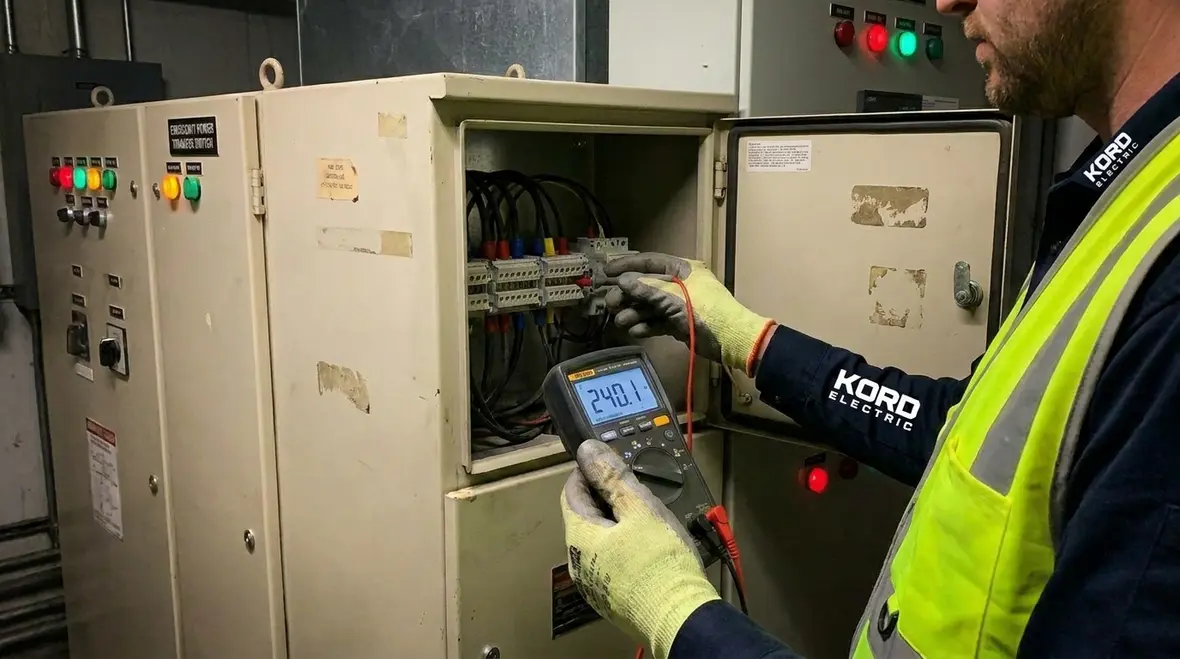
Grounding and bonding is one of those topics people nod through until something fails. Then, everyone suddenly becomes an expert, usually while standing next to a problem that costs more than the training ever would. Under the 2023 NEC updates, grounding and bonding requirements take on added emphasis for how systems maintain fault current paths and how bonding decisions get implemented.
So, what does this mean on the job site? It means we pay attention to continuity, connection quality, and the physical layout that affects how current flows during faults. Moreover, it means we confirm the installation matches the design intent, not just the minimum pass on a checklist. For major property buildings and industrial facilities, even small installation shortcuts can show up later as nuisance trips, noisy signals, equipment failures, or safety concerns.
Our expert service staff often break this down like a story. First, there is normal operation. Next, there is an event, like a short or ground fault. Then, the wiring and bonding do their job by channeling energy safely. Finally, the protective devices operate as expected. If any step gets compromised, the system may not respond the way the facility depends on.
- We verify bonding connections are secure, properly sized, and correctly located.
- We check methods and materials that support long term performance.
- We test and document so owners know what they have and why it is safe.
Because commercial and industrial environments run continuously, we also consider the reality of vibrations, thermal cycling, and future maintenance access. Therefore, we design and install grounding and bonding paths that remain reliable after the first storm, the first upgrade, and the third “quick fix” that nobody wants to admit happened. Grounding and bonding discipline also ties into broader reliability work we perform for clients, such as correcting unstable voltage and nuisance trips so that critical equipment sees clean, predictable power instead of constant fluctuation.
Emergency systems under 2023 NEC requirements: power when it matters most
Emergency power systems exist for one reason: when normal power disappears, people and critical operations still need power. As a result, the 2023 NEC code changes around emergency systems focus on clarity and dependable performance. In the real world, emergency systems often get tested, inspected, and maintained under pressure. If the design or installation details do not align with current expectations, the system may fail exactly when it should perform.
Kord Electric supports commercial and industrial facilities by treating emergency systems as life safety infrastructure, not a side project. We help teams plan for switching behavior, correct classification of circuits, and the right connection methods so the system transitions smoothly. Also, we coordinate with facility managers to keep critical functions running during work.
Our technicians walk through requirements with others on site, explaining how emergency power sources and transfer equipment work together. They also explain what must remain energized and how the system gets verified. And yes, we say “verified” on purpose, because relying on a test that never gets performed is like installing a smoke detector and never checking the batteries. It might look good for a while. Then the worst day arrives.
- We help define the loads that require emergency power based on facility needs.
- We ensure transfer and distribution details follow the 2023 expectations.
- We support commissioning and maintenance planning so performance stays measurable.
When owners understand the workflow and the why behind it, the entire emergency system becomes easier to manage. That is the goal: less guesswork, fewer surprises, and a system that responds as designed. Emergency systems do not live in isolation; they sit on the same infrastructure that handles day-to-day loads, voltage stability concerns, and the kind of hidden electrical risks that can quietly build behind apparently normal operation. Managing those pieces together is how facilities move from “hoping it works” to having documented confidence.
How Kord Electric helps teams meet inspections without drama
Even when the design is correct, the inspection experience depends on how the installation is supported by documentation and process. Therefore, we help commercial and industrial facilities move from “we think it meets code” to “we can prove it meets code.” That shift reduces delays and keeps projects on schedule.
Our expert service staff use a deliberate approach. First, we review the scope and understand the facility’s operating constraints. Next, we translate the 2023 NEC expectations into job site actions, from panel details to grounding and bonding practices to emergency system behaviors. Then, we verify key installation points and prepare the information inspectors need.
We also communicate clearly with building teams and other stakeholders. In many facilities, electrical work touches access routes, life safety devices, and operational workflow. So, we plan shutdown steps, coordinate staging, and keep work areas safe. As a result, facilities see less disruption and fewer last minute changes that nobody enjoys.
Here is what we emphasize during closeout for major property buildings and industrial sites.
- Clear labeling and as-built alignment so future maintenance stays simple.
- Test results and documentation that support grounded and emergency performance.
- Training for facility staff so inspections and routine checks remain consistent.
Does that sound like extra work? Sure. But it is the kind of work that prevents bigger headaches later. If you want to avoid drama, you do not leave the “plot twist” for the day of inspection. You get ahead of it with structured preventive practices, from routine panel checks and load evaluations to more formal programs like electrical preventive maintenance that keep systems stable, documented, and ready for the next review.
Featured snippet FAQ
What to do next when your facility faces 2023 NEC compliance
When a commercial or industrial facility plans upgrades, the smartest path starts with a review, not a scramble. Kord Electric helps others evaluate current equipment, existing installation methods, and planned work so the team can address 2023 NEC code changes in a controlled way. Next, we map the changes to specific project scopes, identify where updates are needed, and build a plan that supports uptime. Then we install and verify with a clear closeout package that supports maintenance and inspections.
As part of that discussion, many leadership teams look beyond a single project and consider the bigger picture: how aging panels, hidden electrical issues, and inconsistent documentation might be affecting reliability overall. Linking NEC-driven upgrades with broader risk reduction work, such as resolving hidden electrical risks in commercial buildings or planning structured electrical preventive maintenance, helps facilities protect both safety and long-term budgets instead of tackling problems one surprise at a time.
If you want reliable electrical systems that meet expectations and stand up in the field, contact Kord Electric. Our expert service staff will walk your team through panel details, grounding and bonding decisions, and emergency system requirements in plain language. We will coordinate work with your operations, document everything clearly, and help you move forward with confidence. Reach out today to schedule an evaluation for your commercial or industrial facility and keep your power where it belongs: on, safely, and ready.
For facilities that want to go a step further, explore how our electrical preventive maintenance programs and other commercial services support compliance with evolving standards while reducing unplanned outages and equipment failures. Aligning your response to the 2023 NEC with a proactive maintenance strategy turns code changes into an opportunity to strengthen your entire electrical infrastructure.