

NFPA 70E Electrical Safety for Commercial Workplaces
At Kord Electric, we work every day with the kind of electrical risk that does not care how busy your day is. That is why we lean on NFPA 70E electrical safety requirements for commercial workplaces as our baseline. In this article, we explain how our expert service staff supports safer work practices in major property buildings and commercial and industrial facilities. And yes, we do it calmly, because the goal is to prevent injuries, downtime, and costly repairs. If you have ever seen an arc flash warning label and thought, “That seems optional,” we are here to gently correct that idea before it turns into a real problem. When we follow NFPA 70E in the field, we translate safety rules into step by step habits your team can actually use.
Commercial job sites need a plan, not luck
Many people assume electrical safety is mainly about wearing the right gear. Gear matters, of course, yet we start earlier. We begin with a work plan that matches the task, the location, and the conditions. Therefore, our technicians treat every job like a small system. We look at the equipment, the job steps, and the surrounding environment before anyone touches a cabinet, breaker, or conductor.
At commercial and industrial facilities, work rarely stays inside neat boxes. A panel sits in one area, but the work scope can include nearby wiring, lighting circuits, motors, and process controls. So we confirm what needs to be energized or de energized, what must stay locked out, and what hazards could show up during testing. This is where safety stops being a slogan and becomes a workflow.
Our expert service staff also helps others understand why the plan matters. We explain in plain language what the rule is trying to stop. Then we point out how a small change, like rearranging tools or changing a test point, can alter risk. In other words, we do not just follow NFPA 70E protocols. We help our customers understand them.
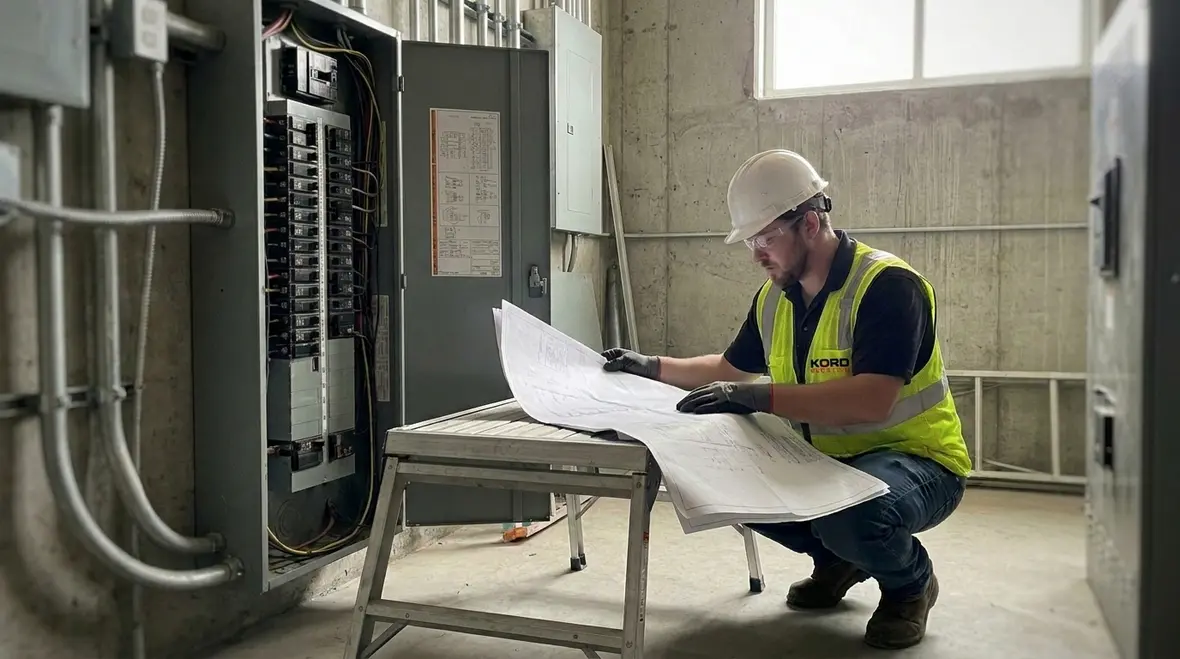
Behind every solid electrical safety plan, there is also a maintenance mindset. When we build job plans, we connect them to the long term health of your system, not just the next task on the list. That is why we often reference related best practices, such as NFPA 70E protocols for electrical hazards and structured inspections that keep your equipment predictable instead of surprising.
How hazard identification shapes the rest of the work
When teams fail, it often happens before the first tool comes out. That is why hazard identification leads the process. Under NFPA 70E, we identify electrical hazards that could cause shock or burns, and we consider both normal and abnormal conditions. We also factor in how likely an event could be, and how severe the consequence would be.
Here is the practical part. We do not treat hazard identification as a one time checkbox. Instead, our technicians connect the hazard to the specific work. If someone is opening a panel, we consider exposed parts, potential energized surfaces, and the chance of inadvertent contact. If someone is working on a motor circuit, we consider energized conductors, stored energy, and the possibility of unexpected starts from controls.
Then we document what we find and what it means for the job. As a result, the rest of the process becomes clearer: what PPE is needed, what approach boundaries apply, and what steps must be taken before anyone proceeds.
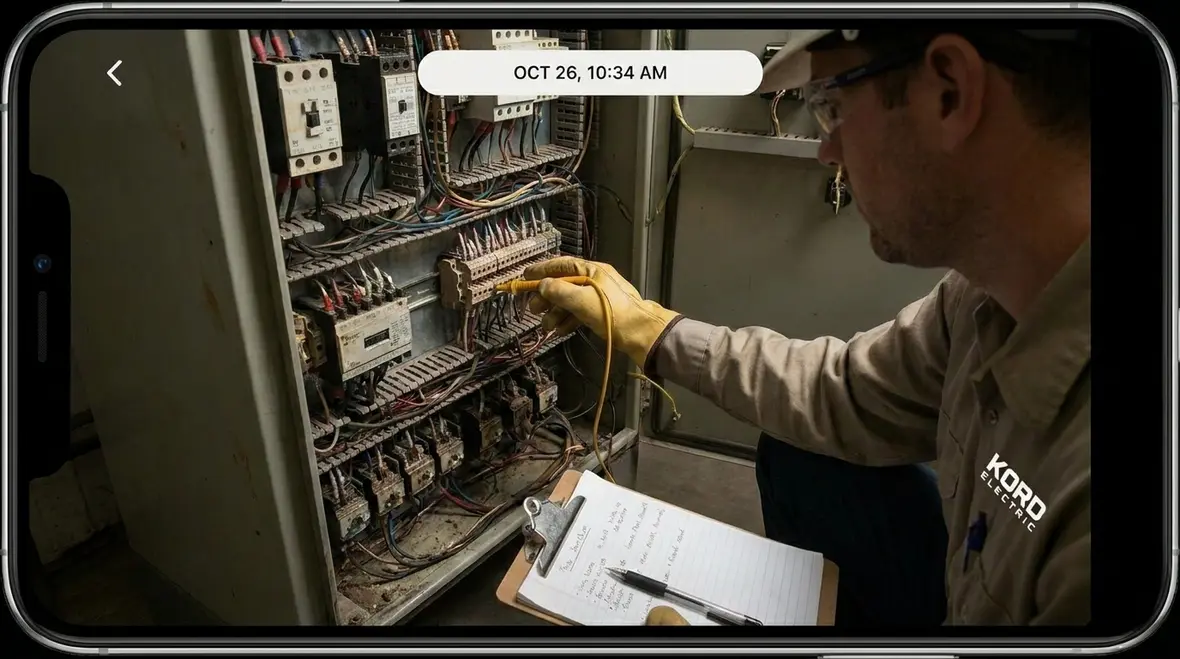
Over time, this kind of disciplined hazard identification changes how teams think. Instead of assuming “nothing has gone wrong before,” people begin to ask better questions: What changed since last time? What is different about this panel, this weather, this process condition? Those questions make it easier to catch hazards early instead of learning about them during an incident report.
De energized work and when energized work becomes necessary
De energized work usually ranks as the safer choice. Therefore, we plan for it first. We confirm the equipment can be safely switched off, and we apply lockout and tagout practices so the system cannot restart while people are exposed. Additionally, we verify that the parts are de energized before contact occurs.
However, in real commercial and industrial operations, there are times when energized work becomes necessary. Sometimes it is the only way to meet a test requirement, or there is no practical way to shut down the process without major impact. When that happens, NFPA 70E forces discipline. It does not allow “because we can” as an excuse. We use a structured decision process and we set tighter controls.
Our technicians explain these trade offs to facility managers. We translate the safety logic into what it means for production schedules. And we keep the tone professional, not dramatic. The goal is to make sure stakeholders understand that energized work carries real risk, and risk requires real controls.
We also align energized work decisions with the broader health of the system. For example, if an energized test reveals recurring performance issues, we may recommend structuring future outages and planned maintenance around that equipment. That way, energized work becomes the exception, not the default shortcut.
Approach boundaries and safe technique for technicians
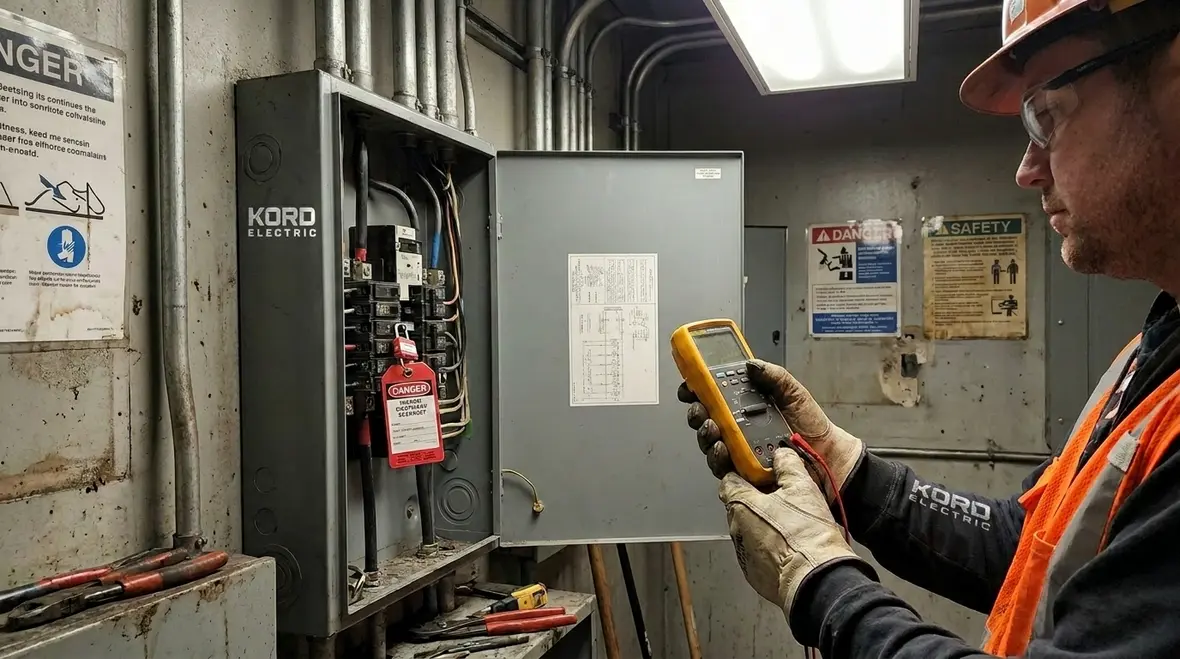
Even when equipment is de energized, people may still work near hazards. That is where approach boundaries come in. Under NFPA 70E, these boundaries help teams understand how close they can work to energized parts. Consequently, the rules guide movement, tools, and body position.
At Kord Electric, we train our technicians to use safe technique, not just safe paperwork. We manage tool handling so conductive tools do not drift into risky zones. We maintain proper footing and clear work areas, because a slip can become a contact event in seconds. We also watch for temporary setups, like ladders or scaffolding, that can accidentally bring people closer than intended.
We also support our customers by explaining what to look for during day to day operations. For example, we show how a partially opened door or a missing barrier changes the layout of risk. Then we show how to correct it before the next task turns into a “surprise.” If you have ever tried to debug a problem at 2 a.m. and wondered who decided that was a good idea, you already understand why we treat boundaries as non negotiable.
That focus on boundaries pairs naturally with other hidden risk controls. When we help customers work through issues like voltage fluctuations in commercial and industrial facilities, we frame those repairs around safe access, clear labeling, and consistent boundary habits. The goal is not just to fix the symptom, but to make sure the next person who opens that panel does so on purpose, with a clear margin of safety.
PPE selection, arc flash, and practical layers that hold up in the field
PPE protects people when hazards cannot be fully eliminated. Yet PPE selection should not be guesswork. Instead, NFPA 70E guides the process through hazard based decisions and arc flash considerations. When we plan maintenance or inspections, we treat PPE as part of the work method, not a random add on.
Arc flash risk can be driven by equipment type, fault clearing time, and system characteristics. Therefore, our technicians focus on getting the details right, especially when facilities rely on critical systems. We help teams understand what PPE categories mean and how protective clothing, face shields, and insulated tools work together as a system.
We also emphasize fit and usability. PPE that is uncomfortable gets adjusted, and adjusted PPE can fail to perform. So we choose PPE that technicians can wear and use correctly. Then, we reinforce safe behaviors. For instance, we train staff to keep PPE on during relevant tasks, and we teach what to do when conditions change.
To keep this grounded, our approach connects with the way we manage maintenance and inspections. When we support electrical maintenance inspection services, we help identify conditions that can increase hazard risk, such as degraded insulation, loose terminations, damaged components, and inconsistent labeling. When you reduce risk factors early, the job gets safer and the PPE burden can become more accurate, not more stressful. For many customers, that work ties directly into structured programs like electrical preventive maintenance, where recurring inspections and testing lower the odds of unpleasant surprises.
We also help connect PPE decisions to the stories your equipment is already telling. If we see repeat signs of heat, nuisance tripping, or unexplained wear, we raise the issue before someone stands in front of that gear in full arc rated clothing. The point is to align PPE categories with real system behavior, not wishful thinking.
Electrical panel maintenance and inspections that reduce hazard over time
Safety is not only about the moment of work. It also depends on what you find when you open panels and cabinets. Therefore, we recommend a maintenance rhythm that supports safe operation and predictable conditions. In major property buildings, equipment often runs under continuous demand, and that can wear components faster than people expect.
Our work on electrical panels focuses on keeping conditions stable. We inspect for overheating signs, check terminations, verify labeling, and evaluate the condition of breakers and bus connections. Additionally, we confirm that protective devices perform within expected behavior. When we detect issues, we address them before they grow into shutdowns or unsafe states.
As we do this, our expert service staff explains what changes mean for safety. For example, a loose connection can raise temperature and increase risk during future tasks. A worn component can also affect fault behavior, which can raise arc flash risk. So we link maintenance findings to the hazards teams face during NFPA 70E based work.
This is also why we reference our protocols and workflows. Our customers can review the NFPA 70E protocols we use for electrical hazards, and they can understand how we turn those requirements into actions. Then, they see the same approach reflected in our inspection and maintenance work, because safety should not be a different language depending on the day. For a deeper dive into how those protocols play out across industries, resources like the NFPA 70E electrical hazard guide can be a helpful reference alongside our on site services.
In many facilities, regular panel inspections become the backbone of a wider risk reduction strategy. When panels are labeled, clean, and documented, it becomes much easier to plan safe work, justify outages, and keep leadership informed about the real condition of their electrical backbone.
Using NFPA 70E protocols effectively across teams
One of the biggest issues in commercial workplaces is inconsistency. One crew follows safe steps, while another crew treats them like a suggestion. That creates risk. Therefore, we help facilities standardize how electrical safety requirements work across teams, shifts, and vendors. We also make sure your internal staff understands the “why,” not only the “what.”
We support training and communication in a business friendly way. Our technicians explain the safe method, then we walk through the job steps together so people can see how the protocol applies. We also align documentation with actual field practices, so the paperwork reflects the work, not the fantasy version of it.
Then we coordinate with facility leadership about boundaries, PPE expectations, and maintenance schedules. When teams share the same safety logic, fewer surprises show up. And frankly, fewer surprises feel like a miracle in facility operations, where the only thing that should move fast is a conveyor belt. If something else moves fast, like an arc flash event, we would prefer it never shows up at all.
This is also where broader facility planning comes in. When we talk with owners about topics like hidden electrical risks in commercial buildings or long term distribution design, we fold NFPA 70E into the conversation instead of treating it as an afterthought. The result is a safety program that feels consistent from the service entrance all the way out to the last motor load.
FAQ
Ready to make safety consistent in your facility?
If your commercial or industrial facility needs dependable electrical safety support, we are ready. At Kord Electric, our technicians and expert service staff apply NFPA 70E electrical safety requirements in real-world workflows, and we back it up with panel inspections and maintenance that reduce hazards over time. Let us review your maintenance approach, electrical panel conditions, and job planning methods. Then we will help you build a safer routine for your people and your equipment. Call us today and let us make safety feel steady, not stressful.
If you are also planning broader upgrades or infrastructure changes, our team can align NFPA 70E practices with services like electrical preventive maintenance programs and other commercial electrical services. The goal is a single, integrated safety approach that supports inspections, upgrades, troubleshooting, and day to day operations without sending mixed messages to your crews.
For facilities that want to go even further, we can connect NFPA 70E electrical safety planning with targeted service offerings such as voltage stability corrections, commercial lighting improvements, or specialty systems. When the same team that maintains your panels also understands your production priorities, it becomes much easier to build a reliable long term roadmap instead of reacting to the next outage.


