
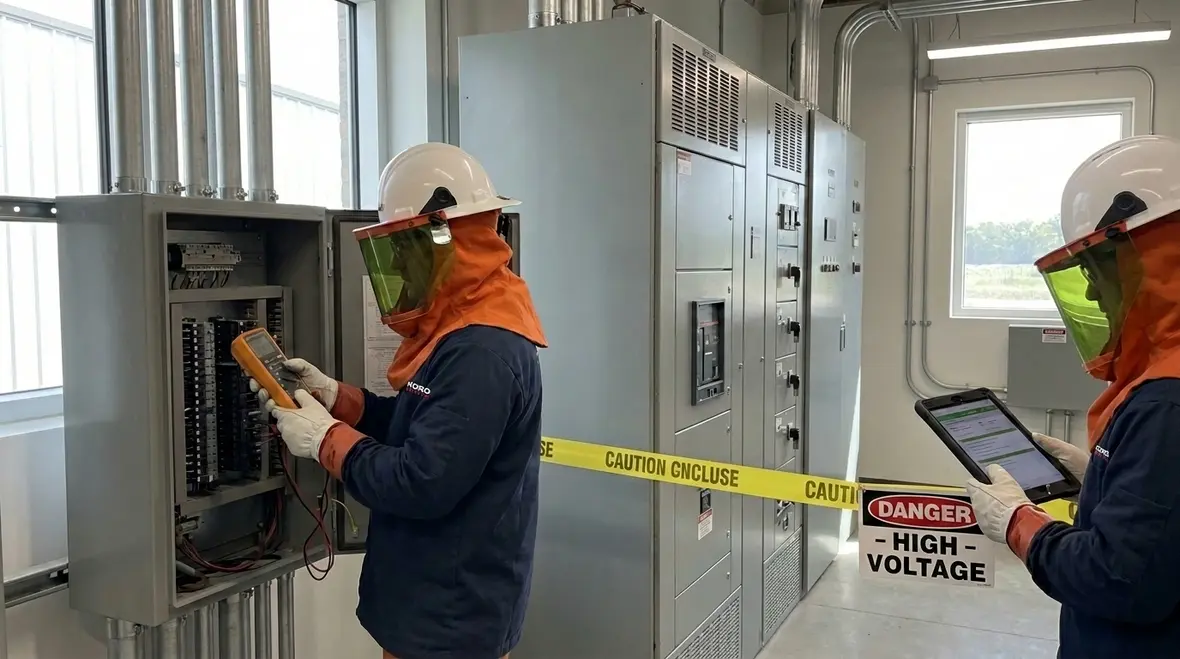
NFPA 70E Electrical Hazards and Safety Controls
At Kord Electric, we take NFPA 70E electrical hazards seriously, because those risks do not care how busy your day is. They show up in the form of shock, arc flash, and arc blast, and they can turn a normal maintenance task into a serious incident in seconds. NFPA 70E exists to help workers make smarter choices before energizing equipment, and it guides the steps that keep people safer. Now, we do not just quote a standard and hope for the best. Our expert service staff explains the “why” behind the rules in plain business language, so your teams can plan work with confidence and stay protected.
What NFPA 70E electrical hazards look like in real workplaces
In commercial and industrial settings, electrical hazards usually show up where people least expect them, like inside aging switchgear, in panelboards with past repairs, or at connections that have been opened and closed more times than a game console controller. NFPA 70E electrical hazards matter because the harm is not only about whether a person touches something live. It is also about the energy that can flash, blast, or arc through the air when conditions line up.
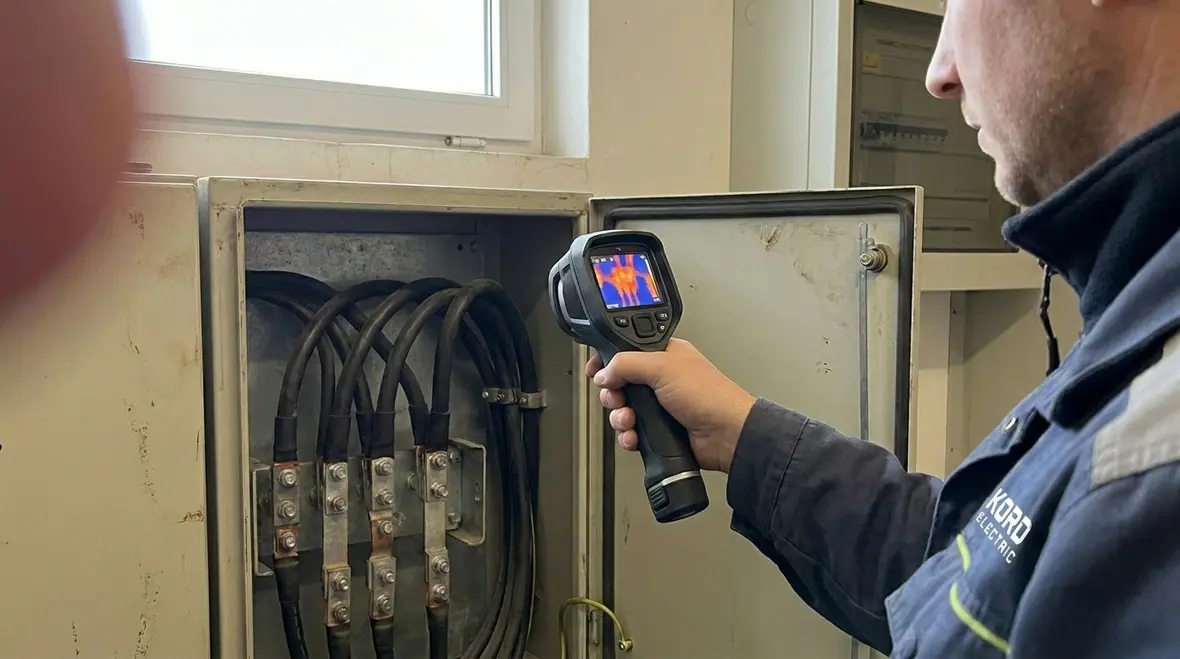
Here is how our technicians describe it when they train facility teams. First, shock risk rises when a person can become a path to ground or when insulation fails. Second, arc flash risk rises when fault energy feeds an arc and the available incident energy is high. Third, arc blast risk increases when an arc event releases explosive pressure, which can throw debris and cause injuries beyond burns. Then there is the common workplace twist: equipment may look “off,” but it can still be energized due to upstream sources, stored energy, or misapplied lockout steps. In other words, “turned off” does not always mean “safe.”
How our team applies NFPA 70E electrical hazard controls
We apply NFPA 70E in a practical way, not as paperwork for the sake of paperwork. Our process starts before anyone touches equipment. Then we build safe work around what the job truly requires. As our expert service staff often explains, the goal is to reduce risk in layers, because one control rarely works alone.
Below are the controls we emphasize for commercial and industrial facilities and major property buildings.
- Job planning: We confirm what work must happen, what equipment is involved, and what energy sources exist.
- Safety boundaries: We set up limits so people do not drift into danger zones during testing or troubleshooting.
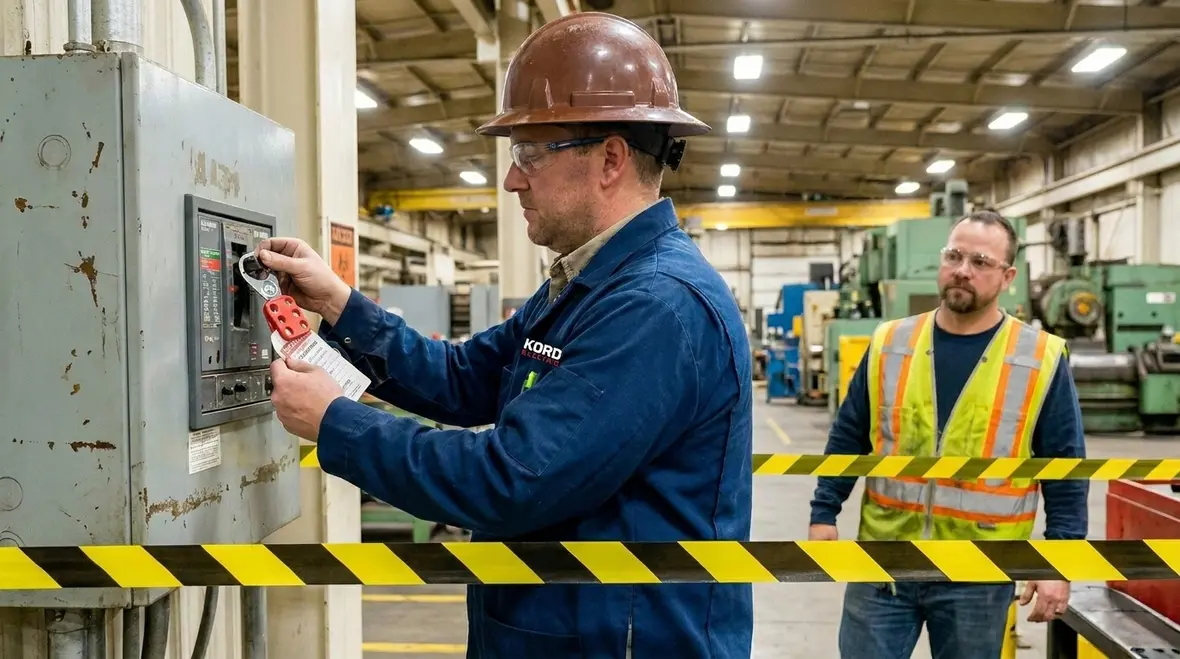
- Energy control: We use lockout and tagout steps to control sources before work begins.
- Verification: We confirm the equipment condition with proper test procedures, not with a quick glance.
- PPE selection: We match protective clothing, face shields, and gloves to the hazard level and the task duration.
- Tools and methods: We use insulated tools and safe procedures to prevent unintended contact.
And yes, we know people sometimes treat safety checks like a routine they can skip, the same way someone “skips leg day” and then acts surprised later. We do not let that happen here. Instead, we help teams follow a process that makes safe work repeatable, even when schedules get tight.
Electrical maintenance inspection services that prevent unsafe surprises
When facilities plan electrical work, the smartest move is to reduce the need for emergency fixes. That is where our electrical maintenance inspection services come in. We support commercial and industrial clients with inspection work that helps identify weak points before they become hazards.
Our technicians focus on practical findings: loose connections, signs of overheating, damaged insulation, abnormal wear, and aging components that can change how energy behaves during a fault. Next, we review what we find and translate it into clear maintenance actions. Then we help the facility team plan work so they can schedule safe shutdowns, coordinate access, and set up the right PPE boundaries based on the task.
In a facility, the “surprise” is often the reality that a panel or feeder has been modified over the years. One upgrade here, one replacement there, and suddenly the label on the door does not tell the full story. So we verify, document, and update the maintenance understanding. That reduces guesswork. And less guesswork means fewer risky steps.
For facility leaders who want to go deeper into proactive electrical care, we also recommend reviewing Kord Electric’s dedicated page on electrical preventive maintenance services and Kord Fire’s guide to NFPA 70E protocols for electrical hazards for additional perspective on long term risk reduction.
Risk assessment, arc flash study, and what technicians tell teams
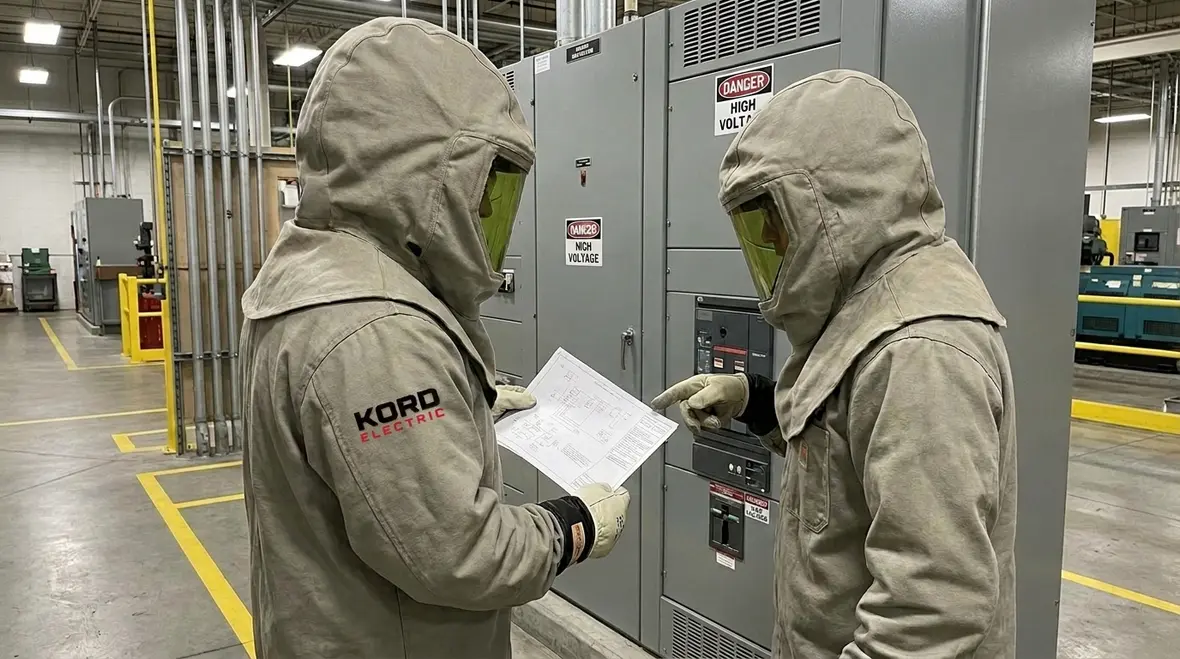
We tell facility leaders that risk assessment is where safety turns from theory into real decisions. A well run process identifies the task, determines the likely hazard conditions, and sets requirements for approach boundaries and PPE. For many commercial and industrial sites, an arc flash study or equivalent evaluation supports that planning, because it helps estimate incident energy and guides safer selection of protective equipment.
Our expert service staff explains this without the fog. We walk clients through what the assessment means for daily work: when a job can proceed with reduced risk, when additional controls are required, and when equipment work should happen only with strict boundaries. Also, we highlight how small changes can shift the hazard picture, such as changes in system configuration, protective device settings, cable routing, or equipment condition.
Think of it like a weather report for electrical work. You can still drive in light rain, but when the storm line shows up, you adjust your route and slow down. NFPA 70E electrical hazard controls do the same thing. They help teams avoid “driving blind” in energized areas.
Training and procedures that keep NFPA 70E from becoming a binder decoration
A standard on a shelf does not protect anyone. Procedures protect people, and training makes procedures work in the real world. We help organizations build practical training habits around safe work practices and task planning. Our technicians also reinforce the idea that electrical work is not a solo sport. When teams coordinate, verify, and communicate, they cut confusion and reduce unsafe behavior.
In many facilities, we see the gaps in two places: first, during switching and troubleshooting, when people move faster than the process; second, during maintenance after modifications, when work teams assume the system stayed the same. Therefore, we encourage a simple habit: before starting a task, confirm the scope, the energy sources, the safety boundaries, and the verification steps that apply.
And because we like a little humor when it helps, we say it this way to teams. “If the procedure looks boring, that is normal. Safety is not here to win awards. Safety is here so you get to win the next shift.” Then we back it up with clear instruction and hands on guidance.
Documenting hazards and tracking improvements at your facility
Safety becomes stronger when teams track what they learn. We help commercial and industrial facilities document electrical hazard evaluations, inspection results, corrective actions, and training updates. That matters because equipment changes over time. Protective devices get adjusted. Components get replaced. Buildings get expanded. When documentation stays current, the next maintenance visit starts with accurate context instead of guesswork.
We also emphasize action tracking. For example, if inspection work finds overheating at a connection, the fix should not stop at replacing a part. The facility should also address the root cause, like torque issues, connection cleanliness, or load factors. Then it should update maintenance planning so the same weakness does not reappear. This is how we turn one repair into long term improvement.
In the end, this approach supports safer operations and helps management understand what controls reduce risk the most. It also keeps compliance efforts grounded in what the facility actually does, not what it hopes it did.
FAQ
Final thoughts and next steps with Kord Electric
At Kord Electric, we help commercial and industrial teams treat NFPA 70E electrical hazards like a real operational standard, not a formality. Our technicians and expert service staff explain the controls in plain language, then we support your facility with electrical maintenance inspection services and practical safety planning. If you want safer work, fewer surprises, and better documentation that holds up during real tasks, contact Kord Electric today. Let us help you move from “we hope it is safe” to “we know it is.”
If your facility is experiencing urgent issues or you want a partner ready when something goes wrong, you can also explore Kord Electric’s emergency electrical services, which align with the same NFPA 70E mindset: stabilize hazards quickly, restore safe operation, and document what needs to change so the problem does not come back.
For ongoing operations, pairing strong NFPA 70E electrical hazard controls with a structured maintenance strategy and clear emergency response plan gives your teams a much stronger margin of safety every time they open a panel or approach energized equipment.


