
NFPA 70E Compliance Checklist for Electrical Maintenance
Electrical work in commercial and industrial facilities never stays simple for long. Someone always wants “just one quick fix,” and the equipment always reminds us that speed is not a safety program. That is why a strong NFPA 70E compliance checklist matters, and we build ours to support electrical maintenance teams from the first step to the last verification. In the first moments of our planning, we align risk controls, protective boundaries, and task planning with the NFPA 70E compliance checklist so technicians can work with fewer surprises. And yes, we also teach that the checklist is not a paperwork hobby. It is the path to safer energized work decisions, safer maintenance, and clearer accountability.
How electrical maintenance teams use an NFPA 70E compliance checklist
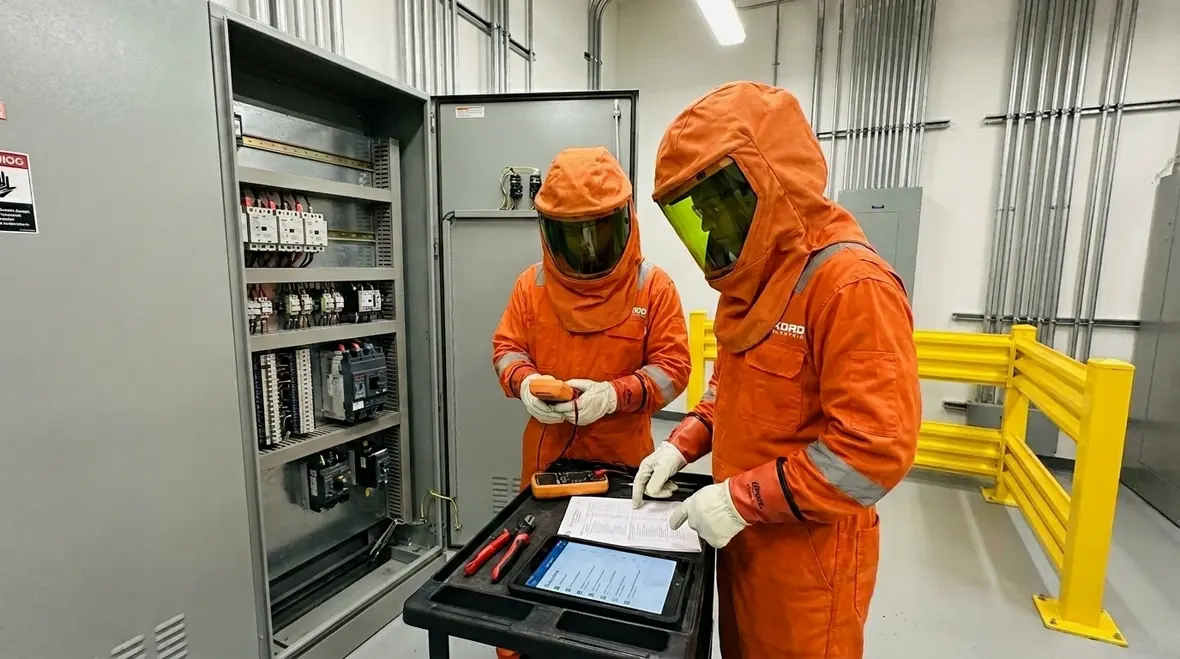
Others may treat safety documentation as a binder on a shelf, but our technicians treat it like a tool bag. They use the NFPA 70E compliance checklist to confirm that each maintenance task has a defined scope, the correct PPE level, and an energized work justification when needed. Then, before any cover comes off, we verify the system state and the work boundary.
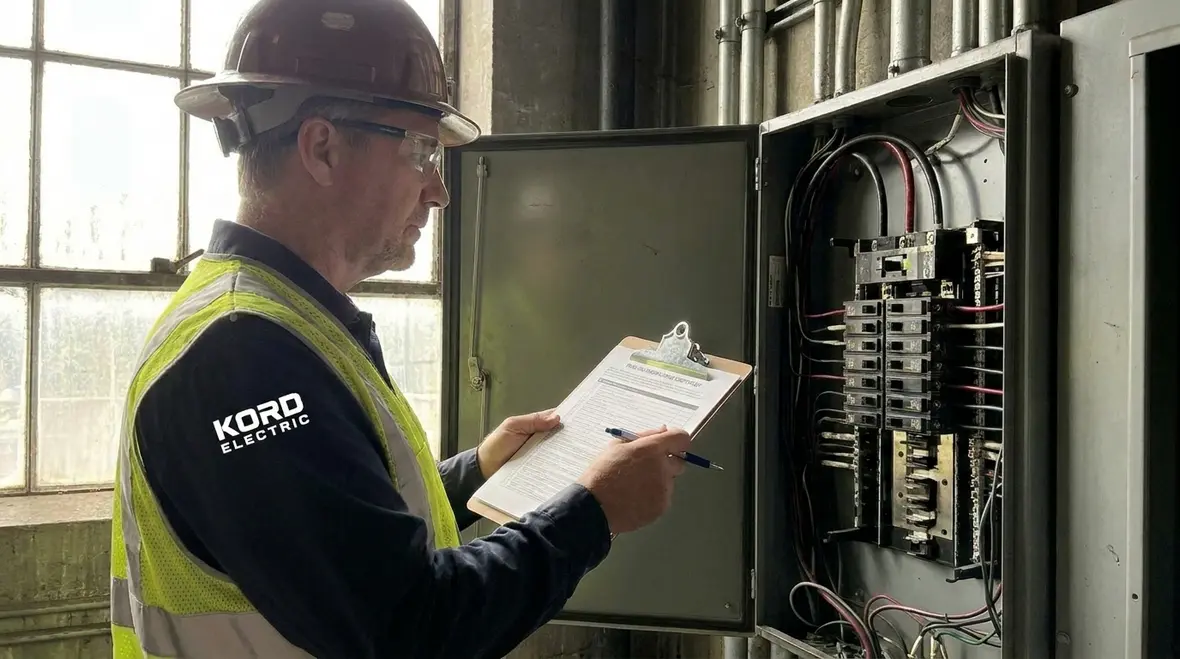
So, the checklist starts with the task and ends with the outcome. First, our expert service staff asks what is being serviced, what could fail, and what hazards exist at the moment of maintenance. Next, we match controls to the hazard, not to what is “convenient.” After that, we confirm training, tools, and work procedures. Finally, we record what changed, what we observed, and what we verified after the work.
When you do this in commercial and industrial environments, the benefit is real. You reduce guesswork during energized troubleshooting, you standardize how teams handle similar work, and you make it easier for supervisors to audit decisions.
This is also where an NFPA 70E safety protocol framework works hand in hand with a practical NFPA 70E compliance checklist. Together, they give your maintenance team a clear way to translate policy into field-ready actions that protect people and keep work moving.
Task planning that prevents the “oops moment”
When maintenance teams do not plan tasks, the field usually plans them for them. That is where many failures begin. We help our clients build task planning that covers more than a few lines in a work order. Our approach starts with the operating conditions. Then we review where the energy lives, how it can return, and what parts could energize unexpectedly.
Next, we focus on shock and arc flash risk controls. We identify boundaries and choose methods that reduce exposure. After that, we set up safe work practices such as verifying de energization when appropriate, using insulated tools correctly, and keeping covers and barriers in place whenever the task allows.
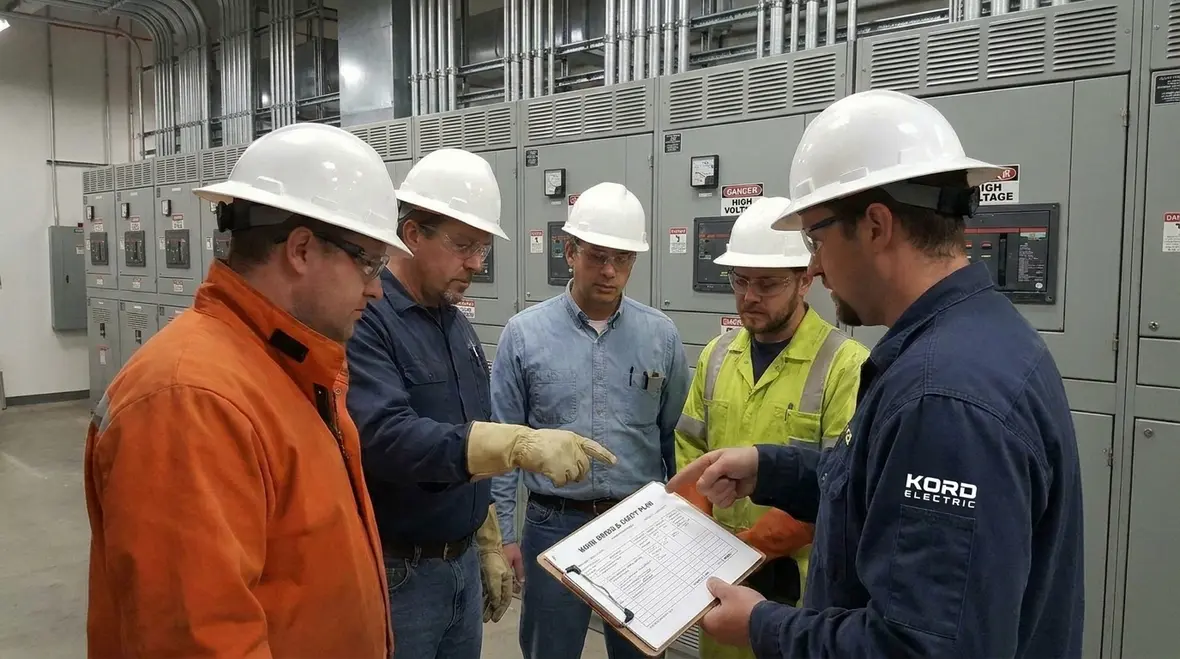
We also train teams to treat test instruments and leads like critical equipment, because they are. A loose connection or a wrong meter setting can turn routine troubleshooting into a safety incident. Then, when the task is done, we ensure the system is restored correctly, including any labeling and inspection needs.
Good task planning also makes room for “what if” thinking. What if the reading is out of range? What if the panel condition is worse than expected? What if access changes halfway through the job? Building these questions into your NFPA 70E compliance checklist keeps “oops moments” from turning into incidents.
Connecting task planning to long-term maintenance strategy
When task planning follows a repeatable pattern, it becomes the backbone of a broader maintenance strategy. Many facilities pair their NFPA 70E compliance checklist with structured electrical preventive maintenance programs so that daily work, inspections, and upgrades all follow the same safety logic.
Electrical hazard controls: selection, setup, verification
Hazard control is not one decision. It is a chain. At Kord Electric, our technicians follow a clear sequence: select controls, set them up properly, and verify them before work begins. That is how we keep controls effective, not theoretical.
For shock hazards, we emphasize barriers, proper insulation, safe positioning, and controlled access. For arc flash hazards, we address the energy source, the configuration, and the conditions that affect arc exposure. Then we ensure PPE is selected for the task requirements and the actual risk level.
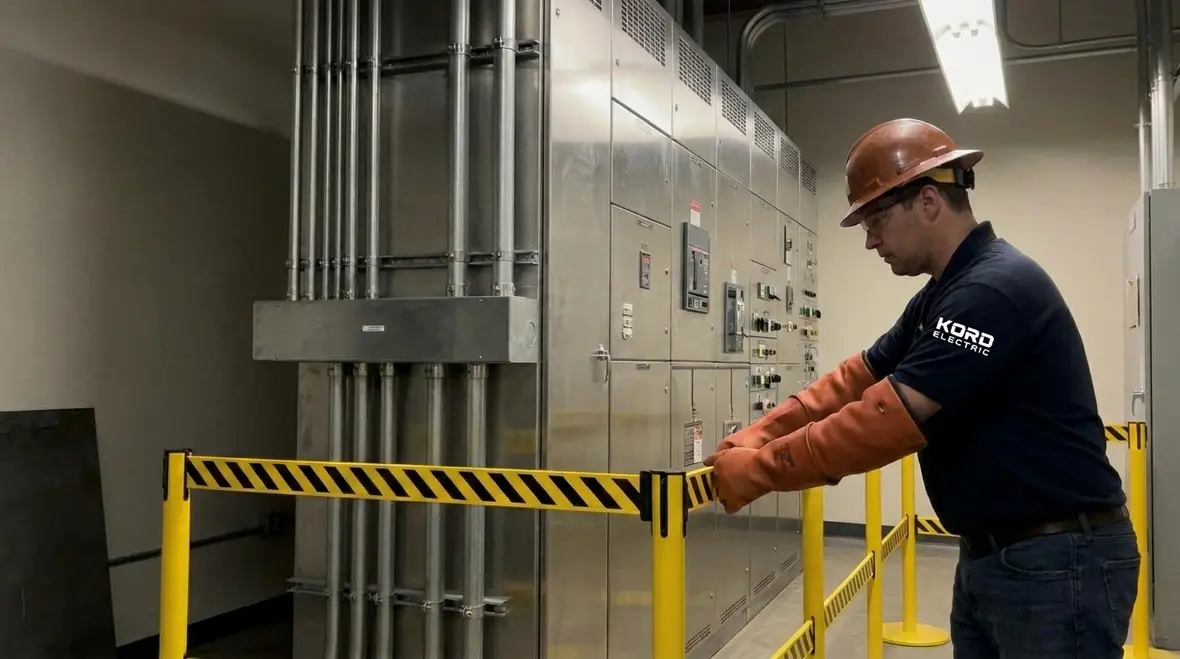
Just to keep it human, we sometimes tell teams that PPE is not a costume. It is protection, and it must match the job. If the risk changes, the PPE requirements can change too. So we make sure the team’s equipment and procedures match the hazard picture, not last week’s paperwork.
What belongs on an NFPA 70E compliance checklist for hazard controls?
A practical NFPA 70E compliance checklist walks through how each control is chosen and verified before the first tool moves. That often includes:
Confirming an up-to-date arc flash and shock risk assessment for the specific equipment
Verifying labels, one-line diagrams, and available fault current information
Defining approach boundaries and limited work zones
Selecting task-appropriate PPE based on the real incident energy, not guesswork
Ensuring barriers, grounds, and lockout/tagout devices are properly applied when de energized work is possible
Documenting test-before-touch steps and meter verification before and after use
When these items live on a checklist instead of in someone’s memory, new technicians and seasoned electricians alike can follow the same standard of care every time they open a panel.
Approach to energized work and when to pause
Sometimes an energized task becomes unavoidable. However, we still treat energized work as the exception that needs strong justification and tighter controls. Our expert service staff explains this approach in plain terms during onboarding and site support visits, because the best safety system still fails if people do not understand why decisions matter.
In our process, the team first determines whether the work can be completed with de energized equipment. If not, then we require a documented decision pathway. We confirm that the team uses appropriate arc flash and shock protection, that boundaries are set and respected, and that the task is limited to what is necessary. Then we verify that the workspace and tools support safe execution.
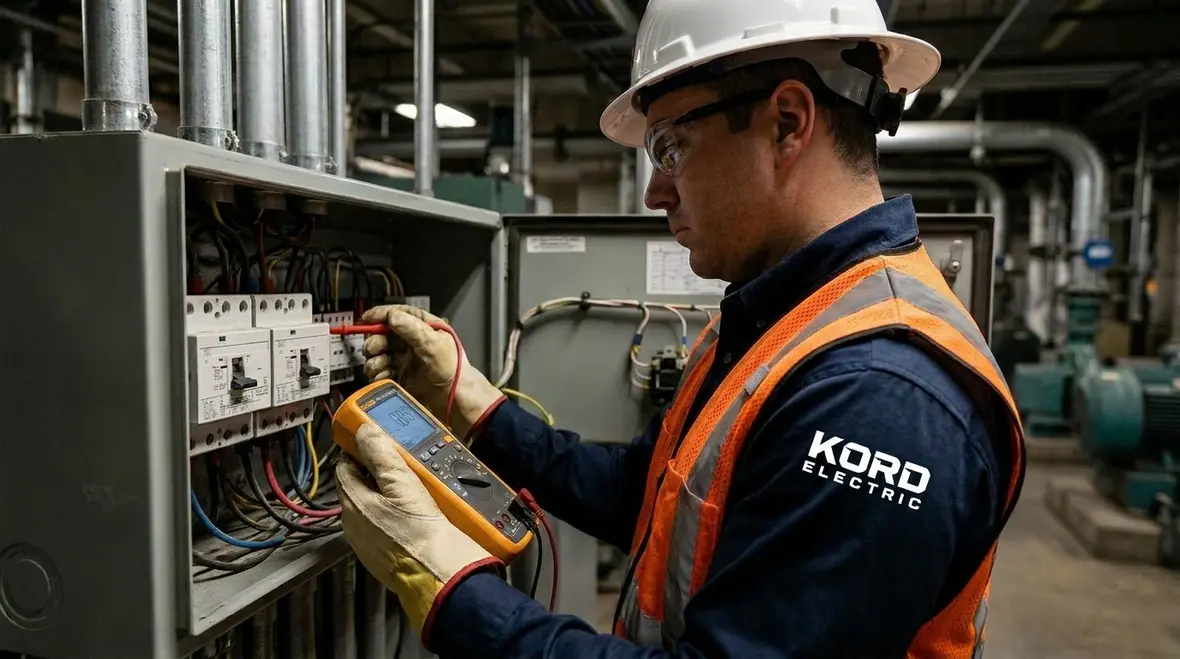
And we also teach the simple skill of recognizing when to pause. If a test result conflicts with expectations, if a connection looks damaged, or if the equipment condition feels “off,” the right move is to stop and re-evaluate. That is not hesitation. That is discipline.
Building “stop work” authority into your NFPA 70E compliance checklist
A strong NFPA 70E compliance checklist explicitly states when any qualified person can stop work without debate:
Unexpected readings or equipment behavior
Visible damage, contamination, or overheating
Missing or unclear labels and boundaries
PPE that no longer matches the task or hazard level
Changes in operating conditions, access, or load while the task is in progress
When “pause and reassess” is a documented step, not a personal judgment call, technicians can act quickly and confidently when work conditions change.
NFPA 70E electrical panels and maintenance inspection services for C I facilities
Commercial and industrial sites run on time, but they also run on systems that age. Electrical panels collect dust, moisture, and wear. Connections loosen. Labels fade. Over time, small issues become safety hazards and downtime risks.
That is why we support clients with electrical maintenance inspection services built around how panels operate in real buildings. Our technicians inspect distribution equipment, verify condition indicators, and look for signs of overheating, contamination, corrosion, and mechanical stress. Then we document findings in a way that helps decision makers prioritize work.
When we find concerns, we guide teams through next steps that align with safe work practices. In practical terms, we help clients keep panels in a safer state through structured inspection and repair planning, so the next maintenance event does not start with guesswork. If the site has a major property building footprint, we also help coordinate schedules and access needs so the work fits the operational reality.
Think of it like HVAC service for electrical systems. You do not wait for the building to “notice” a problem. You inspect while everything still works.
Connecting your NFPA 70E compliance checklist to ongoing panel maintenance
When panel inspections consistently follow NFPA 70E safe work practices, your checklist becomes more than a form. It becomes a record of due diligence. Many facilities combine it with commercial and industrial electrical preventive maintenance plans so every inspection, torque check, and thermal scan aligns with the same safety-first standard.
Training, documentation, and field audits that actually stick
Safety systems fail when training lives only in slides. We use training that matches what our technicians do in the field. Our expert service staff explains procedures, demonstrates PPE selection basics, and walks through safe task planning scenarios that resemble the equipment found in commercial and industrial facilities.
Then, we support documentation that shows real oversight. That includes recording hazard assessments, work permits when applicable, inspection outcomes, and corrective actions. We also help teams prepare for field audits by clarifying how supervisors can verify that the right controls were used for each task.
Importantly, we do not treat audits as punishment. We treat them as feedback loops. If a team misses a step, we fix the process so the same mistake does not return next week. That is how we build consistency across shifts and across multiple assets.
Using your NFPA 70E compliance checklist as an audit tool
When your NFPA 70E compliance checklist is written clearly, supervisors can review it after a task and immediately see:
Whether hazards were identified and documented correctly
Which controls were used and whether they matched the task
How energized work decisions were justified and approved
What corrective actions were created and closed
Where additional training or procedure updates might be needed
Over time, those records tell the story of how your electrical safety culture grows. They also support external audits, insurance reviews, and internal performance metrics.
Featured FAQ for NFPA 70E electrical maintenance
Conclusion: safer maintenance starts with Kord Electric
We help commercial and industrial facilities move from “we think it is safe” to “we can prove it is controlled.” Our technicians and expert service staff support hazard-aware maintenance planning, panel inspection work, and practical documentation habits that hold up under real schedules. If you want an NFPA 70E focused approach that fits your building operations, contact Kord Electric today. Let us review your current maintenance inspection process and recommend next steps you can implement without disrupting your business.
If you are ready to align your NFPA 70E compliance checklist with a structured service program, explore our electrical preventive maintenance services. From routine inspections to data-driven maintenance planning, we help commercial and industrial facilities keep critical electrical infrastructure safer, more reliable, and easier to manage over the long term.


