
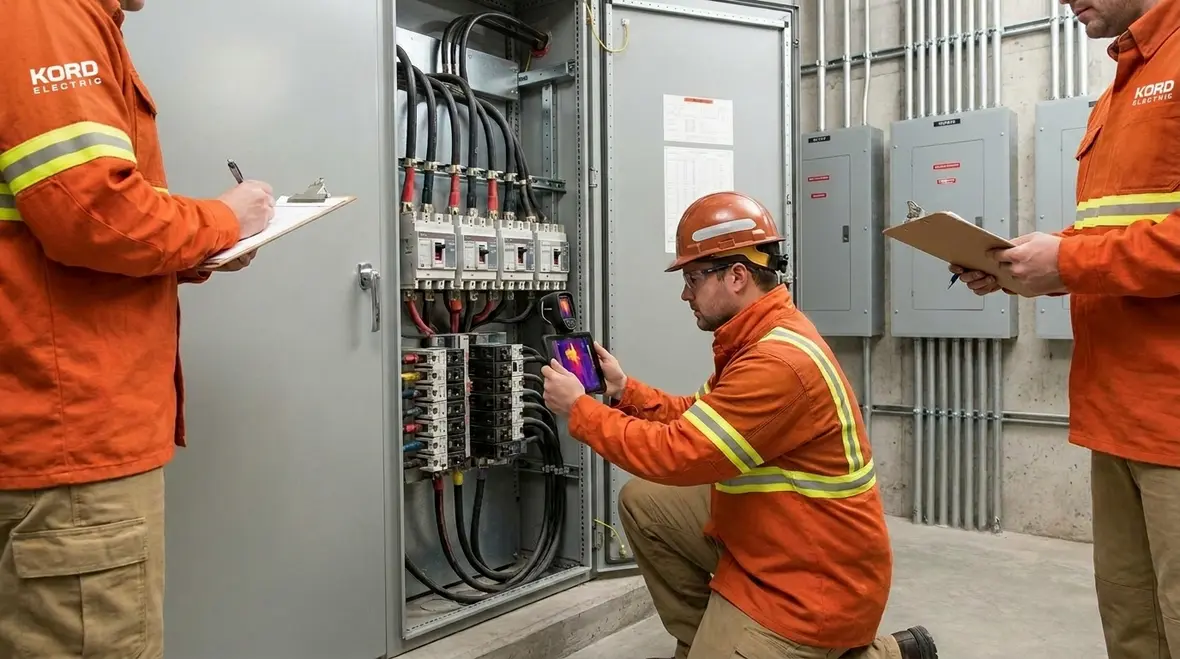
NFPA 70B Electrical Maintenance for Reliability
Kord Electric approaches NFPA 70B electrical maintenance the way a calm pilot handles turbulence: steady, prepared, and never surprised. This is not theory we keep in a binder. Instead, our technicians and expert service staff use the guidance behind NFPA 70B electrical equipment maintenance to reduce hidden risks in commercial and industrial electrical systems. And yes, we have seen what happens when someone treats maintenance like a “someday” activity. That “someday” can turn into a downtime bill faster than a streaming service changes your price.
In this article, third person readers will see how Kord Electric builds a maintenance rhythm that helps prevent electrical system failures. We focus on major property buildings, commercial sites, and industrial facilities, because those environments cannot afford guesswork.
Why commercial and industrial sites need a maintenance standard
Commercial and industrial facilities run on load, process, and uptime. Electrical equipment does not care if the office is busy, the factory is running, or the landlord is “waiting on budget.” Electrical wear still happens from heat, vibration, moisture, and time. Over time, insulation ages, connections loosen, and components drift away from original performance.
Kord Electric aligns work planning with NFPA 70B electrical equipment maintenance overview principles. As a result, our team treats prevention as a process, not a favor. Then we keep the system stable while operations stay focused on their real mission.
- Preventive work reduces the odds of surprise faults
- Condition checks catch early warning signs
- Documented results help teams respond faster when issues appear
In other words, we help keep electrical gear from becoming a dramatic plot twist.
How NFPA 70B electrical maintenance lowers the risk of failures
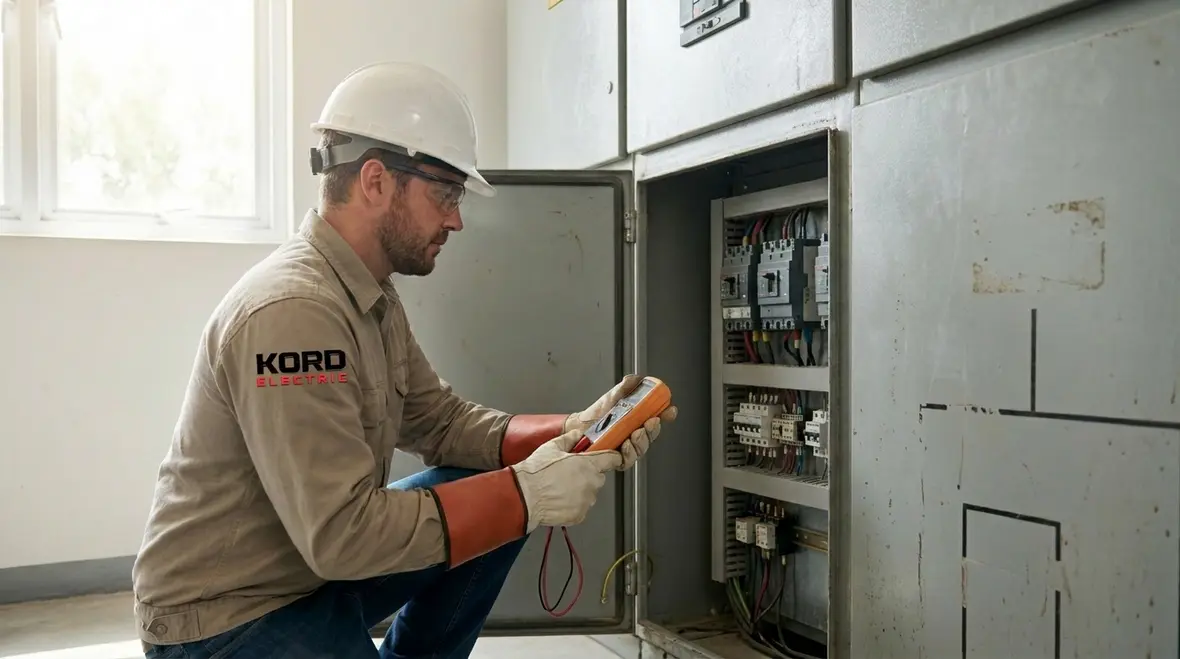
NFPA 70B electrical maintenance works because it emphasizes practical steps that support reliability. Kord Electric uses these ideas to guide inspection frequency, maintenance activities, and decision making. So the goal stays clear: identify problems early, correct them methodically, and verify results.
Our expert service staff explains the “why” behind each task in plain language, because maintenance teams need shared understanding. First, they learn what to look for. Next, they learn what “good” looks like. Finally, they learn what triggers deeper attention.
From there, the system benefits in several ways. If a connection overheats, you can spot heat damage before it becomes a failure. If a breaker mechanism binds, you can address it before operation becomes unreliable. If insulation resistance drops, you can plan repairs before the insulation reaches the point where it cannot protect the circuit.
Think of it like checking smoke alarms. You do not do it because you love chores. You do it because you want fewer bad stories.
What technicians check during NFPA 70B electrical equipment maintenance
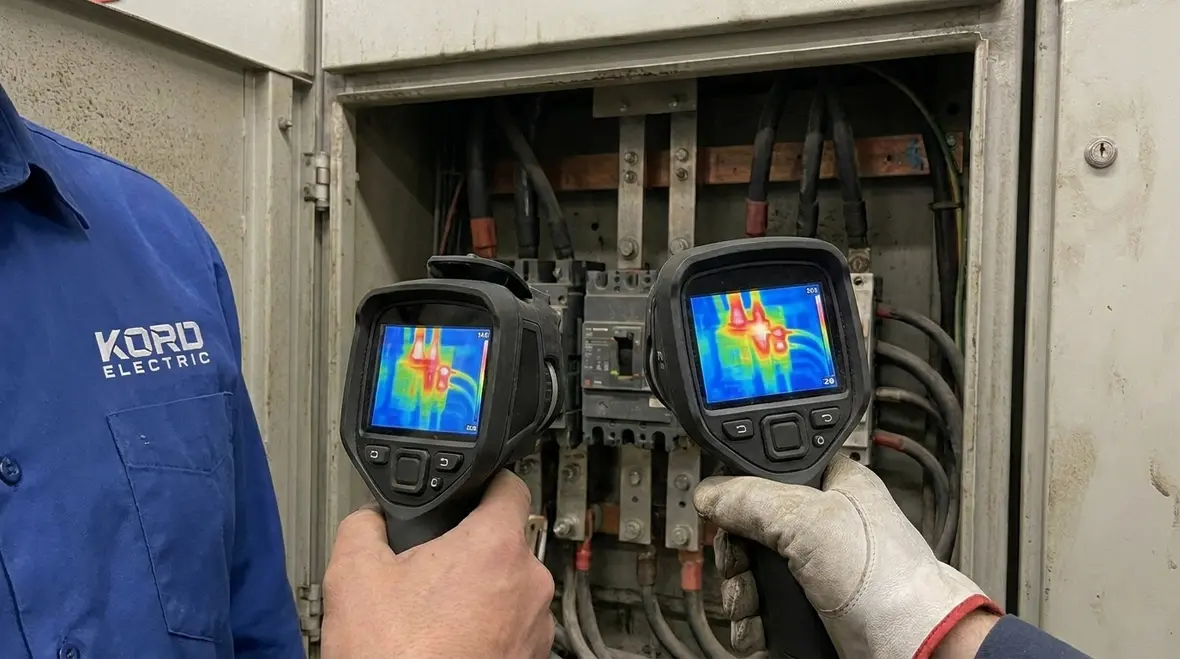
Kord Electric technicians follow a structured approach that fits the equipment and the facility. However, the core work focuses on similar categories. And because every commercial site has different loads, our team tailors tasks to what actually runs in that building.
Below is how the process typically plays out in the field, using principles consistent with NFPA 70B electrical equipment maintenance overview guidance.
- Visual and physical inspection to find damage, corrosion, loose hardware, and signs of abnormal heating
- Mechanical checks on breakers, switches, and contactors to confirm movement and alignment
- Electrical testing where appropriate, such as insulation resistance checks to evaluate insulation condition
- Thermal evaluation when conditions call for it, to spot hot spots that hint at connection issues
- Cleaning and torque verification to maintain proper contact and reduce resistance-driven heat
Then our technicians document what they find and what they plan next. After that, the facility leadership gets clarity instead of mystery. That matters, because no one wants to spend money twice, especially when the first spend was supposed to prevent the second one.
Electrical panel maintenance that protects power continuity
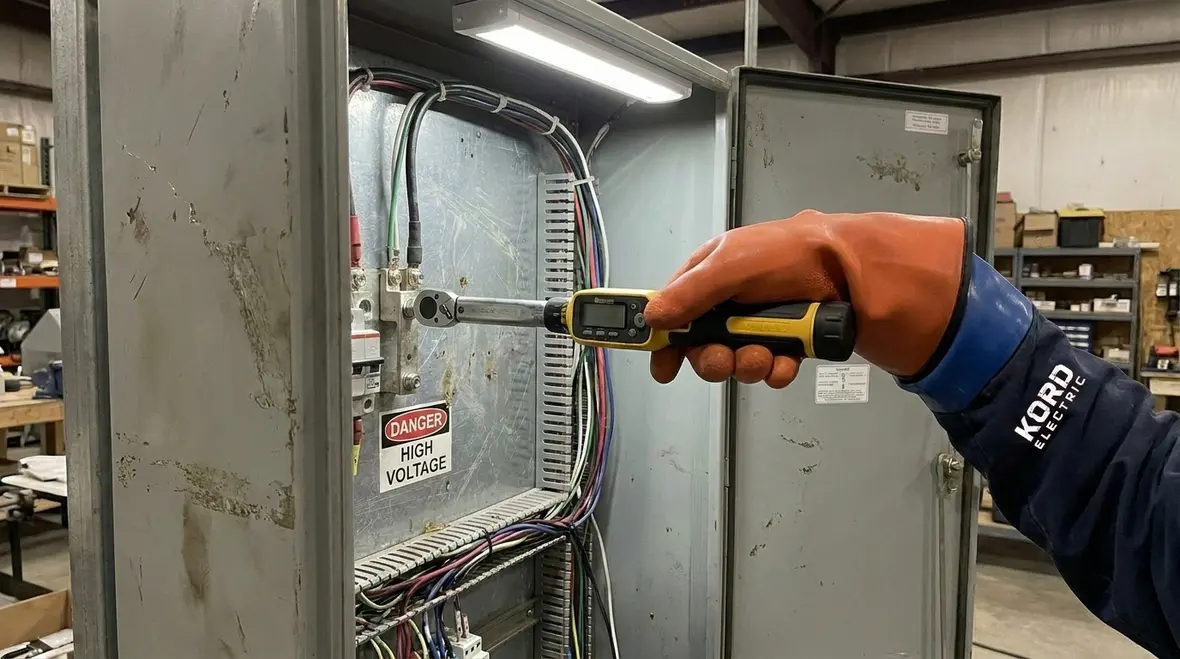
Electrical panels sit at the center of many commercial and industrial electrical systems. They distribute power, house protective devices, and support safe operation. When panels drift out of spec, problems can spread. A failing component can affect upstream equipment, branch circuits, and critical loads that depend on stable voltage.
Kord Electric supports facilities with electrical maintenance and inspection services designed for real-world operations. Our expert service staff explains panel findings and translates them into maintenance actions. That means a facility does not just get a report. It gets a plan with priorities.
During panel-focused work, our team pays special attention to:
- Bus connections and terminations for proper seating and signs of heat stress
- Breaker and contact integrity, including signs of arcing or wear
- Neutral and grounding conditions, because electrical systems behave better when they are properly referenced
- Panel labeling and documentation so technicians can work safely and quickly
And yes, we still see panels that look like they survived a history channel documentary. We clean, inspect, and correct issues with care, then we verify improvements. That verification step often separates “maintenance” from “maintenance that works.”
Planning inspection intervals and maintenance actions that actually fit

NFPA 70B electrical maintenance does not treat every facility like it is identical. Kord Electric accounts for equipment type, operating conditions, and risk level. If a building operates in a humid environment, if dust accumulates, or if loads run heavy for long periods, our schedule changes. The maintenance plan stays aligned with how the electrical system truly behaves.
To keep this process steady, we help clients set priorities and maintain a timeline. Transition words help teams stay aligned, because planning keeps maintenance from turning into panic. So we connect the dots between findings, risk, and next steps.
- Start with baseline data so the facility knows its “normal” condition
- Use findings to set inspection intervals based on actual wear patterns
- Sequence maintenance tasks so downtime stays minimal
- Track results so the next visit builds on the last one
When clients treat maintenance like a living program, reliability rises. When they treat it like a yearly chore, failures tend to show up right on schedule, like a sitcom ending with a cliffhanger.
Technicians as the calm voice on-site, not just the tools
In the field, the most helpful part of maintenance is not only the work. It is the communication. Kord Electric trains our technicians and expert service staff to explain what they see and what it means for the facility. That approach reduces confusion and supports better decisions.
Third person readers should know this: our team does not speak in vague phrases. Instead, we clarify cause and effect. For example, we explain how loose connections can increase resistance, which increases heat, which increases damage. Then we show what we measured or observed to support the conclusion.
As a result, facility managers can justify maintenance budgets with confidence. And operations teams can keep running without that constant “what if” feeling that creeps in right before a weekend shutdown.
FAQ: quick answers for facility teams
Get a maintenance program that keeps power steady
Kord Electric helps major property buildings, commercial sites, and industrial facilities build reliability through structured NFPA 70B electrical maintenance and disciplined panel inspections. Our technicians and expert service staff identify issues early, verify corrections, and explain results clearly so teams can act with confidence. If your facility runs critical equipment, steady power should not be a hope. It should be a plan supported by consistent maintenance.
For facilities that want to connect NFPA 70B programs with broader fire and life safety strategies, Kord Fire Protection offers additional guidance on topics such as NFPA 70E electrical safety protocols and other NFPA electrical safety codes. Together, this support helps facilities align safe installation, safe work practices, and reliable maintenance into one cohesive approach.
When you are ready to translate planning into action, scheduled service through dedicated electrical maintenance and inspection services keeps panels, feeders, and critical equipment operating as designed. That way, the next unexpected interruption does not get a chance to make a name for itself.
Kord Electric helps major property buildings, commercial sites, and industrial facilities build reliability through structured NFPA 70B electrical maintenance and disciplined panel inspections. Our technicians and expert service staff identify issues early, verify corrections, and explain results clearly so teams can act with confidence. If your facility runs critical equipment, steady power should not be a hope. Contact Kord Electric to schedule an electrical maintenance and inspection assessment, and keep your system dependable before the next unexpected interruption tries to make a name for itself.


