
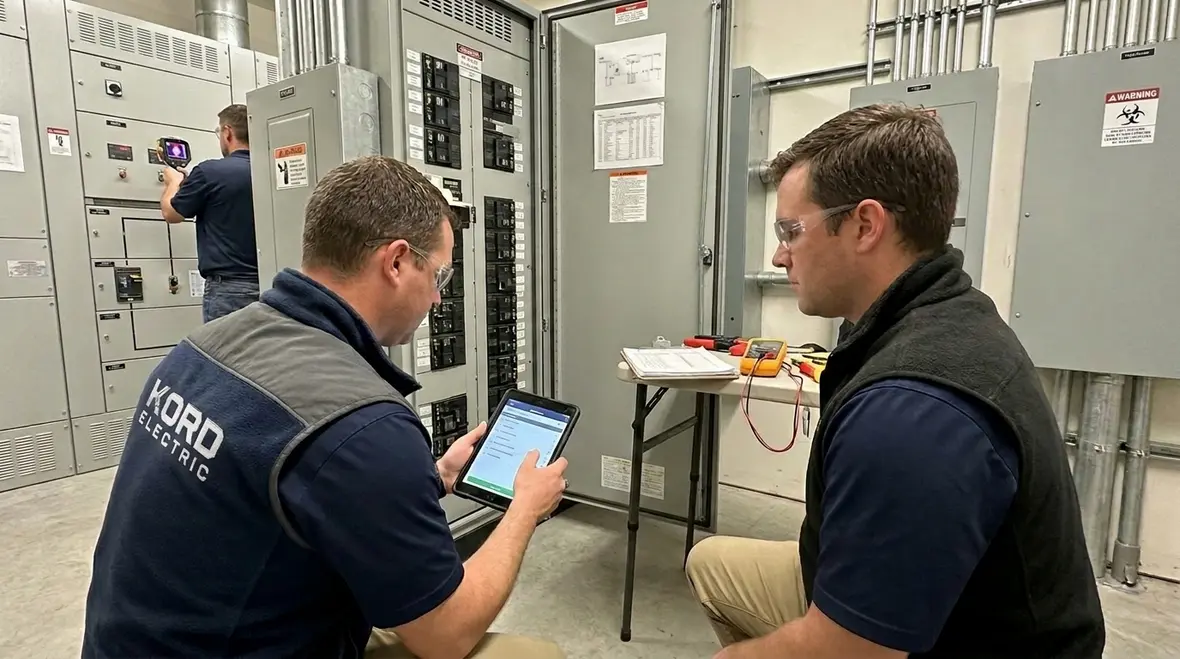
NFPA 70B Maintenance Checklist for Commercial Systems
NFPA 70B Maintenance Checklist: what we verify first in commercial electrical systems
When Kord Electric schedules service for commercial and industrial facilities, we start with an NFPA 70B maintenance checklist so nothing important hides in the shadows. In the first pass, our team verifies safe access, reviews past findings, and then checks key equipment conditions before we touch anything. From there, we follow a clear maintenance rhythm that maps to the realities of real buildings. If a system looks “fine” but behaves “odd,” we dig deeper, because electricity never tells the truth, it just trends toward drama. And yes, our technicians will explain what they see in plain language, not in code from a mad scientist movie.
What the NFPA 70B process looks like on site
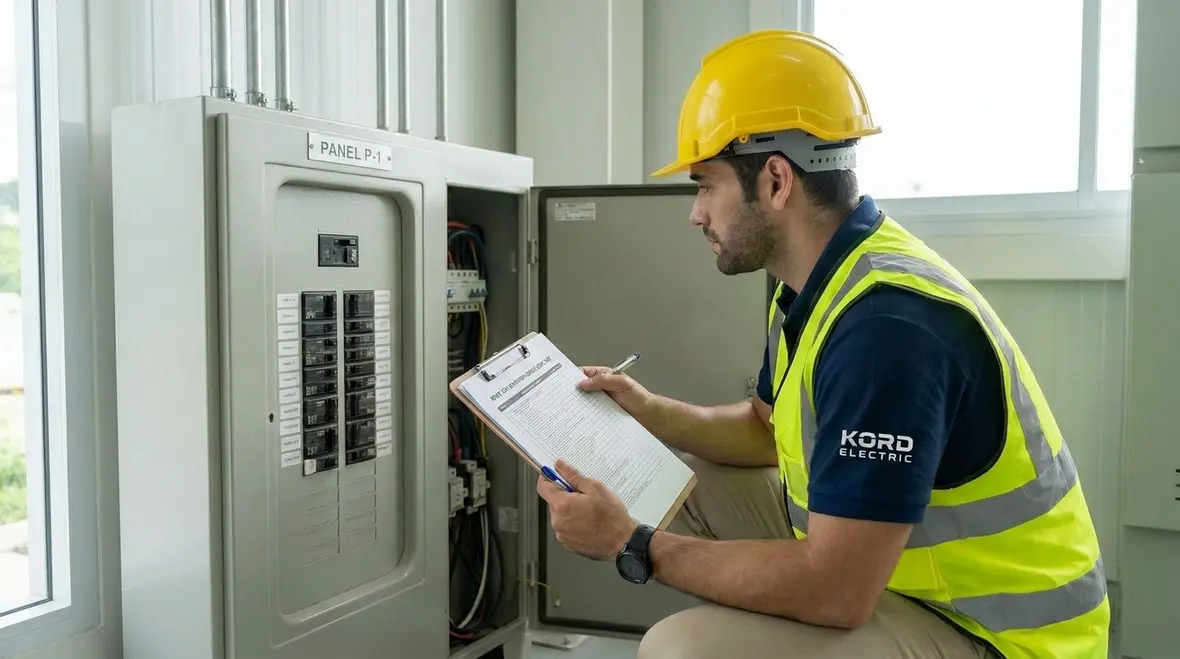
In commercial spaces and major property buildings, maintenance fails most often for two reasons: work gets delayed, or inspections happen without a usable checklist. Therefore, we run the NFPA 70B maintenance approach like a routine, not like a fire drill. First, we document the current condition of distribution equipment, panelboards, switchgear, and feeders. Next, we compare it against earlier results to catch drift. Then, we prioritize repairs based on risk, not wishful thinking. Finally, we confirm that the building team receives actions, timelines, and responsibilities.
To support this, our expert service staff uses practical guidance from the NFPA 70B electrical equipment maintenance overview, which emphasizes planned inspection and purposeful maintenance. Meanwhile, we align field work with what Kord Electric already delivers through our electrical maintenance inspection services for electrical panels. That combination matters, because a checklist is only useful when it connects directly to real observations, clear reporting, and next-step fixes.
Visual inspection, but with trained eyes that do not miss the small stuff

We do not treat “visual” as “quick.” In major facilities, minor signs can turn into major failures, especially with heat, vibration, moisture, or dust. Therefore, during inspection our technicians check for signs of overheating, loose or damaged terminations, corrosion, discoloration, and abnormal wear. We also verify the integrity of enclosures and barriers, because a dirty or improperly sealed compartment can act like an invitation for trouble.
Additionally, we look for clues in how equipment sits in the environment. For example, if a room has high humidity or a lot of airborne dust, the system may need a more frequent inspection cycle. Likewise, if equipment serves critical loads, we coordinate with the facility so we minimize disruptions. And when something looks questionable, our expert service staff explains it right away and gives the likely cause. It is like a weather forecast, but for electrical components, and nobody wants to live inside a surprise storm.
Testing and measurements that prevent surprises before they happen
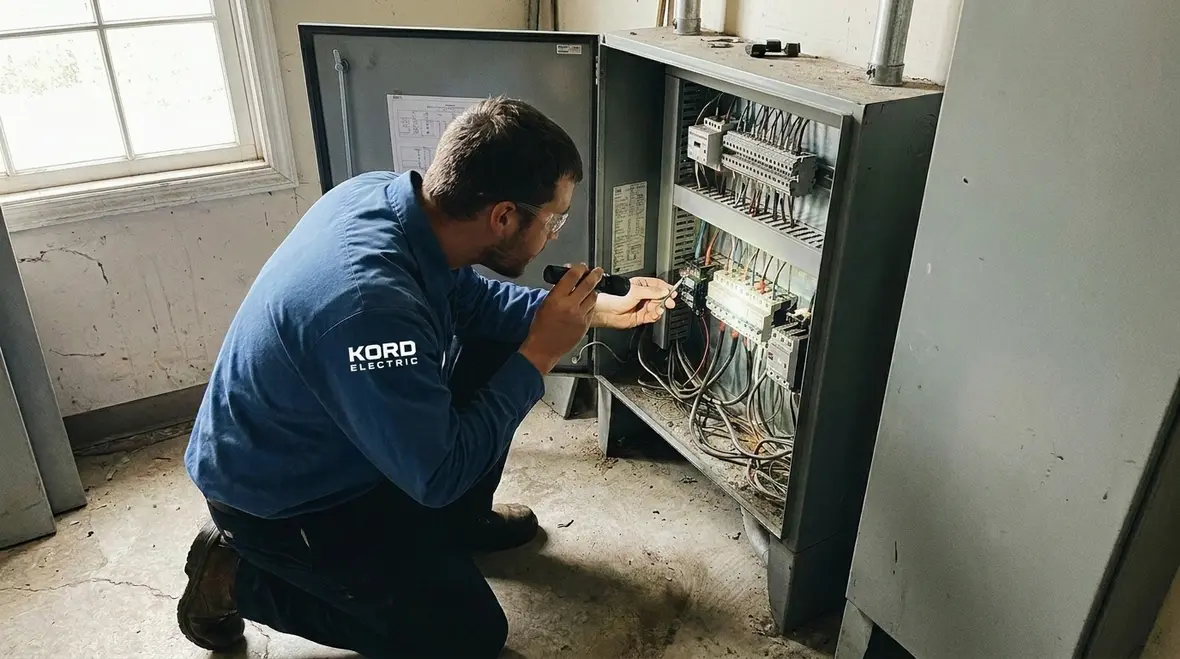
After visual work, we move to tests that confirm performance. We typically include checks that help us identify insulation issues, connection problems, and abnormal behavior in cables and bus systems. Just as importantly, we confirm protective device operation and verify that the system can clear faults when it should. In commercial and industrial settings, the cost of downtime often lands harder than the cost of prevention. So we measure, we compare, and we document.
Moreover, we focus on trends. One reading might mean nothing, but repeated drift tells a story. For that reason, our reporting highlights changes across service cycles. If a circuit shows rising temperature indicators or irregular patterns, we flag it for targeted investigation. Our technicians then describe the next actions in business casual terms, not a lecture that makes your eyes glaze over. And yes, we have seen perfectly clean equipment still fail later because the underlying connections were slowly slipping. Electricity has a long attention span, unfortunately.
Electrical panel and distribution maintenance for commercial operations
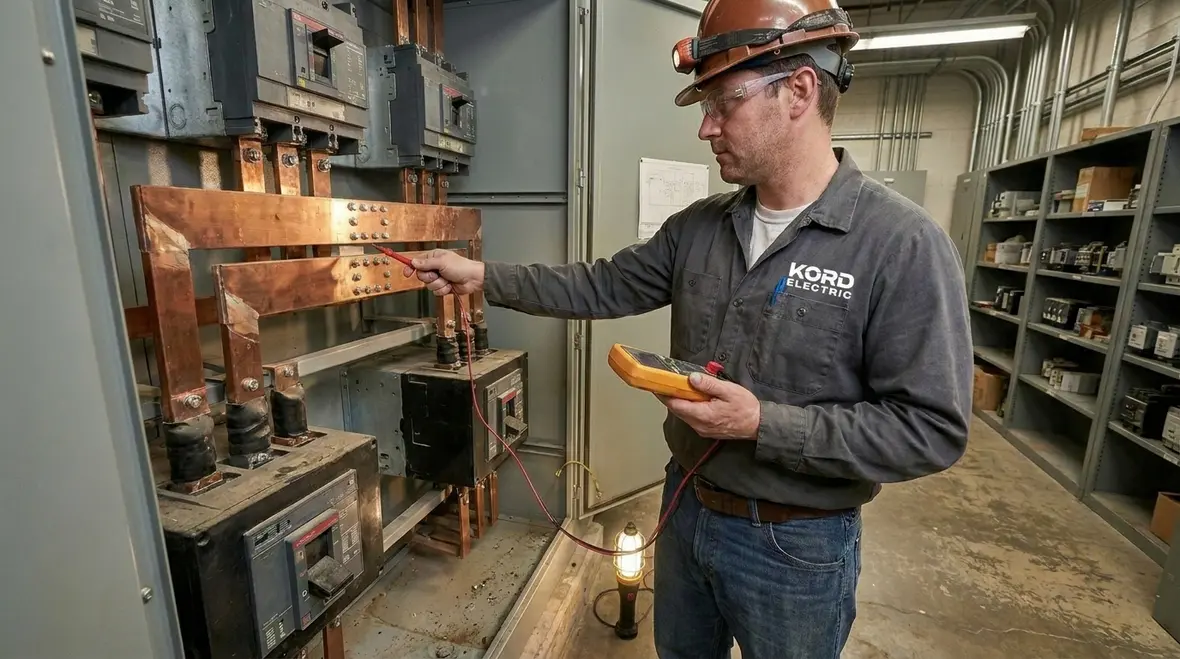
Commercial buildings rely on panels and distribution systems every minute, and they do not care about our schedules. So we maintain them with discipline. When we inspect electrical panels, we verify labeling, accessibility, and the physical condition of components. We check for correct torque where applicable, observe wiring condition, and verify that breakers and protective devices align with the intended design.
Meanwhile, we also look at the “human layer.” In major property buildings, tenants and contractors change spaces, and changes can lead to mismatched configurations. Therefore, our expert service staff confirms that as-built conditions still match what the system documents show. When we find mismatches, we propose a plan that supports safe operation and avoids disruptive guesswork.
To keep work consistent, we tie our field actions back to the electrical equipment maintenance overview and the NFPA 70B maintenance checklist structure. That way, we can schedule what matters, document what we find, and close the loop with clear recommendations. The goal stays the same: keep power stable, keep staff safe, and keep the building team from playing “guess the breaker” during peak hours.
Managing maintenance schedules, records, and compliance documentation
Maintenance succeeds when records stay usable. As a result, we build service documentation that tracks inspections, findings, corrective actions, and follow-up testing. Facility teams need this for operational planning, internal reviews, and compliance expectations. However, records should not become a pile of PDFs that no one reads. So we organize reporting around equipment type, condition, risk level, and recommended next steps.
In our process, we also help you plan the right cadence for your environment. We consider factors like usage intensity, ambient conditions, and equipment age. Then we create a schedule that fits commercial and industrial realities, rather than a theoretical calendar. If your building runs 24 7, we coordinate with your operations team. If you have maintenance windows, we align our tasks to those hours. Our technicians explain the “why” behind the schedule, because prevention feels better when it is understood.
How we recommend corrective actions and prevent repeat issues
When we find problems, we recommend corrective actions that reduce the chance of repeat failures. That includes fixing the immediate issue and addressing root causes like poor connection practices, environmental exposure, or overloaded circuits. Additionally, we verify after repairs with appropriate testing, so the work does not just look right, it performs right.
Furthermore, we use the NFPA 70B maintenance approach to guide the next steps, including deciding what needs immediate attention versus what can be handled in the next cycle. For example, loose connections that show heat damage get prioritized ahead of cosmetic issues. Meanwhile, we help building teams understand what can wait, what must not wait, and what will trend worse if deferred. And if you ever wonder, “Is this going to be a short job or a long saga,” our expert service staff gives you a realistic path, not a hopeful fairy tale.
FAQ
Ready to tighten up your commercial maintenance plan with Kord Electric?
If your facility operates on uptime and safe power, we should talk. Kord Electric can review your current maintenance approach, perform inspections aligned with the NFPA 70B maintenance checklist, and deliver clear recommendations for electrical panels and distribution systems. Then we help you schedule corrective actions without disrupting your operations. Call us today to set up an assessment for your commercial or industrial facility, and let’s keep the lights steady, the documentation clean, and the surprises out of the building.
For facilities that need a broader preventive strategy beyond a single NFPA 70B maintenance checklist, explore our electrical preventive maintenance services to build a structured program that supports uptime, safety, and long-term reliability.


