Backup Power for Business Continuity Commercial Systems Planning
Backup Power for Business Continuity: Commercial Systems & Planning starts with control, not guesses

Backup power for business continuity is not a “nice-to-have” for commercial and industrial facilities. It is a plan that keeps lights on, pumps running, data safe, and operations steady when the grid decides to take a day off. At Kord Electric, we help businesses build Backup Power for Business Continuity: Commercial Systems & Planning that matches how they run, what they cannot lose, and how quickly they must recover.
In other words, we do not just install equipment and hope for the best. We map the electrical reality on site, then we help our clients avoid the kind of downtime that turns a normal workday into a surprise episode of “Why Is Everything Off?” And yes, we explain the why and how in plain language, because our technicians believe clarity reduces stress.
For facility leaders who want a deeper framework behind these decisions, our electrical system business continuity planning guide shows how risk, critical loads, and outage behavior connect to long-term resilience.
1) What business continuity really needs from backup power

To plan correctly, businesses must define what “continuity” means in their world. One company might need refrigeration to protect inventory. Another might need clean power for sensitive controls. Meanwhile, a major property building could require stair pressurization, elevators, and fire life safety loads to stay ready.
Then the next question matters: continuity at what level and for how long. For some systems, minutes matter most. For others, hours matter more. Moreover, your backup strategy must consider both the power source and the behavior of your electrical system during an outage.
As we help facilities through planning, our expert service staff often points out that outages are not all the same. A short flicker can stress electronics. A longer outage can force shutdowns, lockouts, and loss of critical processing. Therefore, continuity planning should include load priorities, transfer timing, and realistic runtime targets.
Translating continuity goals into electrical decisions
Once continuity goals are clear, we translate them into concrete electrical steps: which loads must ride through events, which can restart, which can shut down gracefully, and how long each group must stay powered. That process keeps Backup Power for Business Continuity: Commercial Systems & Planning grounded in reality instead of guesswork.
2) Load prioritization: keep essential systems alive first
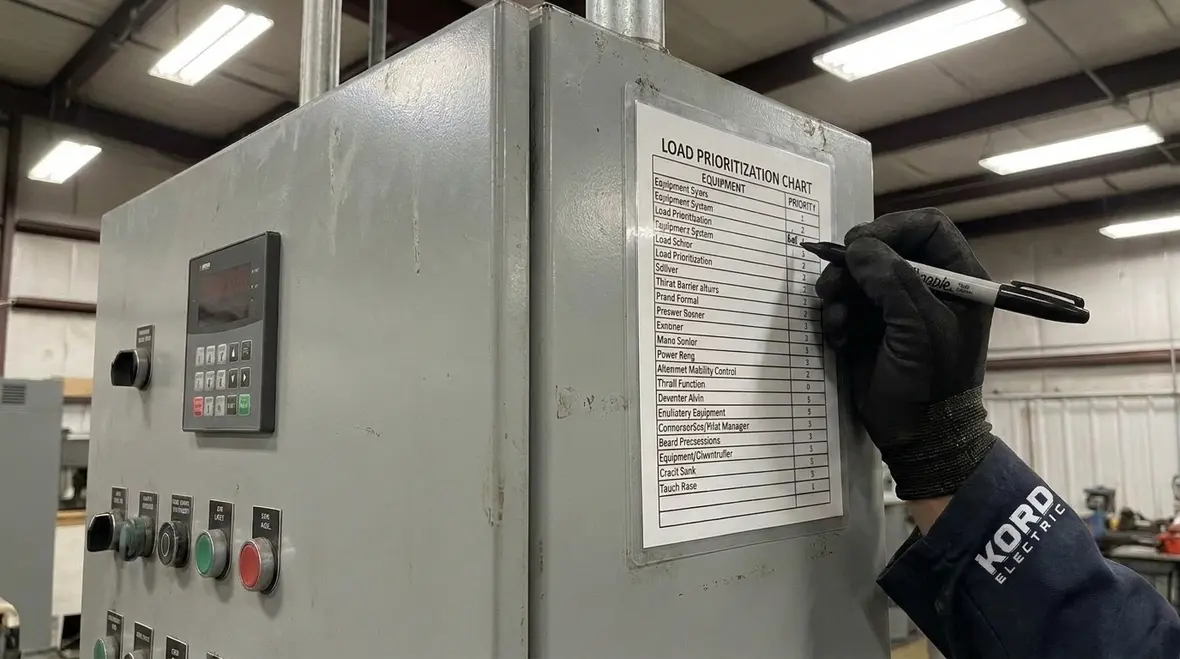
Most facilities fail continuity planning by treating “backup” like one size fits all. Instead, we start by identifying loads that support life safety, protect equipment, and prevent cascading damage. Then we rank them so the backup source can carry what matters without exceeding capacity.
For commercial and industrial clients, typical essential loads often include:
- Fire life safety systems and emergency lighting
- Critical HVAC for control rooms or special process areas
- Pumps, fans, and systems tied to product protection
- Security, access control, and monitored building systems
- Data and communications equipment where downtime costs rise fast
After that, we confirm how each load behaves. Some motors surge heavily at startup. Some controls need a stable power profile to avoid error states. Consequently, our technicians help you understand in practical terms what happens when power returns, not just when power goes out.
Here is a small joke we use in the field: if you tell every load “you’re critical,” then you end up with a backup system that cannot carry anyone. The building still goes dark, just with more paperwork. We prevent that.
Creating realistic tiers of critical loads
We often break loads into tiers: Tier 1 for life safety and mandatory systems, Tier 2 for high-value operations, and Tier 3 for convenience or comfort. That structure lets Backup Power for Business Continuity: Commercial Systems & Planning support safe, stable operation instead of trying to power everything at once.
3) How transfer equipment affects uptime and safety
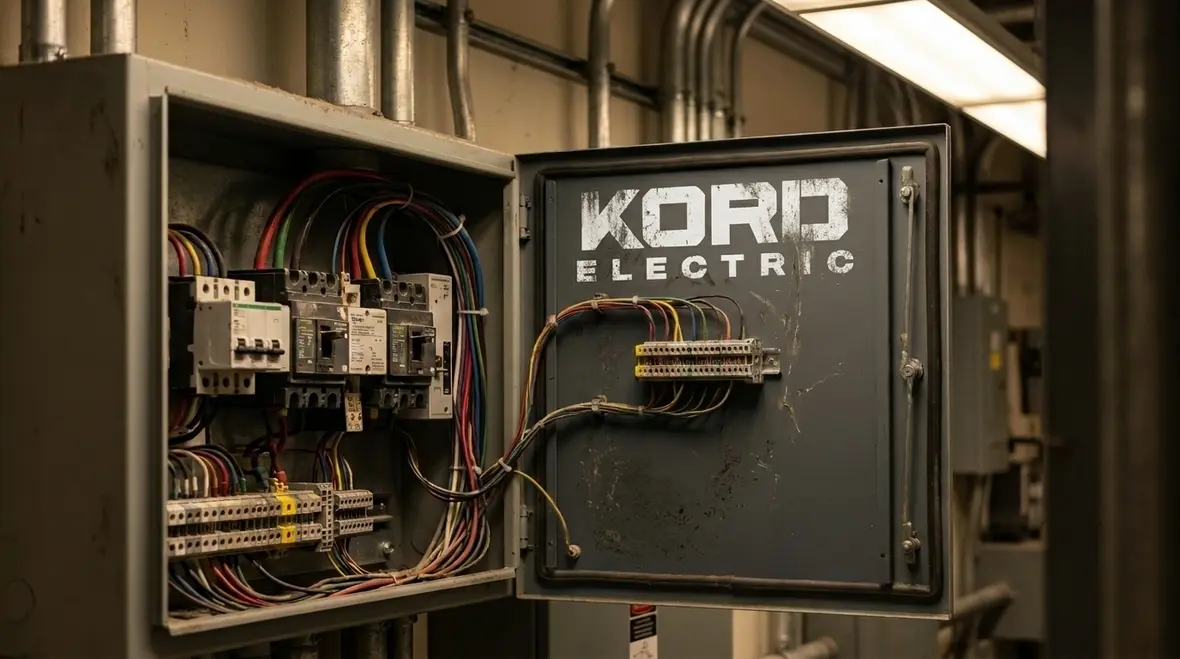
Backup power does not help if the transfer process causes delays or instability. So we design the switching approach carefully. Transfer equipment can include automatic transfer switches, paralleling solutions, and control sequences that match your facility needs.
In practice, the transfer moment must protect two things at once: the load and the source. Additionally, it must follow safety rules that keep the system from backfeeding or interrupting life safety circuits in unsafe ways.
Our team walks through these details with facility leaders. We explain how control logic prioritizes power restoration, how timing reduces nuisance trips, and how monitoring helps operators respond quickly. That matters because during an outage, people do not want to guess. They want to know what the system is doing.
Moreover, we encourage customers to think about how transfer interacts with building management systems. When controls report status clearly, operators can act sooner. When reports are vague, everyone acts later. And in continuity planning, “later” can be expensive.
Automatic transfer vs. manual transfer in commercial settings
Most commercial and industrial facilities benefit from automatic transfer equipment for essential loads, while some noncritical systems can sit on manual transfer or no transfer at all. Choosing the right mix is one of the places where Backup Power for Business Continuity: Commercial Systems & Planning turns into a practical playbook for real outages.
4) Generator sizing and fuel planning for real-world runtime
Once load priorities are clear and transfer behavior is mapped, we size the generator or standby power system based on the electrical demands you actually have, including startup and running conditions. Oversizing wastes money, but undersizing causes failure at the worst time.
We also address runtime. Fuel availability, fuel quality, and storage matter. For major properties and industrial facilities, continuity planning often demands clear rules for refueling schedules and maintenance windows.
Our technicians explain key factors in a way decision makers can use:
- How continuous load differs from peak load
- How motor starting affects real capacity needs
- How fuel supply supports the target outage duration
- How maintenance schedules protect reliability
Then we help teams connect runtime to operations. If your facility cannot pause production, your plan needs a fuel and service approach that supports that reality. In short, backup power should fit your business schedule, not fight it.
Because yes, a generator that looks great on paper is still just a machine. And machines do not care about presentations. They care about fuel, cooling, and proper maintenance.
Aligning runtime with business continuity objectives
In Backup Power for Business Continuity: Commercial Systems & Planning, runtime targets are not random. We align them with your risk tolerance, local grid behavior, and the time it realistically takes to restore service or relocate operations, so your backup system supports decisions instead of forcing emergencies.
5) Protection, coordination, and power quality during outages
A continuity plan must include more than keeping power on. It must also control how the electrical system protects equipment when the source changes.
Protection coordination affects whether critical loads ride through events or trip offline. For example, a poorly coordinated protective device can turn a short interruption into a long outage. Therefore, we evaluate how breakers, relays, and transfer logic work together under abnormal conditions.
Power quality also plays a role. Some equipment cannot tolerate voltage dips or frequency instability. Meanwhile, sensitive electronics need consistent operation to avoid data corruption or controller faults. Consequently, we consider how the system handles harmonics and switching transients.
We reference practical guidance from our planning resources on electrical system business continuity, because our clients need a clear method, not random components. When we review a facility, our expert service staff helps translate planning ideas into electrical steps you can verify on site.
Why protection studies belong in continuity planning
Short-circuit studies, coordination studies, and arc flash analysis all support Backup Power for Business Continuity: Commercial Systems & Planning. When those studies are updated to reflect backup power sources, facilities avoid the surprise where a “temporary” outage becomes a long downtime event caused by mis-coordinated protection.
6) Testing, training, and maintenance that actually stay on the calendar
Backup power earns its value only when it performs under real conditions. So we build a testing and maintenance plan that fits commercial and industrial realities, including shutdown seasons and staffing schedules.
Testing should confirm more than “the generator started.” It should validate transfer timing, load pickup, stability, and monitoring alerts. Additionally, we check that emergency loads operate correctly and that communication systems show accurate status.
We also train facility operators. Our technicians explain what alarms mean, how to interpret status screens, and what steps to take during events. That reduces panic and helps teams respond with confidence instead of improvising like it is a late-night cooking show.
To keep maintenance from getting pushed aside, we help clients set expectations early. Then we align those expectations with warranty requirements, local codes, and service access needs. As a result, backup systems stay ready instead of becoming decorative infrastructure.
Keeping continuity work aligned with broader service plans
When Backup Power for Business Continuity: Commercial Systems & Planning is tied into ongoing electrical preventive maintenance, facilities see fewer surprises. Testing becomes part of a rhythm that checks panels, feeders, transfer switches, and generators in one coordinated program instead of isolated tasks that get delayed.
7) Putting it all together for commercial and industrial sites
At the end of the day, Backup Power for Business Continuity: Commercial Systems & Planning is a system design process. It ties together load assessment, transfer selection, generator sizing, protection coordination, and a real service plan.
For commercial and industrial facilities and major property buildings, we focus on dependable performance under the outage scenarios your operations can face. Moreover, we help you avoid common missteps like carrying nonessential loads, underestimating motor startup demands, or designing transfer sequences that do not match how your building controls operate.
And we keep it practical. Our goal is not complexity. It is clarity, reliable power, and fewer surprises for your team and your customers.
If you are coordinating multiple facilities across the region, the Los Angeles County electrical services overview can help you match backup power planning with broader commercial and industrial electrical needs across your portfolio.
FAQ
Ready for a continuity plan that holds up during outages?
If you operate a commercial or industrial facility, you already know downtime hurts. Now you can reduce that risk with a plan built for your loads, your transfer needs, and your runtime goals. Kord Electric evaluates your electrical system, coordinates protection, and helps your team test with confidence. Contact us to schedule a continuity-focused assessment, and we will map the next steps in clear terms. Let us help you keep critical operations running, even when the grid does not.
When you are ready to move from ideas to implementation, our commercial and industrial specialists can connect your continuity goals to practical service options, from transfer switch upgrades to generator integration and business continuity electrical services.