California Warehouse Lighting Requirements Guide
When a California warehouse gets its lighting wrong, the fix feels simple until you see the real-world effects: slow picking, safety incidents, energy bills that refuse to behave, and compliance issues that land like a second shift you never hired. That is why warehouse lighting requirements california matters from day one, especially for commercial and industrial facilities and major property buildings where uptime and reliability are non negotiable.
At Kord Electric, we work with building teams who need practical answers, not vague promises. We explain what changes, why it matters, and how we get it done with expert service staff and technicians who treat your operation like it is their own. And yes, we will help you avoid the classic “we’ll deal with it later” plan. In lighting, later turns into burnout.
California warehouse lighting requirements: what standards teams actually follow
Warehouse owners and property managers in California typically follow a mix of state energy rules, utility expectations, and workplace safety best practices. Then they layer in what insurers and tenants expect for visibility and task performance. In practice, these expectations translate into measurable requirements: the right light level, the right uniformity, and correct controls so energy does not spike when nobody is working.
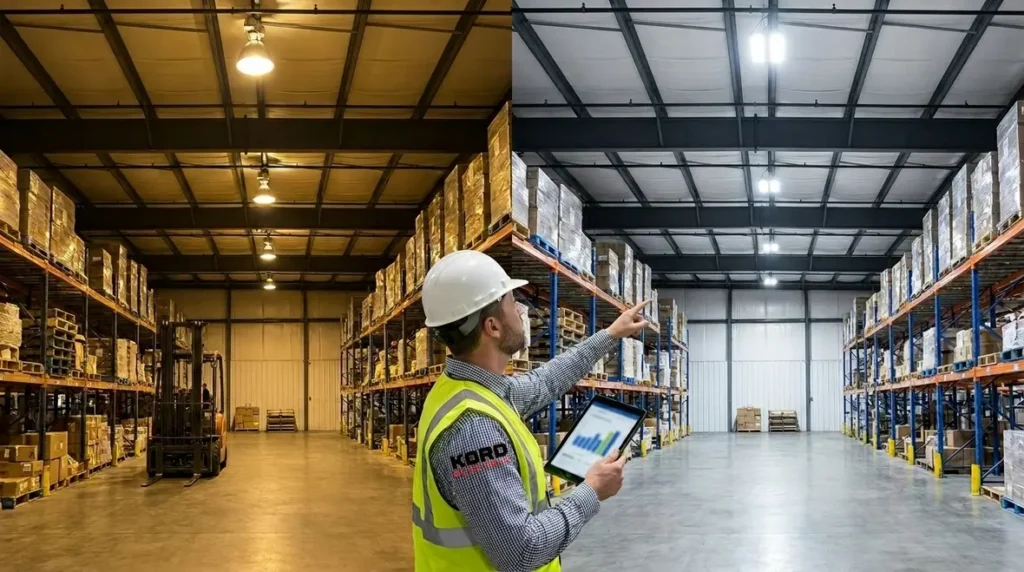
Even if your building already has fixtures, the current setup often fails the modern baseline. For example, older high bay systems might deliver light but not evenly across racks, lanes, and loading areas. As a result, workers face glare near aisles and dim zones under mezzanines. Meanwhile, maintenance costs rise because lamps age faster in high moisture or dusty zones. So, we evaluate what is already installed, then we map the spaces to the tasks being performed.
From there, our team checks for factors that matter in real operations: mounting heights, reflectance from floors and walls, beam angles, and the effect of new racking layouts. Additionally, we review how the lighting will be controlled during shift changes and seasonal demand. We do not just chase a number on paper, we chase the outcome in your facility.
How we assess warehouse lighting needs in commercial and industrial spaces
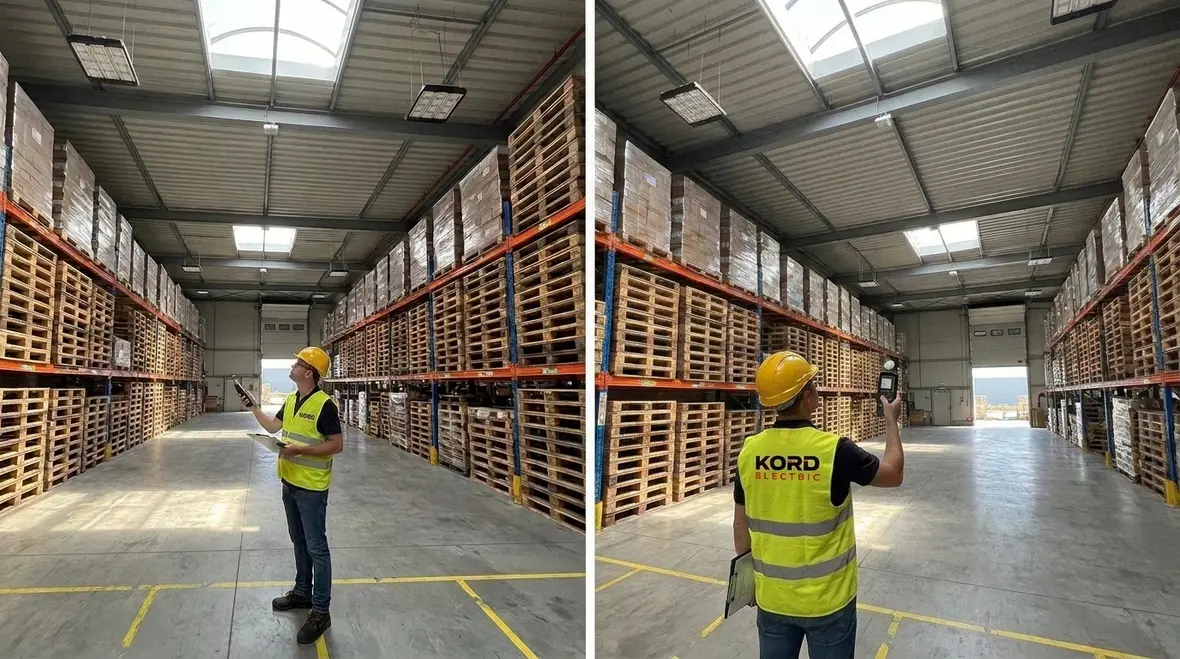
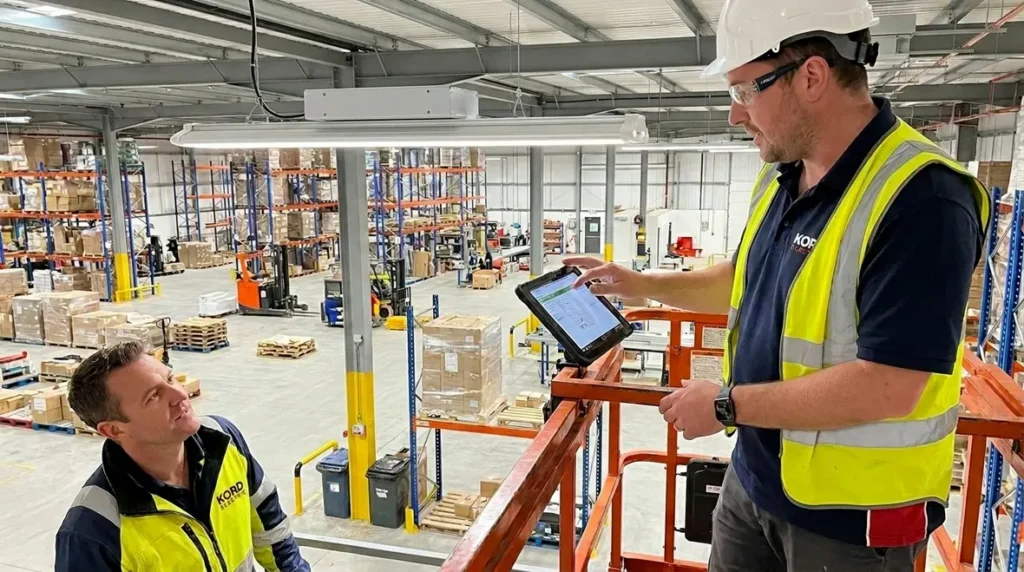
When we show up, we do not start with guesswork. Instead, our technicians and expert service staff follow a structured process that matches the way warehouses run. First, we walk the site with the people who use it every day. That could be the safety lead, a maintenance supervisor, or the operations manager. Then we observe task areas such as receiving, order picking, staging, packing, and loading docks.
Next, we assess physical constraints. Lighting performance depends on ceiling height, structural beams, obstruction from ductwork and sprinklers, and the condition of reflective surfaces. After that, we review your goals, such as reducing glare, improving visibility in aisle intersections, or meeting a landlord or tenant requirement for uniform illumination.
We also look at the failure patterns. For instance, some facilities replace lamps but never fix wiring issues, which means the new lamps still perform poorly. Others install fixtures that do not handle heat or humidity well. Then, they end up with flicker and inconsistent output. Because you operate a major property building, you need stable results, not “mostly working” lighting.
In short, we build the plan around your layout and workflows, not around a standard photo of a warehouse that looks nothing like yours. That is how we get installs that stay reliable for the long haul.
Energy savings without making your facility look like a cave

One of the most common misunderstandings is this: teams think energy savings means dim lighting. We treat it differently. We target smart reductions that keep visibility high and glare low. Therefore, we install LED systems and controls that maintain performance while trimming waste.
Consider controls. Warehouses rarely need full output at all times. When your facility cycles through nights, weekends, and low traffic periods, you can benefit from occupancy sensing in offices and breaks areas, and from scheduling or dimming for storage and passage zones. At the same time, high activity zones need steady output during picking and packing. A well designed control strategy protects both energy use and worker safety.
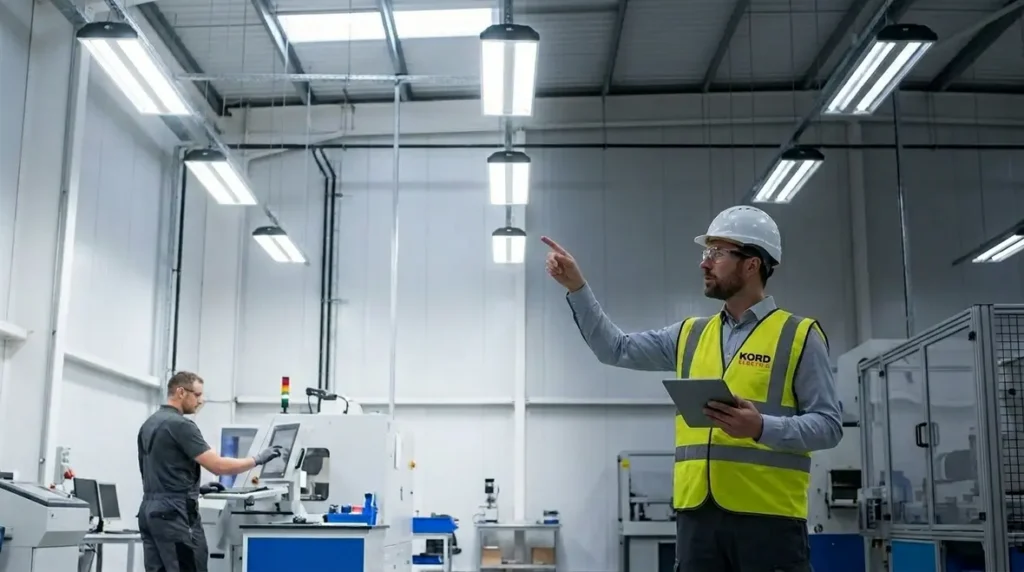
Then we consider optics. Not all LED high bays distribute light the same way. Some create hotspots, while others deliver even coverage across lanes and rack faces. We select optics based on beam spread and mounting geometry, so the light reaches the work surface instead of just the ceiling.
When we need to retrofit, we think beyond swapping fixtures. We review drivers, wiring condition, and the existing mounting system. If we ignore these, performance can fall short. If we handle them, the upgrade feels like a real improvement, not like a “new label on the same problem.”
If you want a guide for typical retrofit paths, our commercial LED lighting retrofit guide covers the practical steps we align to site conditions and project goals. You can review it on the Kord Electric blog and match the approach to your facility.
Retrofit planning for warehouses: timing, layout, and service discipline

Retrofitting a warehouse is not just electrical work. It is also operations management. You need deliveries to keep moving and picking to keep running, even during installation. So, we help teams plan around scheduling, access routes, and safety controls during construction.
First, we confirm which areas can be worked on during normal hours versus off hours. Then we set a staging plan for ladders, lifts, and material handling. Next, we verify ceiling heights and fixture spacing so the new layout maintains uniformity across aisles and loading zones.
We also think about how the retrofit affects current systems. Some sites need compatibility checks for controls, sensors, and emergency lighting circuits. If a facility uses photosensors or zone-based dimming, we ensure the new equipment works with the existing control logic or we upgrade it properly.
During the retrofit, we keep workmanship tight. Our technicians follow consistent labeling and documentation so your facilities team can trace circuits after completion. Meanwhile, our expert service staff explains what was changed and what maintenance will look like going forward. That way, you do not inherit mystery wiring. You inherit clarity.
And yes, we will say it plainly: “We’ll figure it out later” is how projects grow legs and escape the budget. We do not let that happen.
Lighting levels and uniformity: what workers notice first

Workers notice the experience before they notice the spec. When illumination supports the task, people move faster with fewer mistakes. When lighting fails, the problem shows up as missed labels, eye strain, and slower pick times. Therefore, Kord Electric focuses on delivered light where it matters.
In warehouses, bright spots and dark lanes create hazards at rack intersections and near pallet drop zones. So, we target uniformity, not just average brightness. We also reduce glare by selecting appropriate fixture housings and shielding where needed. This matters especially around glossy floors, where reflections can cause visual fatigue.
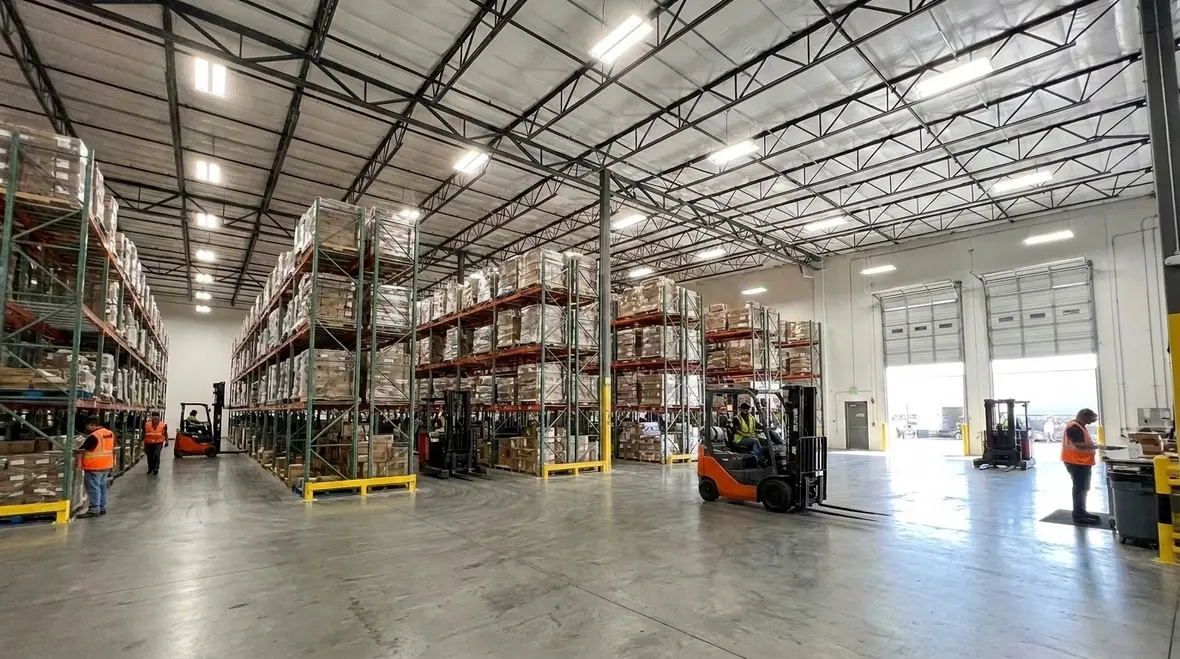
We also evaluate special areas. Loading docks need consistent visibility for dock doors and staging lanes. Receiving areas require clear views for labels and cartons. Packing areas demand stable light for scanning and quality checks. Meanwhile, exterior yards often require different strategies due to weather exposure and mounting differences.
Finally, we consider color characteristics. While most teams focus on lumen output, color quality influences how labels and signage read. When labels look washed out, workers slow down. When color rendering supports contrast, tasks stay quick and accurate.
Controls, safety, and maintenance: keeping performance steady
After installation, the goal is simple: the lighting should keep working the way it was designed to work. Therefore, we plan for maintenance access and long-term control behavior. Fixtures that are hard to reach become expensive to service, which means performance can drift over time. We help teams design for practical access based on the real facility layout.
Controls also need steady logic. Sensors can misread motion if positioned badly or if the facility layout changes. That is why we review sensor placement relative to airflow patterns, doors, and forklift routes. If you add new equipment later, we advise how to preserve coverage and settings.
We also consider emergency lighting integration and safety compliance. Warehouses rely on clear visibility for safe egress and for safe operation in low traffic periods. So, we check how new LED systems interact with emergency circuits and battery backups when applicable to your design.
In other words, we think of lighting as a system, not a single fixture. And as any experienced facility manager knows, systems either work together or they create new problems. We choose the first option.
Project support that feels like teamwork, not a handoff
Large facilities need partners who show up ready to coordinate with your electricians, facilities team, and building stakeholders. At Kord Electric, we operate with that mindset every day. We plan details upfront, we verify conditions during the visit, and we explain what we recommend in plain language.
Our technicians bring the technical discipline to the installation. Our expert service staff brings the communication discipline that keeps your team informed. Together, we reduce confusion during scheduling, material changes, and final walkthroughs. Additionally, we document what was installed and what it means for ongoing operations.
If a major property building shares floors with multiple tenants, we respect that complexity. We keep work scoped to commercial and industrial needs and coordinate with the parties who control access and safety rules. We do not chase side projects. We execute the warehouse improvement plan.
Because in the end, the lighting project is not about the fixtures. It is about keeping your operation safe, efficient, and ready for the next season.
If your facility is located in or around Los Angeles, you can also connect warehouse upgrades with broader Los Angeles County electrical services so lighting improvements align with your overall electrical strategy.
FAQ: warehouse lighting requirements california for commercial facilities
Conclusion: get a lighting plan that works for your facility
If your California warehouse lighting feels inconsistent, inefficient, or hard to maintain, it is time to address it with a plan built for how your facility actually runs. At Kord Electric, we help commercial and industrial teams upgrade lighting with disciplined retrofit planning, clear explanations from our expert service staff, and solid installation by our technicians. Schedule an assessment and we will map your needs, recommend a practical solution, and help you move forward with confidence. Let’s turn the lights on the right way.
When you are ready to connect warehouse lighting improvements with a broader electrical strategy for your building, Kord Electric’s dedicated Los Angeles County electrical services can help align lighting, power distribution, and long-term maintenance into one coordinated plan.