Parking Lot Lighting Requirements Los Angeles Commercial
When a business in Los Angeles thinks about parking lot lighting requirements los angeles commercial, they usually picture bright lights and call it a day. Yet in practice, the rules, safety needs, and real world layout all matter. In our experience at Kord Electric, we see the same problem: a property gets “good enough” lighting, and then the parking lot turns into a patchwork of glare, dark corners, and customer complaints. That is not good for safety, not good for brand trust, and not good for budgets. So, we handle this like other electrical work we do for commercial and industrial facilities, with clear plans, careful installs, and staff that explains each step. And yes, our technicians will also tell you where the light will land, before anyone buys a single fixture.
Why LA parking lots need more than bright lights
In commercial and industrial properties, the parking lot is a working space, not just an accessory. Customers walk from cars to doors. Employees move through loading areas. Delivery trucks roll in and out. Meanwhile, shadows hide trip hazards, and poor color control makes it harder for cameras to capture faces. Therefore, the goal is balanced illumination, safe paths, and controlled glare.
We often explain it this way to our clients: if lighting only “looks bright,” it can still fail the real job. It might flood drivers with glare, yet leave building entrances dim. It might illuminate the center, but miss sidewalks, ADA paths, and crosswalks. As a result, the property may feel unsafe, even when the lux level hits some rough target. We treat lighting like a system, not a vibe.
How we map light and avoid glare on active sites
Most lot failures happen during planning, before any hardware touches a pole. That is why our team starts with the site layout: drive aisles, pedestrian routes, stairwells, doors, and any gate or fence lines. Then we map mounting heights, spacing, and aiming so light lands where people need to see.
We also focus on cutoff control. In Los Angeles, neighbors complain fast when a beam spills into windows. So, we choose fixtures built to limit upward and outward glare. In addition, we consider pole locations so the light does not shine directly at drivers entering from the street. Our expert service staff explains this in plain language during walkthroughs, because nobody should need a lighting degree to understand why a fixture gets re-aimed.
And here is the punchline: the “cheap fix” is rarely cheap. When glare or dark zones show up later, the property pays again through rework, new aiming labor, and sometimes replacement. We would rather prevent that with a correct first plan.
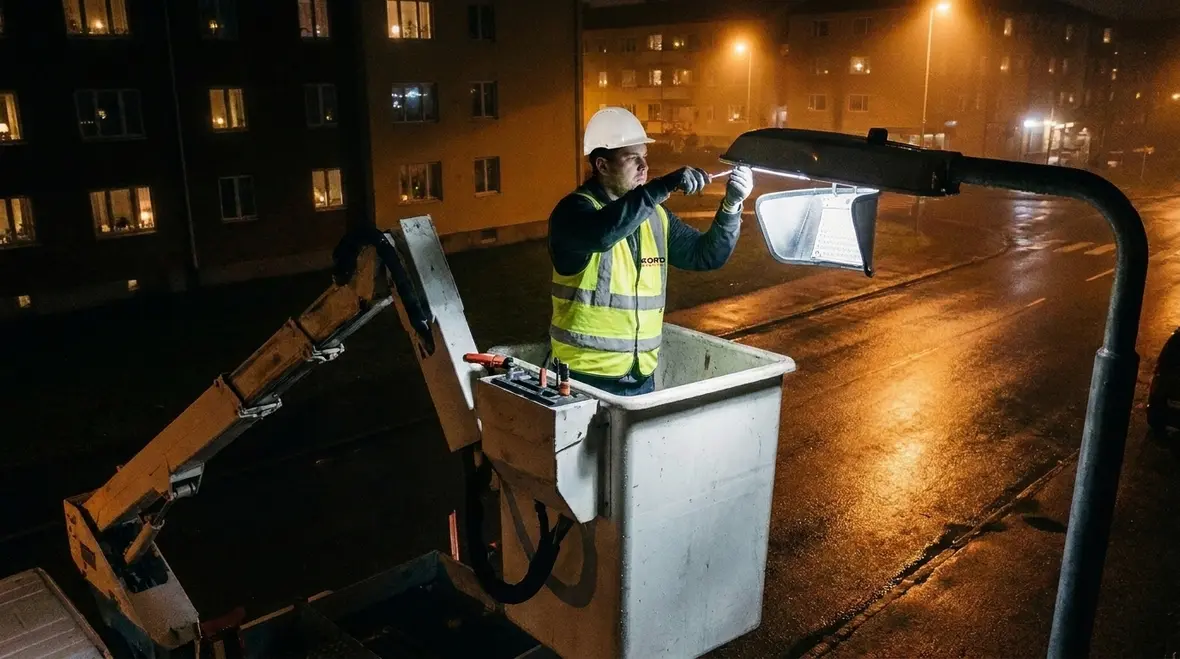
What commercial parking lot lighting standards focus on
Commercial lighting in Los Angeles is not only about local expectations. It also follows widely used performance ideas that guide safety and consistency. Typically, properties target adequate average illumination, uniformity, and good vertical visibility. Vertical visibility matters because faces and signage often sit on vertical planes, and cameras depend on that contrast.
We help clients understand three practical goals. First, reduce dark patches so pedestrians do not step into hidden hazards. Second, limit over-bright zones that cause glare fatigue for drivers and guards. Third, keep the lighting consistent across seasons and weather, since dust, fog, and foliage can change how light spreads.
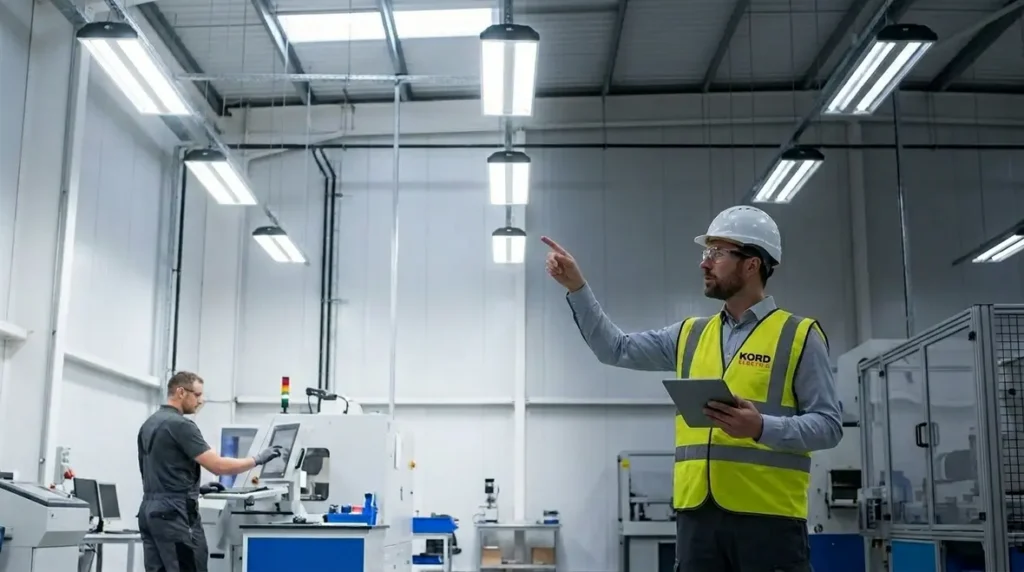
When we install for major properties and industrial facilities, we also plan for long-term performance. That means picking components suited for outdoor duty, designing for maintenance access, and preparing for how the site operates at night. If the lot is busy at certain hours, we plan around that flow, not around a daytime fantasy.
If you are evaluating broader upgrades inside the building as well, you can also explore Kord Electric’s commercial lighting installation Los Angeles guide to see how interior and exterior lighting strategies work together for safety, energy savings, and long-term reliability.
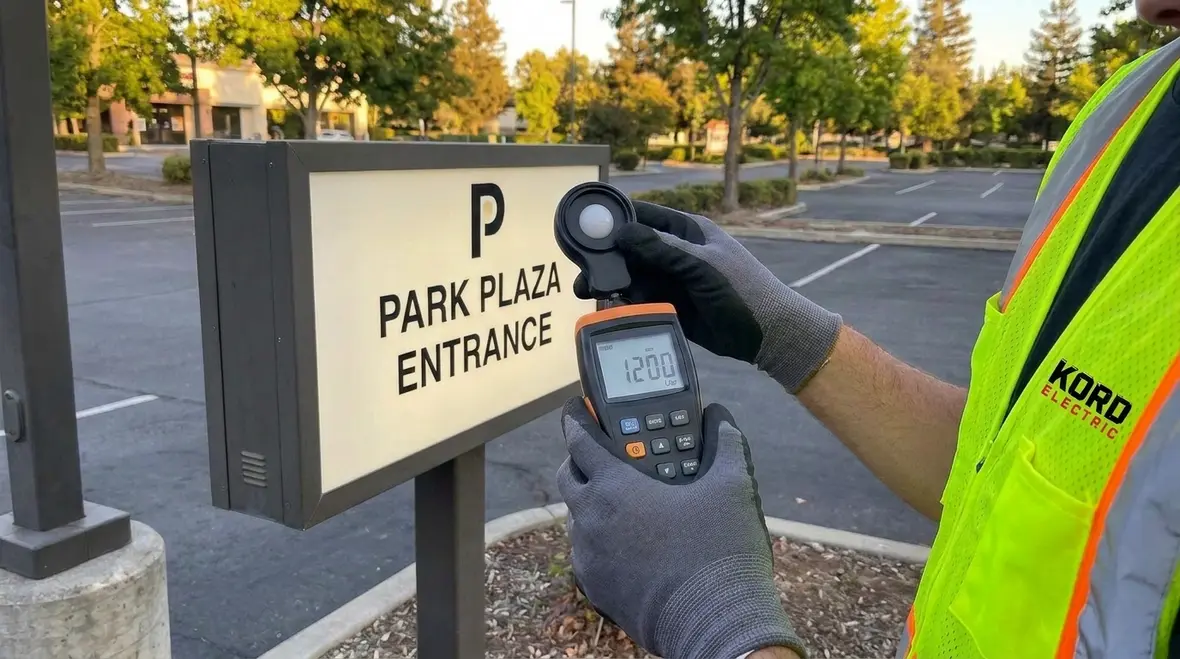
Typical spacing and layout we recommend for LA lots
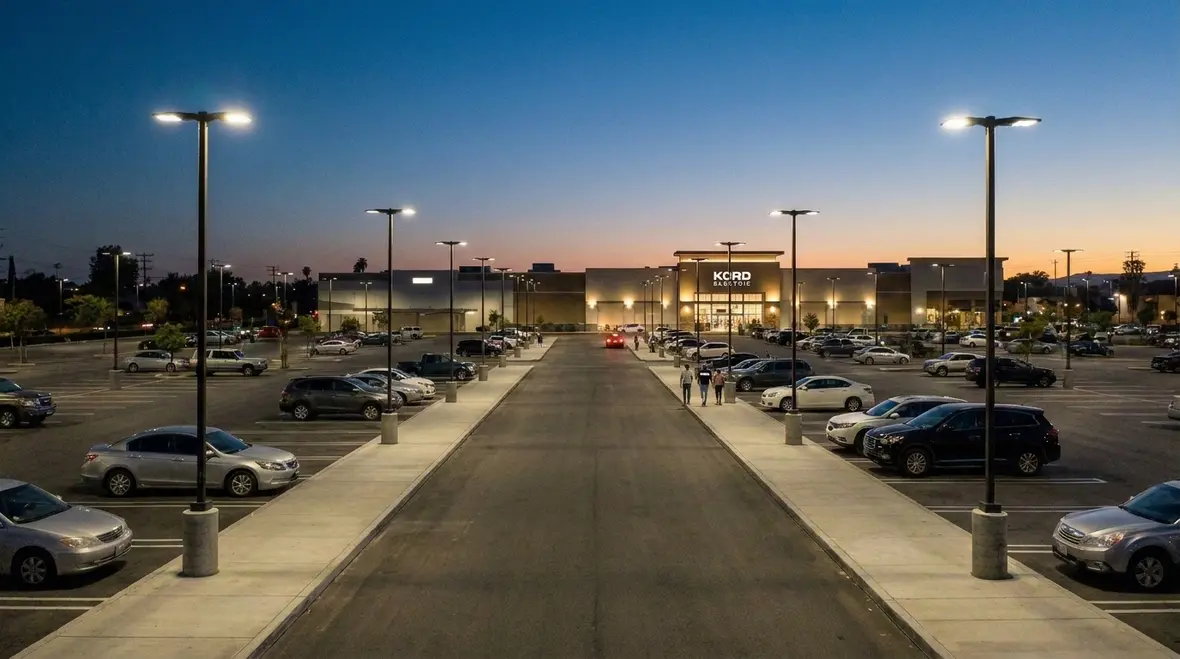
Every site differs, but the planning logic stays steady. We determine mounting height, then choose spacing that supports uniform coverage. After that, we address transitions near entrances, gates, and pedestrian crossings. Instead of treating the whole lot as one big rectangle, we break it into light zones.
For example, we often increase lighting density near building doors and walking paths. Drivers need guidance as they slow down, and pedestrians need clear visibility before they step off a curb or cross an aisle. Then we may reduce intensity in low traffic zones, as long as safety targets stay met. This approach avoids wasting power where it does not help.
Our technicians also verify aiming once fixtures are installed. Therefore, the layout stays aligned with the plan even if the ground shifts slightly or poles settle. It is a small step that saves major headaches. If you have ever watched a movie where the villain says “I am sure this will work,” you understand why we verify. Confidence is good, but proof is better.
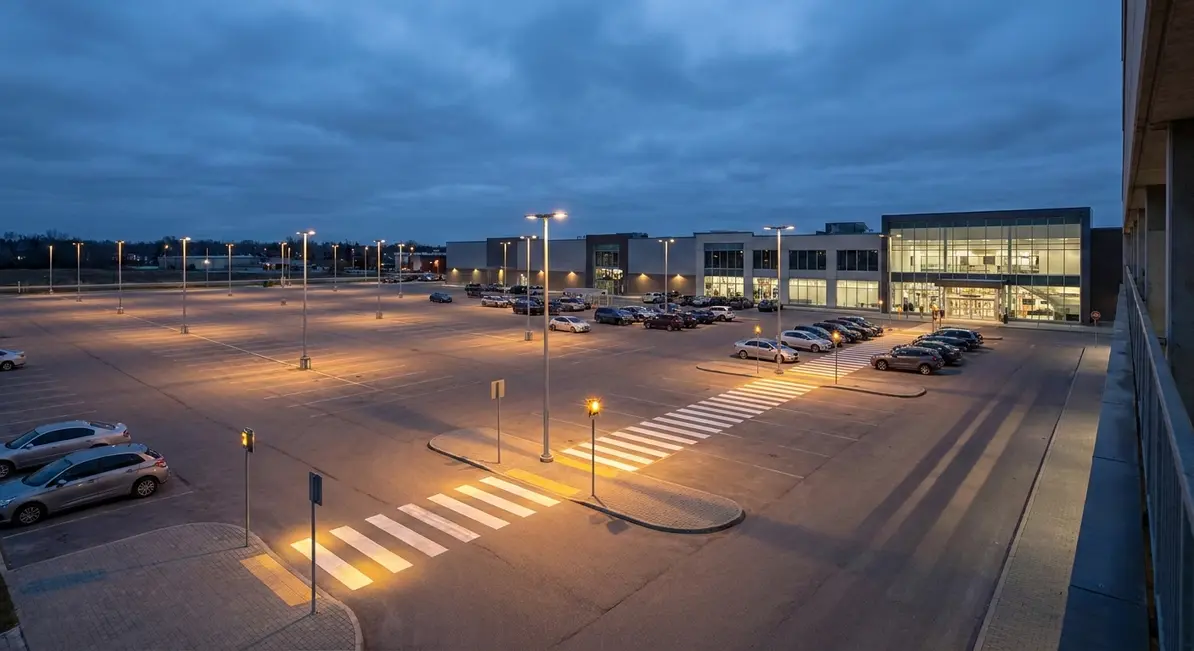
Lighting for entrances, sidewalks, and ADA paths
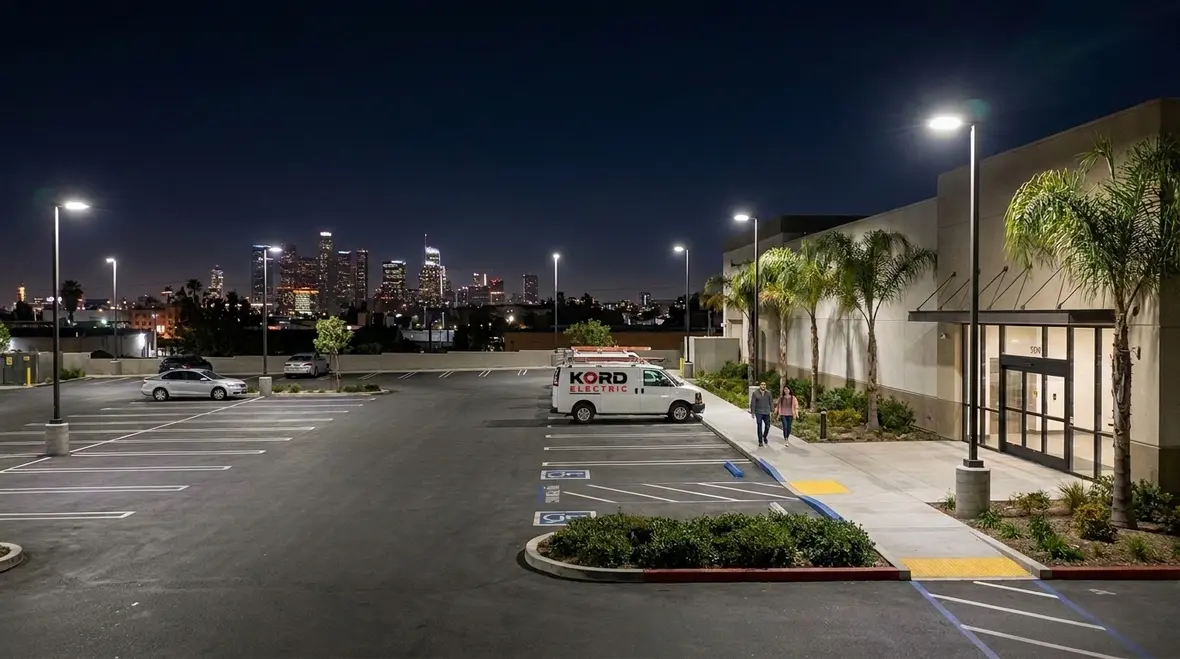
When people search for answers, they often think the rule is only about the lot surface. Yet the real customer experience often starts at the curb. A well lit entrance helps visitors feel safe, and it helps employees find doors, stairs, and ramps without searching with their phone flashlight. Consequently, we design lighting for pedestrian routes with special care.
We focus on evenness along walking paths and transitions at corners. We also consider glare from fixtures placed too close to sidewalks, because glare can be as unsafe as darkness. If the building has multiple entrances, we plan each one as a distinct lighting area. Then we coordinate the lighting with signage and wayfinding so the whole system works together.
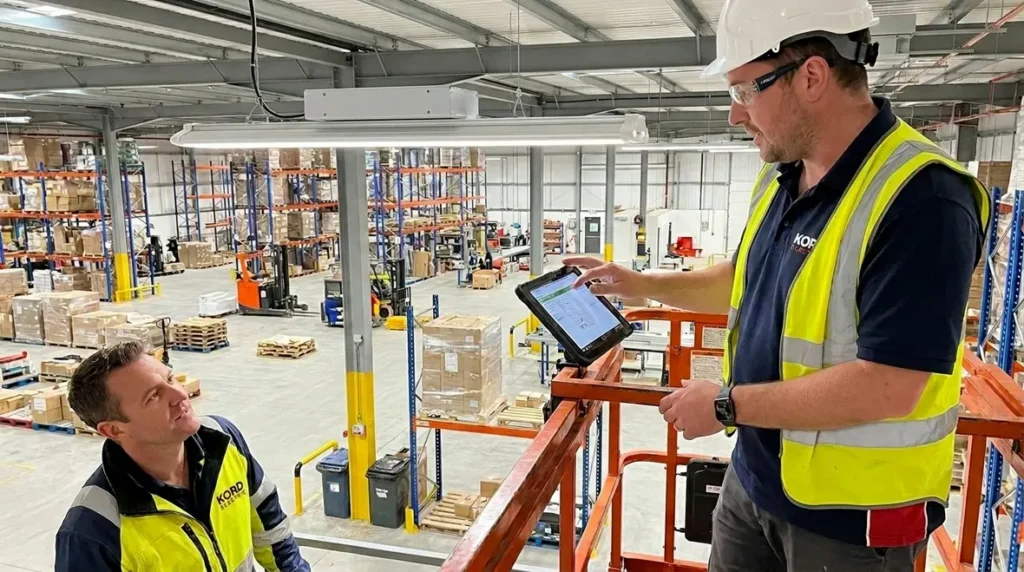
Our expert service staff walks clients through the reasoning. They show where pedestrians will be most visible to drivers, and where shadows can form. In other words, we explain it so your team can maintain it, not just operate it.
Energy, controls, and maintenance for long life
Commercial sites in Los Angeles want safety without energy waste. So, we bring smart control options into the plan. We evaluate timing controls, motion based activation where it makes sense, and dimming strategies that keep visibility while reducing power use late at night.
However, controls need careful setup. If you dim too aggressively, you create “looks fine until it does not” lighting. If you use the wrong sensing angles, lights can fail to activate when people arrive from the side. Therefore, we coordinate controls with site use. Loading docks, gate entries, and security paths get treated differently based on operations.
Maintenance also matters. Outdoor fixtures experience heat cycles, dust, and weather exposure. Our team selects components built for outdoor service and schedules support that matches the property’s needs. That means fewer surprises, faster fixes, and a lighting system that holds up beyond the first season. It is the difference between a well managed facility and a “we will deal with it later” facility. One of those sounds like a sitcom plot, and we prefer real life solutions.
Installation best practices for commercial and industrial facilities
When we install lighting for major properties, we treat the electrical side as part of the same safety system. We plan power feeds, routing, and protection so fixtures work reliably and maintain code compliant wiring practices. We also consider how the site will handle upgrades. If your operations grow, you want lighting that can expand without a full rebuild.
Our team installs with site safety in mind. We coordinate work around business hours when possible, protect walkways, and keep traffic flow clear. Then we test the lighting outputs after installation. After that, our technicians adjust aiming and confirm coverage. We make sure the final result matches the plan, not just the paperwork.
What we check on site
- Pedestrian routes and entry transitions
- Drive aisles and vehicle aiming angles
- Fixture spacing, height, and uniformity
- Glare control and neighbor impact
- Controls setup for real operations
What our expert staff explains
- Where light lands and where shadows form
- How uniformity affects safety and cameras
- Why cutoff matters for glare reduction
- How to keep performance with maintenance
- What changes are needed if the layout shifts
For properties that want their exterior and interior upgrades coordinated under one plan, Kord Electric also provides broader Los Angeles County electrical services for commercial facilities, so your parking lot, building lighting, and critical power systems all work together instead of in isolation.
FAQ: parking lot lighting and LA commercial installs
Ready to upgrade your parking lot lighting in Los Angeles?
If you run a commercial or industrial property, you deserve lighting that supports safety, reduces glare, and performs night after night. At Kord Electric, we design and install parking lot systems with clear planning, careful aiming, and expert explanations from our technicians. Reach out for an on site evaluation and we will map a solution for your layout, your operations, and your budget. Do not gamble with dark corners. Let us bring calm, reliable visibility to your facility.
For facilities planning larger electrical improvements along with a parking lot upgrade, you can also align this work with Kord Electric’s dedicated lighting installation services for commercial and industrial properties, so your exterior and interior lighting strategy stays under one coordinated plan.