Emergency Lighting Requirements for California Buildings
Emergency Lighting Requirements for California Commercial Buildings: What Kord Electric Helps You Get Right
Emergency lighting is not optional in emergency lighting requirements california commercial buildings, and the stakes are higher than most people think. We see it every time: owners want clear compliance, faster inspections, and fewer headaches when the fire alarm systems kick in. Meanwhile, teams still ask, “Do we really need all those fixtures, and do they need to be tested the same way every year?” We respond the way our expert service staff always does, with calm, practical guidance that matches California rules for commercial and industrial facilities and major properties.
In this article, we explain the key requirements, the real-world design choices, and the testing habits that keep systems working when you need them most. And yes, we also remind people that “it should be fine” is not a plan. Not even in Hollywood.
Why Emergency Egress Lighting Matters During Smoke and Power Loss
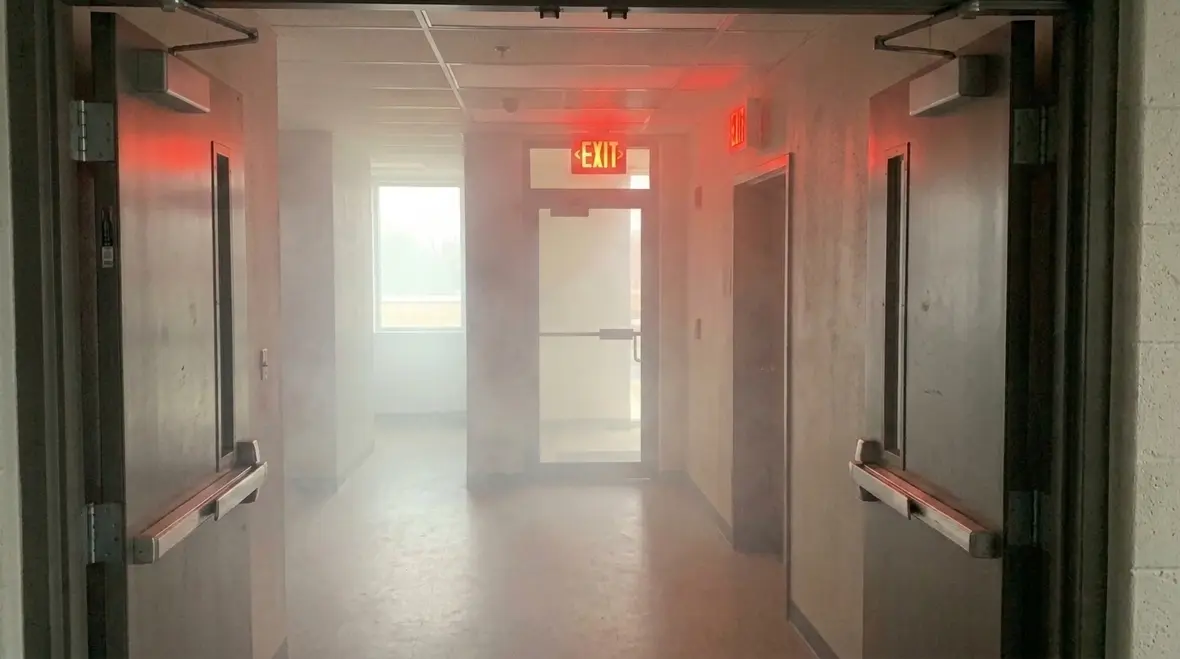
In a real incident, power drops, smoke rises, and visibility disappears fast. Therefore, emergency lighting and exit illumination must guide people to safety even when normal lighting fails. Kord Electric supports commercial and industrial facilities, so we focus on the building conditions that drive proper performance, such as ceiling height, corridor length, exit placement, and occupant load.
Furthermore, emergency lighting does more than help people leave. It helps first responders confirm routes, reduces panic, and supports overall life safety objectives. In other words, it makes the building act like a reliable tool instead of a mystery novel.
We also help teams connect the dots between emergency lighting and the broader life safety system. For example, when emergency lights and exit signs operate correctly, the path of travel becomes obvious, and evacuation behavior improves.

What California Commercial Buildings Must Provide for Code Compliance
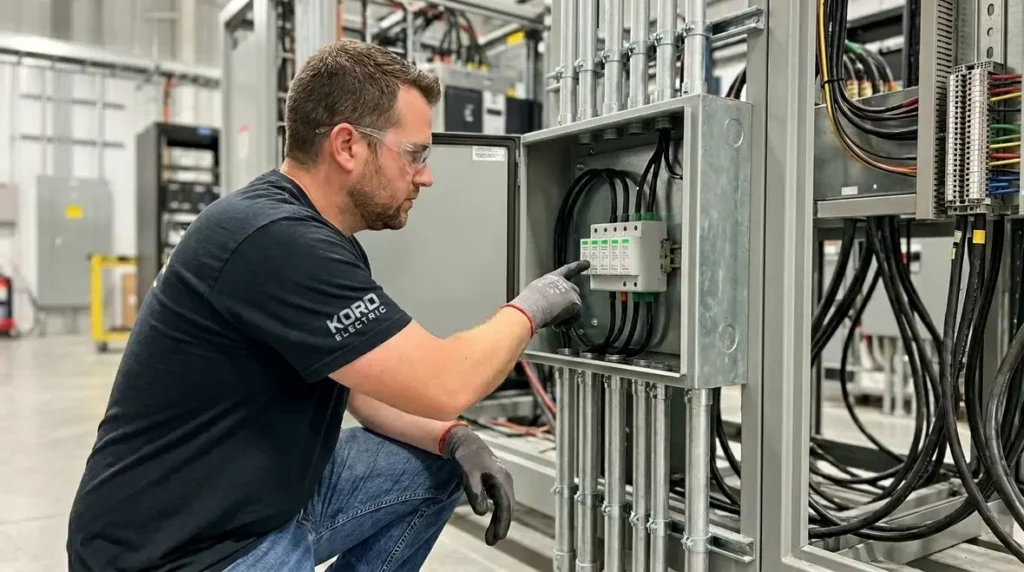
Many people only think about fixtures, but the emergency lighting requirements california commercial buildings includes more than hardware. It includes placement, duration, wiring methods, and operational testing. Kord Electric technicians review drawings, building layout, and existing equipment to confirm the system meets the requirements of California fire and life safety standards used for commercial projects.
In practice, teams usually need:
- Exit signs that stay visible along the path of travel
- Emergency lighting that lights corridors, stairs, ramps, and other key routes
- Proper battery backup or power source arrangement to support required runtimes
- Installation practices that resist damage and support safe operation
- Documentation and test procedures that owners can show during inspections
Additionally, different areas of a facility may have different coverage expectations. Therefore, we do not treat every hallway the same, even when it “looks similar.” Your code compliance should follow the building, not the guesswork.
For building teams that like to dive deeper into related lighting topics, Kord Electric also shares practical field lessons in guides such as the Lighting Installation Code Compliance Guide, where emergency egress lighting, exit signs, and inspection expectations all show up in real-world examples.
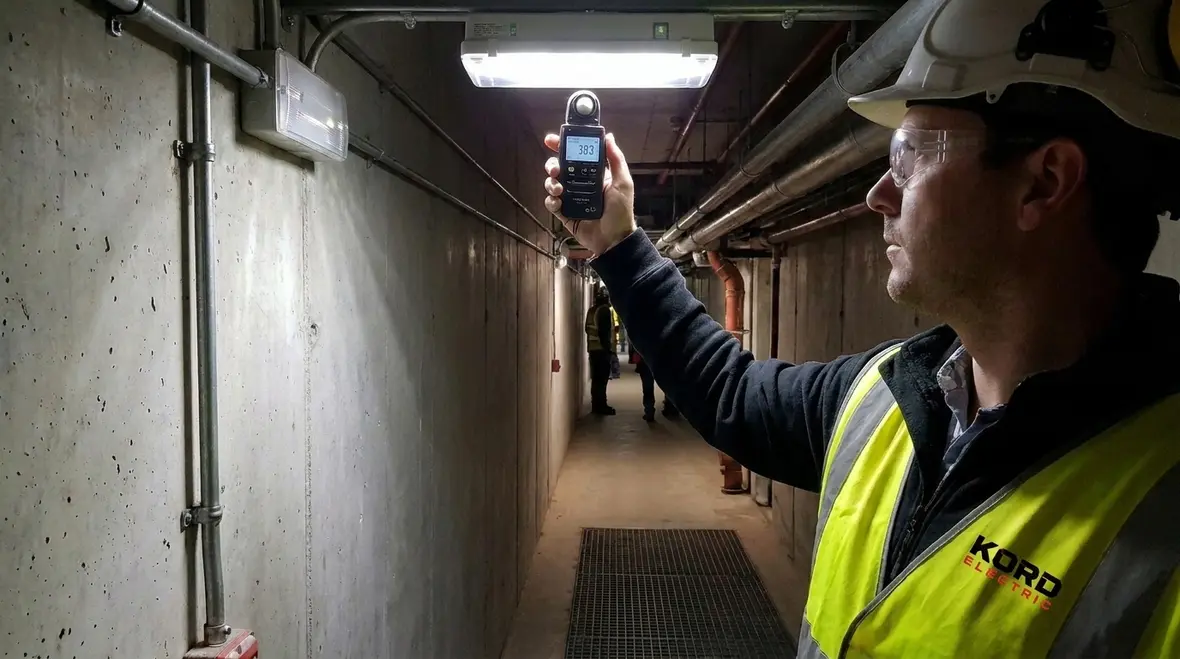
Connecting Emergency Lighting With Broader Electrical Priorities
Emergency egress lighting rarely lives on an island. It lives on panels, circuits, and power strategies that also support day-to-day loads. When we review a site, we frequently coordinate emergency lighting decisions with broader reliability planning, such as how emergency power behaves, how panels are labeled, and how testing fits into electrical preventive maintenance instead of fighting it.
If your facility operates across Los Angeles County, you can also look at how our Los Angeles County electrical services support lighting, panels, and life safety circuits as one coordinated system instead of a patchwork of disconnected projects.
How to Choose Placement, Brightness, and System Type That Works in Real Life
Design is where compliance can either come together smoothly or turn into a last minute scramble. Kord Electric helps property teams think through emergency lighting coverage based on real travel patterns. We evaluate the path of egress from where occupants are likely to be to where exits connect to the outside.
Next, we consider placement at intersections, near doors, and along long corridors. After all, if people miss a turn because the corner stays dark, the system did not actually solve the problem. Our technicians also review mounting heights, spacing, and the relationship between emergency lights and exit signs, so the lighting supports legible routes.
As for system types, there are choices based on building needs and upgrade plans. For example, some facilities use centralized power systems and others rely on unit equipment. However, the real goal stays the same: the emergency lighting must start promptly and run long enough when normal power fails.
And because buildings are never “standard,” we help coordinate upgrades with existing electrical infrastructure. If someone tells you it will take “about an hour,” we politely remind them that wiring never respects schedules. Not even at the movies.
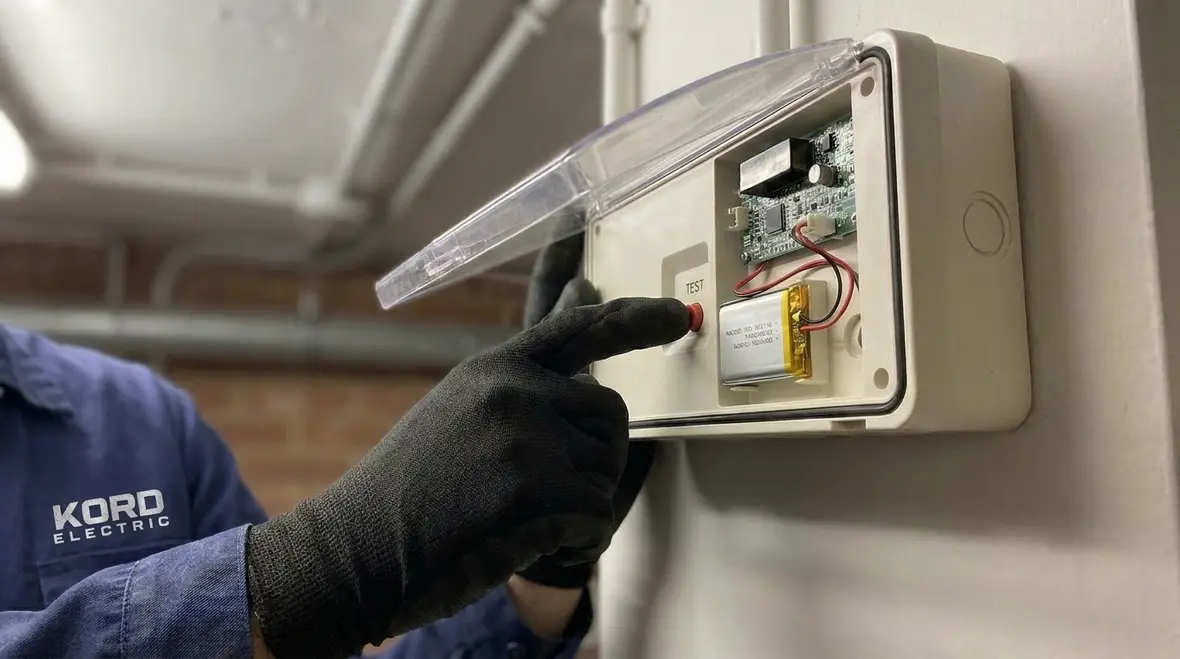
Balancing Code Requirements With Everyday Building Use
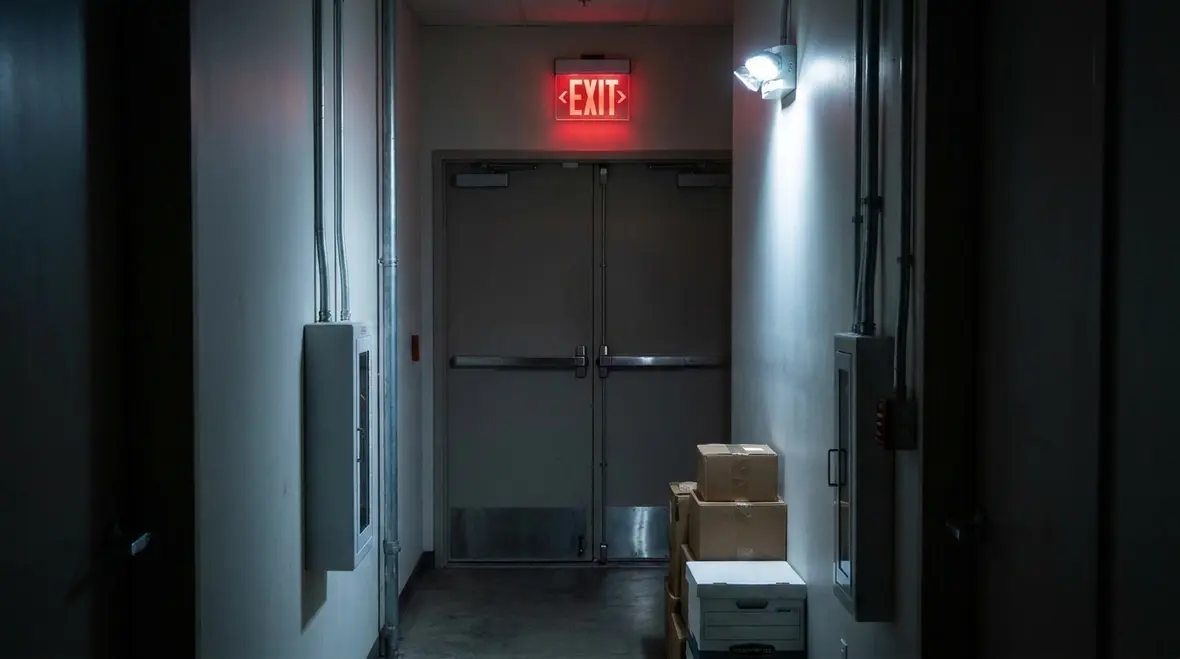
On paper, every corridor behaves perfectly. In reality, doors get propped open, storage areas grow, and people choose shortcuts the drawings never showed. When we plan emergency lighting for California commercial buildings, we pay attention to how the building actually behaves. That means walking routes, asking operators where traffic clogs, and treating the path of travel like a living system, not a static line on a plan.
Sometimes that leads to small but important shifts: a fixture moved a few feet for better coverage, an additional unit at a landing, or a brighter source where smoke could quickly lower visibility. Those small choices help the building act like a guide instead of a maze when power fails.
What Inspections and Testing Look Like, and How We Help You Stay Ready
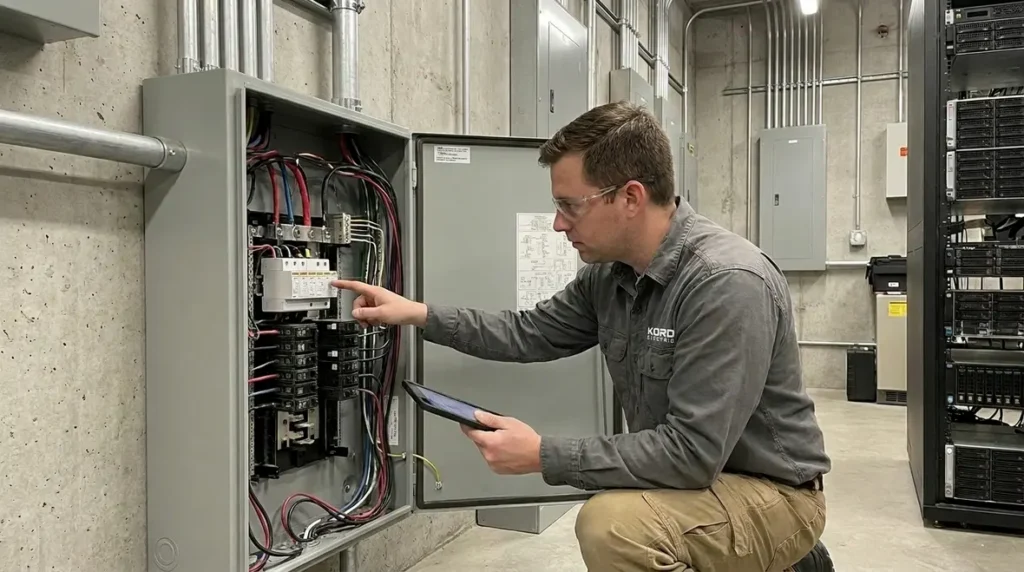
Maintenance and testing often separate compliant systems from systems that only look compliant. In commercial and industrial facilities, the inspection process expects proof that emergency lighting works as designed. Therefore, Kord Electric supports teams with service approaches that keep testing consistent and documentation organized.
Typically, test expectations include verifying that emergency lights illuminate and remain on for the required duration, and confirming that exit signs operate properly. In addition, we help owners plan service around downtime limits. We understand that production schedules and tenant operations do not pause just because a test date is on the calendar.
Our expert service staff explains each step in plain language. You do not need a wiring diagram to understand what you are checking and why. Still, we can provide details when you want them. That way, your staff can participate, your facilities team can track results, and the building stays ready.
Also, when systems age, batteries degrade and components fail in quiet ways. Eventually, “it still turns on” becomes “it turns on… just not long enough.” We help you address that before it becomes an inspection surprise.
For property teams that want testing and documentation to live inside a consistent plan instead of scattered calendar reminders, Kord Electric’s electrical preventive maintenance programs bundle emergency lighting testing, generator and ATS inspections, and broader electrical checks into one practical roadmap.
Making “Inspection Day” Feel Routine Instead of Risky
No one enjoys rushed fixes five minutes before an inspector walks in. By treating emergency lighting checks as part of regular preventive maintenance, you turn inspection day into a verification step instead of a high-stress fire drill. Our technicians document findings, flag weak links before they fail, and help you keep a clean trail of records inspectors actually want to see.
Service and Upgrade Paths for Commercial and Industrial Facilities
When emergency lighting upgrades enter the conversation, owners usually ask for speed and low disruption. We focus on commercial and industrial facilities and major property buildings, so we plan the work like professionals who respect both compliance and operations.
Depending on the condition of existing equipment, Kord Electric may recommend:
- Retrofits that preserve usable infrastructure while improving coverage
- Component replacements such as battery units or circuit interfaces
- Relocation or addition of fixtures where egress paths need better illumination
- System upgrades that support required performance and maintenance needs
Moreover, upgrades often tie into broader electrical and life safety improvements. We help coordinate projects so emergency systems align with the building’s electrical design and any related safety systems. As a result, teams avoid patchwork solutions that create future testing problems.
And if you are thinking, “Can we just add a few lights and call it a day?” We hear that often. However, real compliance depends on the whole path of travel, not just the loudest corner. Kord Electric keeps the solution honest, not hopeful.
Planning Upgrades Around Real-World Operations
Every facility has windows of time when work slows down—or at least takes a breath. We help you align emergency lighting projects with those windows so crews can work efficiently without disrupting tenants, production, or building services. Phased work, clear communication, and a predictable schedule keep everyone focused on the improvement instead of the inconvenience.
Dual Focus: Design Standards and Local California Expectations
Commercial and industrial facilities face two kinds of pressure: national style requirements and local enforcement expectations. Therefore, Kord Electric approaches emergency lighting as a complete system, not isolated fixtures. We align layout and performance with the standards used for California compliance, and we also respect how the local fire authority typically reviews life safety documentation.
In our field work, we notice that small mistakes cause big delays. For example, documentation gaps can extend project timelines, and incorrect fixture labeling can slow acceptance. Hence, our expert service staff treats paperwork like part of the electrical system, because it is.
In many projects, we pair layout verification with inspection ready records so the building team can move forward with confidence. Meanwhile, our technicians explain what they found and what they recommend, so decisions stay clear, not confusing.
If your team manages more than one building, it can also help to think about emergency lighting requirements as part of a larger playbook for reliability and continuity. Resources like Kord Electric’s coverage of emergency power design, electrical troubleshooting, and lighting code compliance give owners a broader context for how egress lighting, exit signs, and life safety circuits fit into everyday operations—not just emergencies.
Coordinating Life Safety Loads With Other Projects
Tenant improvements, renovations, and equipment changes all have a way of bumping into emergency circuits. When that happens, we evaluate how new loads, panel conditions, and wiring changes will affect life safety systems. The goal is simple: no surprises when the power fails and no surprises when the inspector reviews the plans.
FAQ: Emergency Lighting Requirements for California Commercial Buildings
Conclusion: Let Kord Electric Bring Your Emergency System Into Focus
Emergency lighting requirements for California commercial buildings demand more than a quick fix and a wish. Kord Electric delivers expert, on site service for commercial and industrial facilities and major property buildings, with technicians who explain every step and support you with testing readiness and practical upgrade paths. If your system is aging, your documentation is incomplete, or you want a clearer compliance plan, contact us. We will help you move forward with confidence, not confusion, and keep your egress routes bright when it counts.
Call Kord Electric to schedule an assessment and bring your emergency lighting coverage, testing process, and records into alignment.
As you look across your broader facility needs—from panels and troubleshooting to lighting upgrades and emergency power—you can also explore how Kord Electric’s regional services support commercial properties and industrial facilities throughout Los Angeles County. Keeping emergency lighting, power quality, and day-to-day operations under one coordinated service umbrella helps every inspection, every outage, and every workday feel a lot more predictable.