Commercial Emergency Lighting Inspection Checklist
Kord Electric emergency lighting inspection checklist commercial starts before anything fails. Our team uses a practical emergency lighting inspection checklist commercial designed for commercial, industrial, and major property buildings, where uptime matters and guests do not want to find out the hard way. Within the first minutes of an inspection, our expert technicians confirm coverage, test operation, and check the safety pathway so the lights perform when the normal power stops. In this article, we walk through what a strong inspection looks like, how we document results, and why businesses benefit from doing it on schedule. And yes, we do find the occasional “it worked last time” story. Unfortunately for that story, electricity does not care about past feelings.
What our emergency lighting inspection checklist commercial covers in the real world
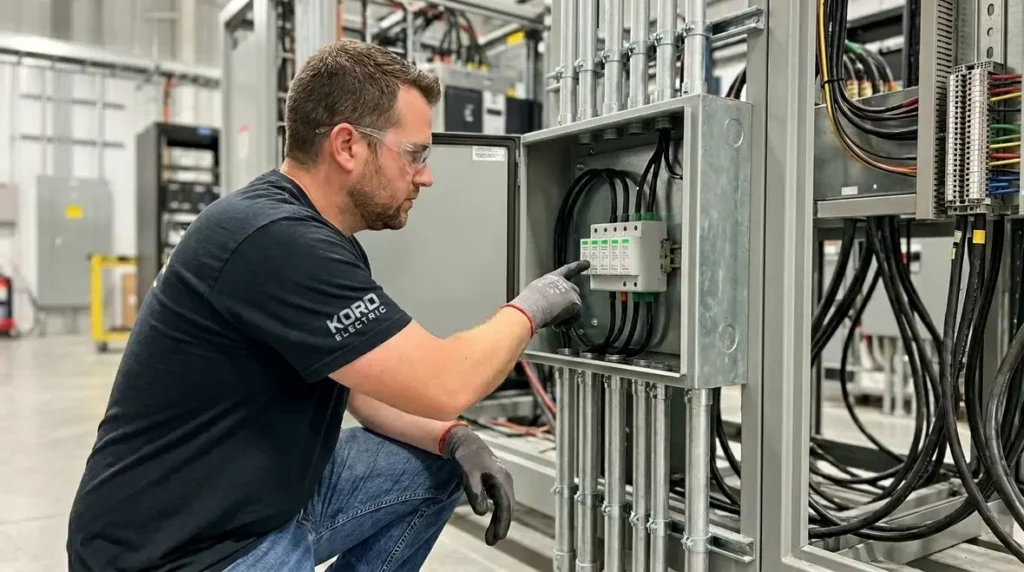
In commercial and industrial facilities, emergency lighting has one job: help people move to safety during a power loss. Therefore, the inspection must look at more than whether the lights glow. First, our technicians verify that every device sits in the right place, serves the right route, and follows the needs of the building layout. Then they check functionality with testing that matches real conditions, not just a quick visual glance. Next, they examine whether the system can start and run long enough to support safe egress.
From there, our expert service staff focuses on the “boring” details that prevent big problems later. For example, we check battery health, charger operation, and correct transfer behavior in maintained and non maintained systems. Additionally, we confirm that exit signs and emergency lights work together, so the route guidance stays clear. Finally, we verify that documentation is complete and easy to review during audits, insurance requests, or incident investigations.

When inspections follow a consistent emergency lighting inspection checklist commercial approach, property teams gain something even more valuable than a checkbox: a repeatable way to confirm that real people can see, move, and exit safely when the normal lighting goes dark.
Emergency power lighting systems and components you should not ignore
Emergency lighting does not live as one single product. Instead, it exists as a system with parts that must work in harmony. Our technicians look at emergency light fixtures, exit sign units, remote heads, power packs, battery backup units, and wiring that connects them. For major property buildings, the system can be large and distributed, which makes good labeling and clear documentation a must.
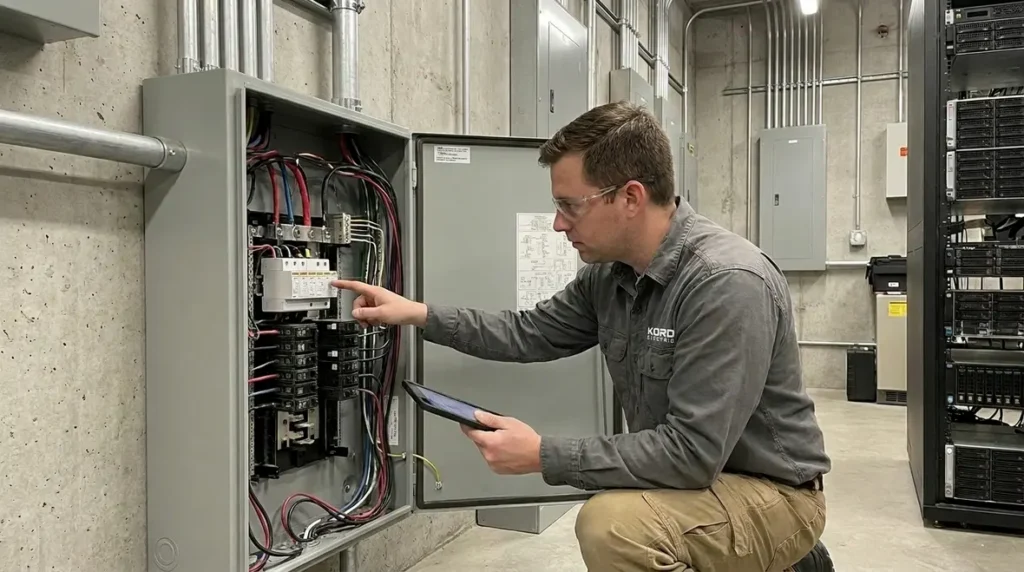
Because many facilities also include control panels, circuit details matter. Our team checks that the correct circuits feed the emergency loads and that there is no mismatch between panel schedules and installed devices. Additionally, we examine age and wear factors. A unit can look fine and still fail under load. So we test the output and confirm performance against expectations for duration and brightness.
And just to keep it human, we remind property managers that “I saw it turn on once” is not a testing plan. It is more like checking a smoke detector because you smelled pizza. It might help, but it is not the standard.
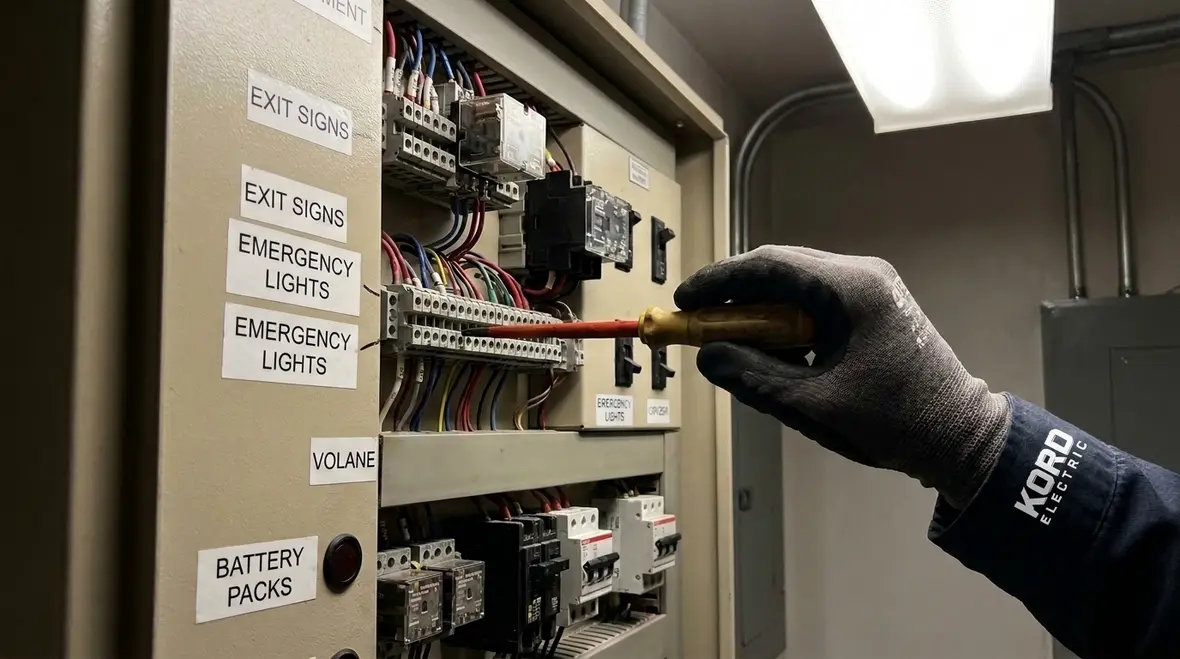
When commercial teams treat emergency lighting as an integrated system instead of scattered parts, they make it much easier to coordinate with broader power readiness efforts, including emergency lighting strategies for commercial buildings that tie into backup power and life safety circuits.
Step by step inspection process for businesses
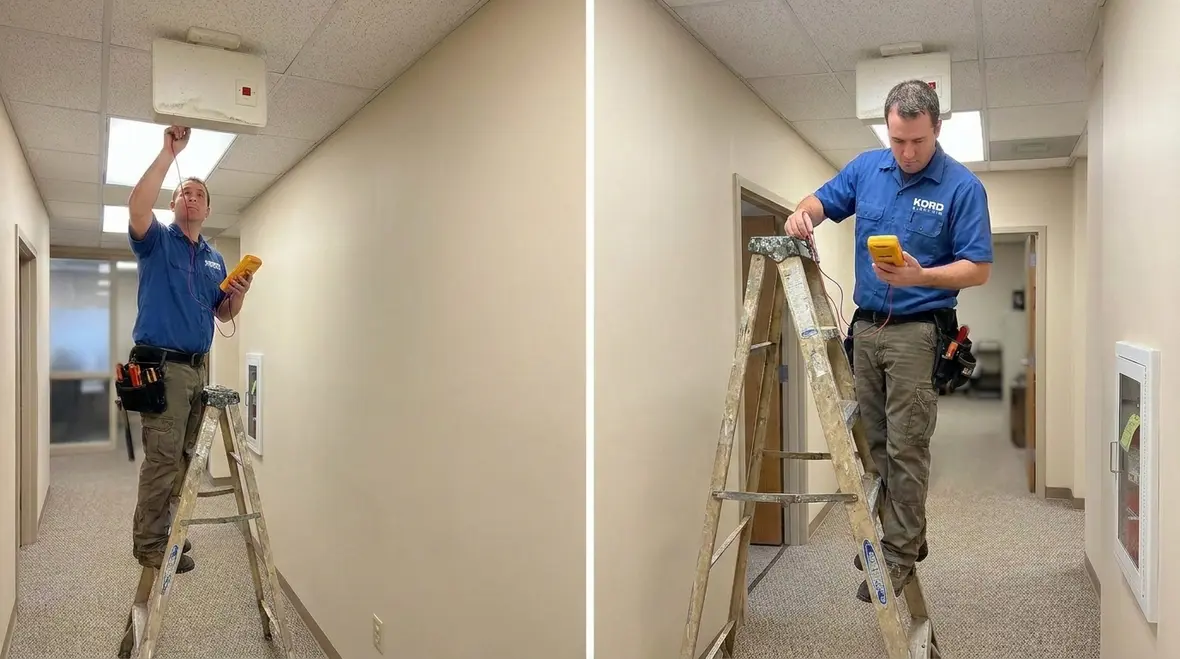
Our approach stays consistent, so results stay clear. First, we plan the route and identify the coverage areas based on floor plans and egress needs. Then we inspect the physical condition of each unit, including lens clarity, mounting security, and signs of moisture or impact damage. After that, we run the operational tests required to confirm the system responds as designed when power changes.
Next, we verify test records and confirm that prior findings got addressed. If a light failed last quarter, our technicians track whether repairs happened and whether the replacement matches the original spec. Then we evaluate whether any devices require cleaning, re-aiming, or circuit correction due to building changes, renovations, or tenant work.
To keep everything practical, we also confirm that access remains safe. Emergency fixtures can sit above ceilings, along corridors, or near mechanical areas. Therefore, we coordinate access needs with building staff so the inspection does not turn into an all day scavenger hunt.
Because Kord Electric also supports broader commercial electrical services, including Los Angeles County electrical services for commercial facilities, we align emergency lighting inspections with other electrical work where it makes sense. That way, building teams reduce repeat disruptions and make better use of every planned shutdown or access window.
Why a consistent process matters for commercial safety
Emergency lighting inspections that change format every year confuse everyone. A consistent process makes it easier to compare results, track weak spots, and explain the story to insurance partners or safety committees. With a clear emergency lighting inspection checklist commercial teams can understand, facility managers get predictable data instead of surprise findings that show up with no context.
How commercial facilities should test coverage and runtime
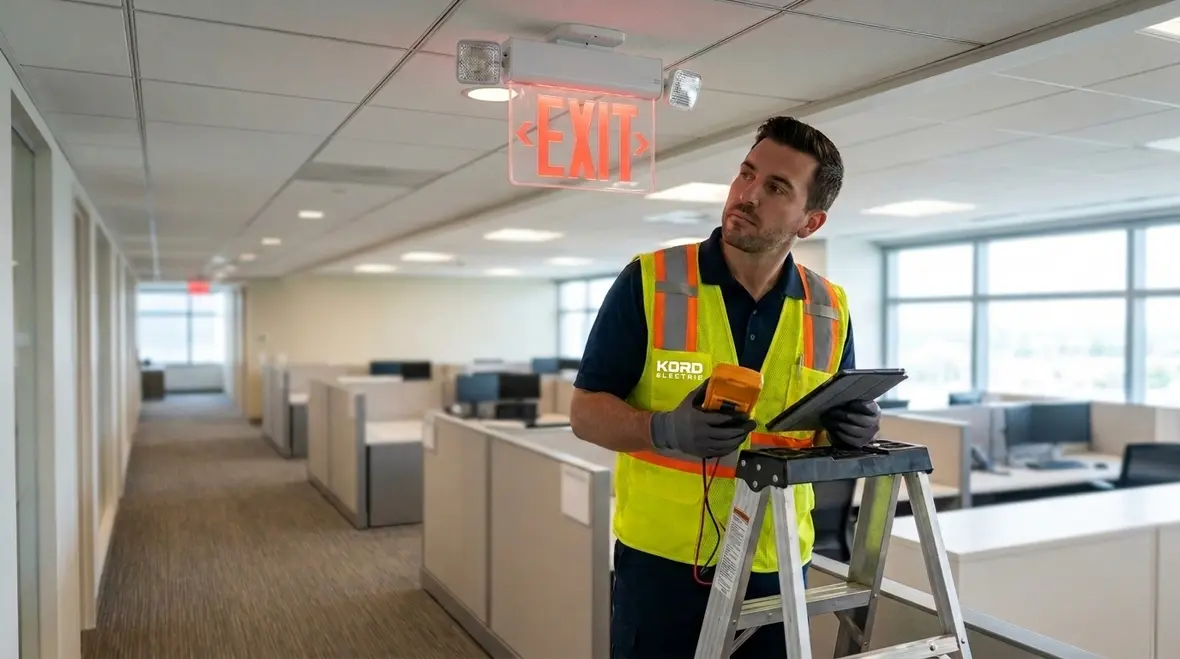
Coverage means the route stays visible and guided. For that, our technicians confirm spacing, mounting height, and intended sight lines. In a corridor or stair enclosure, poor placement can leave a gap where people would struggle to navigate. Therefore, we focus on whether each segment of the path receives adequate illumination and guidance.
Runtime matters just as much. When power drops, emergency lights must run for the required period based on building and code expectations. Our expert service staff checks battery backup performance and observes that the system maintains output during the test window. Then we record results with location identifiers so the facility can act quickly if a unit shows weak performance.
In addition, we test whether maintained and non maintained fixtures behave correctly for their mode. Some facilities have both types depending on design. Because of that, correct settings prevent confusion and repeat failures. If the system triggers at the right time and stays on long enough, then the building supports safe evacuation. If not, then the facility risks losing guidance just when people need it most.

Linking emergency coverage to broader power reliability
Coverage and runtime do not live in a vacuum. They tie directly into how the building’s power system behaves during a fault. Many property managers combine emergency lighting checks with broader evaluations inspired by topics like emergency power failures, hidden electrical risks, and business continuity design so that life safety lighting and distribution gear support each other instead of working at odds.
Common failure points and how we help you prevent them
Many emergency lighting problems come from predictable causes. First, aging batteries reduce capacity over time. Second, vibration and heat can loosen components or degrade wiring connections. Third, renovations can change layouts without updating the system. For example, a new storefront, moved racks, or updated wall signage can alter how people use corridors and exits.
Another failure point involves power distribution. If the emergency feed circuit labels do not match the as built reality, the emergency loads can miss their mark. Likewise, poor maintenance can leave units dirty or obstructed, and lens buildup reduces visible output. Our technicians also look for water intrusion, corrosion, and impact damage near loading areas and exterior entrances.
To make this easy for stakeholders, Kord Electric technicians explain findings in plain language. We do not just hand over a list like a grocery receipt. Instead, we show what failed, where it failed, why it failed, and what the facility should do next. And if you hear the classic line “we will look at it later,” we gently remind everyone that electricity takes no meetings.
Turning “we will get to it” into real preventive action
The emergency lighting inspection checklist commercial property teams rely on should do more than flag problems. It should translate findings into prioritized action items. That means calling out immediate safety risks, near term maintenance tasks, and long term upgrades so funds move where they have the most impact instead of chasing the last failure.
Documentation, reporting, and what owners ask during audits
Businesses and major property managers need proof. Therefore, our process includes clear reports that track which devices we inspected, test outcomes, and any follow up actions. We also include time stamps and location references so the information remains useful for internal review and external needs.
In many cases, property owners and facilities leaders want to know risk, not just results. So we organize findings by priority, such as devices that failed versus devices that may need attention soon due to weak performance. That way, the facility can plan repairs without guessing. Additionally, our team makes it easier to manage recurring schedules, so a building does not scramble every time a deadline approaches.
What our team checks |
Why it matters for commercial safety |
|
Fixture placement, coverage, and exit sign pairing Battery and charger function Correct mode behavior and transfer |
People can find routes in low light Lights last long enough during outage Guidance activates at the right time |
When inspections also feed into broader efforts like commercial electrical safety audits and emergency power system testing, documentation becomes a single source of truth instead of a scattered set of forms. That makes future inspections faster and gives owners a clear narrative to present during insurance reviews or safety committee meetings.
Where the checklist fits into an overall emergency readiness plan
Emergency lighting inspection should not sit in a folder and collect dust. Instead, it should connect to the facility’s broader readiness strategy. Our technicians align the inspection with operational realities like shift schedules, access constraints, and building changes. Then, we help facilities update the emergency lighting plan when layouts shift or when tenants reconfigure spaces.
Additionally, we recommend a steady maintenance rhythm that matches building use. Busy industrial sites see more vibration and heat. Office towers see more tenant turnover and signage updates. And major property buildings often add new corridors or upgrade finishes. When the environment changes, the emergency system must keep up.
Finally, we help businesses reduce downtime and disruption. Because our team works with building staff, we plan testing times to minimize impact. And while emergency equipment does not require attention every day, it does require attention at the right times. Think of it like preventive maintenance, not panic button behavior.
For property teams already thinking beyond lighting and into distribution, standby power, and controls, combining an emergency lighting inspection checklist commercial approach with services such as emergency power systems testing and commercial electrical safety audits creates a tighter, more reliable overall emergency plan.
FAQ on emergency power lighting inspections for commercial buildings
Request a commercial emergency lighting inspection from Kord Electric
When businesses plan for emergencies, they build trust with every tenant, worker, and visitor who walks the building. Kord Electric provides expert service for commercial, industrial, and major property buildings, using a clear emergency lighting inspection checklist commercial approach that tests what matters and documents what happened. Contact us to schedule an inspection, get a detailed report, and receive technician explanations you can use right away. Let us help you prevent surprises, reduce risk, and keep your emergency system ready. After all, the only thing that should light up during an outage is safety.
If your facility is also planning broader electrical work, you can connect emergency lighting inspections with related services like emergency power design, safety audits, and distribution upgrades so life safety lighting, panels, and backup systems support a single, well documented emergency readiness strategy.