Electrical Fire Hazards in Commercial Buildings
Kord Electric has seen how quickly small problems can turn into serious outcomes, especially in environments where people, equipment, and downtime all matter. When facility teams look at electrical fire hazards commercial buildings, they often focus on obvious sparks and smoke. Yet the biggest risks usually begin quietly, through heat buildup, worn parts, poor connections, and systems that no one checks until something fails. That is where we step in. Our technicians and expert service staff walk building teams through what to look for, why it matters, and how to prevent trouble before it becomes an emergency. And yes, we promise to keep it practical. Nobody wants a fire drill. That is just a pop quiz nobody studied for.
Where electrical risk starts in commercial and industrial spaces
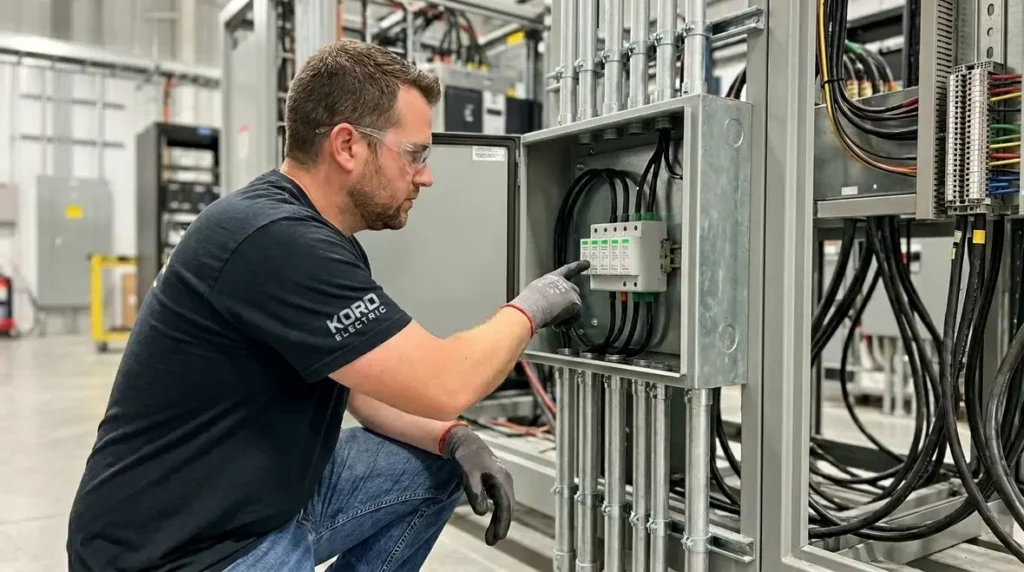
In commercial and industrial buildings, electrical fires do not start because the facility is “unlucky.” They start because heat finds a weak spot, then heat makes the weak spot worse. Kord Electric explains this in plain language for facilities managers: if current flows through resistance, it creates heat. If that heat has nowhere safe to go, materials dry out, insulation degrades, and connections loosen even further. Over time, the system reaches the point where a small fault can ignite dust, fibers, foam, or other combustibles nearby.
Additionally, commercial buildings tend to run electrical systems harder and longer than many people realize. For example, loading changes, tenant buildouts, and equipment upgrades can shift demand without a clean plan for how those changes impact panels, feeders, and grounding. As a result, electrical fire hazards commercial buildings often show up after renovations, new machinery installs, or “temporary” fixes that never got removed. And temporary fixes, like pop songs from the past, have a way of staying around longer than promised.
If your facility has seen multiple rounds of tenant improvements or equipment upgrades over the years, it is worth pairing a fresh electrical inspection with a broader review of how your distribution system is laid out. That is where a structured preventive plan makes the difference between steady operation and a surprise outage.
Hot spots, loose connections, and panel problems that trigger fires
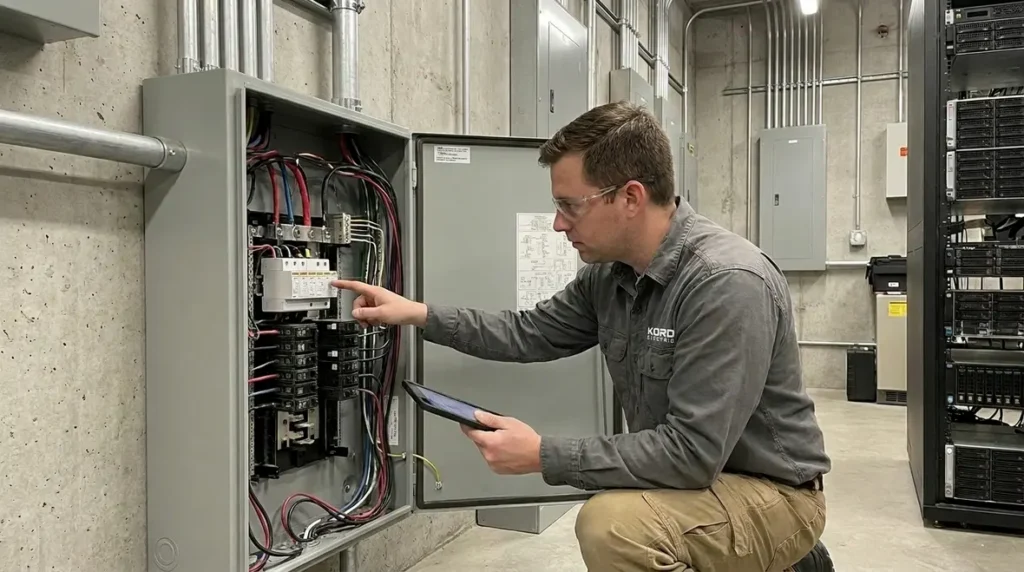
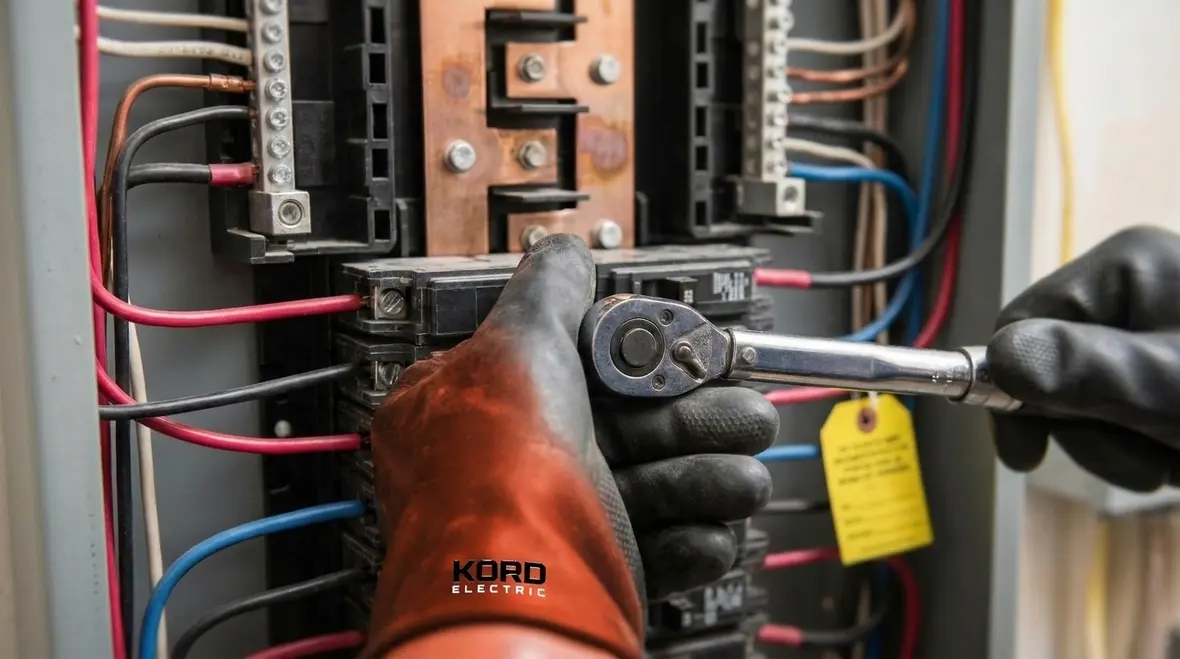
Many electrical fire hazards begin in areas that look normal to the untrained eye. Therefore, facility managers should treat panel life like a schedule, not a guess. Loose terminations and poor torque can create arcing. When arcing happens, temperatures spike quickly, and carbon forms at the connection. After that, the next time current flows, the connection overheats faster. Ultimately, the panel becomes a source of sustained heat rather than a stable distribution point.
Here is what our service team urges others to monitor in commercial and industrial buildings:
Discoloration around breakers, lugs, and bus bars. Heat leaves marks that do not lie.
Buzzing or crackling sounds from switchgear or panelboards. That noise often signals arcing activity.
Burned insulation smells during operation. Even if no visible smoke appears, it can still mean trouble.
Signs of water intrusion in electrical rooms, especially near conduits and meter cabinets.
Our technicians also recommend close attention to how maintenance teams handle panels during troubleshooting. If a cover is left off, if a gasket is missing, or if someone uses the wrong part for a replacement, the problem can grow without warning. On top of that, any work order that adds new circuits should include an evaluation of load and breaker sizing. Otherwise, the electrical system works like a crowded elevator. It gets uncomfortable, fast.
In many Los Angeles County facilities, this is where a partnership with a commercial electrical contractor pays off. A properly documented maintenance visit not only corrects loose terminations and aging components but also helps you line up future capital planning. When panels and feeders are running near their limits, you want that decision made in a conference room, not during an outage.
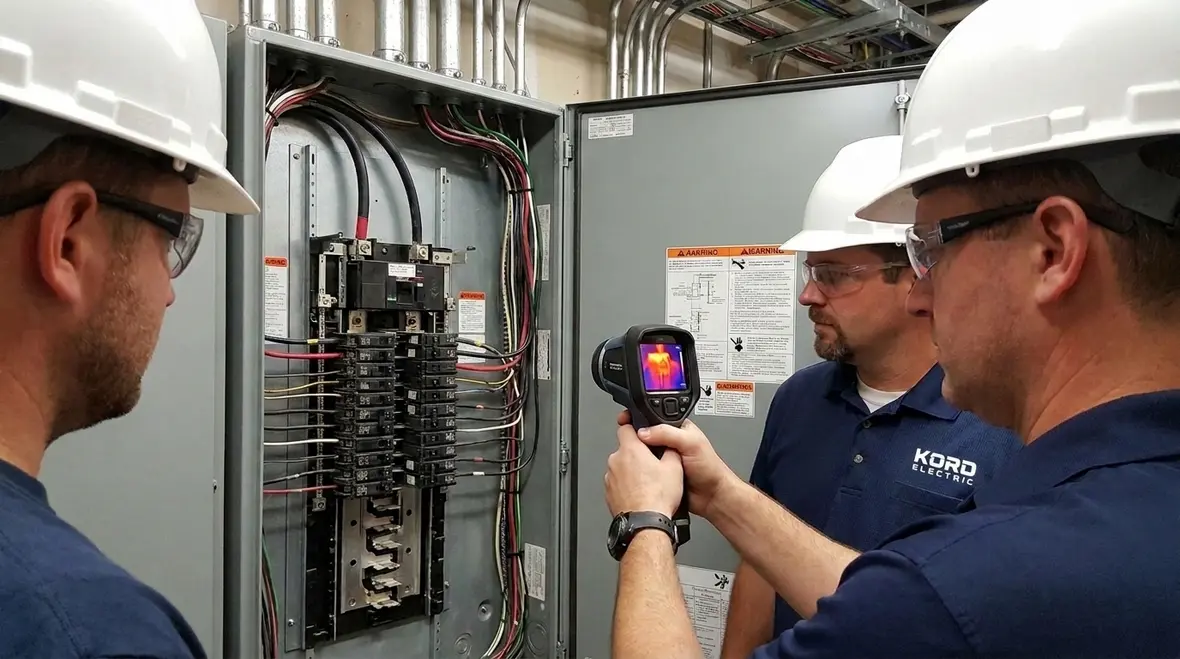
For property leaders who want an even deeper dive into reducing risk at the system level, pairing these visual checks with thermal imaging and structured preventive maintenance is a smart move. It is the difference between guessing and knowing where your hot spots actually are.
Overheating from overloads and damaged cables in real facilities
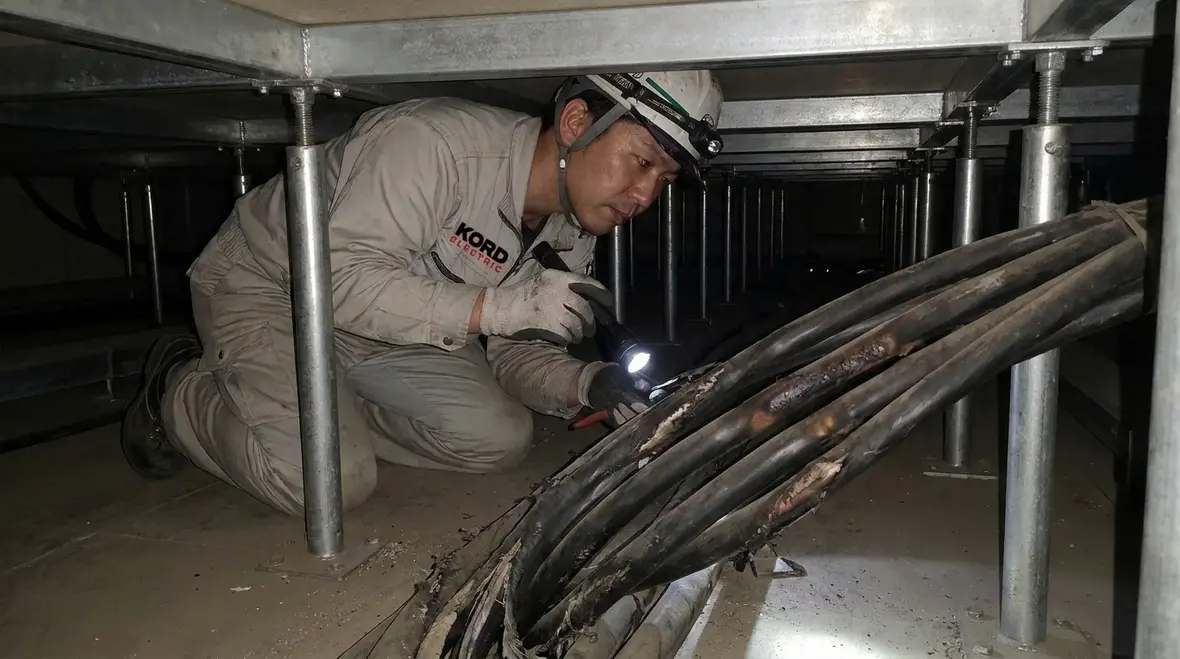
Overloads and damaged cables rarely announce themselves with dramatic signs at first. Instead, they build heat in the background. A cable can run warm for weeks, then fail during a peak load day. That is why facility managers should treat cable condition as an ongoing inspection item. Kord Electric emphasizes that damaged insulation, cracked jacketing, and rodent or impact harm can turn conductors into heat sources.
Other common contributors include:
Cables with crushed sections under racks, curbs, or door areas.
Improper cable management that traps heat or restricts ventilation.
Signs of moisture where conduits enter buildings, especially in basements and service corridors.
Undersized conductors from older installs that do not match today’s equipment.
In addition, facilities managers should watch for recurring nuisance trips. A “quick reset” mindset hides the cause. If breakers trip often, the system may have an insulation problem, a connection problem, or a fault current issue that needs real diagnosis. Our expert service staff helps teams understand that downtime is expensive, but unmanaged heat costs more. Fires do not care how busy the schedule is.
This is also the point where broader risk planning comes into play. If your building has aging branch circuits feeding critical loads, a structured upgrade plan can stop recurring problems from turning into emergency calls. Proactive work often costs less than repairing equipment, remediating smoke damage, and explaining an avoidable outage to tenants or operations leaders.

When our team evaluates cable conditions, we also look at how loads have changed over time. A circuit that was “fine” a decade ago may now be feeding servers, HVAC upgrades, or production equipment that push it beyond its original design. That creeping overload is one of the most overlooked electrical fire hazards commercial buildings face today.
Arcing, dust, moisture, and hidden ignition sources
Even when wiring appears intact, ignition can start from conditions around the electrical system. Therefore, facility managers should think beyond the equipment cabinet. Dust buildup on electrical components, moisture in enclosures, and flammable storage near panels all raise risk. In commercial and industrial environments, dust can be an issue in warehouses, manufacturing spaces, and areas with sanding, cutting, or product packaging.
We also advise teams to look at how enclosures are sealed. If doors do not close correctly, if covers do not fit, or if seals fail, airborne contaminants enter the system. Then, heat from normal operation or a minor fault can ignite the material. Just like how a coffee spill gets sticky over time, small issues turn into messy problems when they stay unattended.
Moisture, meanwhile, can reduce insulation quality. Once insulation breaks down, current can leak in places it should not. In that situation, arcing can start where no one expects it. Kord Electric trains staff to recognize these patterns and to document conditions for repeat issues. Then, we help building teams prioritize repairs based on risk and impact, not just convenience.
If your operations or tenants store inventory near electrical rooms, revisiting housekeeping rules can be one of the simplest, highest-impact steps you take. A few feet of clearance can be the difference between a warm panel and a fire that finds cardboard, shrink wrap, or chemicals sitting right where they should not be.

For a deeper look at how housekeeping, load management, and system design work together to reduce risk, building teams can also explore resources on electrical fire prevention for commercial buildings available through Kord Electric’s education-focused content. Connecting the dots between daily practices and long-term system health is where real prevention starts.
Preventive inspection routines for facility managers and property leaders
Preventing electrical fire hazards commercial buildings requires more than occasional checks. It requires a routine that matches how the building operates. First, define inspection points for panels, switchgear, disconnects, and large mechanical equipment connections. Next, schedule those checks around facility cycles, not random calendar dates. Then, document findings so trends show up before failures do.
Kord Electric supports facility leaders by offering guidance that technicians and expert service staff can explain during site walkthroughs. We encourage teams to track:
Thermal conditions when systems run under load, since heat reveals problems that visual checks can miss.
Breaker and termination condition after any maintenance or upgrades.
Environmental factors like humidity, water leaks, and dust accumulation near electrical rooms.
Changes in load after tenants or operations add new equipment.
Additionally, we recommend that facilities managers assign clear responsibility for electrical room access and housekeeping. If electrical areas become storage space, the risk climbs. And if the access control is “not a big deal,” then the building is basically daring someone to ignore warnings. Our job is to keep that dare from turning into a headline.
A structured preventive maintenance program also makes it easier to budget and plan. Instead of discovering surprises in the middle of a critical season, you can schedule repairs, panel upgrades, or targeted replacements ahead of time and avoid the cost of rushed emergency work.
If your property portfolio spans multiple sites across the region, aligning inspection routines and documentation standards can give you a consistent picture of risk. That consistency helps you prioritize which buildings need attention first, and where investments in upgrades will have the greatest impact on reducing fire risk and downtime.
How commercial teams should handle upgrades, tenant work, and system changes
Commercial and industrial properties do not stay still. Equipment gets added, production lines change, and lighting plans get updated. However, electrical fire hazards often rise when changes happen without coordination. When a contractor installs new circuits, facility teams should require updates to panel load calculations and labeling. They should also verify that terminations and routing match code and manufacturer guidance.
Our service team advises property leaders to avoid the “it worked before” trap. A building’s electrical system can handle old loads, but not new ones. Therefore, every upgrade should include:
Load review to confirm capacity and breaker coordination.
Verification of protective devices so faults clear correctly.
Inspection of connection quality after new work is completed.
Updated circuit maps so future troubleshooting does not guess.
And we cannot stress this enough: communication beats blame. When property managers, tenants, and contractors share information, systems stay stable. When they do not, someone will eventually “discover” a problem during peak operation. That is when everyone becomes an amateur detective, searching for clues like it is a mystery show. Spoiler: the culprit is usually an overlooked connection.
Upgrades are also the perfect time to revisit how your facility will grow over the next few years. Instead of sizing everything just for today’s loads, planning with an eye toward near-term expansion can keep you from constantly chasing capacity issues. When your electrical backbone is built to support that growth, fire risk drops and reliability climbs.
For regional businesses and industrial sites throughout Southern California, coordinating these upgrades across multiple locations can feel complex. Partnering with a licensed commercial and industrial electrician who understands permitting, code requirements, and long-term system performance makes those changes a lot smoother.
If you manage facilities in Los Angeles County and want to align your risk reduction plan with your long-term operations strategy, working with a local team that knows the area, the utilities, and the common building types helps a lot. You can learn more about how Kord Electric supports regional commercial properties on our Los Angeles County electrical services page.
FAQ: Quick answers for featured snippets
How does Kord Electric help property teams reduce risk?
Our technicians and expert service staff guide inspections, repairs, and maintenance planning focused on commercial and industrial needs, so teams prevent issues rather than chase them. We focus on real-world conditions, from dust and moisture to overloaded circuits and aging equipment, to keep your operations stable, safe, and code-conscious.
For property leaders who want to go deeper into strategy, combining these hands-on services with a documented electrical fire prevention plan for commercial buildings creates a roadmap you can use across multiple sites. That roadmap turns one-time fixes into a repeatable, scalable way to manage risk.
Conclusion: Take control before the system makes the decision
Electrical fires rarely arrive with perfect timing. They build through heat, connections, and environmental conditions until the building can no longer handle the problem. Kord Electric helps facility managers and major property leaders identify electrical fire hazards early, prioritize repairs, and keep systems operating safely. If you want a calm, clear plan instead of a stressful scramble, contact Kord Electric today. We will send our technicians and expert service staff to review your facility and recommend next steps you can actually act on.
If you are responsible for commercial or industrial facilities in Southern California and want support that goes beyond quick fixes, Kord Electric is ready to help you align maintenance, upgrades, and emergency response into one practical strategy. When you are ready to turn “we should look into that” into a defined action plan, we are here to walk your site, review your risks, and help you build a safer, more resilient electrical system.