

Commercial Building Energy Management Systems Guide
Kord Electric designs commercial building energy management systems that help modern commercial facilities use power with more control, more visibility, and less waste. In our experience, when a building can “see” its own energy use, it can also manage it in real time. That matters now because energy costs do not wait for anyone’s budget cycle. Meanwhile, our technicians explain the changes in plain terms, so facility teams understand what gets fixed, why it gets fixed, and how the savings usually show up. And yes, we sometimes joke that the building is finally getting a bedtime story, not just another utility bill.
Why smart energy management now matters for commercial buildings
Smart energy management is not a luxury for commercial and industrial properties anymore. It is a practical way to keep a facility stable while operating costs rise. For example, when HVAC schedules drift, lighting stays on longer than needed, or load peaks get ignored, the building quietly burns money. Then, the team finds out when the bill arrives, and everyone acts surprised, like they did not sign up for this show.
With commercial building energy management systems, the facility can monitor demand, track usage patterns, and respond fast to changing conditions. This helps operations teams avoid guesswork. Instead of relying on manual checks or outdated time clocks, smart controls can adjust setpoints, optimize equipment sequencing, and reduce unnecessary run time.
Even better, energy management supports a more “whole building” approach. It connects electrical loads, mechanical systems, and sometimes even meter data. As a result, it helps reduce peak demand and smooth out consumption. And when peak demand drops, utility charges often respond too, depending on the rate structure.
How energy data turns into action for facilities
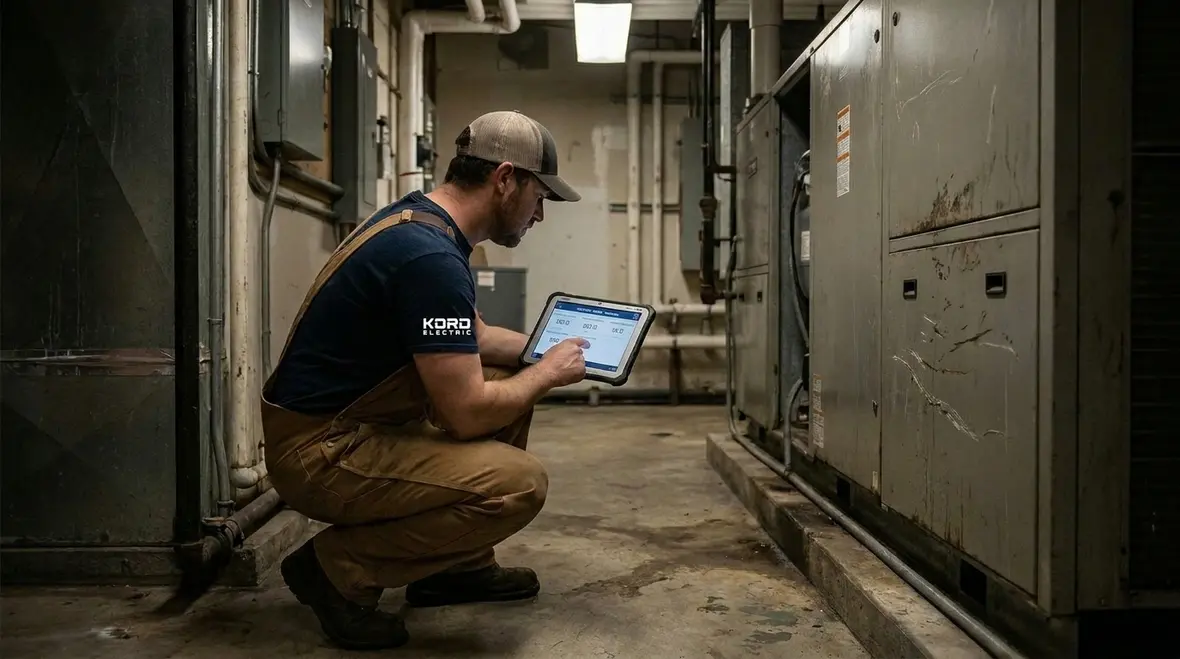
Data only matters when it turns into better decisions. So, our team at Kord Electric builds systems that focus on action, not just dashboards. Typically, we start by reviewing how a building currently operates, how it measures power, and where the real bottlenecks show up.
Then, we help facility stakeholders define what “good” looks like. That could mean tighter control of mechanical loads, better management of standby loads, or improved coordination of electrical panels and distribution equipment. After that, our technicians validate settings and explain each step. They do not talk down to the people running the building. They talk through it, like seasoned guides leading others through a maze with the lights already on.
In practice, action usually includes:
- Schedule alignment so equipment runs when people need it, not when someone last guessed
- Demand response readiness so the building can respond to grid signals when applicable
- Setpoint tuning for HVAC and other systems to protect comfort while limiting energy use
- Fault detection support that flags unusual spikes, short cycling, or failed sensors
As controls improve, the facility moves from reactive maintenance to proactive management. And that shift reduces downtime risk, because teams catch problems earlier, not after equipment fails during peak hours.
Smart management reduces energy waste and peak demand
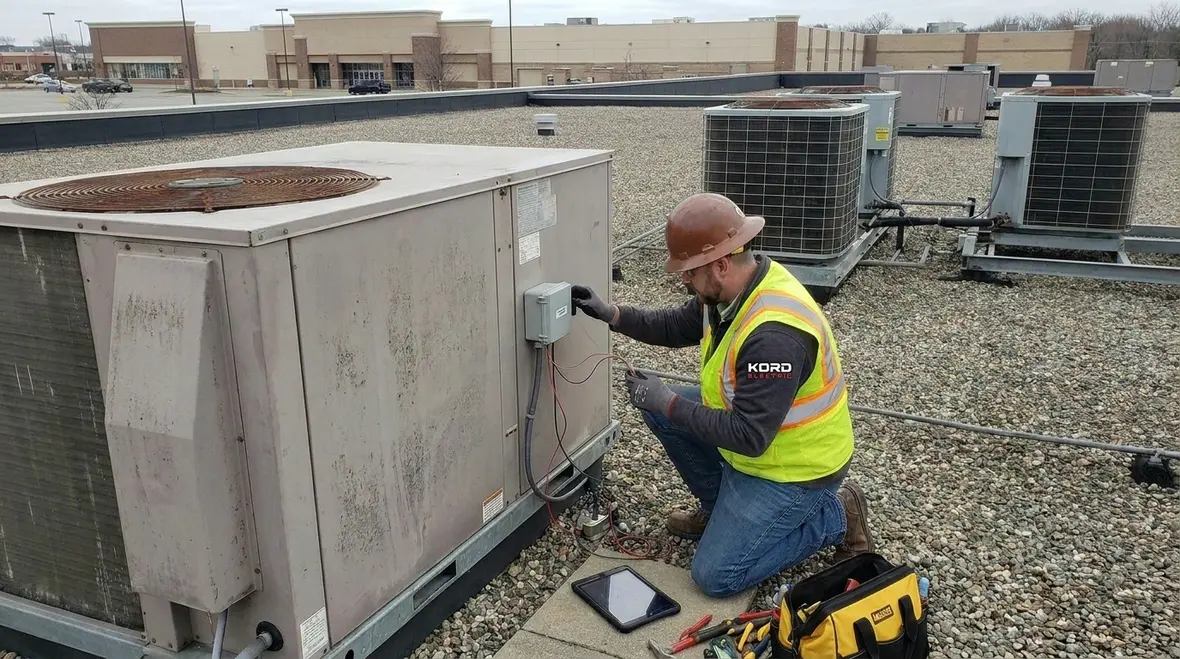
Most commercial facilities lose energy in predictable ways. Equipment often runs longer than it should. Systems sometimes keep heating or cooling even after conditions stabilize. In other cases, electrical loads stack up without coordination. And then the building hits peak demand and pushes the utility bill higher.
Commercial building energy management systems help reduce these issues by controlling when and how loads operate. For HVAC, this can mean smarter staging of chillers and air handlers, improved ventilation control, and better responses to occupancy and weather trends. For electrical loads, it can mean tracking patterns and identifying where consumption does not match expected use.
We also see this in older buildings where panel coordination and submetering were never fully planned. When teams add or adjust electrical components later, the building may still operate as if it were blind. Therefore, energy management becomes the “eyes” that guide the facility toward smarter control.
And here is the part that matters most: reducing energy waste improves both budgets and comfort. When equipment runs only as needed, temperatures stabilize and zones behave better. In other words, the building stops acting like it is always one step away from chaos.
What smart controls mean for electrical reliability
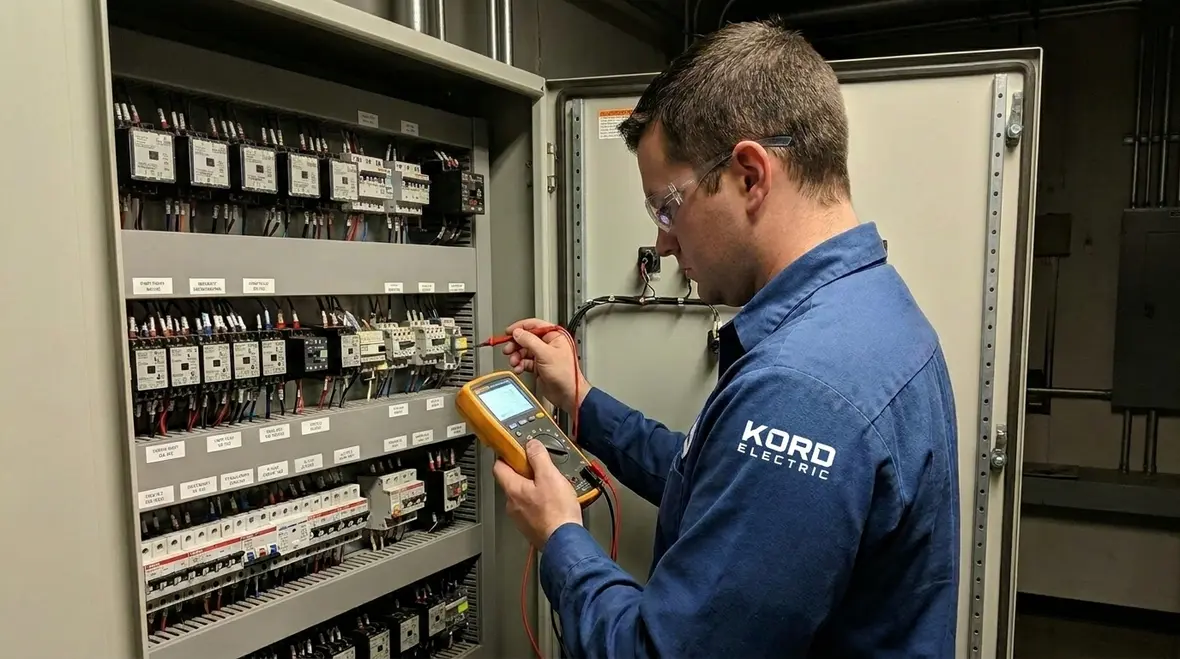
Smart energy management also supports electrical reliability, especially for facilities that carry heavy loads such as data centers, warehouses, manufacturing spaces, and major property buildings with complex mechanical systems. When a facility uses better monitoring and control, it can reduce stress on equipment. It can also spot irregularities before they become failures.
Our technicians coordinate energy management with the electrical system. They do not treat it as a separate world. Instead, they help ensure the right measurements exist and the system uses them correctly. That includes checking where metering happens, how signals communicate, and how controls respond to real operating conditions.
While the tech side matters, we also respect the real world. Facilities need continuity. So, Kord Electric plans upgrades carefully and works around business schedules. We focus on safe installation practices and clear documentation so the facility team can support the system long after we are done.
In buildings where rewiring or electrical upgrades may be needed, the cost and approach matter. Our blog includes a rewiring cost guide for commercial electrical systems, and it highlights how scope, material needs, labor complexity, and system size influence total cost. That guidance helps stakeholders avoid surprises and plan budgets with more confidence. After all, no one wants a project that starts simple and ends with a “surprise, you need everything” ending. That is not a plot twist anyone asked for.

Design and installation: what Kord Electric does differently
Smart energy management works best when the system fits the building, not when the building fits a generic template. Kord Electric brings a commercial and industrial focus, which means we plan for the realities of major facilities: multiple floors, shared equipment, diverse operating schedules, and long-life assets that cannot be shut down casually.
Our process typically looks like this, and our technicians take the time to explain it:
- Discovery: we review how the facility uses power and identify major load drivers
- System mapping: we coordinate controls with electrical distribution and mechanical equipment
- Metering and integration: we make sure data flows where it should, in a way teams can trust
- Programming and tuning: we set control logic to match comfort goals and operational needs
- Testing and training: we show the facility team what to watch and how to respond
Then, after the system is live, we help teams maintain performance. That includes checking trends, confirming schedules, and addressing issues early. As a result, the system stays useful instead of turning into another “we meant to review it” item on the list.
And because we work with commercial and industrial properties, we prioritize resilience. We design for the building’s long-term needs, so the system supports future upgrades rather than blocking them.
Common pitfalls and how to avoid them
Smart energy projects can stall or disappoint when teams skip key steps. One major pitfall involves poor data quality. If the facility relies on inaccurate measurements, the control logic can steer equipment the wrong way. Another pitfall is forcing controls to handle every task at once. When teams overload the system, it becomes harder to tune and harder to trust.
Our technicians often help clients avoid these problems by focusing on a clear scope and staged rollout. They also set realistic expectations about timelines. Energy improvements usually show up through steady reduction in waste and peak leveling, not overnight miracles. That is how physics works, and honestly, it beats the old “flip a switch and hope” method.
Other pitfalls include:
- Ignoring occupancy patterns so schedules do not match real usage
- Failing to coordinate mechanical and electrical systems so controls fight each other
- Skipping staff training so facility teams do not know how to interpret alerts
- Not planning for growth so the system cannot adapt when loads change
Transitioning to smart energy management works best when teams treat it like an ongoing program. Therefore, Kord Electric supports both implementation and performance follow-through so the facility keeps improving instead of drifting back into old habits.
FAQ about commercial energy management systems
Ready to modernize how your facility uses power?
Kord Electric helps commercial and industrial facilities implement commercial building energy management systems that deliver control, reliability, and clearer energy decisions. Our technicians explain each step in plain language, so your team stays confident from design through tuning. If your building is carrying high peaks, drifting schedules, or you simply want better visibility, we can assess your setup and recommend a practical plan. Reach out now and let us help your facility run smarter, not harder.
For organizations that want performance to stay strong long after commissioning, pairing energy management with electrical preventive maintenance services helps keep data accurate, panels healthy, and controls dependable year after year.
If your site is in the region and needs a team that understands large facilities, Kord Electric’s Los Angeles County commercial electrical services support everything from new projects to upgrades and troubleshooting, so your building’s power story stays predictable instead of dramatic.


