
Commercial Electrical Load Balancing Strategy
Commercial Power Upgrades Start With a Smarter Load Balancing Plan
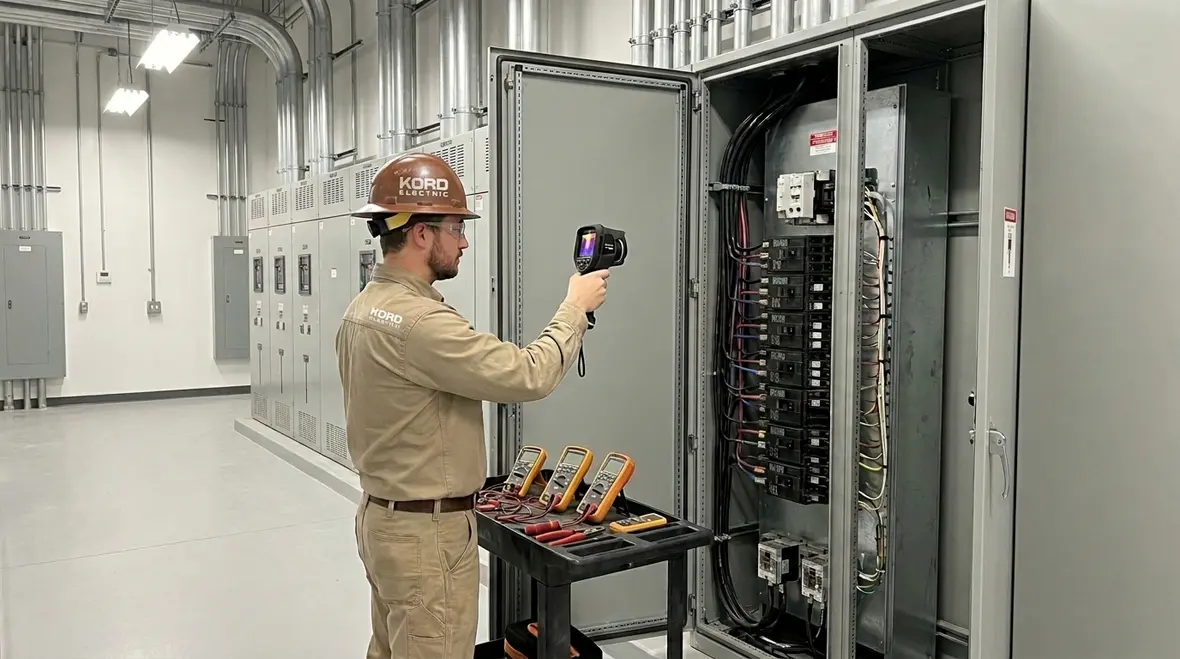
At Kord Electric, we improve power distribution efficiency through a practical commercial electrical load balancing strategy built for real facilities, real schedules, and real demand swings. First, our team reviews how current flows across feeders, transformers, panels, and bus sections. Then we rebalance loads so one path does not carry the entire weight while others sit underused like an extra server at a small office. Next, we verify results with measurements, thermal checks, and protection settings review. Finally, we document the changes so operations teams can run with confidence. In other words, we make the system behave like a well trained crew, not like a group project.
For facilities that want structured support beyond a single project, this kind of load balancing approach aligns naturally with broader electrical preventive maintenance programs. When balancing becomes part of a long term plan instead of a one time correction, distribution systems stay healthier and easier to manage.
Why load imbalance costs money in industrial and commercial sites

When loads sit uneven across electrical circuits, distribution losses rise, voltage regulation worsens, and equipment stress increases. As a result, components run hotter and wear faster. Also, operators often notice the symptoms first, not the cause. A plant might see nuisance alarms, a building management system may report voltage dips, or a main panel might show uneven phase currents. Meanwhile, demand charges can climb if one side drives peaks earlier than other connected loads.
We see the pattern often: facilities add production lines, data centers, HVAC upgrades, or after hours processes, and the electrical distribution does not adapt quickly enough. Then the “problem” becomes a recurring maintenance story. Yet, the system usually has a simple truth underneath. Power wants to follow the path of least resistance, and without strategic load balancing it can overload the wrong path.
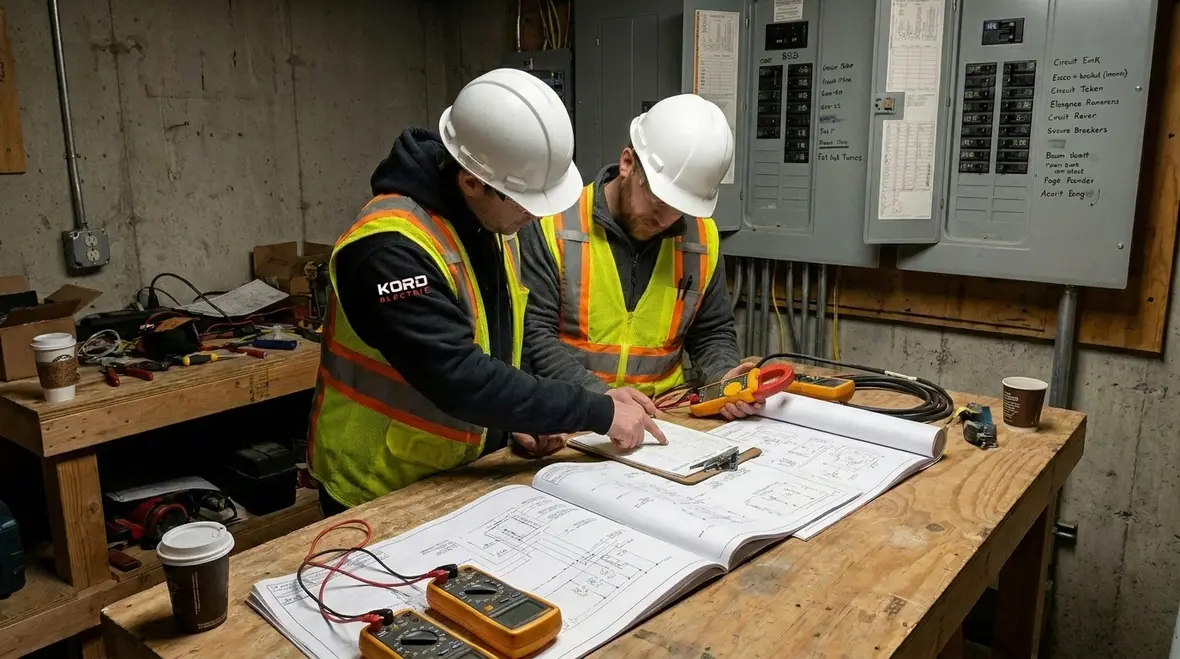
Our technicians explain this in plain language during site walks, because we know your engineers and facilities leaders do not need a textbook lecture. They need usable decisions. Our expert service staff typically points out phase current imbalance, harmonic hotspots, and overloaded feeders, then shows how those findings connect to cost and reliability.
How our engineers evaluate load flow, phasing, and demand patterns
To rebalance effectively, we must understand what is happening today and what will happen tomorrow. Kord Electric starts with a load inventory that focuses on commercial and industrial equipment. We map panel schedules, feeder connections, and transformer loads, then we collect field data such as current per phase, real power and reactive power trends, and voltage levels under typical and peak conditions.
Next, our team looks beyond basic kW. We also consider load type, duty cycle, and switching behavior. Motors and drives behave differently than lighting, while HVAC sequencing differs from process equipment. Therefore, we build a picture of how loads shift during shifts, weather changes, and production cycles.
Then we compare the data with the one thing most facilities wish they could do on a Monday morning. We aim to predict where peaks will land after changes. For example, if a building adds new chillers, we do not just spread load randomly. Instead, we follow the distribution topology and ensure the system keeps its protection margins.
Our technicians often joke that the electrical system is like a kitchen crowd. If one line of cooks gets all the tickets, the food comes out slower, and someone eventually complains. With proper evaluation, we spread “tickets” across feeders and panels so everything runs smoother.
This evaluation process also dovetails with broader reliability work. When we document how your system behaves under load, that insight strengthens everything from targeted voltage support to long term commercial and industrial electrical maintenance plans that keep critical infrastructure on a predictable path instead of a roller coaster of surprise outages.
What commercial electrical load balancing strategy looks like in the real world

A good approach is not just moving breakers around. In practice, our commercial electrical load balancing strategy combines engineered switching steps with verification. First, we identify which panels and feeders carry the highest imbalance and which are underutilized. Then we select candidates for redistribution, prioritizing loads that can shift without breaking continuity for critical operations.
After that, we plan load transfers with care. We consider start up currents for motors, ramp rates for variable frequency drives, and timing for HVAC compressors and fans. We also review neutral loading where applicable, since single phase loads and harmonics can raise neutral current in ways that surprise people. That is where a calm, expert explanation helps. Our service staff walks clients through the why, not just the what, so stakeholders understand the risk controls and timing.
Next, we balance phase loading to reduce current asymmetry. We also target better voltage regulation by aligning loads to system impedance characteristics. Then we verify using measurements after each phase of work, because “it should work” is not a method we trust.
Finally, we document the new distribution scheme. We update one line diagrams, panel schedules, and load notes. When you later troubleshoot an outage, the information is there, crisp and accurate. No scavenger hunts required.
Step by step: from site measurements to safer distribution
Kord Electric uses a sequence that keeps your facility operating while we improve performance.
- Field verification: We measure current, voltage, and temperature indicators across key panels, feeders, and transformers during normal operations and at peak windows when possible.
- Load analysis: Our technicians compare phase balance, feeder loading, and transformer utilization against design limits and observed duty cycles.
- Redistribution plan: We propose specific breaker and circuit changes that match your operational needs, including sequencing constraints for production and life safety loads.
- Protection review: We check protective device coordination and ensure settings remain appropriate after redistribution.
- Execution with controls: We perform switching steps with clear labeling and operational coordination, so the site stays safe.
- Post change validation: We re measure and confirm reduced imbalance, improved voltage stability, and no abnormal thermal trends.
Also, we include a “lessons learned” walkthrough. Our expert service staff explains what changed and why it matters, so your team can maintain the benefit and avoid reverting back to uneven loading. Think of it as training your electrical distribution to stop acting like it never got the memo.

Dual column view: typical findings and what we do next
| Common finding in commercial and industrial facilities | Action Kord Electric recommends |
| High phase current imbalance across panels and feeders | Reassign compatible circuits to even out phase loading while respecting equipment duty cycles |
| Unexpected feeder heating or elevated thermal readings | Reduce loading on overheated paths and validate thermal behavior after switching |
| Voltage dips during motor starts or HVAC transitions | Balance distribution to improve voltage regulation and review protection and starting profiles |
| Neutral overloading on mixed single phase loads | Redistribute single phase loads to reduce neutral current and mitigate imbalance |
| Rising demand charges tied to peak timing | Adjust load allocation to shift peaks within practical operational windows |
Benefits you can feel: efficiency, reliability, and lower downtime risk
When facilities adopt a smart load approach, efficiency improves because losses drop when currents spread more evenly. Voltage stays steadier, which helps sensitive equipment operate closer to intended conditions. Meanwhile, equipment runs cooler and more consistently, so the facility stretches service life and reduces failure odds.
Reliability also improves in a less obvious way. When load distribution becomes more predictable, maintenance planning gets easier. Teams can schedule work based on actual system stress patterns rather than chasing hotspots. Additionally, better balancing can reduce nuisance events linked to protective devices or monitoring alarms that get triggered by uneven load and voltage fluctuation.
For major property buildings, offices with heavy shared services, and industrial plants with rotating equipment, these gains add up. We see fewer surprises. Not zero, because reality is messy, but fewer surprises. Like finding your keys on the first try, it still happens occasionally, and when it does, everyone feels calmer.
These benefits do not exist in isolation, either. Load balancing supports everything from voltage stability to long term compliance with standards like NFPA 70, and it pairs naturally with services that address voltage fluctuations in commercial and industrial facilities. When those pieces move together, your power system stops feeling like a mystery and starts feeling like a dependable tool.
FAQ: quick answers for facilities leaders
Ready to reduce losses and stabilize your distribution?
Facilities deserve power systems that act like dependable partners, not unpredictable divas. Kord Electric can assess your site, rebalance loads using a commercial electrical load balancing strategy, and verify results with measurements and expert technician validation. If your team sees phase imbalance, voltage dips, heating issues, or rising demand costs, we can help you address the root cause. Contact us to schedule an on site evaluation and get a practical plan your operations team can trust.
For organizations in Southern California, especially those managing portfolios across major properties, it is often helpful to connect load balancing work with a broader service roadmap. Kord Electric supports campuses and large facilities through dedicated Los Angeles County electrical services built for long term reliability, not quick fixes.
Whether you are planning targeted upgrades, considering major rewiring, or simply trying to stop the cycle of nuisance alarms and unexplained voltage swings, a smarter commercial electrical load balancing strategy is a strong place to start. From there, you can layer in preventive maintenance, voltage correction, and infrastructure upgrades at a pace that matches your budget and operational risk.


